
Marina Crane (00:01.512)
good morning. It's Sunday, August second. And the weather report, it's still smoky. I can open the door and I can still smell the forest fire smoke. As you can hear in my voice, it's affected me. This has been all summer. So hopefully in the next week as the weather cools down we'll get some rain and and some fresh air. Okay. I'm just grateful that I have more listeners
and also on my blog, more people blogging or looking at my blog. So the topic today on my podcast are gonna be two. One is about the r anti racism in terms of psychology, how the psychology
of Canada associates or sees indigenous people. And the second one is how cults end. Now how do they all fit together into this podcast is because
The reality or the the missing link or the puzzles that sort of percolate up to the top has to do again with Nathan chasing horse because of his cult. Now, a lot of things within the within the cult is like there are they'll talk about the four ways in which a cult ends. And and a lot of times people don't realize it it comes and percolates from within within the cult membership itself. And so there are the the person that I'm going to
Have you listen to talks about you know historical facts. And this is all part of basic psychology and human behavior. Now that's the the that's going to be the latter part of the podcast. The first part is going to be dealing with like educated scholars, indigenous scholars who were trying to write a paper and how it was rejected within the Canadian psychology journals in academia.
Marina Crane (02:01.024)
Why is this so important? Well, because again, anti racism or systemic racism, this this I mean you've gotta listen and re and think for yourself because i it's one thing to to like for me, I speak English. I I I was raised with parents who, you know, were bilingual.
And the reality though is is throughout my life, I'll give an example. Murdered and missing indigenous women yesterday, like or the day before, I br I'll brief be brief. I hope I ca I'm not gonna bore you. But I go gambling once a month and I I'm around a lot of seniors. And one white woman who is a senior was sitting beside me and she says, I live in a nursing home and we started talking about like she was talking about
you know, just living there and that there's a lot of horny old white men. And, you know, she had this disgusted fit look on her face, just like, you know, she just can't stand living there. And and you know, she needs a break. And and I could understand that 'cause I mean, imagine your whole life living as an individual, all of a sudden as you're an elder, you have to be in a community, in a collective re holistic community, and and you have to put up with predators.
o I mean they don't see themselves as predators because they're just going on what's their their biology. But again, there I again we have to talk about healthy human sexuality and the discourse that's needed throughout our lives bec to prepare for when we become older. Now, yesterday I went to the mall
And I wanted I got something to eat. I found a little cloister place, little place I cloister myself so that I couldn't hear all the the noise. And all by myself. So people knew I was by myself. Lo and behold, an elderly white man comes cre creeping by and sitting staring at me.
Marina Crane (04:03.062)
I just ignored him because like throughout my life I and I t I I I this is ex experience, okay, which I don't think some white women can really get a gist of it. But but throughout my life I've had white men glaring and and sort of targeting me. So here's this elderly white man targeting me yesterday and he sat there and sat there and then finally I the two of the people that I was with came and sat beside me as soon as he realized I wasn't alone
then he knew I wasn't a target anymore. And this is like as we're aging anyway, that's what I'm talking about in terms of of just how people perceive other people from other cul countr cultures and how prevalent it is to have like how people think about how s they sexualize or or think or believe indigenous women from childhood to to seniors as being hypersexual.
Okay, I mean that's a psychological statement there. But I want you to to listen to this because it's so important because I find that there are so many so many white people who who want to come and for some amazing reason they think they are God's gift to humanity by helping the poor savage. Even though they don't think it in modern times in twenty twenty six, it's amazing.
That's why I I have such a a deep like I I really I'm critical when it when it comes to people who who want to become the therapist, especially when they themselves have so many other issues within their own family of origin. and yet it's hard for them to to accept the fact that I don't need help.
Here's the here's the essay. and I hope you stay tuned for the latter half of the of of of a TikTok fr regarding cults. Because it has to all tie together with what's happening with this lawsuit with Southanasation as well. Okay, because it all is in theory of how cults have evolved, especially when it all had to do with Indian residential school, this whole psychology of it.
Marina Crane (06:27.158)
Let's see if it can start here.
Marina Crane (06:32.78)
Dr. Monica Williams.
How Canadian Psychology Made Indigenous Trauma Invisible. I recently co-authored a paper on the harmful connection between discrimination and trauma among indigenous peoples in Canada. We titled it The Trauma of Invisibility. I was proud of the paper and of our black and indigenous team of scholars who completed this important work.
We gathered detailed survey data on racism, microaggressions, and trauma from near-indigenoppers across Canada. Yet when we submitted the paper to a Canadian psychology journal, the editors did the very thing our study described, they made the problem disappear.
Canada has a deep, often polite undercurrent of anti-indigenous racism, a pervasive bias many institutions prefer not to acknowledge. When we presented the data clearly, that denial became impossible to ignore. The Canadian publication roundabout
We first submitted the manuscript to Canadian Psychology Impact Factor two point zero, the lead journal of the Canadian Psychological Association. The response was a swift desk rejection, but
Marina Crane (08:05.516)
The editor argued that our empirical work was not, large scale, enough, and was not of direct relevance to the discipline as a whole, recommending that we send it to a smaller sister journal instead. That reasoning was difficult to accept, but
Collecting data from 196 Indigenous respondents across Canada is not a minor undertaking. It requires trust, care, and significant effort with communities that are often difficult to reach because of the very systems our paper examined. Yet, according to the editor, the psychological trauma of indigenous people in Canada was not sufficiently relevant to Canadian psychology.
We then submitted the paper to the Canadian Journal of Behavioral Science, Impact Factor, 1.6. This time it went out for review, but the response produced a different kind of whiplash. Reviewers acknowledged that the topic was of most importance, then recommended rejection based on a series of narrow and distracting critiques.
For example, reviewers objected to our repeated use of the word idea in describing discriminatory practices, claimed that familiar concepts, such as implicit bias, required extensive explanation, and criticized the sample because its subgroups did not perfectly mirror the provinces with the largest indigenous populations.
These comments ignored how difficult and sensitive it is to gather this kind of data safely within systems that have long marginalized indigenous communities. The overall message was clear, the work was being pushed aside. Bypassing the gatekeepers. I knew the paper was strong, and the findings deserved a broader platform.
Marina Crane (10:08.888)
Frustrated by the denialism of the Canadian academic establishment, I submitted the manuscript to American Psychologist, the flagship journal of the American Psychological Association. The result accepted. The contrast was striking.
Canadian journals with relatively low impact factors either dismissed the study as irrelevant or slowed it with reviewer critiques that reflected the very problems we documented. Meanwhile, a leading North American psychology journal, with an impact factor of 7.2 and a five-year impact factor of 12.8, recognized the paper's importance.
That disparity suggests the Canadian rejections were not about the quality of the scholarship. They reflected a broader reluctance to confront indigenous pain, the legacy of abusive residential schools and travel restrictions, as well as ongoing harms such as forced sterilitions and deaths linked to unsafe drinking water on reserves. What we found
Marina Crane (11:30.03)
Our study found that racial microaggressions and ethnic discrimination were strongly associated with mental health symptoms among indigenous peoples in Canada. More than half of respondents reported clinically relevant symptoms of racial trauma. Among the daily indignities we examined, the trauma of invisibility emerged as the strongest predictor of trauma related distress.
Followed closely by microaggressions rooted in deficit-based stereotypes and claims of cultural inferiority. We also found heightened vulnerability among specific groups. Indigenous women reported significantly higher racial trauma and discriminatory stress than men, while Inuit participants reported the highest trauma symptoms among the indigenous groups examined.
Marina Crane (12:27.052)
This institutional denialism did not arise out of nowhere. The academic gatekeepers who tried to sideline our data were following a familiar social script, making indigenous people disappear on paper. Canadian policy has refined that mechanism for generations. To understand why our findings felt threatening in the present,
We have to examine how the machinery of erasure was legally engineered in the past. 1985 and the legal machinery of erasure. Most Canadians have never heard of the second-generation cutoff in the Indian Act. In 1985, changes to this law altered who could be legally recognized as indigenous. The consequences were far-reaching.
With each generation, fewer people could be recognized under the law as indigenous. In effect, the law created a mechanism through which, over time, fewer indigenous people would legally exist on paper. If you were indigenous, how would that make you feel? Erased? Invisible? Violated?
Many people assume that when a government writes a law like this, the harm is limited to those directly affected. It is not. Laws do more than regulate society, they shape how society thinks. They influence the categories we use, the questions we ask, and the people we notice.
When the law erases a people from official recognition, it becomes easier for everyone else to overlook them as well. Over time, invisibility stops being merely a legal status and becomes a psychological reality. That is what our data revealed.
Marina Crane (14:35.294)
Among the forms of racial microaggressions reported by indigenous respondents, invisibility was the strongest predictor of racial trauma. Being ignored, forgotten, misidentified, or treated as though your history and identity are less real than everyone else's was more strongly associated with trauma than other forms of discrimination.
When an entire society repeatedly sends the message that your people do not count, those experiences accumulate. This forced invisibility affects indigenous peoples most directly, but it also shapes everyone now living on this land.
If institutions teach generations of Canadians to think poorly about indigenous peoples, or not to think about them at all, it is no mystery when many Canadians fail to recognize the anti-indigenous racism around them. The violence of the law. Law shapes more than policy. It shapes perception. Over time, perception shapes reality.
Once invisibility becomes part of how a society sees the world, the harm it continues to cause becomes harder to recognize. Why invisibility? When the results first emerged, one question stood out above all the others.
Why would feeling unseen be a stronger predictor of racial trauma than assumptions of criminality, being treated as a foreigner, or many of the other microaggressions indigenous people experience? The answer was not immediately obvious. It became clearer only when the findings were placed alongside Canadian history.
Marina Crane (16:34.126)
Policies that may appear technical at first glance reveal something much deeper. They shaped who the low recognized as indigenous and how society came to see, or fail to see, indigenous peoples. History still unfolding. The findings from our study are not only about psychology. They are about history still unfolding.
Because decades of Canadian policy continue to tell the same story. The deeper question is not only why invisibility predicts trauma, but why that invisibility exists at all. Who is hiding what? Societies rarely hide crimes from themselves by denying every fact outright. More often, they change how those facts are seen.
They redraw categories, redefine who counts, rename, reclassify, and reorganize until the original harm becomes difficult to recognize, even by people of good conscience. The real question is not simply how indigenous peoples experience invisibility, but why society keeps manufacturing it. What history is too painful to face?
What shame requires an entire people to be pushed from public view? Looking the other way. This is why the findings were so threatening. Anti-indigenous racism in Canada has a long history and deep institutional roots.
That brings us back to the Canadian Psychological Association, the organization that owns the journals and speaks as a national voice for psychology in Canada. The CPA had a clear opportunity to support indigenous science and the authors documenting systemic trauma.
Marina Crane (18:39.444)
Instead, it failed to honor its own 2025 2030 strategic plan, which commits to using calls to action and justice, supporting indigenous knowledge and practices, and being accountable to reconciliation with indigenous peoples. The resistance we encountered in publishing this work became further evidence of why the work is urgent. And we shouldn't be surprised.
This experience illustrated the cultural hypocrisy we wrote about in another recent paper of ours, Canada Nice A Comparative Study of Nada, and the United States of the prevalence and correlates of racial microaggressions. Yet this story also has a hopeful ending. Despite efforts to sideline the work, the
The findings were ultimately recognized by one of the most influential psychology journals in the world. The study documented the relationship between discrimination, microaggressions, and racial trauma. Invisibility emerged as the strongest predictor of trauma-related distress.
The publication process itself illustrated how institutions can reproduce the very erasure the research exposes. The trauma of invisibility persists when institutions refuse to see what is right in front of them. Real progress begins when we stop looking away.
So that was an essay published and I I thought it was like a very like excellent work in terms of actual like when I say that I have real issue with mental health workers coming into First Nations
Marina Crane (20:40.372)
Because it it's it's it they're following they're following the psychology guidelines of Canada. And so the lady who wrote this is Dr. Monica Williams. And and it's how and it's under how Canadian Psychology Made Indigenous People Trauma Invisible. So and and again too, like they fo they're focusing more on indigenous women because we're perceived as being invisible.
And and because of patriarchy and and society as a whole being individu individualized, it's very difficult for for non-Indigenous people to understand that indis indigenous people are a holistic collective community. So so obviously like like I mentioned, when I'm in a mall and I have somebody targeting me, they're targeting me as being individual, alone, invisible, and so nobody would miss me. Whereas when two
P two other people that are indigenous came and sat beside me. There was a red flag for that elderly man stalking me. And and and again, you might think, you're reading into it. No, this is the reality of my life. even even during the stampede when I was a little child pushing my siblings in in their in their carriage, you know, I'd have these old old ugly, you know, men who came out from the oil fields to
To have rest and relaxation at the stampede, cat calling me a child. And again, too, I have to reflect, I'm 74, and yet proof is in the pudding when our children who are trafficked in the city are being trafficked out of foster care systems at the age of 14.
So, yes, if I'm trying to if you're trying to make me invisible and think that what I'm saying doesn't have any relevance, this is exactly what the TRC is talking about. And exactly why this paper that was just read is so vital because they're saying you have to listen to the people who have actually lived those lives. Like I said, every ten years we change identity in terms of evolution of how we choose to heal. If we choose to be frozen in time.
Marina Crane (23:02.917)
At a certain time where we've been traumatized, that in itself is because why? We're all human. But when we have the courage to face the pr thing that we fear the most. I I use the example of my late mother, she was always afraid of white people. When I take her to the doctor and the doctor would say, What's your plane p pain level? And she'd say, Three, and I'd say to the doctor, No
Her pain level's at an eight. And he'd look at me. I said, she's afraid of you. She's gonna answer you because she thinks that you wanna hear that her pain level's at three and that you're a good doctor. I said, but her reality is like her pain is at eight. I said, I'm gonna be here to make sure she that she she answers that whatever she needs to have done, that it's gonna be done by you knowing the truth of what she's what pain she's bearing.
Things like that, like they have social workers in in hospitals right now, you know, when you have systemic racism and the reality of it is there are so many immigrants who are coming into the city of Calgary who are experiencing the same systemic racism because they're not white. Again, white fragility again who who's like when I like the importance of of like part part of the reason I want want to talk about
these things it has to do with like the separatist movements and the way they think about like their commo co colonial mindset, trying to make people invisible, stereotyping us, racializing us, and
You know, the social the social structure. It's like it's like they have this magic wand and all of a abracadabra like we're ghosted or we're erased. And and you know, it it's been like that when I talk about the Indian Act and like it was mentioned in nineteen eighty-five, how you know, women could not marry or I mean, everything to try and erase indigenous re d identity, especially when we're coming from a matriarchal system.
Marina Crane (25:09.251)
But like I said in other podcasts, there is a bill being passed, and and this bill is is hopefully there are two of them that I'm interested in, and I hope the general public is, is is when they talk about people who've lost their status for from generations that will have the ability to enroll in in the common common ban list or the common indigenous list in the federal government system.
as well as also a a law change these are these are two laws in the Indian Act. And the other law is to make to have give sovereignty to First Nations Inuit in Metis communities for sovereignty over their children. These are impactful and you gotta understand I'm I speak good English. I I started going being around white kids when I was five years old. I saw my first white person when I was five.
My whole life I've been educated with other white kids. This I'm s like and th the reality is like I'm still invisible. I am still invisible, get that, because I follow a different law under the Indian Act. The Indian Act has deemed me as being invisible. And yet for my whole life do do my white counterparts, kids that I've grown up with in schools and education and all this, did they even give a damn?
They only gave a damn recently because you could apply for or even say you don't even have to apply. Even if you couldn't even find your indigenous ancestry, as long as you said you you had somebody, you know, government would give you grants, you know, t because you're indigenous, your businesses would. And I'm going, what the hell? In high school I went to school with this one in a Catholic school.
And and even now this woman, you know, lives in Cochrane, has her own her own ranch and business and she networks with the Cree Nation up up north and she's collected like around you know, c cohorts that are Metis and in indigenous, okay? But again, she's claiming she's indigenous. Yet yet when she has an indigenous her ex husband and her had an indigenous doctor friend, did she claim she was indigenous?
Marina Crane (27:27.207)
Only when it suits suits people. I have another colleague that I went to c university with gets all these jobs because she claims she's indigenous. And yes, she's still applying to the Metis Association. And again, too, the process and this is what I want y people to get across, no matter how much you think you're indigenous.
It's up to the people, the original people where your ancestor came from that has to accept you. It's one thing to get on the general list. Once you get on the general list, you have to make application to the home community that your ancestors came from and then be voted on. So don't think it's an easy process. We've made it really clear for the past twenty, thirty, forty, fifty years these things were going to happen to us.
That's why all of a sudden, you know, people say, separation and
You know, Daniel Smith and blah you know, like really all the money that they're sucking out of the trust fund of First Nations, a fiduciary obligation by the federal government, and they're twisting it to make it look like we're invisible, we don't know what the hell we're doing. Okay, I I I know I get really volatile about this, but but there is a good reason. There is a good reason because
A lot of times people don't realize how historical like the the trauma the trauma that has happened within the s systemic racism since the beginning like when when people when oil was first founded in in our communities. Like they they just don't they just don't understand the historical impact on unless they're actually
Marina Crane (29:17.214)
have have had that lived experience. So part of my podcast is to explain that h historical context.
as well as as well as what is happening today. Like within our community, our former chief, a s like in terms of this lawsuit, this when they talk about cults, and I and I will play this this message about cults, because when when a cult implodes and when a cult ends is exactly what's happening within our community. Now it's also happened with the rest of Nathan Chasinghore. So they say so they're both parallel to what's the reality of what's happening here.
in the present. Now we'll we'll start this off and hopefully it'll it'll have a clear you'll have a clear recording of it. But please hold by and be patient with me.
So I researched cults to find out how every other cult in history ended. He called for federal takeover of the elections. Federal agents killed people in the streets for all of us to see. And his supporters, they defended it and pretended they didn't see it. When does it all come crashing down? Because if you want to understand how this ends, you need to understand how every cult before it ended. Here are the four ways cults die. One, the leader falls.
In nineteen fifty five, a preacher named Jim Jones started a small church in Indianapolis. He told his congregation he could heal the sick, predict the future, and that he alone had the truth everyone else was hiding. Over twenty years he built one of the most devoted followings in American history. By the mid nineteen seventies the walls were closing in. Abuse allegations, former members going public, government officials asking questions. So Jim Jones told his followers the government was trying to destroy them.
Marina Crane (31:04.015)
Because they were getting too powerful. The only way to survive was to leave America completely. And they believed him. Because he spent 20 years convincing them that he was the only one telling the truth. He moved 900 followers into the jungles of Guyana. When a US congressman flew down to investigate, Jim Jones had him murdered on the airstrip. That same night, he ordered his entire congregation to drink cyanide-laced fruit punch. Parents gave it to their children first, then drank it themselves.
909 people died in a single afternoon. The followers didn't leave. Jim Jones collapsed and took them all with him. Psychologists call this catastrophic cult collapse. This happens when a leader feels cornered with no way out. The more cornered Trump gets, the indictments, the courts, the walls closing in, the more he starts to look like a man with nothing left to lose. Two, the inner circle starts talking. Facts don't break cults, betrayal does. Not CNN, not a court ruling.
Not a journalist with receipts. Someone from inside the tribe. Because cult members reject anything from the outside group automatically. It's part of the conspiracy against them. But when someone from the inner circle starts talking, that's different. You can't explain away someone who was in the room. Trump's own chief of staff called him the most dangerous person in American history. His Secretary of Defense said he'd use the military against American citizens if he could. His chairman of the Joint Chiefs called him a fascist to the core.
More than a dozen former senior staffers signed a public letter saying he was unfit. Not Democrats, not journalists, people he hired, people who ran his government, people who were in the room. Did it break the cult before the election? No. But here's what cult researchers know. The inner circle talking isn't a single event. It's a slow erosion. Every person who speaks up makes it slightly safer for the next person to speak up. And the list keeps growing.
You can dismiss one outsider. It gets harder when the people speaking up are part of the cult, the inside circle. Three, promises never come true. Every cult leader makes promises they can't keep. In 1954, a woman named Dorothy Martin told her followers that a UFO was coming December twenty first to rescue them before the world flooded. Some sold their houses, others quit their jobs, they gave up everything to be ready for the event. December twenty first came, nothing happened. No flood, no UFO, just silence.
Marina Crane (33:26.155)
Psychologist Leon Festinger was watching from the inside of the group. He expected them to walk away. Instead, the most committed members became more devoted. They called newspapers, preached harder, recruited strangers off the street. Festinger called this cognitive dissidence. And here's the part that matters. The members who gave up the least walked away when the prophecy failed. The ones who gave up everything doubled down forever. Because admitting you were wrong is painful, but admitting you destroyed your life for a lie is unsurvivable.
Trump promised winning. So much winning, his supporters would get tired of winning. Tariffs hitting their wallets, that's fake news. Medicaid cuts hitting their families, that's a hoax. People losing everything, don't believe what your eyes are seeing. That's not winning. The members who sacrifice the least will leave first. And reality is very patient. Four, the community fractures. The last thing holding most cults together isn't the leader, it's each other. The group chats, the rallies, the shared enemy.
The feeling of belonging. For a lot of Trump followers, it's the only community they've ever had. In the 1970s, psychologist Henry Teifel took strangers and randomly split them into two groups. They had nothing in common. No history, no rivalry. Within minutes, they were treating their own groups like family members and the other group like the enemy. He called it social identity theory. People don't just join groups, they become the group. The group becomes the answer to the question.
Who am I? This means leaving isn't a decision. It's a loss of identity completely. But here's what Tifel also found. Groups fracture when the loyalty test becomes impossible to pass. When members start getting attacked by their own tribe. When the true believers start getting called traitors. When the group turns on itself instead of the outside enemy. That's already happening inside MAGA. That's when people quietly slip out the back. Not publicly, they just disappear. Cults don't die because people get smarter.
They die because the structure holding them together stops working. The leader can't protect them anymore, and the promises stop coming true. The inner circle started talking, and the community started eating itself. Some of these people know something is wrong. They see it. They just can't say it out loud. Because saying it out loud means losing everything they have. But here's what history teaches us: the longer a leader holds on, the more desperate he becomes. And the more desperate he becomes, the more he asks of his followers. More loyalty, more
Marina Crane (35:50.796)
More sacrifice, more willingness to look the other way. And eventually the cost becomes too high even for the most devoted believer. Every cult in history has ended, every single one of them. This one will end too. The only question is how much damage gets done before it does end. I've been wondering for years how the Trump cult ends. So this is why it's important to talk about the holistic and collective approach.
Especially when the majority of people, indigenous people, First Nations, anywit in Metis communities, have only known their own community their whole lives. So like with Nathan Chasing Horse, he had trained his followers. He had three hundred and fifty followers at the time of his arrest.
And he had ordered and had had instructed the women in his cult, in his circle, how to how to use a firing arm and also like how to poison themselves if he c like when he was anticipating being arrested and he wanted them to have a standoff. Now, and and again that's historical, like like I like you just heard on this on this video.
Now I think the fellow's name for this TikTok video is I don't some of these TikTok videos too, they don't have like their real the this is W DHW92.4 on TikTok is the author of this. again DHW ninety two point four one. Okay, so fifteen like he says,
Like fifteen years Mum's daughter almost dies. So again, they're talking about like again it comes from the loyal followers and and she could not believe she started she started p like she could not she could not believe what he told her about me. So you gotta understand there was a woman who reached out to me. And again, understand this. My I started writing my blog twenty years ago.
Marina Crane (38:08.301)
So it was the followers within the cult who started questioning.
And and like the this woman the mum of the the daughter. The mum knew Nathan when she was fourteen. She had children and she introduced her children. Her youngest her daughter, the one who was almost who almost died, started met n started being associated with Nathan when she was three years old. And then he he sexually assaulted her at at eighteen. And anyway, many saying that they weren't
like like part of part of the part of the saying that he was unfit like and just just like like I like I'm pretty sure like I like I know I had people
throughout the twenty years contacting me, you know, having thoughts that, you know, what he was saying and what he was doing just didn't fit. And and they would reach out to me and I'd say, Yes, you're right, you're right. He's he's not qualified. He's he's he's not
You know, he's he's he you know, h he he's being delusional or illusional. So twenty years you know, of talking amongst each other. These are these are the followers within the cult, okay? and he talks about people test like when he's like when he was fourteen and fifteen and he went to for his first
Marina Crane (39:39.652)
fasting and how aliens, UFOs had aliens had visited him up at Bear Butte. And so there's all this conspiracy too, like how he was recruiting people into believing this this phenon this story about his connection to the star people and and like indigenous ways of knowing being a s practicing being a spiritual leader because he was chosen.
Again, this is the psychology of cult leaders. So recruiting people like his followers would be recruiting people from powows. Like like they knew there was something happening because of the controversy. And a lot of people in the Pow Wow community knew something was wrong and the more it festered, the more the inner circle tried to recruit people. So at the same time too, there's
How did I put it now?
Marina Crane (40:45.615)
who's who leaves the community and who gets together. Rallies and gets and get togethers. Get togethers. So within Sue Tina too, even when we knew something was going on, like, you know, I like I said, my whole life I've worked and I've gone lived in another country. I worked on my own, my own money, taxes, all the stuff, because again, I wasn't living in my community.
But when I realized that all this money was going to from the chief, again, I'm talking about cult leaders who recru who supported all of Nathan Chasing Horse's followers. So you have two cult leaders supporting each other.
And you have a group of of of the of the members who who depend on on these leadership to support them because they're part of the mechanism of of keeping their power for for like like what they're doing. And so as the years go by and the conspiracies keep on f percolating to the top, a lot of the inner circles start leaving.
So even with Nathan Chasing horse, there were different like s people from my community started leaving. But at the same time too, for decades, there were people who still supported him, kept quiet, just like they supported our former chief Roy Whitney. A lot of things that were questionable, they they would would
They would get together and they would say, you know, this and this has been happening and look at this financial statement. And again, only only the mi people within the community could churn against other people in the community because because it it's imploding in itself. A cult implodes from itself. Okay, so the more
Marina Crane (42:31.595)
as it's leading to the new election and as here's Roy Whitney who who gets charged with two historical counts of sexual assault and another band counselor getting charged with sexual assault, innuendos or conspiracies or talk about leadership in historical context of sexual assaults. Like this is all normal and natural in in First Nations Inuit and Metis communities. And and and and in the broader sense of the United States too, we'll say in Canada as well.
But the reality of it is like the microcosm or the micro management within indigenous First Nations and Metis communities is is like again in the cult they they they recruit. And and so I again he t he talked about how even in the recruiting
the members make make the new members feel like like they're just like so close. They're all of a sudden they feel like like they're they're they're part of this family. And and so again, this is the whole phenomena of like especially especially when you have a lot of pretendians who who are coming within the First Nations anyway to communities and you have rec people who are recruiting within that community that are cult following a cult.
And and of course they're going to embrace the pretendian and the pretendian is gonna feel like they belong. And again, like it it it's all part of of dismantling a cult. But yet again it it has to do with the inner people who were following the original cult leader. So a loyalty when when it's it creates itself, it it's it stops when when when there's when the power
or the leader cannot cannot follow follow through on his promises.
Marina Crane (44:25.511)
and and the people who are following him know that they can't depend on him, then then it sort it then it implodes. So so like for example with Nathan Chasing Horse, from my understanding talking with with the ladies that I'd been in networking with, because they w they said we we didn't know we were drinking the Kool-Aid, but for decades Nathan would always talk to them about not reading my blog.
Now and again too from within the cult they started, you know, criticizing and the cult started churning against these other people who had formerly tr tried to press ch formally did press sexual assault charges against him. And and this is like not just yesterday, this is took took a period of fifteen years. And I said like even with my blog it was twenty years.
So again, when we're talking about invisibility in terms of psychology or even how people want to perceive women as indigenous women as being invisible
This is a perfect example of it. But yet it it took the followers, the women within and men too within the cult to to start talking, to have the courage to speak up. And as they spoke up, other people within the cult or the membership started talking and realizing like you know, see again, who has more to lose? The people who invested more money, more dedication, the ones who didn't invest much
They just disappeared. They just sort of sunk into the woodwork or sunk into the bushes.
Marina Crane (45:57.856)
You know, the ones who had the greater loss are the ones who put so much money and time, like the the the young man whose whose son died from because Nathan had said he could cure him of cancer. Not only that, but people within my community who paid tithing every month to this man. And and we're not talking like just a hundred dollars, we're talking ten thousand to over a hundred thousand dollars. And not just that, but even our our band funds, our community funds that what
coming out the chief's the chief's personal purse, wasn't coming out of his bankroll, even though he had his own company that was associated with Embridge, the oil company. That money didn't come out of his pockets, it came out of our community our community funds. And again, why to support to support the people who are following the cult.
And yet who is being victimized? The people who are not part of the cult, like I say, this fourteen year old young woman who's in his her thirties now, you know, she needs compensation because the chief and counsel who swore on, you know, when they swore in they were gonna protect the most vulnerable didn't.
Instead they support it because again they had to feed the leader of the cult. They had to support them, recruit, like as the dynamics each time election comes, you can see the phenomena of how they start recruiting new members and how they try to keep keep that that their their organization from imploding. But this time it did not work for Roy Whitney. But even he had the audacity after he was charged to continue to run.
Again because he has to keep that cult moving. So these are how cults end. When somebody gets arrested like Nathan Chasey Morse, or when our former Chief Roy Whitney is attached and associated with this lawsuit revolving involving Terry Braun, the former lawyer, and all the the the what do they call it, the building blocks, the domino effect of everything falling into place.
Marina Crane (48:05.635)
All around our mental health. And again, systemic from Indian residential school. And I use my own life as an example. When my parent my grandmother went to residential school. My parents went to Indian residential school. When I was growing up, I always wondered why are my parents so vulnerable to cults. I didn't know there were cults. Didn't know Indian residential school was a cult.
Now that's why I'm saying you Psychology Association of Canada in denial? In denial of what? That you created all this? You created all this cult mentality based on what? Your own fear because you came from a cult yourself? Examine the Psychology Association of Canada and try to understand why it is so delicious, so f so flavorful.
Just like like it's ice cream and you're you're you crave ice cream and you're going, I can make I can just eat it and drink it up and you know people who are who are just wanting to become social workers and therapists and psychologists, that's that's what the is dangling in front of them, especially when it it's a cash cow to to come into indigenous First Nations Inuit communities. And yet, as indigenous knowledge keepers, we're going, What are you doing?
What are you doing? And then when you tell them that, they they they ghost you. Because that's part of the that's predictable because it's it's a historical way of creating invisibility, especially when it's coming from an indigenous woman like myself. Now again, why is this so important? And and why why do we have to talk about this whole issue of of mental health?
And and again when w when we're talking about like s hypersexuality and like when the Beatles came out in the sixties, you know, before that music was just sort of a humdrum.
Marina Crane (50:14.447)
You know, like the old classic cowboy howling at the moon, my broken heart, you know, just really sad, sad sack movie songs. That's that's what our par my grandparents and my parents listened to. All of a sudden the Beatles come in, the Rolling Stones, this whole revolution of music. And and when the Beatles toured the United States the the the first year, they they called it the pissing tour.
To my amazement. Because again, you know, my parents weren't taught about sexuality in residential school. A lot of things, as I grew up, like I say, every ten years, the ev evolution of my understanding of a healthy human sexuality evolved.
And that's why I I use my podcast because I I find a lot of elderly women, especially white women, and and I say indigenous women too, have have a a different understanding of the ageing process with men and women, a as well as like why men behave the way they do. But it's very disgusting in a sense because you know, when when a woman is so submissive
And they are put in a nursing home and you have these predators lurking around, it it it's dangerous. And you know, how how do you know and and the children, the adult children, you know, they they they they don't have the capacity to to you know embrace and release or help guide their aging parent until they they leave this world. Instead they you know pound them off to this hor these horrible places.
So anyway, I again this this whole pissing tour of the Beatles. Well the reason they called it the pissing tour is because they were so sexually aroused, these teenagers, that they pissed themselves as they're jumping up and down screaming on the top of their voice because they fell so in love, so infatuated with the Beatles. Again, you know, that's human nature.
Marina Crane (52:14.957)
But again too, just the reality and the structure of how young men are are how they understand female sexuality.
And and again, women too, like i it's taken decades for for the sexuality of women, especially girls entering puberty and and young adulthood to understand their their bodies. And and that was not educated during my time or my mother's time, or I I'll say until recently, maybe the past twenty years. So so a lot of these things that I I do talk about in terms of structure, a lot
A lot of times when you you get past a certain age, it's really difficult to change. and I use the word difficult very modestly because I use my life in terms of structure. and it's been a lifetime for me. I can't even comprehend how difficult it would be for a woman to do this type of work after choosing to have children.
It's it's it's a very hard thing to do and especially too, especially when when you know you need support systems in place. And a and again too, like how is the support system? What what is the what are the structures involved in that? So again, the the whole need to of of dismantling c cult leaders and and people would criticize and say, Marina, you know, your politics isn't cult and I'm going, No, it is
This is the this is the the the what do you call it the the the crumbs the the crumbs of colonization. It's it's the aftermath and that's still we're still living it. Like I said, the laws are being changed through the Indian Act. I want non-indigenous people to understand this. The laws you live in, like paying insurance for your house in case it burns down, or car insurance or life insurance.
Marina Crane (54:22.881)
Or or ownership of your house or ownership of your land. We we we don't have those concepts unless we live off reserve. And and so the concepts of ownership, no, we we have a different collective and holistic way of thinking. So it's very easy for us to to slip into this cult mentality where, you know, we start a business and if the chief is in favor of us, he'll give us contracts or he'll give us job promotions.
without any education, degree or anything. And we live in this fallacy that someday we will be the head manager of a company that say with a white person would take you know, years and years of university. And and again, who am I to criticize a nation member and saying, No, it's not gonna happen for you. You're living in a delusion. Again, who they're adults.
It it's like I I say to people, you know, we we have major crises in our communities in terms of mental health and drug and alcohol addiction. And and I I I use the parallel. I said, take a w take away the equation. Take away the alcohol and drugs. I say the underlying problem here is mental health. If you take away the alcohol and drugs, what's left?
You have to look at that hypersexuality, you have to look at you have to have people who actually know the skill set of how to de well, we we use the word decolonize, but how to how to basically debrief from being in a cult.
Because psychologically that's all we gravitate to. Like I said, there is a phenomenon of of people gravitating to indigenous First Nations Inuit communities, and yet they don't realize that the people who are inviting them to come into the community could be members of a cult. And they'll make you they'll whine and dine you to make you feel like you're part of the community because they have a purpose. And yet people within the community who are saying no
Marina Crane (56:29.401)
You're not indigenous. You don't you you've never lived here. They the people who are pretending become defensive and they are they become a part of that erasing the voice, the original voice, like my voice, my indigenous female voice. Because it's so much easier to make me invisible than to actually understand what the hell it is I'm trying to say to you.
So that's why I put in the two the first essay on on just even academics, both indigenous and black, trying to publish about this systemic racism and how psychology tries to make us invisible. and again through the Indian Act.
Indian residential school, taking away the identity of indigenous women, and even like they said in this paper, the hardest part are indigenous women as well as Inuit people. And the fact too that only a few years ago the Canadian government recognized the nine Sioux tribes that fled from the United States into Canada. And also understand, the Sioux migrated all the way up to to James Bay, like Hudson's Bay.
Our migratory paths were historical. And it even the a post that I had posted a while back by Chase Arnaize with when it when it comes to when it comes to just how how much as indigenous people we honor our sovereignty and our treaties to the point of even fighting within the countries as military people and how we we struggle, like what are we willing to give?
To protect these treaties. Treaties and understanding of how we lived five even before five hundred years, before colonizers came. These these things are are part of a system that was handed down, even though we weren't allowed to practice our spiritual practices, I think, until the seventies or eighties. So
Marina Crane (58:31.713)
Yes, pardon me if I'm quite upset or I talk about these things, but the reality of it is the really basic fundamentals of how people perceive people in terms of being invisible. So so that's why when I say I never allowed my mother to travel alone in the city. Because I knew how predatory white men were. I knew as soon as they see you that you're you're alone.
All of a sudden they get all I don't know if it's a sexual frenzy or what or this notion of fantasy or eroticism that they think that they can, you know, stalk us. And even the whole point of like not understanding, you know, we're not bad mums or grandmothers or aunties. We're under a law in the Indian Act that says we do not have sovereignty over our children.
Now, as white women and immigrants and other people from other countries who've only started coming into Alberta in the past 70 years, educate yourself, understand. You're just here recently. You're just here recently. Like I say, I I didn't I lived off the land when I until I was like ten, twelve years old. That's in Calgary here.
I belie I've gone to school my entire life in the city. I I've I've had I've had to stay with white people when my parents traveled to India and South America. You know, I've had I've had you know, when I talk about people using indigenous people when and I'm using this in a broader term of of mental health people, psychologists and social workers, because these people with MRA
Well, they they were psychologists and therapists too, but they were also associated with capitalism. And and to to to use indigenous people, they had the money and the know-it-all to to recruit for, you know, over ten years, shipping them to Mackinac Island, Michigan. I I'd meet people in Utah that were Native American, who were children who who had gone there, who had been I'd taught this ideology.
Marina Crane (01:00:48.501)
Like a as you know, like again, they're using indigenous people, making us invisible because they're blending us in with their own way of thinking. Which again is is, you know, like they you know, they're throwing breadcrumbs to us.
wanting us to join their cult. And then when we do and we find something's the matter, we we leave. And the ones who who have committed more is more tragic. Like like say in the case of Nathan Chasenhorse, you know, the for decades people started talking. And the more they talked, like with I think the year before he was arrested, one of the ladies from my community left him.
And and then within within six months I think another lady started writing in Facebook of her experience. And from that on social media in the States, they started to to do an investigation. But it took decades and even ten years f with with people within the cult itself to start talking. So so yes, after the sentencing and when
The fifth estate called me because I'd gone to the sentencing. I had said, yes, there the the people like to the aftermath of the sentencing, the the survivors, the ones who were former members of the circle, had had Zoom called, had a collective call of all the supporters that had had been supporting each other for the past fifteen years to try and get justice for themselves and others.
you know, had a had a call. They they talked on the phone for hours about about like what they had done to to get this man serving life in prison. And it that and that's what it takes. It takes people talking about whatever they feel and having other people support each other. And and the courage to understand that, you know, th i it it does matter what you say.
Marina Crane (01:02:50.759)
I I'm just very fortunate like I like I said throughout the years when I talk to young people about Nathan Chasing Horse and how they'd share information about you know what's happening with our accountability and the our nec economic developments within within the scope of Soutina. It like I'm I'm very fortunate that they trusted me and that I trust them and and that I have great great hope and great faith that the young people are starting to understand what it is that was created.
And that it's up to them now to decolonize themselves and understand what it is to belong in a cult. And to be very mindful, to be very mindful and have critical thinking skills of what it what it is actually that you're participating in. Now, for me, like I said, I I saw it my whole life: my parents being used, my grandparents being used.
And and of course I I I have been used myself. So and I continue in some ways being used because, you know, I've got to trust people.
I have to trust people with with my life story and and hope hope that in trusting people to listen to me that that they will you know get get it across in their minds that that you know there there there is some commonality in the struggles that we have as indigenous peoples.
Now the reality too is that, you know, even in the Indian Act, the indigenous people were not allowed to to even own a bank, create a bank or have a bank do banking. Okay, so y you know, people go, What? Going, no, the Indian Act is law in First Nations in Uit and Metis communities. Why why do you think it was illegal for parents to raise their children?
Marina Crane (01:04:45.603)
Why do you think the RCMP was created? Or why policing is the way it is today when it comes to indigenous people and whether or not we're going to be radicalized? Or like say the chiefs in Alberta making a stand against Daniel Smith and Daniel Smith threatening the chiefs of Alberta. What are they going to do? Arrest all the chiefs in Alberta? And that's the reality of what Daniel Smith is saying.
Now understand me, and this is why, like I I say, there there's more historical context of what sovereignty means and and and the dedication for generation and generations of of indigenous people fighting to keep our identity. As much as people have tried to erase the very thought or the very existence
of who our ancestors were and are and continue to be, we struggle and we fight for it. Like that that young man who lost his son to cancer. The bravery and the courage it takes for him to say, I still practice my spiritual beliefs. As for me, I s I practice, I practice and I try to understand what what my parents taught me. The same with my grandparents.
And and all that love, all that attention, all that even within my community. You know, I may have arguments with my siblings or people in my community, and it may take a while, and then eventually like we were there hugging each other, forgiving each other. And and the reality of it is like my my I'll use an example, my niece, she's she's thirty, thirty-one, thirty-two.
At the year she was born, my neighbor I that I grew up with, she married into the Nakota people, which is an hour west of me. Her the that week that my niece was born, her daughter died in a horrible car accident. And the newspapers were talking to the parents and my my neighbor's ex-husband says he says, I forgive the driver.
Marina Crane (01:07:01.667)
And it was so controversial because all of a sudden there are white people going, How could that man forgive the person who killed his daughter? It it's i th that's the reality I'm trying to talk about in terms of what it's like to live in First Nations in the Witten Matic community. Yes, it's difficult. Yes, it's hard, yes, every day we see some form of of what's the word, injustice that we believe is happening.
But until we actually hear it and see it and feel it from the survivor, taking whoever it is to court, that's all we have is is is a hope and a prayer that someone out there is listening and and someone out there will find the courage to to charge somebody. And for all those those young men who charged the Roy Whitney with sexual assault, imagine the what how many years it took.
And even for me when I charged these these serial rapists within my community, the years it took. Now, at the same time too, it you have to be patient with yourself. I I you know, I it like I said, I I was never one to be an alcoholic. yes, I partied. I can count how many times I I drank. I can count how many times I've been sexually active.
You know, I the only thing that I chose not to do is count how many times I gamble, which to me is like I don't gamble every day. I I go once a month. But even that too, like taking care of my my nervous system throughout my life. A as an indigenous elder, I I've started that in my early twenties.
And it's really difficult for me when when indigenous women call me and they're in crisis and I I have to c talk call them, talk the talk them down to take a deep breath and and recover by by balancing their nervous system. Because I don't know what habits or behavior they they've they've lived with in order to cope.
Marina Crane (01:09:12.289)
So those things are are part of the living structure of of networking within indigenous communities. We may you may not see it, it may not be documented in psychological papers, but yet at the same time it's deeply rooted from decades, historical, handed down in in spiritual practice. So those things I hope and I I hope that you know you understand these things. Because it it's such a profound understanding of just
the whole complexity of of you you can take a look at how Trump has recruited people and just the whole notion of how many thousands of people have followed him and how just looking at him as as a human being to another human being and and looking at your neighbor and saying that like would I put up with somebody who who behaves this way.
and understanding the reality of like what is it that you're trying to accomplish in terms of the safety of your children and the children yet to come. Those things and these realities is how I was raised with I knew it with my grandparents. I could feel it when I was around them. And and that's all my grandparents, all of them. I had I had over twenty two grandparents.
When I talk about holistic collective healing, that's what I'm talking about, a different way of thinking about family. As an elder, that's how I see it, but I know the realities of this new generation don't have that concept.
But it's my part of understanding and relating the historical context of what people have done to dec to colonize us, to make us individuals when we're not, to try and take away that very skill set, that very knowledge that holds so sacred to us that it protects our children and those that we love. No matter how long it takes, we have the fortitude and the tenacity to hold on to those beliefs.
Marina Crane (01:11:20.193)
Imagine, I know it's difficult to comprehend, and sometimes it's difficult for me to understand that this is what I did. As hard as it was to write that blog and continue writing the blog, I did, hoping and praying that someone in Nathan Chasing Horse's cult would wake up and charge him, would wake up and start talking because they were so close to Nathan Chasing Horse.
That's why I try and say to people, I only knew him for a short time. But I knew the devastating effect he had on my family, my immediate family, my immediate community, as well as the aftermath of so many people writing to me, talking to me, getting mad at me, thinking that I was telling a lie, that I didn't know what the hell I was talking about. And the more people started talking, the more of his inner circle started talking and imploding.
the harder it was for him to defend himself and his structure to the point where he you know like he was dangerous. He started like I said, he he he even showed his the women how to fire firearms. And and the fact that even some of them, like like the Melissa in on YouTube, she says, I I tried killing myself three times. Because it's the amount of dedication that some of his followers gave
Like that one man who put out a mortgage for to buy a house and that he's paying the mortgage for Nathan Chasing Morse's parents. I talk about
The reality of like what it's gonna cost for him to give up this notion that Nathan Chasing Horse is some sort of friend to UFO aliens or some mythology or some something that he has to that he belongs to, some community where his identity, this is who he is, all based on a a false premise, an illusion. Based based on somebody who just wanted one thing.
Marina Crane (01:13:27.897)
to sexually exp exploit children. And and you know, members in my community, some giving hundreds of thousands of dollars. That's individuals. As well as my community leadership under the guise of of the chief to to give money. Now even even for me when as an elder when I approach chief and counsel and wonder like what is it that I can apply for.
The structures are pretty pretty rigid now. And and rightfully so. Because, you know, we we have economic development of one point five billion and and we're not messing around. Our young people have have thrived. And and hopefully through example. A lot of a lot of us elders are I think two hundred and twenty some odd elders now. And and you know, we all grew up together.
We all know each other, when we see each other in the community, we're glad to see each other. We we are the we are the ones who who have gone through all this, all this invisibility. All this invisibility that white people do not see us. But yet when we see each other and we hug each other, we see each other. That's what it's like to live in First Nations in Metis communities. Which I think a lot of people
When they see indigenous women, especially that old man last night, when he saw me and he thought like I was alone.
That I didn't have the wherewithal or the strength or the tenacity to reject him? Like how privileged, how white privileged does a white man have to think to think of me as that invisible? That's what I talk about, colonialized thinking, and the way white people think about indigenous women and children. A colonial construct built on a law in the Indian Act.
Marina Crane (01:15:30.509)
that hopefully will be changed once the sovereignty is transferred to First Nations, Inuit and Metis communities. This is twenty twenty six. How many decades has Indian residential schools closed? When w what, in the late eighteen hundreds they started the first industrial school? And when was it that they found oil in in Alberta? And why is it so important for President Trump and President Putin?
wanting to have money filtrated into Alberta through Daniel Smith to separate. And again, is it a smoke screen, like the smoke we're seeing out here? To to what's really happening, what they really want to do? As indigenous people, we've been here twenty, thirty, some even say a hundred thousand years. But the reality of it is I'm here talking
Majority of people who listen to my pod podcast are from Japan. a majority from the United States and some from France. And and my blog, I don't know who is listening to my blog, but I know because I'm talking about separation I'm getting at least two hundred people a day reading my blog. So that's an in increase that's an increase from just you know, little little drops of people listening over the past twenty years.
So however I became notable and understandable and people to listen to me, I I appreciate it. I appreciate it very much, and I wanted to share my knowledge in terms of truth and reconciliation, and that it is portant for indigenous people like myself to talk about our lives because it meant something, it means something. The people we love and those that came before us.
did and mean something and we continue to build on this for the those children yet to come. Like Chase Arnai's put put it. And even the people, the young people who are working in Soutana say this. I'm doing this work for my children and grandchildren, the seven generations. Like this young man Lance Miniwounds. He gets paid one dollar a month. He has his company, he pays out of pocket to help.
Marina Crane (01:17:54.819)
We have so many gifted people in Sutina that are young.
That are young, that are helping.
And it's important to give back. It's vital. And hopefully my podcast is is giving back. It's giving back to all those women that I help bury, that I help wash their bodies, put on their their funeral clothes, organize their funerals. And I appreciate all my Japanese audience.
Who who do the same practices for for the people that have passed, and all those other cultures that do the same thing. We we are we are not invisible. We we do honor the people who've come before us, and those are yet to come.
So with that, I want you to take take what I've done with this podcast today and listen and understand these hor hor hor hor this historical context of of how how the psychology of association rejects the the TRC, the truth and reconciliation, of even acknowledging people like myself that exist. I'm just one
Marina Crane (01:19:17.741)
Just one person in this country.
I I'd like you to really think about that. I'm just one. I know there are a hell of a lot more people that are more intelligent than me, that have had more tenacity and courage than I have. But but I I do want to put it out there that that it is important to to to be open and and to listen to people because somebody's gonna come out and and want your support.
when they're the most vulnerable. And if you you have it in you to have that courage and that strength to share with them because your central nervous system is balanced. This is why it's so important to understand healing and that people are depending on you and will be depending on you in the future. Again I close off with saying Wopida Midakiya Piyavasana.
That means you know thank you, we're all related. The reality of every human being has a creator. Every human being has grandmothers and grandfathers. Every human being in this existence, every living thing, everything. So when I say creator, grandfathers and grandmothers, thy will be done.


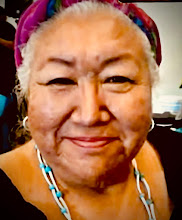 Memories of my late mother saying her dad, my grandfather taught her in a warning that the Dakota Medicine was good, but not anymore. As far back as 81 years ago, fake medicine people deceived their own people for money, power, and glory. Our grandmothers showed us through their prayers helping us celebrate love and helping us celebrate life within our families. Through my own lived experiences, I had to eliminate my own self-defeating behavior. Our people are depending on us to bring justice into our Indigenous Communities. Our Indigenous girls and women are going missing at an alarming rate and are being human trafficked. With little help in finding them or bringing their killers or abusers to justice, I started this blog. I never thought I would live to see such as year as 2023. Today, I feel blessed to be able to hold those who reached out to me in high regard. I am truly grateful, Creator’s Will guided me in my lifetime to see Nathan Chasing Horse arrested. And, yet at the same time, I grief for all his victims who died before they could see him brought to justice.
 https://abcnews.go.com/Nightline/video/dances-wolves-star-nathan-chasing-horse-accused-sexual-114067081?sfnsn=mo Throughout the decades of...
No comments:
Post a Comment