
Marina Crane (00:01)
Hello. It's Thursday, August sixth, and why am I posting two podcasts in one day? You ask me, I don't really know, but ⁓ little insight though. ⁓
Like I'm I'm I'm a senior and ⁓ I'm always surprised at the health of younger people like my nieces and nephews and ⁓ just the fact that by the time they're like in their forties and fifties they're they're they're like really aging more so than my generation or even my mother's generation and I
I don't know. It it amazes me. I think it's just a different type of upbringing or lifestyle 'cause when I was like five and six I used to go help my father picking snares like rabbits like we we used to collect rabbits and eat them. We ate off the land and you know, I used to hull water, pump pump water like either pump or from the spring, chop wood to fuel our wood stove.
if we had to go to the bathroom it had to be outside in an outhouse. Like people will say, Well you were really rugged and roughing it That was just a way of life and that's let that's like fifty years ago. And and just those five decades with the amount of like my nieces and nephews and the change of lifestyle ⁓ again too like the struggle even if
Like with my nieces and nephews, they haven't been in foster care, at least the one like recently since my like with my brother, ⁓ he his children were but that was because of a crime he committed. ⁓ but the majority of my nieces and nephews have had their families, like their my brothers and sisters to watch over them. So it I d I think it's just a different ⁓ pace of life and
again to even processed foods and things like that. It's it's amazing just just in my lifetime to see that happening. And and you know, I mean, what can we do? ⁓ we try to live every day the best and the fullest that we can. Now I'm going to play this tape that was sent to me by a f a friend of mine, a childhood friend, and it has to do with what's happening in Alberta.
So I'll I'll play it and then I'll c I'll do a c I'll have a comment, Terry, on it because it has to do it's called Large White Supremacist Meeting Shakes Residents of Alberta Town. And this is a CBC investigates Christine Pa Poslaing, Bret Braden Collier, and Jordan Pearson.
This is their article and I will have it read out loud and then I'll comment on it because this is gonna be the first time I'm hearing it as well as with you. Large white supremacist meeting shakes residents of Alberta Town. RCMP aware of Second Sons Canada monitoring rise of hate motivated crime and incidents.
Christian Poslang, Brendan Coulter, Jordan Pearson, CBC News, posted, August 6, 2026, 4 a.m. Eastern Daylight Time.
Residents of a small town outside Calgary are shocked to learn that Canada's most prominent white supremacist group held its second annual national meeting, where masked group members participated in military-style drills at a volunteer-run community center in early July. My first reaction is: that scares me, Lou Kewak, a Millerville area resident, told a CBC Calgary reporter. I didn't think that would come to our small little town in our backyard. Using visual clues and videos posted by the group, Second Sons Canada, CBC's
Visual investigations team identified the location of the gathering roughly 70 kilometers southwest of Calgary, near the hamlet of Millerville, Alta. Second Sons Canada was formed in 2024 and has chapters across the country. Founded by Jeremy Mackenzie, Second Sons describes itself as a men's nationalist club. But it more closely resembles the active club style model favored by the global white supremacist movement. Second Sons leaders have welcomed neo-Nazis into their ranks, called for mass deportation.
At gunpoint, of non-white people from Canada, and said Canadian politicians should be executed as traitors. Watch residents react to white supremacist group meetup. Videos and images from the Alberta event, posted by Second Sons on its social media accounts, show more than 60 members participating in exercises including army crawls and marching with cods. Mackenzie, an Afghanistan veteran, led a military-inspired chant that referenced fighting the Taliban and included a Second Sons slogan: Our People, Our Home, Our Future.
Group members also wore shirts with the slogan Old Stock Enforcer, emblazoned with cross swords behind an old school goalie mask. When they say old stock, they mean white and European people, said Evan Ballgord, executive director of the Canadian Anti-Hate Network. When they label themselves as enforcers, it's tied to their belief that they will have to use culture, politics, and violence to achieve their goal of a racist mass deportation of people who aren't old stock Canadian. Exposing the location.
Second Sons routinely publishes visuals of its exercises, but its members are often masked or digitally obscured, and the group does not publish the precise locations of its gatherings. The group did not identify the exact location of its July meetup, only saying that it took place in the foothills of Alberta. In a telegram post published weeks after the gathering took place, Mackenzie praised the group's members and said they had spent a weekend in activities that included friendly combat sports competition, organizational training, promotions, awards, excellent food.
Food and social time. In a video posted to Telegram recapping the weekend, Second Sun's members can be seen holding a banner with the traditional active club slogan Tribe and Train over an overpass on Highway 2 near Okotoks, Alta, a town about 47 kilometers south of Calgary. Using the clue as a lead, CBC matched the community center used by the group that weekend with Square Butte Hall near Millerville, located approximately 43 kilometers from Okotoks. A distinctive welcome arch belonging to the hall can be seen in shots of
Second Son's members arrayed in their ranks outdoors. Similarly, interior details of a clip showing Mackenzie leading members in a chant related to the war in Afghanistan match photos of the hall that can be seen on the venue's Facebook page. Square Butte Hall is a volunteer-run space that hosts community events like dances, recipe exchanges, and fire prevention training. The organization that booked the hall did not identify itself to us in any way, said Shauna Dunn, president of the hall's board of directors, in an emailed statement to say.
CBC. The Square Butte Community Association is committed to providing a respectful and inclusive community space, and our volunteers work hard to support the many positive events and activities that bring our community together. In a phone call with a CBC Calgary reporter, Dunn said an RCMP officer contacted the hall and asked for information about the Second Sons meetup. In a statement to CBC, the RCMP said it does not confirm or deny investigations, but that it is aware of the Second Sons.
Emphasized it does not investigate movements or ideologies, focusing on criminal activities by individuals or groups. But it said it is actively monitoring the rise of hate-motivated crime and incidents across the country. Residents shocked.
Millerville residents who spoke to CBC said they didn't know the second son's meetup had taken place, and were concerned about the group's presence in the community. Liana Bridgman, manager of local coffee shop Miss Marples, said she was absolutely shell-shocked that something like that would happen out here, calling it completely disturbing. Tim Baby, owner of the Millerville General Store, said he was really surprised. People out here are pretty accepting, but I think they'd still be quite shocked at seeing something like that going on, he said.
CBC reached out to the Foothills County Reeve, a position similar to mayor, for comment.
Foothills County recently became aware of activities that are reported to have occurred on private property, said Reeve Rob Seward. At this time, the county has not received any formal complaints and is not aware of any calls having been logged with staff regarding the matter. Second Sons Canada's use of the community hall fits a pattern CBC has observed elsewhere in Canada, where they book spaces like recreation centers without disclosing the full scope of the group's planned activities or overall aims. Last September, CBC News tracked a similar meeting in Southern.
Ontario to a Lions Club in Caledonia, Ontario. The Hall told CBC at the time that if staff had been aware that Second Sons was behind the booking, it would not have been approved. Booking community spaces under false pretenses is normal for white nationalist movements, because most spaces wouldn't agree to hold their events, said Ballgord of the Canadian Anti-Hate Network. Second Sons Canada did not respond to a request for comment from CBC.
So why was this sent me?
Again, I live only like I've gone to Millerville. I like I just I can drive to Millerville. ⁓ my one of the ladies that works at the health center here in my community lives in ⁓ High River. Like
There's black diamond, all this like it's a really nice scenic drive to go to Millerville. And they have these like ⁓ garden shops and s mark farmers markets in the spring and summer. ⁓ again, you know, I know they're saying, Well, we didn't know we didn't know they were being booked, but throughout my understanding of white supremacy and these hate groups, it's you know, it's a ske like
I remember decades ago people talking about red deer and just how much like they they have these hate groups in in red deer. And ⁓ again, you know, I mean, what can I say? Calgary's the most Americanized city in Canada and again, you know, it has to do with oil and ⁓ US influence and
r I think there's more ⁓ people that are from the United States living in Calgary. So of course if there's gonna be a a bunch of white supremacists they would have been all Americanized. That's my opinion. And at the same time too, when I lived in Utah I had an instructor who was a history inst in the history instructor, a PhD, and ⁓ he was raised Mormon.
but he really enjoyed ⁓ learning about survival techniques with indigenous people like hunting, skinning, trapping, ⁓ like a real outdoors type of guy. And he said that one of his class one of his students in one of his classes who had been ⁓ in the military 'cause they they they're talking about in this report about ⁓ somebody who had ⁓ served in Afghanistan or now if I'm wrong, I'm wrong, but
The reality of it is like you have ex military who've d who have had active service and this ⁓ h history instructor in Utah said one of his students sent to him, because he knew the instructor was into survival and hunting and tanning hides, and he said to the instructor, ⁓ he says, I'll ⁓ let's let's have a ⁓ exchange of knowledge here. You teach me how to hunt and skill a skin a deer and I'll teach you to kill a man. Like how
Like combat ready.
And the history instructor had said to the class, this particular student of his was associated with the white supremacy in in the state of Utah. So so there are fractions of people, like generations after generations, of white supremacists who teach and and enlist in the military and still recruit and and indoctrinate. Again, we're talking about cults. So, you know, it's not surprising in the sense for me, but I know the residents of military
and other people 'cause it's a quiet town, a quiet community. Like like they have rodeos and gar like they do gardening and like they're they live off the land and ⁓ and it's be it's a beautiful beautiful countryside, so
It amazes me and I I guess that the r one of the reasons why this was sent to me to read was because it's so close to my place, so close to my community. And and yet you know, my community we're 247. We we have people from all around the area and 'cause it's a we're right at the city limits of a half a ⁓ a mil over a million people. And and we've had like people ⁓ I think we had a drug somebody was ⁓ busted around
arrested just last week for drug drug trafficking in our community. So of course for me, ⁓ anytime I see ⁓ someone parked in certain psi places in my community, I'll take their driver's license down and report it to the tribal police. It's it's something that we're w well aware of but and again, too, a lot of a lot of times I think ⁓ we don't really
get the gist of it until like if we're all alone and and we sort of sense it
Like a like I said, it for me as an indigenous elder, and even with my late mother, I never allowed her I never would allow her to and I and I know it sounds like I'm really possessive and controlling, but it was for her own protection. Even ⁓ but she never did want to go on the LRT, the local transit or bus. But but for me if if we if she did, I was with her. Just just the notion that I've known how y people ⁓ have called down our elders. Even when I was
in my teens, you know, the teenage boys calling down Sutana elderly men, you know, at seven eleven's and you know, just the whole notion growing up my whole life being called a wagon burner, squaw, savage. It's you know, you you learn to you learn to either, you know, take the first punch and then and then deal with it.
White supremacy and this whole notion of military tactics is is the reality of what's being taught out there.
⁓ I know when Daniel Smith tells the chiefs of Treaty Seven to check themselves and even s he claiming that if there's any kind of protest that that they will arrest the chiefs of Alberta. So what does it mean for all these white supremacists? Not only that too, but you have Daniel Smith just this past ⁓ twenty four hours talking about the East Indian ⁓ students who are protesting in Calgary because they're denied their their ⁓ they're denied further education.
education and she says, well you've you've been educated now leave type of attitude. So the reality of it is like there's so much hate crime or hate speech for for people of color that and again to people of color for for what I'm saying is like we need to be more conscious of how ⁓ we're pitted against each other and that it's best to you know come together and say no the the systemic racism
isn't just for towards indigenous people or East Indian people or people from Africa or China or or the Caribbean, wherever wherever people immigrant immigrate from. Sometimes you have more ⁓ freedom than indigenous people. But but at the same time too, I I don't understand ⁓ well I shouldn't say I don't understand. Hate is hate.
I I cannot comprehend why someone would want to kill somebody only because they believe that the way we think or speak or say anything ⁓ is g is hurting them. ⁓ most of what I try to talk about in in terms of just hate, I you know,
Somebody I read someplace, I don't know if it was on TikTok or social media and they were talking about racism and they said the the only way to get rid of racism is for the old racists to die. And and so, you know, it's the same premise in terms of patriarchy. The only way to get rid of patriarchy is for all the patriarchs to die. Patriotism not patriotism, patriarchs like male male male dominance.
So I don't know. It o there's al the result is always like, okay, somebody dies out and something new comes into play. But ⁓ for me, ⁓ we're born into this. And and again, you know, it it's like recruiting, like trafficking, the majority of
w people who traffic, ⁓ groom or women doing this to children. And so like with white supremacy, I prob you know, it's probably the same statistics with you know, females educating their sons. I know ⁓ it's white fragility and and the un like the lack of
understanding s like that their culture isn't like the ⁓ main culture. There's so much diversity in in human in humans, even even amongst white people. So with that I you know, it it it amazes me. But yet it shouldn't. Like that's that's the reality of it is like when when people want something, they'll go to any lengths to to get it. And
No, that's I I like I said, I it was sent to me. I thought I'll I'll make a comment on it. And like it's all over, like in Vancouver, d different parts of Canada, these these
white supremacy groups pop up and they're always the underlying current of militia or people with guns. And in Canada, we're not like the United States where it's like we have to carry gr guns. I had I mean really when I lived in the United States I had I had roommates. I d I did not know all the time that they had a pistol under their driver's seat. I didn't know that until years later and she says, No, I have a pistol under my seat. ⁓ especially when you're coming from United States and
Canada, you've got declare your weapons. I was traveling with a fellow. Actually, you know, when I say I've hardly ever traveled with white men, well, I did travel with this one white man, but I was with traveling with his mother, and he was like 30, 33. And ⁓ when we came to the border, they they asked him if he had a weapon, and he says, like because he's former FBI, he said, yeah, he did. It's always surprising to me how casual and how people just
Just
accept ⁓ like a a gun, a firearm, a pistol. To me, to me, ⁓ I've seen the damage a bullet can do to a living living ⁓ th living animal. Because like I said, I've lived off the land and like to eat, like to to hunt deer and moose and elk. ⁓ you know, I've I've seen what bullets can do.
I I I cannot even equate killing something with a gun without eating it. So like that's how brutal I hear when I hear people talk about guns, that's what immediately comes to my mind that cannibalistic
way of of thinking and that it's so normalized this this this eat or be eaten mentality. I I mean you might not think and even understand it, but that's from my indigenous perspective when it comes to using
something to kill another living thing. Especially when, you know, like I like I said, just just in terms of health and how things have evolved from the time that I had to live off the land, even within my own family and how
how people have aged. So a lot of this this quick ⁓ fast food, fast kill, fast everything has really ⁓ aged a lot. Late a it's aging things. And I think I think this this thinking, this we'll call it a laziness or lack of critical thinking skills or just the lack of education or understanding of the diversity of just community.
I I I I tend to think ⁓ white supremacists are very limited in their how they self reflect or even ⁓ having networked with other other groups or of different cultures and different creeds. I it it amazes me as to how narrow minded or small minded people are. But but yet again too, even that, like there has to be some recognition of boundaries. ⁓
I I I can't comprehend that too because like I said, it's dangerous is especially if you're all by yourself.
So I wouldn't I wouldn't be so bold as to say these statements if I'm by myself in front of white supremacist. I'm not that stupid. I I I al I will always have a backup. I was I will always have someone to back me up. I will make sure and I have made sure that the friends I have do back me up. ⁓ like like like I said, ⁓ in the early ⁓ seventies when they used to have in the city, the city police and all the politicians or whatever, municipals
different different sections of communities. They they would make sure that indigenous people or minorities would not congregate into one. Now Calgary is so multicultural that like in the northeast section of the city it's there's more minorities. Years ago in the seventies they the city ⁓
people the white people in Calgary did not want to have minorities all in one ghetto or or community. And so even when it comes to nightclubs, I know if there were black nightclubs or minority nightclubs in Calgary, they they would disperse them. They they ⁓ know the police and everybody would make sure that that there wasn't one minority just you know sort of all congregating in one. And and this was the s this was so with the indigenous people in Calgary.
When they'd have the Calgary Stampede, you know, there there was there were a couple of bars where it were just indigenous, just hundreds of indigenous people. And so my cousins and I were there, and I had my old car, and of course, real Indian car, everybody packed into it. And we went into the it was like a place where you drink and dance. And we go downstairs, it was just hundreds of people dancing. And it was time to go home, and we were coming out, and I had a couple of cases of
We brought put them into the car. And I had ⁓ my younger brother and his friend Brad ⁓ they were stay they were in the vehicle waiting for us. And so when we came out they were they were there and ⁓ but there were five cars that circled my little car and they were all I don't know, they looked Italian or European. I don't know what their ethnic background was, but they looked like they were in their early twenties. And each of them they were like it was a c car. Well, like
The cars were the kind of cars where you had just the two doors and you'd have to push the seat open for somebody to sit in. And ⁓ so there were like I I know each of those cars had at least five men and one girl in the back. The what each of the cars had a ch had a female in the back seat, like sitting in the middle of the two guys.
And and they ⁓ when we came out into the car they started catcalling us, calling us down, squaw, everything. And one of my cousins, like my cousins were short petite women, you know, like like five two and maybe, you know, a hundred and hundred power like they were tiny women. And these these guys were like five s five three, maybe f you know, like they were they were big men, you know, like they looked like they were jocks or football players and they cut out and
They my cousins, you know, were standing their grounds and I could just see my my cousin sh taking her fist and thrusting it upward, trying to hit the guy's jaw or face. And and the guy just, you know, would just retaliate and just punch my cousin in the face and she'd go falling on the ground and she'd jump back up. And one of the one of the cousins, like the sister, she had these high heels on. Like again, we're nightclubbing. We're not we're not dressed in blue jeans.
jeans and, you know, ready for a a brawl. We were we were you know, my my cousins had lipsticks and earrings and we're all gussied up and well I'm saying gussied like as if we're ranchers, cowboys. And anyway,
It was it w it was becoming a massacre. I yelled to my my br younger brother and his friend, Go get help. Even though they couldn't go into the bar, at least they could run there and yell for somebody to go in and get help. And within a couple of minutes, maybe ten minutes, all a whole bunch of indigenous y men came and and just started helping us. 'Cause understand this, there were just five of us gir women, you know, y we we were in our early twenties as well.
Fighting fighting like these fifteen white men. You know, and and y as they were ⁓ getting back in their cars, you know, I I said, I said, you know, you've got you've got white girls in the back, like have them come out and fight us. You know, what's the matter? You you men are fighting us, women, you know, let's have it equal here. Let's do girl on girl. Come on then. You want to fight, you want to beat us up? And ⁓ this one white guy came
after me and he started kicking at me and I jumped back and back and this Blackfoot guy came and rescued me and the that white guy just took him to the ground and started pulverizing him. And and I thought, my goodness, he came here to rescue me. And I so I grabbed that white guy's hair and I just pulled pulled my pushed down squatting over his head, grabbing his hair, bouncing up and down
while he's trying to beat up this guy and he's trying to get away like the Blackfoot guy crawled up crawled out from underneath and I'm still holding on to that white guy. Because what the hell? He's trying to beat me up and this other guy comes in to rescue me. You know, like I'm like I said, I always ask for back up, even if it's for women and men. 'Cause like when when shit hits the fan and somebody's gonna kill you or beat the crap out of you, you want somebody to be there to back you up. I mean, like
I like I like when I talk about when I talk about matriarchy and when I'm saying, you know, we had to fight and and the the thing about it is it it was always the point it was always pointed in in systemic racism when you have people the white supremacists are gonna fight you, you you make them f hit fight first. You make them d hit the first punch. Because once they hit once they do that then you can fight back in self defence.
So that's what we did. That's how we've always handled white supremacists. But what can I say? You know, ⁓ very ⁓ what's the word when men h hit women? Very cowardly. Very cowardly ⁓ people because again, if you have nothing to hide, then why didn't you tell those community people who are renting you the hall w you w who you were?
Like when you hide your shit, that does not make you a man. That does not make you like an honorable man or woman. So for me, like I said, growing up in the city of Calgary and having white people just not wanting to have minorities
you know, group together again because white vigility or just the fact that they just think like, ⁓ you you know, you don't have any rights. ⁓ it it it it completely amazes me because, you know, here is my cousin, like they when everybody came out and started helping us, ⁓ they were p the everybody started g those white boys started getting into their cars and my one cousin just
went in to punch she she was like the girl in the middle, she's Come on, let's fight She went reached in to punch and the g the these guys grabbed her her punching arm, grabbed on to these men were holding on to her arm and the guy in the driver's seat started driving away and there's my poor cousin, her body she's just a small little thing. Her body was just hitting across that car, the side of the car as they're driving away with her and they spin around the
corner and they just let her go and she gets she rolls off. ⁓ we had to go to the I had to take her to the emergency and ⁓ and she she was okay, no broken bones.
⁓ but it was just the reality like that we went through that. It was like a shock to our system. And a few days or weeks later when we were driving in the downtown core, we saw one of the instigators of that of that ⁓ episode and he he as soon as he saw us he started running away. 'Cause he was one single white guy. You know, and you know, what can I say? You know, he was beating up on on five indigenous women in their early twenties. These are fifteen men.
Fifteen white men, young men, college age, university age. So yeah, you tell me, you know, ⁓ when it comes to murdered and missing indigenous women, or even the fact too, get this, we have such a high population of indigenous women, yet fifty percent are in the prison population.
as well as like ⁓ like for what? For for what reason? A as well as understand this too, and I didn't know this, but but a lot of this pretendianism, especially in the jails when they say there are over fifty percent that are indigenous. See, the reality of it is like when you're indigenous and you say you're white and and you want privilege because you've been robbed of your cultural identity, if you claim to be indigenous you can attend like sweats and
different programs, cultural programs that are i included too for indigenous people. So you have a lot of people pretending to be indigenous so that they can have these these privileges of like attending ⁓ sweats like outside of like that's part of the system. But but it you get these little perks because of intergenerational trauma. It's not to say they're indigenous, they're just pretending to be indigenous while they're in prison.
So, you know, I ⁓ it i it it amazes me that people ⁓ either are g grifting indigenous people or or they're white supremacists trying to trying to prove that they're better
And and yet at the same time they're there's always they're always trying to get something for nothing or or or benefit for for some knowledge that they want to associate with. I know that I know indigenous people, so I'm an expert, so pay me. it's it it amazes me. Like I said, I'm I'm ⁓ I'm not shocked at ⁓ the fact that there's a group of white supremacists
that had met in Millerville. I'm not shocked that there are white supremacists in Red Deer, nor am I surprised that there are white supremacists popping up all over Canada, especially when you have such an Amer a big neighbor as the United States and and what's happening there. But ⁓ indigenous people have been dealing with this for five hundred years. It's not it's not a question that it's gonna ever go away.
I just think the fact that there's so many immigrants that have come into the Americas
the I think the indigenous people are the most culturally diverse people now with so many like intermarriages with different cultures from around the world. Like I said, we we have really ⁓ you know our blood group and ⁓ have has I guess basically has has saved that old bloodline from Europe. But ⁓ that's just my opinion and again from a white pers white supremacist point of view, my opinion doesn't really mean much to them. But I hope it means
something to you and and that ⁓ you will take it in a in a good way. I know like I said I don't I don't know why sometimes sometimes when it comes to my podcast and things that I want to do or say it's it's
no I I there's there's ⁓
There there is a social media person who like I really like admire the things that she says and what she does. but I'm not too sure if let's see here if I can even get get some of what she's the content of what she was talking about.
if I can find the one that ta she does she does such a good ⁓ education in in indigenous cultures and indigenous ways of knowing that I quote her quite a bit. She's a young woman and she's not afraid to to talk about things. I think she's also served ⁓ in the military. Okay, so here's what she has to say. It's stop erasing our ancestors' pain.
This is why like with white supremacy they're constantly trying to erase do the eraser thing. So h let's see if we can pick this up here. She went and snitched out the s the mechicas to the Spaniards and betrayed ⁓ Mexica indigenous women and to Okay, she's talking about Mexica. He's talking about Mexica. Now I just wanna
like increase the volume so you can so you can hear it clearer. let's see if I can get this.
So at least he can hear the content.
Okay, let's try. ⁓ Mexica indigenous women and threw them under the bus. So she was an opportunist. So ⁓ this is what exactly the modern day Chicano feminists do. They they throw their own man under the bus and they go with these other men out here. So that's a malicious syndrome. For somebody who calls himself a conscious Chicano, why are you then pushing a Spanish narrative? See it wasn't Chicana feminists who changed the narrative. No. It was Mexican women all throughout the diaspora
Who have been working hard to reveal the truth. The truth that men, machismo men, choose not to believe. Men believing men over women is nothing new. And you continue to perpetuate rape culture and pedophilia when you push the Spanish narrative of who La Malinche was. Which by the way, her real name is Malanali, or also known as Malinsen.
Octavio Paz didn't tell the true history because while he called Malinsen a traitor, he failed to tell the world what her age was. She was twelve when she was given to Cortez and 15 when she had his first child, creating the mestizo race which was born out of rape. Pedophilia. Author and historian Matthew Restall, who wrote the book When Montezuma met Cortez, which was the book depicting the
The true history of the meetup, not the Spanish version of it, talks about the sex trafficking and the slavery of indigenous girls. Here's part of that speech. The darkest side to conquest and colonization in Mesoamerica, and I'm talking about the trafficking in indigenous girls as sex slaves, needed to be covered up. The solution? Surrender. Not just of Montezuma, but surrender in a larger sense, in a gendered and metaphorical sense. We're accustomed to seeing the early modern era as one of
Imperial expansion, of conquest and colonization, terms that evoke images of military encounters, of church building, of statecraft, and cultural accommodations. But consider the experience of indigenous women. Hundreds of thousands of them from Calusa, Maya, Mishtek, Muisca, Nahua, Taino, Tocabaga, and other indigenous communities were grabbed on shores, dragged from homes, or simply presented to their Spanish, Portuguese, or English capitals. Colonial Spanish laws often reveal not what was done in compliance with the law.
But what had been done so widely that a legal attempt was made, usually in vain, to stop it. That's the disturbing context behind a 1534 royal edict that indigenous slaves should be at least 14 years old. For the majority of enslaved indigenous women who appear in the Imperial Spanish historical records testified that they were taken from their homes and sold when they were children or young girls. Accurate numbers of enslaved indigenous children are impossible to obtain for the very reason why their stories have been absent from the historical record. Their captivity was
Almost always illegal. They were always removed from their home communities, often taken thousands of miles away. And as children, they had no legal recourse and few ways to remember their origins. So the testimonies that have survived are important and deeply disturbing. For example, I can only have time to give you one example. A woman who was simply known as Isabel La India, Isabel the Indian woman, testified in the Spanish port city of Cádiz in 1554 when she was about 30 years old, that she was taken from her home village in Mexico, quote, and I was brought.
to Spain by way of Veracruz and Havana when I was about fifteen, still a child, a young girl. And the boatswain sold me to another boatswain, and then to a ship captain who was Portuguese. And we docked in Lisbon, where I was sold to a Portuguese slave merchant who brought me to Cádiz.
Imagine the sheer terror experienced by Isabel and thousands of other girls taken by force from their homes, shipped around the Americas or across the Atlantic Ocean, distributed among Spanish men whose sensibilities had been made dull by years of combat and slave raiding. Most of the captives were younger than fifteen, more typically twelve years old, as was Malinche. Some, like Malinche and her fellow captives, were barted by caciques as the men who ruled indigenous communities, to secure goods, to secure temporary peace or secure the departure of the invaders, a trade consistently.
consistently depicted in early modern accounts and prints as a happy affair.
But a happy affair it was not. This was a multi-layered international system of deception that condemned children to years of abuse, leading to an adulthood of slavery. The Annals of Klatiloko, written in Nawak, noted that at the fall of Tenochtitlan in 1521, quote, some women escaped from being sieves and made sex slaves, that's my phrase, quote, by putting mud on their faces and dressing in rags. Well, Malinche had no such option.
Just twelve years old, she had to survive as best she could, even if that meant giving birth to her rapist's child when she was fourteen, and then seeing that child taken from her and sent to Spain while she was married off to a man chosen for her by her rapist. That this story was rewritten as a romance in the 19th century, and her role then judged as being traitorous in the 20th century surely only adds to the indignity and violence that she endured in her short life.
How awful the concept is of presenting all of that as a romance. Seeing through the mythologized Malinche to the enslaved girl of the 1520s helps us to rescue from the erased past the other 19 girls transferred to conquistadors, as well as the thousands of others who suffered similar fates. If Chigana women aren't fucking with Chigano men, it's because Chigano men can't let go of their machismo or their egos. Have a day. What is the Malinche syndrome? So
Like that's i k sh I enjoyed listening to her because when she's talking about Chicano men, y d use the parallel with indigenous men.
And and just the whole attitude of like the the trafficking, like take taking the girls like into residential schools, ⁓ trafficking them, like even right now the average age for children in foster homes indigenous is fourteen years old. So, you know, when we're looking at historical context and we're saying, Well, this happened in the fifteen hundreds, this is twenty twenty six. When we have white supremacists who, you know, think and b
believe a certain way. They're they're perpetuating this erasure culture of exactly what's been happening in terms of trafficking. Now, you know, people say, well, you know, what what is that what does it all have to do with with, you know, w white supremacists? Well, you you look at the Indian Act. This this was a a structure that was taking place in the fifteen hundreds.
My understanding of American history is like there are five conquering races, the Portuguese, the Dutch, the Spaniards, the English and the French. Out of those I think it was the Dutch or the Portuguese that were the worst, worse than the Spaniards. Okay, so we're just d talking about Chicano and we're talking about like the reality of the of them taking children to Spain.
And and and this was this was a conquering race that wasn't even the worst. The Dutch and the Portuguese were worse than the Spaniards. Then the then the English and then the French. So even you look at colonized Canada and you look at the whole notion of like ⁓ slavery, why do you think they they did industrial schools?
You know, they they were making slaves out of indigenous children by educating them how to be ranchers and farmers, not not for their own gain, because they were considered guardians of the of Canada. Canada was looking after our trust fund. They were guardians and they wanted to make sure that they had l slave labor. And so they created these these schools to to to make sure that we became that we were good slaves. And then because they were afraid that that these
boys who were gonna get educated in these industrial schools were gonna come back to the r the reserves and marry and and be converted back to savages. It was like, no, all our work to have s cheap labor is going to be for naught. And so of course they they considered indigenous people as nothing but slaves.
I mean, you even look at indigenous women like my mother, my grandmother, the what kind of work did they do? They were h farmers, like ⁓ maids for farmers, housekeepers. The same with the Chicano the K Ch Chicana. Everything that has to do with minorities and indigenous people in terms of trafficking, making making sure that that the male diaspora well whatever you call it, the whole
facade of of supremacy was was in place and that women were just, you know, like nothing. And that and that and what they had to endure. So that's why as a as a f indigenous woman, when I talk about my mother, talk about my aunts and my aunties, and and for me
You know, when when I hear and I see something just in the pitch of a voice, just in the n how English is spoken, I will confront it. And I I'd have my mom and my auntie say, Don't say anything. You're like they they they they wanted to they wanted to fawn. They were fawning. My see, that's part of it too, is this fawning, this grooming, not to say anything when you're in Indian residential school 'cause you don't want to be punished. I know when I was in Indian residential school I just slept there.
We were bust into the into the sis the system in the si in the town of Portugal Prairie. The the whole fawning part of it too is like it was it was it was, you know, like don't don't cr don't be don't say anything, don't challenge anything, 'cause you can get punished. I ⁓ like I ⁓
belonged to a glee club and and I wanted ⁓ we had to have our our skirts an inch below our knee and I wanted it at my knee level and I had to get permission. So I went per got permission from the head administrator and the vice administrator. The administrator's wife was the one who was taking our measurements and when I said, Well I got permission because that was the protocol that was given to me as a child, I was sixteen years old, fifteen, sixteen years old, just following the the
the instructions of h how I wanted to get my my my skirt tailored. Like how dare I? She slapped me in the face and she put me on punishment for the rest of the year. And I couldn't go traveling with with the glee club that I'd practiced with. The psychological abuse that I received
Like understand this. I'd already been going to white schools. I'd already been with white kids and white teachers. I you know, the fact that I could stand up to a white administrator
And the fact that my parents had said to me and taught me like all these poverty in India and South America and and just the like how poor, how poor the world was and how populated it was. So when I had somebody trying to tell me like that I that I didn't have any rights to to express myself, that's why that's why f for for me narrative is so important.
especially if you've been in Indian residential school, even though I didn't I didn't have my education there, I was bust in. But it was the fact that I had been already socialized around white people as opposed to the majority of the population of the other indigenous kids that I was with who had never been around white people. And and for me, no, I I did not I I I would not fawn. Would not. I I just couldn't.
it was impossible for me to do that. Again, like I like I said in the previous podcast, I had uncles who who didn't know how to ⁓ treat a a a girl and maybe rightfully so because, you know, I I just didn't have that fear. Like ⁓ like I wasn't socialized that way. And I'm grateful that that I had uncles who stood up and and talked that weren't afraid to talk.
So I don't know when I when I talk about just the historical context of human trafficking and the nature of people wanting to keep people in their place. ⁓ that's why when when I when I hear talk about white supremacy and how ⁓ you have the white vigility of wanting to keep minorities in place
⁓ like I said, ⁓ you know, w the denial of the genocide and the repercussions of ⁓ England, like the like I said, Portuguese, Dutch, Spanish, English and the French
Now a lot of even with the French, even though they weren't as bad as the other four colonizing st countries, the French in themselves too, a lot of the ⁓ result of children, the children from from French fathers, Scottish fathers, you know, white white settlers, farmers, fur traders, th some the majority of it was like rape culture. You know, so this whole rape culture in in terms of ⁓ like how how to live
the the saving grace I think with the French people, even though today in Quebec or like they really do not like indigenous people. But yet the histor history though is that if it if the French first fur traders were were going to even survive in the trading company of the Hudson's Bay or trapping, they would have had to have adapted to the indigenous ways of living with their indigenous wives. So so that's why they they they
learned how to live as indigenous people and that's why they call them Métis. Okay, which the United States doesn't recognize that. Again, you know, the ri United States was basically what, Spanish and English colonizers. Which again in South America there's Dutch and Portuguese. So take it for what it is, there the reality of the history and the context of how ⁓ human trafficking
or the legacy of human trafficking is covered up in in disguised by law, by British law called the Indian Act, which was basically to
keep indigenous people as slaves. And even too, like when they first brought slaves over, when when the indigenous people ⁓ ran away, they ran away into other indigenous communities and were able to hide. Whereas black people when they ran away from the slave ships, it was really difficult for them to to to hide because they didn't know the land. And a at the same time too, understand this, our genetics was so vulnerable
to European diseases that slave owners thought that we weren't good stock because we we wouldn't survive the the diseases that that were brought into the Americas. Whereas black slaves because they'd been to a the that whole old world culture, the whole ⁓ what do they call it
evolution or like the way people intermarry and all this for thousands of years, they had already been genetically ⁓ modified to live with all those diseases, whereas in the Americas it wasn't. So so we had all those going against us. And and even then in hindsight, when we talk about alcohol and drug abuse, and when we're talking about like what, in fifty years ago they said they didn't think smoking was so dangerous and they found out
Like what it does to heart disease. And I briefly talk about Barney Miller, who had the first artificial heart transplant in Utah, when he died and they did the autopsy. It wasn't the artificial heart that was dying, it was the organs around the heart that had that had been slowly dying because of the cigarette smoke, the carcinogens that were had been in the bloodstream. Also, too, ⁓ one of the fellows that had open heart surgery when in recovery, the neck his next door neighbor.
was an elderly man who had smoked most of his life and they had tried to do the bypass and establish ⁓ blood vessels attached to the heart, like a triple bypass. And they had to talk to his children. And here's this fellow relating to he says, yes, I was in recovery and I heard the doctor talking to to this man's children and saying, his adult children saying we can't do anything. All the smoking that had happened with with this man and his heart when we tried to ⁓
attached blood vessels to the heart, they would disintegrate. Every blood vessel that we tried would disintegrate. We cannot do anything. So they had to let them know that they had to let this man pass away because the the blood vessels or even around the heart were weren't weren't they were so fragile that they would disintegrate when when tr trying to be sutured. Like all this that they didn't understand about the causes of tobacco, cigarettes
Yeah.
Marina Crane (53:57)
So when I talk about like carcinogens and the heart and that all of a sudden like they had to put labels on cigarettes that it's bad for you. So this is the same premise that's falling with alcohol and alcohol abuse. ⁓ you know, they're they're finding out ⁓ the things that are happening, especially in the aging process.
and and just what it does to the human brain. Like even like what if you're just if you drink maybe three or four glasses of alcohol a week o like throughout your lifetime, it takes at least a year of not drinking for the your brain to totally detox from the chemical. And again too, as you're aging the hippocampus, the wall between the right and left hemisphere, ⁓ the structure of that ⁓ boundary ⁓ weakens just like the
Just like the the the blood vessels when you're having cigarettes, this that lining or that barrier is weakened bec from alcohol use. ⁓ so many things that are happening right now in terms of what like is is is ⁓ not like like is not good for the human body.
Again, I'm I'm only reflecting this in terms of indigenous ways of knowing because we we didn't have alcohol or drugs. We didn't domesticate the animal. We didn't have you know, we had clean drinking water, we didn't have a hundred years of, you know, ⁓ drinking ale like they did in England. All these ⁓ social constructs and diseases that they brought off over to the Americas, understand this, this is only five hundred years. We're not talking a thousand to five a thousand years. We're we're talking just
you know, half of that. Like five hundred years. ⁓ even a hundred like the Americas. The United States is two hundred and fifty years old. ⁓ this whole trafficking th that's five hundred years even even the the mentality of of keeping that construct in place just for slavery, for cheap labor. ⁓
Th these things are all part of this whole construct of ⁓ industrial school, Indian residential school, the Indian Act, keeping keeping us under this law, it's like a a slavery law.
And how we struggle just to get one law changed. Like I said, the one of grandmothering or getting people on the general ⁓ indigenous list in in Ottawa, that's that's still going before before Parliament to change, as well as having sovereignty over the rights of our children, is just happening now in 2026. So when you have white fagility and you have ⁓ systemic racism and you have a group of people who claim to be ⁓ more intelligent, more superior.
From what standpoint? From a standpoint of one 500 years? Or from a standpoint of 10,000 or 20,000 years? The the actual properties of of why indigenous people died off so much, like the first 100 years. The first 100 years they killed five generations of children.
They tried so hard to to enslave us, but because the majority of the people who were trading carried these diseases a and and killed us. So we weren't good slaves. But at the same time too, even trafficking girls as as you know, as young as four t thirteen, fourteen, twelve, that's been going on since five hundred years.
So who who is who is the most ⁓ like what's happening today, even with the Epstein files, ⁓ with ⁓ white supremacy, with white fragility, ⁓ you know, people talking about ⁓ pedophiles, pedophilia. This this is just it's a common it's it's it's so common throughout our ⁓ history in terms of humanity that we we do have to talk about it.
We do have to address it and we do have to call it what it is, and that it's it's not gonna happen over overnight. Look, five hundred years has passed. How how many indigenous children are still how and why are indigenous women being still hunted? Like how civilized are we? And is this like what makes ⁓ the Americas great? Is hunting the most vulnerable women and children? Understand this too, the United States
Ka the United States is the greatest country for children going missing. So you know, we've got to step back and look and say, yeah, we have jobs, we get do all this stuff, all these policies and and yet who are the victims? The children are. So we have to really take a look at that, especially now too with this climate changing the way it is.
What they said the last El Nino was a hundred and fifty years ago that killed fifty million people, and that like this El Nino that's coming up is is just the beginning. So, you know, we have to really take a look at how we're looking after ⁓ our women and children. Because it's it's an it's an analogy of how we look after Mother Earth and all the living things on earth. You know, like ⁓
Look at the dinosaurs. They lived how many millions of years, and we've only been here just seconds on the human evolutionary scale. Like the earth will take care of itself. Mother Earth will always be here. And whatever form we take, whatever incarnation we we evolved to in this on on this planet, I I think the the great mystery is a whole part of it.
And the more that we are in denial of this connection that we have, the connection we have with every human being, and I think more so with women in the sense of how we choose how we choose to live our lives in in terms of who who we choose to have children with. The the the this connection, this interca interconnection with energies and and just healing properties.
Sometimes it takes a great change for for people to evolve. And s just look at the Vietnam War and all those thousands of men who came back who were changed for the rest of their lives. I'm not saying that that's the answer to have war and have people change that way. We don't need to go to that extent.
But the reality of it is that as our children are being terrorized, murdered, ⁓ every every second of the day in this planet, that we have to understand what i what is it that we're holding on to. I'm an elder. I've lived so long in this protected space, and I continue to try and live longer, even though all around me people are abusing
the way of life, looking not looking after them their health, not understanding their s the way their central nervous system needs to be balanced, what mental health is. You know, far from our saving graces in in what we do and how we understand things, but we really have to question just just our day to day interactions with people.
And and I I'm I'm so totally grateful for
Like like again, the social media and all these young indigenous people who are ⁓ waking me up in a sense of curiosity and understanding from the limited knowledge that I've had in universities and applying it to how I see things, especially when it comes to ritual abuse and cults and the fact that that the United States has been very sophisticated in their craft of war and how they've used ⁓ forensic psychologists to to copy.
And analyze leaders. And it's the same thing here in our communities when we have million, you know, we have millionaires, we have these million-dollar oil companies and people financing white supremacists and separatist movements. When we realize, like, my goodness, these oil companies are hiring educated ⁓ forensic people to have analysis of our leaders, our indigenous leaders, or people who aren't even indigenous.
who it could be minorities running for politics in Alberta, you know, the the undergr underlying root of all of it is is the psychology of educated people being paid to give advice to people who want to control other people. And and that's not what it's supposed to be for. It's supposed to be there to help heal people.
So as indigenous people trying and doing the grassroots like with Nietzsche Institute, ⁓ like I'm just adding that on to the Indi in my initial podcast and hoping that all this makes sense to somebody out there. You know that you know white supremacy has been around for a long time and how it percolates now in certain areas across Canada.
is is just part of part of what ⁓ has already been existing here.


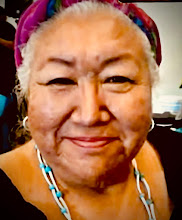 Memories of my late mother saying her dad, my grandfather taught her in a warning that the Dakota Medicine was good, but not anymore. As far back as 81 years ago, fake medicine people deceived their own people for money, power, and glory. Our grandmothers showed us through their prayers helping us celebrate love and helping us celebrate life within our families. Through my own lived experiences, I had to eliminate my own self-defeating behavior. Our people are depending on us to bring justice into our Indigenous Communities. Our Indigenous girls and women are going missing at an alarming rate and are being human trafficked. With little help in finding them or bringing their killers or abusers to justice, I started this blog. I never thought I would live to see such as year as 2023. Today, I feel blessed to be able to hold those who reached out to me in high regard. I am truly grateful, Creator’s Will guided me in my lifetime to see Nathan Chasing Horse arrested. And, yet at the same time, I grief for all his victims who died before they could see him brought to justice.
 https://abcnews.go.com/Nightline/video/dances-wolves-star-nathan-chasing-horse-accused-sexual-114067081?sfnsn=mo Throughout the decades of...
No comments:
Post a Comment