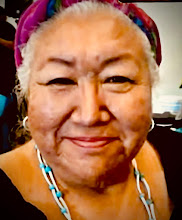
Thank you for sharing the transcript. I hear several intertwined themes in Marina Crane's reflection, and they seem to be less about any single video and more about making sense of decades of experience, trauma, community dynamics, accountability, and personal boundaries.
A few themes stand out:
1. Boundaries and self-protection
One of the strongest threads is Marina's explanation of why she has chosen to distance herself from certain people in her community. Her argument is that self-respect sometimes requires limiting contact with people whose behavior she experiences as harmful, manipulative, dismissive, or chronically unhealthy.
Whether someone agrees with all of her conclusions or not, the underlying message is clear:
Healing is not just forgiveness. Sometimes healing includes boundaries.
2. Narcissism as a framework
Marina uses narcissism as a lens through which she interprets many experiences:
community conflicts
family dynamics
enabling behavior
public figures
abusive relationships
responses to accountability
One thing worth noting is that some of the speakers she cites make very broad claims about women, men, narcissism, and parenting. Those claims are opinions rather than established psychological facts.
For example, statements such as:
"women are a thousand times more narcissistic than men"
women are primarily responsible for violent sons
certain gender traits explain most social problems
are not conclusions supported by mainstream psychological research.
What does align with established psychology is the broader idea that:
unresolved trauma can influence parenting,
people sometimes avoid self-reflection,
shame can produce defensiveness,
unhealthy family patterns can repeat across generations.
3. The Nathan Chasing Horse experience
A significant emotional center of the transcript is Marina's processing of the events surrounding Nathan Chasing Horse.
What comes through is that she sees:
grooming,
coercive influence,
community denial,
failures of accountability,
and harm to vulnerable young people
as examples of what happens when power goes unquestioned.
Her reflections suggest she is still trying to understand not only the actions of the perpetrator, but also why so many people ignored warning signs.
4. Self-reflection versus blame
An interesting tension appears throughout the podcast.
On one hand, Marina emphasizes personal responsibility and self-reflection.
On the other hand, many parts of the discussion focus heavily on the failures of other people.
The most constructive takeaway may actually be the one she repeats several times:
"You have to look at yourself."
That idea is consistent with many therapeutic approaches. Growth often begins when people ask:
What are my patterns?
Why do I keep entering similar situations?
What am I tolerating?
What boundaries do I need?
5. Trauma, colonization, and Indigenous identity
The transcript repeatedly connects present-day struggles to:
intergenerational trauma,
colonial violence,
missing and murdered Indigenous women,
systemic racism,
cultural disruption,
and the loss of traditional community structures.
Whether one agrees with every interpretation offered, Marina's perspective is clearly rooted in the belief that historical harms continue to shape current social realities.
6. Love, limerence, and attachment
The section discussing Helen Fisher's work shifts the conversation in an important direction.
The idea there is that:
romantic attraction can feel addictive,
rejection can intensify obsession,
emotional attachment affects brain reward systems,
and people often confuse different experiences such as:
attraction,
limerence,
attachment,
sex,
and love.
This seems central to Marina's larger message that understanding ourselves is essential before we can build healthy relationships.
My overall impression
At its core, this transcript feels like a personal attempt to answer the question:
"What have I learned after decades of living through trauma, conflict, grief, community politics, and advocacy?"
Marina's answer appears to be:
protect your boundaries,
examine your own behavior,
don't ignore warning signs,
healing takes work,
love should not require self-betrayal,
and accountability matters more than appearances.
Even where some specific claims about narcissism, gender, or psychology are debatable, the deeper message is a call for self-awareness, personal responsibility, and community healing.
If you'd like, I can also provide a more formal thematic analysis of the transcript, separating evidence-based psychological concepts from personal interpretations and opinions.
Marina Crane (00:01.378)
Good afternoon. it's a little after one thirty Mountain Standard Time, October tenth. Marina Crane here. So I'm going to play two videos. One is about maybe three minutes and the other one's almost ten minutes. And I'll break into each one in segments because I I want to it's sort of like a deconstruction of things that have happened to me this past year in terms of narcissistic behavior.
and and the we'll say the epiphany or the aha moment of like clarity. Because there are some things like when you hear on my podcast and again, hello to my the people who who have been viewing me and the reality is like a lot of people are more interested in the content of systemic racism in terms of how racism affects my community as well as
Just the systemic racism and and how I I deal with it or cope with it or how I see my environment within my First Nations community. Mind you I'm I'm not Inuit or Metis, but I I sort of drift on the side of Metis too because of my Sioux Sioux background, 'cause there are like seven nine Sioux tribes in Canada that weren't even recognized as indigenous until like three years ago. So their status were
more like Idneywith Metis and so I I can relate to to that part. But what I what I'm trying to do in this podcast is to describe the r rationale behind why I chose to just put some boundaries down when it comes to women that I've grown up with in my community. Because I think by the time we become seniors, like sixteen over, sixty five and over, seventeen over
even even like as far as your fifties, there are a lot of regretful moments that I don't think that you s that older women get. So that's why I focus more on younger people, like teenagers, young adults, women in their thirties, so that I I can get the influence that that it's important to deconstruct or or tr choose to
Marina Crane (02:28.678)
have self-eliminating, defeating behavior, like to understand yourself. The analogy was like Arnold Schwarzenegger. He grew up his father was a Nazi and he he he describes in his autobiography how he had to really work at dismantling the belief systems of his father that he imprinted on him. And he equated it to like his his physical, like the the how long it
took for him to bodybuild. And so that's the the the whole point is you gotta really work at it. And and I find that by the time a person is a senior, you're you're basically battle fatigued, exhausted, and you just like leave it throw it in the wind like a breeze or a shaft in the wind. Maybe that's where the analogy comes from. But part of my podcast is is to focus on my own personal journey so that I'm
reflecting to younger people that it is possible and but again to
It has to do with respect and self respect I think is really crucial because it's one thing to talk about it, but it's another thing to actually feel it. I think it's like like sex. You really have to work at sex to to really enjoy it. And and it's the same thing with all things. You really have to work at at things that you you want to understand. It's not the brain is a muscle, you have to exercise that. So the first one
that I'm going to show or talk about is a young woman who I put on the tape recorder and she's talking about narcissistic behavior. And even though as indigenous women we don't realize it, we we are participating in a narcissistic behavior. So in the past six months, maybe even less too, I've had to put boundaries down and I've even had to stop my contact with certain individuals. And
Marina Crane (04:32.205)
And it's because of their narcissistic behavior. Because by the time you get to like sixty five and you've worked your entire life, that's a time to relax and enjoy the rest of your life because you're giving it up to the next generation. However, I s truly believe that if you are narcissistic and you're holding on to everything, you can't really enjoy your life. And and you have this codependency with your adult children who are in their forties and you're still paying their bills.
Anyway, like look at how much I'm just cringing here. So I'll start it off and I said like I'll I'll put I'll stop and go and stop and go. and this weekend is like a a Thanksgiving weekend in Canada here. So I'm trying to fight off this cold as well. What do you think the most uncom uncomfortable truth about women? So the the lady in question here,
She's I thought I thought I had this all set up. I'm sorry for I'm sorry for doing this to you again. But the reality of it is like a lot of times a lot of times I I like I I don't know how to edit my like my audio here. So you you've gotta bear with me. But the fur like I said, the first context is going to be from a lady who who's talking about narcissism.
And the next one is gonna a man who's going to deconstruct Trump. Now the reason too is like, okay, yes, he was expected to win the Nobel Peace Prize, but it's the rebuttal, like it's the reality of of just the deconstruction of the psychology of narcissism. And and the fact that there are different different discourses or different segments of narcissism si narcissistic behavior.
Again, I'm just grateful that I'm able to find these on social media. Think the most uncom uncomfortable truth about women is that that that you really that it's rarely spoken about. That women are a thousand times more narcissistic than males. I don't think I think the entire human species is a narcissistic species. The whole species is narcissistic. But I believe that the
Marina Crane (07:07.714)
I'm sorry, it just it seems to pop in and pop out. And like I like if I can even get it to just stay so that you could hear it all, well s well that'll be a success. But but when she says that all human beings are narcissistic, that's why when I focus on healthy human sexuality and I use like it's a seesaw before be between eroti eroti and limerence. So if we're all narcissistic then
We're on this balance the seesaw throughout our whole lives. And and so that's why I'm using the analogy because when you it comes to murdered and missing indigenous women, the the the the seesaw or the goes on the extreme on irodomania. And and and that's the that's the critical part where I'm trying to educate people on on the dynamics of how people perceive like a group of people that that like that
didn't even know this was happening. We're born into it. Like for like since what the past five hundred years. But I really appreciate all the content from other women of color and just the dynamics of everything that we go through as as women. So we'll go through this again. Yes.
that women are a thousand times more narcissistic than males. I don't think I think the entire human species is a narcissistic species. The whole species is narcissistic. But I believe that the most uncomfortable truth for the average person is that women are actually narcissistic, more narcissistic than males.
It's not that males are not narcissistic, it's that women are a thousand times more narcissistic. I've never heard a saying that, you just have to love your father no matter what he did because that's your only dad. You only get one. I've never heard that. I always hear it about a woman. No matter what a mother did to her children, no matter what, that's your mama. You still need to love your mom, no matter what she did. I hear women say,
Marina Crane (09:26.016)
No matter what a woman does, a man should never put his hands on her.
Marina Crane (09:33.718)
And women believe they can do anything to you and expect that you accept it and still worship the ground they walk on. So if anything is going to improve the truth about the psychology of women has to be revealed. It's a dark place. It's not it's not peaches and cream because women think that they can abuse you, women think that they can talk to you any kind of way.
They think they can put their hands on you and then they expect you to still speak of them as angels. That's bad because that behavior trickles down to their children. So they end up ab their children. Women are very to their children and they don't even understand in what ways they're to their children. This is abusive to their children. They can't tell them anything because they do no wrong in their eyes.
I try to tell women that even when it comes to their sons, most women set their sons up for failure. And they don't even understand why they set their sons up for failure. And they don't understand this because they don't understand the nature of the male, the physiology, the neurolo the neurology of the male. They don't understand the male's existence. Healthy human sexuality, learn about it. Parents, especially specifically women.
Because it it's most most single parents are women.
You hear them say something like, I just wanted to give my child the things I never had.
Marina Crane (11:16.032)
And if it's a woman saying that and she has a son, this is bad because you're not thinking about the development of your child. You're trying to make up for your own childhood through your child.
Giving them things that you never had, that you wanted. You're not giving them what they need. You're not tailoring the new environment or your behaviors or your parenting style around what your current child needs. You are thinking about yourself. Well, if you're a woman and you have a son, you are subconsciously thinking of your son as your daughter, yourself. You're treating him like a girl.
Because you were a girl and you start to give the children things that they don't need that ends up sabotaging the development of the child. And they are totally unaware of this. So I believe that more information, more knowledge, more education can help
With women seeing their own psyche. Relationships should be a mirror to the individual. Every person that you get with is going to reflect back to you who you are. You have to be attuned enough to know that, hmm, this stuff that I'm getting back, it is because I'm projecting something and I'm getting feedback. What is it that I'm doing? What is it about my thought process that's bringing this back to me? What is drawing?
Me to the types of relationships, what is it that is showing me? People don't use relationships as feedback as they should, but they give you information that you really need to not only help yourself but to help your offspring. And so for women, I believe, since they are the first teachers of the child, that there needs to be far more education.
Marina Crane (13:24.116)
in her direction about not only the nature of herself, but the nature of her sons, the male. Women are inadvertently
doing things that harms the male's development and then they'll get out and say, That ain't my fault. He needs to man up.
We need to stop the conversation about what men need to do. Do men have their faults? Absolutely. I've spoken on these faults. I've called out a lot of male behavior. I mean, I wrote a book called 41 Shades Men to Pursuit to Sedo and Use You. But what's the conversation on women? Because they are the first teachers of the child, you know? so I feel sorry for a lot of the children, especially the involuntary celibates.
Because they are they are a danger and women don't understand. These are your signs. These are your sons. Women procreate indiscriminatively. They don't have a they don't have they don't value the things that are valuable. And a lot of times women are unable to recognize threats. So women are attracted to like the worst of the worst. They like criminals. They do like criminals. They like
They like psychopaths. They like a lot of things and these traits end up getting passed down to their offspring. So what happens is you choose jacked up genetics and now your son is socially awkward. But he's still a male. And he's still gonna have so desires. And then you you you don't nurture him the correct way and you make him weak.
Marina Crane (15:22.59)
unable to fight the woes and the challenges in society. And then he gets out here and struggles with the most fundamental human need, especially the male need. You create a violent and a very dangerous person to come out into the world. What do you think the most uncom uncomfortable truth? So the reason I find this article
her interesting it she's called the self the soft under bell wipe underbelly. And so the reason I'm struggling with this too is like twenty years ago w we have the group of mothers whose daughters were struggling and they were like fourteen, fifteen, sixteen year old daughters. Now twenty years later I've had to put boundaries down with with quite a few of these women.
All because their behavior is still the same. They are still they they can't s they can't set set sense threats. They're attracted to the criminal. They're attracted to the psychopath. And back then they were attracted to Nathan Chasinghorse. So also too, like I've I've met Nathan Chasing Horse's mother. So when I'm talking about like the average woman or when she talks about the average woman, like no matter what she does, she's like
Like no matter what she does, she's gotta be perceived as being the good mother. Everything in her her narcissistic behavior is like, I'm doing this because I'm a good mother. I'm putting my my children into these ceremonies and and I'm doing the best thing because I'm with other women who are who are doing the same thing. We are all good mothers. Even when they're giving their daughters to Nathan Chasing Horse, they're they're underage
non consensual daughters to him, they still perceive themselves as being good women. They either because they can do anything, because anything that they can do to worship the ground they walk on. So the like what even when I'm warning them that going, no, no, like, yeah, I I understand, I hear you. In the meantime, they're still attending his ceremonies because they they want to look as holy women. See and and that's the whole c deconstruction of it.
Marina Crane (17:46.828)
Because back then too that that young woman who who initiated her Facebook and one of the victims, her mother when sh her mother was here and the way she talked about her daughter as like a holy child, and the fact is like she has to have been a good mother too, because why else would Nathan Chasing horse be interested in worshiping her and her daughter? So so Nathan Chasinghorse
had had been feeding into this narcissistic behavior. because again, the like again, she isn't the only one. Even even in the sentencing, she got up and she said, I I tried to kill myself. Yet it has nothing to do with her. Everything had to do with her daughter. And and that's why I'm saying all these young women who are in their thirties now and and their moms like were instrumental in in like wanting to have
them attend ceremony with Nathan Chasing Horse. Yet he knew how to how to engage with them and build them up as if they were like so so such dynamic women that he would worship them. And at the same time he's doing that, he they're giving him their daughters because a good mother would do that. So anyway, so
A lot of the talk that I the lot of the things that I do in my podcast in terms of self-reflection, eliminating self-defeating behavior, narcissism, erotia, limerence, all these words are psychological words and and what even when I say it's important to be a collective holistic community, a lot of this times too is that these group of women, even though they're all joining together like a support group.
It's it's the inability to to actually work at it. Because it's a lot easier to just sit and gossip than to actually use your brain and look at your own self and wonder why the hell did I give my daughter up to Nathan Chasing Horse? Or why did I keep on persisting when I knew he was dangerous and yet my daughter was so in love and infatuated with him that I wanted her to continue going to his his ceremonies. Like it like the struggle
Marina Crane (20:08.33)
in in a woman the narcissistic behavior to make it look like everything is okay and she's the best mother that she can do because she's not i looking at herself. And and and the thing is like I I like the point where the lady is talking about her the when you look at it in terms of men, the sons of these women. And like I said, I I've had to put boundaries down with childhood friends, with relations
Who have the same dynamics of how they treated their sons. And believe me, it's it's heartbreaking. Because I've I made like I knew them when I was a teenager, when I was a child, and and then I reacquainted myself with them. And then to know how they they still enable their sons. I mean, they they pay for their bills. And her son lives there. And he he
He drinks so much he goes he on the weekends he can go on the top of the roof and terrorize the entire community. Like like I like I I I kid you not. I mean I think the most uncomforta even even the point of like one of my relatives, her s her two sons are in their forties and and like they're living with her the one's living with her in the after he got out of jail. Now the other son is in jail. And I have another friend who's like
I think she had one son and she's like 77 and she's still working. All these women I'm talking about are still working when they should be retired. They're like like battle fatigue. But it has to do with their the the the narcissism within themselves. That like the the reality is like they're making these their sons isolated. I I see it within my own family. Like the men isolate themselves and they just stay home.
and and don't socialize. They don't go out there and actually, you know, enjoy the company of other people, like human sexuality. The basic basic concepts of what it is to be a healthy male. Like as as narcissistic women like to do that. But yet at the same time I want I also want you to I also want you to understand too like like I said there's there's even the whole nature of narcissism.
Marina Crane (22:31.946)
Even even when you're open and rich like Trump, there's this whole okay, I'm going to play the one on Trump, but I want you to imagine that Trump is not a male. I want you to look at him as being a female, because I'm still harping on women. Because it's crucial because when women are doing this and and look at how the outcome of their sons violent. Violent. Like like the outcome of Nathan chasing horse's mother.
Or the outcome of so and so, like or men who go to prison, like even my own mother with my brother who who served four years in in prison. All these things, like I I took care of my mother for over ten years. And and basically I put boundaries down so my own brothers wouldn't abuse our mother verbally, emotionally. So I'm I'm talking from like hardcore here, because even when I'm making the alert of what's happening or what was happening with my niece.
in terms of being trafficked, and then trying to put trying to have understanding and support when nobody was listening. It isn't a r I I'm deconstructing everything because at the sentencing of Nathan Chasinghorse this year, the things that I had to have closure on, and this podcast is part of that. So again, I'm gonna play this, but I want you to really work at thinking, instead of this man being Trump, think of Trump as being a woman, a mother of sons and daughters.
And I know he's got his own children, but I want you to think of it in terms of your own relationships with other women and and your own relationships too with your sons and daughters, okay? And I'm gonna try and make it so that you understand for each of these diagnoses of narcissism, I've had to put boundaries down, like I said, throughout this year, with with with people with people I've reacquainted with or or just people who
I've basically put myself out there to help them. But but the reality of it is they should have done this when when they were in their thirties, when their children were just babies. It it's it's a really difficult thing to to try and have or teach somebody what self reflection is. I I know. That's why I have such a hard struggle with older women, w whatever race they come from, wanting to go into the mental health field because
Marina Crane (25:02.048)
It it's something that has to start at when the when the your mind is malleable, more malleable than it before, especially when it comes to making sure you're not harming another human being. Okay, so this this is DH four seven nine dot seven one on TikTok. And it's gonna be ten minutes, so that'll take up most of my podcasts. So have some patience please and
Understand this, like I'm it's a revelation to me, but at the same time I want people to understand 'cause people have come to me and say, Well, why aren't you talking to this woman anymore? Or why aren't you friends with this person? And the these are the reasons here.
Wondering for years why Trump is obsessed with Barack Obama. So he decided to do some research on narcissistic obsession to understand what's actually going on here. Trump has tried to reverse every Obama policy he could find, even when those policies were working. He spent years claiming Obama was not born in America with zero evidence. He tried to erase Obama's name from government websites and official records. And every time Trump speaks, he brings up Barack Obama. He literally can't keep
Now the reason I'm using this is because for me, Marina Crane, living in my community, when I talk about intergenerational trauma or when I talk about lateral violence, I'm I'm using this as an example as if I'm Barack Obama because no matter what I say or do, there is always someone who is trying to destroy my reputation, trying to discredit me, trying to show me disrespect. So
This obsession isn't new, but I truly believe it's based on a narcissistic foundation. And and so understand this. Some of my podcasts, when I do talk about these things in terms of intergenerational trauma and lateral violence, it's it stems from a lot of the things that happen to indigenous women. And and it's not it and it's imposed because of erotic, the
Marina Crane (27:15.438)
You know, murdered and missing indigenous women, it's it's it's systemic racism based even before we were born. That's just my opinion. Why is Trump so obsessed with Barack Obama? I had to find out. Here are the five psychological reasons. Trump is absolutely obsessed with Barack Obama. One, the mirror. Trump cannot stop comparing himself to Obama at rallies, in interviews, on social media.
Trump brings up Obama's name in every press conference. Even when Obama has nothing to do with that press conference, he can't help himself. He is absolutely obsessed with Obama. Heinz Cahut at the University of Chicago spent his career studying what happens when a person's sense of self is confronted with someone who has everything they believe they deserve but cannot attain themselves. He found that for people who built their identity around a false sense of superiority, while in
Marina Crane (28:15.032)
This is a specific and devastating kind of pain. Psychologists call this narcissistic injury. Narcissistic injury is a specific psychological wound a person experiences when confronted with someone who has the qualities, achievements, and admiration they believe they should have. Obama is self made. Trump inherited everything from his father. Obama is respected across party lines. Trump is defended only by people who need him. Obama speaks in full sentences.
About complex ideas. Trump clearly cannot speak in full sentences, and he has no idea about complex ideas. Obama is calm, contained, and at peace with himself in a way that no amount of money or power can manufacture. Every time Trump sees Obama, he sees the proof of everything he is not. He doesn't hate Obama. Trump experiences the most painful thing a narcissist can experience: a mirror that shows him the truth, that they are weak.
And the person they envy is strong too. So that's why I'm saying my efforts to get an education, my efforts in terms of being single and having no partner has has made people look at me and I've had people say, Well, I understand, Marina, why you chose to be single. Yes, because of violence, not because of religion, because of how violent men I saw men treat women. At the same time too
Even today, like when I get up and I'm and asked to talk and and like like again, even in my podcast I've had people from various parts of the United States contact me and wanting to inter it it wanting me to be on their podcast or or have them on my podcast, whatever it is. And I've said this before I had a a friend or acquaintance for thirty years, a forensic psychologist, who was always whining and dining me, like, let's do a book together.
I had a therapist and you know, one all all of a sudden when I was going to get on national T V sh there she was. Let's set up an appointment, let's do this, let's do that. And I'm going, all of a sudden you're so interested in me. That's why I caution people about mental health workers too, because it's one thing to be indigenous, it's another thing to to look at me and and and say, like something that I have, even though they're basically they're they've been there
Marina Crane (30:40.224)
as my support, but yet they weren't, how would I put it? I had to come to this myself. Because even in therapy when I'm talking to people about people who look at me and wonder like how like why did I choose to not have a family or in a relationship? Now part of this post that I'm going to put on my blog, I'm going to post a picture of myself. AI generated when I was 23.
and what what I would have looked like, what my child would have looked like if if I had had children. And and the thing about it is like,
that's like I said a lot of pe a lot of women who chose to have children who who you know l like they they they they want something from me and the thing is like even when I was in even when I was going to university and I had indig a young indigenous men being limerence with me, mind you, like understand this. There was no I had didn't have sex with them, nothing. It was just the fact that they knew I was going to university. So
a lot of things and a lot of people too just assume that I have a lot of money or anyway I've gone through so much of this so much of of of this the way people look at me. And and but again too, it's a reflection on the accomplishments I had, but it's another thing to actually own it, like to to recognize my worth. Even though I like for years I I I had
friends say, Maureen, you gotta finish this. And it didn't occur to me the strength of finishing something. So so no matter how how much it might seem as as just a inquisitive something small, minute, it it is important to finish something that you started. Because it has it resonates something that other people can't even have. And my one friend who passed away
Marina Crane (32:48.538)
she counseled quite a few gifted people and then she counseled other people who she says, Marina, the your ability, your gift for for the fine arts, you can see it. She says some a lot of my clients can't see it. And see that's the pivotal thing is like even though I accomplished things, I couldn't see why people would would would want something that I have that I have. But yet again because
I obtained it. I obtained a degree. I things that I accomplished, like the competition for it with indigenous women my like sixty five, sixty years and older, even in their fifties, I still have people after I talk come up and and want to befriend me. And so I'm very cautious of making sure I put my boundaries down. Now the second like he's talking about deconstruction of of Trump and again think of Trump as being a woman
In my community, an indigenous woman, and think of Barack Obama as being me. Okay? So like I said, you gotta really work hard at it.
Envy. Trump does not just want to beat Obama. He wants to be Obama. Roy Baumeister at Florida State University spent decades studying what happens when people with inflated fragile self esteem encounter someone who possesses what they believe they deserve. He found that the response was not admiration and it was not motivation to improve. It was rage. Baumeister called this threatened egotism. Threatened egotism is when a person's fragile self image is destabilized.
By someone who possesses what they believe should be theirs. And their brain responds with hostility and aggression rather than self-reflection. Trump wanted the Nobel Peace Prize. Obama won a Nobel Peace Prize. Trump wanted to be considered intelligent. Obama taught constitutional law at the University of Chicago. Trump wanted genuine public love. Obama is loved and respected the world over without even trying. Trump has spent his entire life.
Marina Crane (34:55.49)
Chasing a version of respect that Obama carries effortlessly, and the chasing makes it worse. Because you cannot chase your way into being someone you're not. And somewhere underneath all that noise, Trump knows that. Three, the cowards move. When a narcissist cannot become the pr Okay, so envy. Okay, so like I said, it it's it's like I'll go back to
Nathan Chasing Horse and just the the whole envy part of his narcissistic behavior towards me. Like the the intelligence, the the like wanting the public to love him, chasing chasing after respect. So even within my community, he knew I had a degree, he knew I could articulate. This was like I like I'd already had experience with limerence, with working with high risk suicide teenagers.
The reality though is I didn't have the support, I wasn't employed in my community. This was all voluntary on my part. But you also have to understand too that the women of the children the teenagers who were struggling with their children also were sh like like the intelligence, they n none of them had gone to university. they they they wanted to seek they wanted people to look at them
like the public in the community look at them as if the their children love them and and they're chasing after the respect of their they want their children to sh show them respect, as well as other women. So again, this whole narcissistic part of it. Now narcissism can become a person they envy. Hold on. Person they envy. There's only one thing left. They try to destroy what they can't have. Not because destroying gives them what they want.
But because they cannot stand that it exists out of their control. In 2013, psychologist Mietje Bach at the University of Munster published research on how grandiose narcissists respond when admiration seeking fails. He found that when a narcissist cannot win the admiration they believe they deserve, they shift into a second strategy. Bach called this narcissistic rivalry. Narcissistic rivalry is when a narcissist responds to any perceived status threat.
Marina Crane (37:13.602)
By devaluing, attacking, and attempting to destroy the source of the threat rather than compete with it on merit. This is the Berther conspiracy. Trump spent years telling the world that Obama was not born in America. Not because he believed it, because he needed Obama to be illegitimate. Because if Obama was illegitimate, then everything Obama achieved was fraudulent. And if everything Obama achieved was fraudulent, then Trump did not have to argue with the fact that Obama achieved greatness and Trump did not.
When that failed and Obama became loved throughout the world, Trump went after Michelle Obama. He allowed his supporters to mock her appearance and mock her humanity on national television because hurting the people Obama loves is the only move left when you cannot hurt Obama himself. And through all of that, Obama never flinched. Not once. Because a bully needs a reaction. The reaction is proof that the bully has power. When the target does not react, the bully has nothing.
Marina Crane (38:16.646)
And has failed at it. Obama has never once given him the time of day that is an immature grammar school bully who can't make the other kid cry and can't figure out why for the trap. Every attempt. So again, I want to go back to the the part of what he what he was talking about. He cannot cannot stand what they cannot control. And so like Nathan Chasing horse could not stand me because he couldn't control me.
But at the same time too, understand, twenty years ago these women couldn't control me either. I mean I I did everything to fundraise having taco sell sales, trying to help earn money for them to try and get their children to go to to to Nathan Chasing Horses Sundance so that they could be mother and daughter participating in a very grueling ceremony and ritual. But that never came to fruition at all. So again
The whole thing is if you cannot control somebody, then like I said, I I in my podcast last month I had to stop and just cut off all connections with a relative. Like I said, these senior women like sixty five and older that are indigenous, the things that they've done to enable their sons or their adult children and when they don't see they when they can control me.
Like the the one lady was coaching me on how to kill myself because because she you know, she couldn't she couldn't make the shift, like she's shifting because she couldn't control me. So at the same time too, like even even the the merit of what I've accomplished in terms of being single, the whole notion that Nathan Chasing horse created a narrative that I was chasing him. And the fact that these women who
I basically was there supporting and volunteering to help them. We're we're we're riding on that merit that that that I was chasing Nathan Chasing Horse. Now what would have happened if I actually tried to chase him, tried to seduce him, tried to like make a fool of myself in public. see, 'cause if they couldn't do that. They couldn't do that. So what did they do? See, understand this. When my brother was actively
Marina Crane (40:39.72)
supporting Nathan Chasing Wars and actively abusing my niece, both men. When when they had no control over me and the community they shifted. They shifted and they went after my family. They went after my brother's children. They went after my niece. Like they went after my nieces and nephews. And and so that's why when I when I talk about sovereignty over our ch
children. I I'm c talking from experience. When when a child ha gets to a point that they become a danger to themselves and others, who who is there g that's going to champion them? And and the thing is like when when a child turns against you and and and whatever they do to discredit you and people believe them, you have to stand strong and say, no I'm doing this. I had to get a restraining order against my niece.
Now that's why I'm I'm I struggle when it comes to these women twenty years ago. The they they couldn't do it. They they couldn't they couldn't face their daughters their daughters, whatever slander they were gonna throw at their mothers, the women could not do this. And and the thing is like if we had some mental health workers and support in in youth development, if we had sovereignty over that. That's why I struggle when people
say, I'm sovereign this and I'm sovereign that. I'm going, No, you're not. You don't understand the concept of it. It's one thing to have treaty rights. It's understand it's another thing to understand how that law is implemented at the federal and provincial level because we're the fourth world. We're the fourth it's the fourth world we're living in. And it's a very hard concept for people in federal or provincial ways of thinking to even comprehend. And that's why it's such a difficult task.
when I talk about erotic and murdered and missing indigenous women and tr and y also like the whole notion of of deconstructing limerence so that something normal is is perceived as being abnormal so that they can take control over that individual who is in limerence. Like turning it into something like a lateral violent scheme of things. And and that's why like when I try to struggle with healthy human sexuality and the
Marina Crane (43:05.292)
the definition of it. It's important that people understand and if but if you're a woman with narcissistic behavior and and you're unable to self-reflect, then at what point are you actually making that effort? Because it's not easy. It's not easy to to protect the people that you really care about. And it's not in terms of reputation. It's just in terms of
values and beliefs because if you know the basic fundamentals and that's why I say basic psychology one one when an adult thinks of having sex with a child that's a thought it's not an action but once he once he or she
Marina Crane (43:56.152)
gets that thought into motion and becomes an action, then it becomes then it becomes something that's unforgivable. So that's why I'm saying when women gave up their children to Nathan Chasing Horse and they knew what he was doing, that is unforgivable. That is unforgivable. And yet here here when twenty like here now and this twenty years later when I'm
Some of these women have passed away, some are still here. And and the fact that they're they're really curious about me and I'm going, No, I've had it. I'm putting boundaries down. I don't need to participate in any kind of sl like like I'm not I'm not naive enough to know that they're slandering me.
But you know, like that that's the reality of it is that they're they're narc when they're when it's slanderous it's become narcissistic Machiavellian. And so that's why I I try to distinguish that that it's important that women when you're younger, like in your in your thirties and your babies are just like five years, like in they're just children. Get mental health, get you know, deconstruct, understand your limerence and erotomania, understand your your
self-defeating thinking, how to deconstruct it, how to trust people, how to respect understand what respect feels like. I'm seventy-four. It's this isn't easy. Okay? It isn't easy. And every day when I think and I get up and I'm grateful for another day, if I can do something to to even just release things that that are so vital to me to share. And
'cause a lot of things that we talk about and hear about and ev especially people who ha are so tired of t of Donald Trump and how he just envies people who win a Nobel Peace Prize, especially a woman. It it i and you think, no, that's him. No, th it's everywhere. You d it's pervasive. But you have to step back and take a look at at you have to look like y self reflection is so important. Now, here's here's another
Marina Crane (46:14.464)
It goes on this guy I again I said his his TikTok is TH four seven nine dot seven one Trump makes to erase Obama makes the narcissistic wound worse for Trump. Dan Cahana at Yale University published research on what happens when a person's core identity is threatened by something they cannot neutralize through normal means. He found that the brain does not accept defeat. It escalates it.
Cahan called this identity protective cognition. It's when a threat to a person's core identity cannot be eliminated through rational means, so the brain constructs increasingly extreme responses in an attempt to destroy the threat. Obama's certificate of birth was released. Trump kept talking about it for years anyway. Trump reversed many of Obama's policies. Yet Obama's approval rating stayed higher than Trump's. Obama's name was removed from websites.
Obama published a memoir that sold millions of copies and won awards, and when Obama gave a speech, the entire world paid attention. Every erasure attempt failed, because the thing Trump is trying to erase is not policy or a record or a name on a website. Trump is trying to erase the living proof that genuine dignity, genuine intelligence, and genuine respect cannot be faked, bought, or taken by executive order. Obama exists. He will always exist in our history.
Trump cannot escape what Obama's existence proves about himself. That he will never be the man Obama is. That is why Trump can never stop. That is why he will never stop. Five. The scapegoat. Trump has been blaming Ob So again, like like I like for this the escalating of one's core identity, the extreme responses. So even when it came to Nathan Chasing horse.
for dec like for decades it was like I have emails from Marina Crane saying that she is in love with me. Like like attacking me over and over again. And the fact is the women from my community believed him. Even though they're talking to me and I'm still struggling and saying, No, this is what he's done, this is the emails I've received, this is what I'm hearing. Nothing, nothing could convince them. He
Marina Crane (48:38.058)
even when he was arrested they were still there. Like I use the analogy of my niece. I I I approached Michelle and I said, I'd like to be on your your podcast. And and the first time I was on my podcast, bang, I got you know, I got messages from CBC and and the thing is like even two months later I asked for another interview with Michelle
Each time my niece had confronted Michelle and Michelle told me, she says, Marina, I've been receiving text emails from your your your niece saying not to believe you because again, this whole core identity of Nathan Chasinghorse, he coercive control over my niece. That my niece spread this thr this like d denialism that I you know, like for me.
I did not send emails. No matter what I said or did, she ev my niece even hired a lawyer to sue me for defamation of character and slander. Like r like I said, the core identity of Nathan Chasing Horse, right until the bitter in even when he was arrested, that that I had to get text that the lady who did the the podcast had the text so I could send it to our
our local police, our tribal police, so I could say, Look, my niece is still threatening me because if it became dangerous and she came to my house, they'd be there to s to to protect me. So like it it it isn't it isn't something like a fallacy. Nathan Chasinghorse tr trained his followers like to commit suicide if he ever was caught, he trained them how to to like he he told them what to take I'm I mean like he tried to
He said to them like to commit suicide. Just like I said that it seems preposterous that's that I I have a a a f a child like a friend trying to coach me how to kill myself. But these things seem outrageous, but the reality of it is like there are people out there. So anyway, going back to the podcast and and the fact that that, you know, the police had validation and the whole whole core core of of this
Marina Crane (51:01.006)
but ice like escalating his core identity and for the fact too is that when I went down to Las Vegas and the late the people there from California and Nevada when they came up to me 'cause everybody went into the courtroom, all the reporters and everybody were in the courtroom and these other people who had been belonged to Nathan's cult came to me and and and they they thanked me because because
they they they they were participated in this escalation i in in what he thought I was like how he attacked my core how how would I say the core identity of of of him like the extreme response they they participated in this and they thanked me for the blog I had. And see the reality of it is this is the the response, this is the the the turning point.
when when my blog got recognized and and everybody was paying me attention. So when he talks about Barack Obama and all the things that he's accomplished and how people pay him attention and and like it even even like like Trump trying to the fact that he was you know, using his passport, his identity, like all these things this narcissistic behavior contributes. That's why I put the first
video on about the narcissistic in terms of women. So anyway, the whole point is I exist. I exist. I I know my worth. I know I'm respected. And the thing is women still will still bl the like they still want to to be me. Some women still want to be me. Like the lady who who coached me
to kill myself. When we I was friends with her mother before and when we first started getting to know each other, she says, Marina, I I I wish I was you. Now to the whole point is like like that's why I say it's really critical for for women to to really do some self-reflective, have some self-reflective skills. It's one thing to say you've got a degree, but what is the worth of your degree?
Marina Crane (53:24.342)
if your mental health and your own identity does like if it just doesn't fit, it just like it's it's it's like on that seesaw, one side is tipped, either erodomania or limerence. Like see and that's the whole core of systemic racism and and the reality of like what is it what is it that that you're holding on to in in terms of trying to like
understand what is it that you you can't find peace. Like I I'm I like I said, I I had to I had to let people know or not know when I went to Las Vegas, I didn't let people know I was going. I d I didn't understand the social structure of why and the protection I was doing that for. But but it played a big part in in who
after when I came back from the sentencing, who I was still letting within my own personal circle. Who is it that I would trust and who is it that that I would disclose certain things about my life? And again to I truly, truly believe creator of the grandfathers and grandmothers, everything is guided. So so if you've been and if you're part of my podcast and you've listened and and you've been acquainted with me and we're no longer acquainted
That's because it was guided. So even if you've emailed me and wanted me to be on your podcast, I don't take money. Like I said, I had an acquaintance for over thirty years who wanted to write a book with me. I I don't I don't I don't do this for anything, but just to make sure that indigenous people know there are so many people out there pretending to be your ally when they're not.
And so even though the struggle is real and even though I say like yes, I gr grew up and I still know these women from twenty years ago, I still see you know, I th I still am living in my community. Nothing has changed. The only thing that has changed is that I I I'm no longer talking to them. And and that's the reality of it. It's just that simple.
Marina Crane (55:47.39)
For twenty years, not just politically, but personally and obsessively. The economy is struggling, Obama's fault. Crime is up, Obama's fault. Foreign policy is a disaster. Obama's fault. Things that have happened over a decade after Obama left office. Things that Obama had nothing to do with. Problems Trump himself caused in 195. See, understand this too, even when it comes to Mormonism and people in my community, it's Marina's fault.
It's Marina's fault this, it's Marina's fault that within my own family. But but the ripple effect then it goes into my community and it's Marina's fault. Under understand this too, like like like I said, I started a daycare the budgets for daycare and detox treatment center under when I was like t built before I was even twenty five, just so that I the renovations I c I could be the janitor, have place of my own.
And the fact is that the leadership had to create a policy that says they weren't going to give housing or place for single women with no children to live until they were fifty five years and older. And I don't I I don't know, maybe in the past ten years they've taken that policy off of housing. But I tell you, my my sister who is sixty and my other sister who is seventy three have been paying mortgage their whole lives off off reserve.
And and you know, applying for housing. Anyway, like I said, narcissistic behavior and how other women will will use excuses for other women not to have things. So it's it's a struggle. People blame people, we know that, it exists. But but even then too, like I said, and I think like what Arnold Schwarzenegger said too, you've got to really work hard. So
So even no matter how well what do you call intergenerational trauma, no matter how hard our parents were or grandparents, our ancestors, like like like I said, even if even like with Schwarz Schwarzneger, his father was a Nazi. Eva like in for all these white supremacists out there, no matter how hard it is, you have to know that that the struggle is worth it if you just do some self reflection.
Marina Crane (58:14.656)
some some eliminating some self defeating behavior. It's it's as it's as it's as pivotal as as biking or exercising. Y it's it's something that that you have to work at because because it's it's blood, sweat and tears. Everything that I've done, like even taking care of my late mother, that really slowed me down. It really slowed me down.
And and but the things that I've learned about myself and my family is priceless. And especially my community. Because I also had to protect my mother from my community. When all this was happening to her son, and and because again Nathan Chasing Horse was Sioux, and my mother is a Dakota Sioux woman, and my grandmother too, who married into Sioux Tina was also Sioux. And the same with my dad's aunties, they were Sioux.
So the whole identity of my core identity had a foundation, but when Nathan Chasing Thorst came in as a Lakota Sioux and and felt that I was threatening him, to the point where he even had s explained to one of his followers that I thought I was more powerful than him. The discredit of this man, even during the sentencing, the fellow who came with me took a picture of me with a teardrop.
I was so involved in everything. Just being there silently listening to the sentencing.
I just didn't want anybody to look at me.
Marina Crane (59:57.922)
The whole matter is that I w witnessed I had warned him, go to the police. Go to the police. Tell your story. See, I knew that if he went to the police, the police would have called my niece. And he knew that too. He damn well knew it. But he knew that even if he turned himself in and it was true, even if he was arrested and and charged, it would have been the beginning of his healing journey.
It would have been the beginning of his healing journey twenty years ago. But he chose not to. He chose not to to do that. He chose to hide. He chose his narcissistic behavior because because it was so entrenched in our communities, with within our own indigenous women, because of intergenerational trauma. And that and that if if you haven't worked at it
He haven't really worked at deconstructing and and and eliminating a self defeating behavior that that he could take advantage, you become vulnerable. And he was vulnerable. He knew he knew that that that 'cause he'd already like I said, he he had already been so entrenched in what he was doing and his his propensity for children, not just teenagers, children, twenty years ago. That's my opinion.
I truly believe that from everything that I heard at at the sentencing. D four psychologist Gordon Alport at Harvard University published The Nature of Prejudice. In it he documented what happens when a person cannot tolerate their own failures and inadequacies. He found that the brain looks for a target outside of itself. Someone they can project all of their failures onto.
Someone who absorbs all of the blame so that the person doing the blaming never has to face themselves. Elport called this scapegoating. Scapegoating is when a person displaces all of their own failures, inadequacies, and frustrations onto a target who becomes the symbolic cause of everything wrong, protecting the person from having to confront their own responsibility. Trump didn't choose Obama as a scapegoat randomly. He chose the person whose existence already wounds him the most. Because blaming Obama does two things.
Marina Crane (01:02:20.814)
Things simultaneously. It protects Trump from having to admit his own failures, and it diminishes the man Trump can never be. One move, two psychological needs met. Obama is not just a rival to Trump. Obama is Trump's explanation for everything Trump cannot fix, achieve, or become himself. Trump cannot keep Obama's name out of his mouth. Trump does not hate Barack Obama. He wants to be Barack Obama.
He wants the natural dignity, the earned respect, the genuine love of people who do not need anything from him, the calm authority of a man who is completely at peace with who he is. And Trump knows he will never have it. Not with all the money, not with all the power, not with the presidency. Because those things cannot be bought, faked, or stolen. And the man who spent his entire life buying, faking, and stealing.
Marina Crane (01:03:16.472)
For Trump supporters who wonder why he keeps bringing
Knows that better than anyone else. For Trump supporters who wonder why he keeps bringing up Obama's name at rallies that have nothing to do with him, this is not a strategy. This is a man who cannot escape the shadow of someone who is everything he pretends to be. For the rest of us, the obsession explains everything. Every irrational reversal, every unprovoked attack, every rally where a name comes up that has no reason to be there. This is one fragile man watching someone else be everything he
will never be and he is completely powerless to stop it. That's DH479.710 on TikTok. So that's why like even scapegoating and the whole thing about like buying and stealing like I I had the the the former chief
Like you know, just buying his votes and stealing and scapegoating, never like l targeting me as a female, like I am Sioux. I know my identity. I've I grew up as a child hearing all the multi languages within my community. Dakota, Sioux, Stony, Cree, Blackfoot, Sutina, English.
And yet here's our leader, our chief, who only understands English. Again, scapegoating and and into like being targeted. Everything any crisis that came up, I had people say, Marina, you wrote a letter to the chief. No, I didn't. yes you did. I'm going, no, I d like trying to anything and everything targeting me to discredit me throughout my life.
Marina Crane (01:05:02.968)
Finally, like even like I said, him enabling Nathan Chasinghorse to be here and for this forensic psychologist to come in here and you know talk to the tribal police and the one tribal police isn't here anymore. And and for this psychologist to say that our chief had a propensity for boys and even knowing like I said, Nathan Chasing Horse twenty years ago, his propensity for children was already established.
Like it's preposterous and yet diabolical and yet true. Cause he you know, he the forensic psychologist explained to the tribal police like that he'd been his this our leader's therapist and that he he had said to me, he said that this chief had enabled Nathan Chasing Horse to thrive so much longer in our community because the targeted person was me. Even even in the chief's politics.
And even if I'm not even doing anything, it was just automatic. Automatic. That's why when it comes to religiosity, I'm thinking no, don't even go there because you know that's what people are doing. They want to look like they're they're good people. They're really good people. Anything like to slander me and like you know, I for whatever reasoning and purpose
for my podcast and even to just say like I do this so I could have peace. I do this so that you know you get you get a gist of of the realities of of what it's like to to live as an indigenous woman. And and so like I said it's it's the reality of of just how narcissistic as human beings we are.
And to to deconstruct it and to understand. So a lot of when I came home from the sentencing and I started letting people know that I did go down to sentencing and and just the the realities of the lateral violence that I experienced and I thought, no I can't do this. I can't do this. I spent decades defending myself and I'm not gonna do it no more. I'm not gonna do it no more because I have respect for myself.
Marina Crane (01:07:29.2)
And if I hadn't if I hadn't allowed myself to to trust to trust CBC, the fifth estate, if I hadn't allowed that, then then people wouldn't have like I I'm a public figure now. I mean you might not know me because like the majority of the world is white and black. And and and on the other side of the world there's like the what I'm trying
my my poor ego. What I'm saying is like within my indigenous community when I'm going places, out of unexpected people just come up to me. And so I'm grateful for for for the publicity and to be to be seen, to be seen because I was heard. I'm grateful, but at the same time too very humble in the sense that I've had to put boundaries down. I've had to learn to protect myself.
against women who are living day to day struggling to to pay their bills, to to keep still keep that same behavior with their adult children, their adult sons. And the thing is like, why is there so many indigenous men in prisons?
You know, when I look at when I look at just what like the like that lady, I'll play her her ta like I I don't want to play it again, but the reality of it is like she she is it is true. You know, th the outcome is violence. The outcome is violence and and we have to we have to look at it that way, that when we when we don't allow our our boys, our sons, our nephews to
To be healthy human beings. I'm just grateful for Wachashta Washte for for the stictuativeness for him championing this cause of Nathan Chasing horse at a national level. That even it went into the United States as well. I'm just so grateful because as indigenous women we have to voice our opinions. We have to let the public know.
Marina Crane (01:09:44.994)
that this is intergenerational trauma. This is what this is what systemic racism has created. And if we cannot interpret it and say it in the most basic simple terms, then how are we how are we going to address the issues that are facing us today?
I I'm just grateful again for the the peop the these abilities the abilities of of of
Marina Crane (01:10:22.338)
I don't know if I'm even able to do some of these things that I'm supposed to do, but let's try the I'm not too sure. Romanic love is one of the most addictive substances on earth. I and my colleagues, Art Aaron and Lucy Brown and others, have put thirty-seven people who are madly in love into a functional MRI brain scanner. seventeen who are happily in love, fifteen who had just been dumped.
And we're just starting our third experiment studying people who report that they're still in love after 10 to 25 years of marriage. So this is the short story of that research. Our first study of people who are happily loved found activity in a tiny little factory near the base of the brain called the ventral tegmetal area. We found activity in some cells called the A10 cells, cells that actually make dopamine a natural stimulant and spray it to many brain regions.
Indeed, this part, the VTA, is part of the brain's reward system. It's way below your cognitive thinking process. It's below your emotions. It's part of what we call the reptilian core of the brain, associated with wanting, with motivation, with focus and with craving. In fact, the same brain region where we found activity becomes active also when you feel the rush of cocaine. But romantic love is much more than a cocaine high. At least you come down from cocaine.
romantic love is an obsession. It possesses you. You lose your sense of self. You can't stop thinking about another human being. Somebody is camping in your head. And the obsession can get worse when you've been rejected. Looking at the data of the people who we put into the machine after they had just been dumped. We found activity in exactly the same brain region associated with intense romantic love. That brain system, the reward system.
For wanting, for motivation, for craving, for focus becomes more active when you can't get what you want. In this case, life's greatest prize, an appropriate mating partner. We found activity in other brain regions also, in a brain region associated with calculating gains and losses. You're calculating, you know, what went wrong. How how what you know what have I lost? And indeed, it's this brain.
Marina Crane (01:12:37.954)
Part of the brain, the core of the nucleus of cumbersactory that's becoming active as you're measuring your gains and losses. So, what have I learned from this experiment that I would like to tell the world? Foremost, I have come to think that romantic love is a drive, a basic mating drive. Not the sex drive. The sex drive gets you out the loop for a whole range of partners. Romantic love enables you to focus your mating energy on just one at a time, conserve your mating energy, and start.
the mating process with a single individual. I've also come to believe that romantic love is an addiction, a perfectly wonderful addiction when it
Marina Crane (01:13:20.206)
And a perfectly horrible addiction when it's going poorly. And indeed, it has all of the characteristics of addiction. You focus on the person, you obsessively think about them, you crave them, you distort reality. And it's got the three main characteristics of addiction: tolerance, you need to see more and more and more, withdrawals, and last but not relapse. So one thing I would like the medical and the medical community and the legal community and even the college community.
to see if they can understand that indeed romantic love is one of the most addictive substances on earth. So my final statement is Love is in us. It's deeply embedded in the brain. Our challenge is to understand each other.
And that's from her name is the most addictive her name is Helen Helen Fisher. It she says if you ever felt obsessed with someone you love, you're not alone. Your brain is hardwired that way. Here's an anthropological and her name is Helen Fisher says makes romantic love so addicting and that's can be found at T dot Ted dot com forward slash C
L F U L eight three. That's why when I talk about limerenance and erotomania, the that's the the like that is the the seesaw of life. But how we interpret it when when like when we're extremely burnt out, like in like I said, erotomania, or even in terms of limerence, because limerence can last quite a long time, sometimes even years, sometimes just two weeks.
But but it's the nature of how we deconstruct it to to go like we go through relapse and recovery through this addictive behavior. And and so like I said, I truly believe like love isn't eternal. It's not forever. We if we go into erotic and we go into traumatic bonds, then then it becomes very self destructive behavior because we're we're we're not looking at ourselves in terms of limerence and
Marina Crane (01:15:38.264)
limerence eventually leading to like love, like it's not sex, like there's a difference between sex and love. So when you go to the point of being in a bonding just for the one person, that that is the nature of life. But to to deconstruct it and to to pervert it and to to have it and manipulate it to your core fundal your core fundamental identity, then then you're
It like again, those things are unforgivable. So if if that makes any sense in terms of how how I see things and how may maybe okay, so here here is a thing that that people don't understand and i i i in all things in all things. So let me put it this way. When these core of women all came together to support their daughters
Okay, their daughters are thirty now. Understand this, okay, when it comes to addiction. And I and and this is why I wanna make it clear. Collective and holistic approaches are important. It's more important, say, than than people who don't even have that, don't have community, have never been raised with people your whole life. So so what am I getting at? Okay. we'll use the analogy you've got a job and it's on the thirteenth floor.
And on the thirteenth floor, everybody in that office, men and women, go out every weekend and get pissed drunk on Friday night and recover recover Saturday and Sunday and come back to work. And and they all smoke and they all drink and they party, do a little coke on the side. And so here you are, you apply for the job on the thirteenth floor, you get it. You yourself have never smoked, drank, take you know, took part in pornography, nothing.
You're like you're you're just like, no, I don't participate, my central nervous system is balanced. You get a job, you go into that. Within three years, okay, because you're in that environment, you be you will start smoking, drinking, watching porn. Everything that that thirteenth floor audience has been doing, participating every day, you get absorbed in it. So that's why when I talk about narcissistic behavior
Marina Crane (01:18:04.448)
and p things that people accomplish. It's important that in this whole sphere of things, like women in support groups, when they're healing and they succeed in something, it's important that it's validated because that means the whole evolution of that group changes as well. So even within my community as elders and how much we developed and progressed in terms of economic development, we've all had a share in that because we've all seen how
individuals have ch have changed or have succeeded in certain things. Like I said, we have a young man who's a millionaire. That's just one. We have so many other young people who've accomplished things. And again, understand this, we're all on this healing journey. Just because somebody has accomplished one thing doesn't mean that their journey is over. Everybody, every human being, and that's what's the that's why there's such the beauty of it at all.
So, wrapping things up, I just want German philosopher named Heide Guttner Avengers spent decades researching indigenous societies across Asia, Africa, and the Americas. And what she found challenged everything that most of us were taught about how human beings are capable of organizing themselves. She said that matriarchies are not the opposite of patriarchy. They are not women ruling over men, they are mother-centered societies built on caretaking, nurturing, and the protection of everyone in the group.
Men included. In these societies, if a man wanted status, if he wanted to be respected and represent his people, he had to be like a good mother. Not dominant, not aggressive, but accountable to the well-being of others. This is a completely different definition of male leadership than anything that I grew up with. But if you look at the current system, what it's actually producing is that men account for over ninety percent of all violent crime. They commit nearly all mass shootings. They are the primary perpetrators of domestic violence and child abuse and sexual assault.
And they also die by suicide four times the rate of women. The same structure that makes men dangerous is also the one that makes men desperate, and that's not what I would call like an individual failure, it's what the system has built in dominance and it and it's created over generations. So here's what most people don't know is that indigenous matriarchal leadership models sustained entire nations since time immemorial. Okay, and so it was colonization driven by these systems.
Marina Crane (01:20:23.36)
of violent gender-based policies that deliberately dismantled them, right? These these true matriarchal systems were rooted in the understanding that women are direct reflections of the land and the waters, the earth. Women were the conduit for healthy and strong communities. So colonization took the land and also to the governance structures that were protecting life amongst indigenous communities. So there is a word for that that we are gonna call back, which is rematriation. So it's linked to land-backed movement and it goes deeper. This is where my mind goes is
Who will steward the land and the air and the water, the natural lahu will sing and give the prayers and the ceremonies for the women and the children, right, and the generations that come. Leadership in governance and ceremony, land steward stewardship has to be carried within a truth, which is you cannot restore the land without restoring yourself. You have to r restore systems that protect that. That's why I say leadership that we need cannot come from inside this framework that we've been existing in. It has
Good intentions are not enough. Decolonization without re-indigenization isn't complete. Liberation isn't just about dismantling the colonial structure, it's it's about building and embodying the ancestral near the ancestral narratives. So if you see yourself as a selected or advised one necessary, then you will be held accountable by a council. You can't just call in matriarchy, we have to re-indigenize what that means, not of nostalgia by us of in practice, so we have to get back to our language.
So I'm here to educate the youth around re-indigenizing and what leadership looks like, so go ahead and check out my links in bio. And he's called the A-L-I-C I A O R R O W. And he's saying I've struggled a lot recently internally with this deep knowing that any resistance to one's craziness of today is still operating inside of a very current broken system.
It is self perpetuating system that hurts everyone, even those who resist it. So I again that's why I'm when I talk about it, and this is at Kale.ca L E C A H I for this beautiful examination of the differences between vertically oriented patriarchy and the hor horizontal orientation of matriarchy. So
Marina Crane (01:22:47.946)
Again, like I said, collective and holistic approaches. It i again like it takes it takes a period of time of evolution, especially when you're a support group, that you ca that you become cohesive i ev like in a span of three years. That that's not that's not a lot to give up when when it when the rewards are so much greater.
A problem in society is not
Marina Crane (01:23:18.314)
Our kids enough science. Because let's say we started that tomorrow. Does that mean everything's okay? If we teach the 13-year-old better STEM education, have a better STEM teacher, am I gonna wait 40 years for that kid to become president and or member of Congress so that we now have a scientifically illiterate country? No, I don't I'm not I'm not that patient. For me, the real challenge, the real problem are scientifically illiterate adults, adults are in charge.
There are five times as many adults as there are kids in this country. Adults wield resources, adults vote. Don't tell me, well, let's fix the kids and everything will be fine. Fix the adults, then the kids will be fine. If you feel strongly about your religious philosophies, I will have nothing to say about it. Unless you want to change the curriculum in a science classroom. And I would ask you, I won't fight you, I will ask you.
Why? There's no tradition of scientists knocking down the Sunday school door, telling the preacher what to teach. That is never atheists don't even do that. There's no scientists or atheists picketing outside of your church saying or synagogue or or or mosque. That might not necessarily be true. There is no such tradition. So what is the motivation to try to take a religious philosophy
And influence what goes on in science. You can get up enough people to influence school boards. Okay. Again, I'm an educator, so I'm here to tell you the consequence of that. If you substitute religious philosophy for science, there'll be a generation of people who will not understand what science is. And they will be intellectually crippled from contributing to what
the centuries have demonstrated to be the most efficient engine of economic growth that has ever been devised. And that is innovations in science and technology. The real problem in society is not whether we're teaching our kids enough science. Because let's say we started that s Neil degre degrees Tyson on cre on creationism in America.
Marina Crane (01:25:40.046)
So that's why I'm saying I don't have patience. I don't have patience anymore. I'm seventy four. A lot of the things that that I talk about in collective and holistic approaches to healing, like that could have been done in the sixties. Like like I said, my people who want to have control over individuals, like control over my parents or my grandparents, already did that. Like poo poo on you. You know, really.
I'm just so grateful that there are a lot of indigenous and people minorities who are contributing to the understanding of of what history actual North American history was all about.
No.
Marina Crane (01:26:27.094)
So if you've ever noticed as you've taken this journey, connect with Indigenous heritage, obviously she says white passing, but someone that I've learned about herself is that you can be native presenting depending on how you style your hair, what kind of clothes you wear, the native jewelry. And she like waiting a white passing discovers that representing native
is men feel very s especially white men feel very, very comfortable invading her per personal space. And this is something she's expected that women throughout her life, but consistently, that when you it happens and and you're representing native people is disturbing.
If you've been if you've wondered why it seems like a lot of native people don't wear like traditional clothes or traditional jewelry or traditional styles and like this is the reasoning of it is the target that not only racial racism but sexualization of violence at the hands of white men is obvious with murdered and missing indigenous people. And it's easy for white person just
Book to go about their life thinking. You don't understand. I didn't understand until I started embracing my heritage and presenting in a native way. I get it now. So when indigenous women are telling you this is a genocide, and yes, that is the word that I'm using, they are completely correct. And I am angry. I'm angry that we can't wear our heritage outwardly without it being a liability to us. And I am angry that there are so many women who can't
can't just take off the earrings and the braids and feel.
Marina Crane (01:28:17.484)
Because they are walking around visibly indigenous, regardless. And I am so angry that there are so many men who are comfortable making us as Indigenous women feel uncomfortable. So I have noticed something very disturbing as I've gone this journey to reconnect with my Indigenous heritage. Obviously, I am white passing.
But something that I've learned about myself is that I can be native presenting depending on how I style my hair, what kind of clothes I'm wearing, am I wearing native jewelry? And I have discovered that when I am native presenting, men feel very, especially white men, feel very, very comfortable invading my personal space.
And this is something I've experienced, you know, as a woman throughout my life, but the consistency with which it happens when I am presenting outwardly as a native person is disturbing. And I've wondered why it seems like a lot of native people don't wear our traditional clothes, our traditional jewelry, our traditional styles. And I'm realizing it makes us a target of not only racism, but sexualized violence at the hands of white men.
Which like obviously with the missing and murdered indigenous women, we knew this. It's so easy as a white person to just go about your life and think, yeah, this is a problem, but you don't understand. I didn't understand until I started embracing my heritage and presenting in a native way. I get it now.
So when indigenous women are telling you this is a genocide, and yes, that is the word that I'm using, they are completely correct. And I'm angry. I'm angry that we can't wear our heritage outwardly without it being a liability to us. And I am angry that there are so many women who can't just take off the earrings and the braids and feel safe because they are walking around visibly indigenous, regardless.
Marina Crane (01:30:26.368)
And I am so angry that there are so many men who are comfortable making us as indigenous women feel uncomfortable. So I And her she's O-L-E-A-F-I-A-444.
I mean, even when I went to Las Vegas and I come back on the airplane and I'm sitting between two white men, obviously they're uncomfortable. Even my trying to make them comfortable was a failure. like yeah, they just it's just natural to them. No need to even show me any courtesy or respect. Yeah, I wear my skin.
Marina Crane (01:31:11.984)
So let's see here.
Marina Crane (01:31:20.492)
Now. let's see man camps. Here we go. Absolutely. The biggest threat to Indigenous women are the man camps that are put in place by the oil industry. There is a pattern where when these man camps pop up, indigenous women start to go missing. Because these men have tons of money. They're seeking out sex workers. They're brutalizing women because they're on drugs.
And the RCMB probably doesn't do anything about it because they're being paid off by the oil companies to just look the other way. The brutalization of the land is directly reflected in the brutalization of the indigenous women on that land. They don't call them rig pigs for no reason. Absolutely. So I worked up north when I was thirty. And there were man camps in Fort McMurray, because it's the oil sands.
And just recently one of my childhood friends in my community, her grandson has been working up at Fort McMurray for the past three years and she says he has changed. And I said, Well, if he's been there for three years and say he goes in there and he's indigenous and and he's like so naive about like human trafficking, drugs
police like how the police look the other way. He'll he's gonna look really really.
Now, when I worked in Fort Mackay, Alberta, I worked with a white guy, he had been the principal, and he was also married to the first indigenous female chief in Alberta. And he made a comment, he says, when I f when the Fort Mc Fort McMurray was first started, he says he said there were there was a lot of violence, a lot of violence towards w indigenous women.
Marina Crane (01:33:22.022)
And he said in a group of indigenous women got so sick and tired of it, they plotted to get the revenge. And so what they did is they set up a white guy, went to the bar went where they were drinking, s lured him to a place to have sex. And and when they got him there, they tied him up and they raped him. They raped him so bad he had to be airlifted to Edmonton. Okay, so like these horrific stories.
of violence in these man camps and just what what happens when women go missing and the intolerance like within communities that live there that have been putting up with so much violence with the police looking the other way that this group of women took matters into their own hands. And that was a story that that I was I was told. So and understand this the no matter how moral a structure you think and you feel you are
that you you know, you don't have the capacity to to be that vulnerable. Believe me, if you've been in that environment like this young man from my community who has come out very hardened because of what he's experienced, that is the result of it. Even though we you know, we have to work, we have to do things, that that is the reality of the things that happen when people are around people who are are addicted. And again too, when we say
like the most addictive thing in life and h and how it's deconstructed and not understood by men. Men who were raised by narcissistic women, so they become so violent. And the victims are indigenous women.
Marina Crane (01:35:06.338)
If we don't trust the man that we are with, but we are still allowing him to penetrate us, that is a form of self-harm. And we need to really take that in instead of taking him in. We need to be present.
with the knowing that many, many times our body just knows this is not someone that I should be with. And for whatever reason you're not enforcing that boundary or you're lonely or you just feel you should or you really like this guy and you want him to want you. These are all forms of self-betrayal and we really need to recognize that as such and make a different choice so that we don't dishonor ourselves. Because when we really when we dishonor ourselves in our sexuality, it is a much
Harder place to heal from, whether that comes from some form of sexual violence that's done to us, or whether we're betraying ourselves and allowing that penetration to happen when we know this isn't something that we want. And that's come comes from Gina Cloud. and apparently she does has has a podcast.
Gina Ecology Podcast. That's the Gina G-I-N-A-C-O-L-O-G-Y podcast. Interesting. So again, like I say, I was sexually active fif over fifty years ago and just the feeling like of betrayal, like betraying myself when I didn't feel like I just didn't feel comfortable.
just like knowing that I had to work at things. But the reality of it is like I didn't know just the whole deconstructing or decolonizing or the understanding of like land back we'll say. or natural law we say. You give it certain names but for me
Marina Crane (01:37:08.684)
when when I get triggered by trauma, when I get triggered and the whole country is triggered by trauma and the realization that thousands of children went missing and were killed and the government just looked the other way and said poo poo. It's the same thing with indigenous women going murdered and missing. even like twenty years ago, like I like even when I was a child I used to hear stories of of indigenous women being prostitutes in Regina.
Like this this s this genocide has been going on since the beginning of colonization. Like I said throughout my podcast and the millions of generations of children that have been killed. Is it any wonder why I chose not to have children? I met a actor who was Inuit, part Inuit, and he grew he
was raised by a a white Scottish man who who tortured him every day. He ran away and he became a I don't want to say movie star, but he became an actor, quite well known actor. And and when I did work with him on the set of Bury My Heart It Wounded Me, he he he he spoke about he spoke about the violence that he experienced and his addiction like when he
became famous and just his addiction to alcohol and drugs and just his violent temper. Like he said, he was in a relationship and he was so upset, he says he said, you know, rather than beating her or anything, he I don't know if it was her fault or his fault. He said he just took his car keys, gave his car keys to his fri or his apartment keys to his friend and says, Take everything. He says, I just drove into the States and I lived there for a while.
Like it's just the way he was trying to handle his anger. And he made a comment to me that he chose not to have any children, not to have any children in this world. So even though I have put some boundaries down with with my female friends who who are over the like their age they're over sixty years old, the majority of my friends now are women who have retired.
Marina Crane (01:39:28.366)
who are living comfortably in retirement, whose adult children are working, whose adult children are on their own. to me, I can handle that. I can handle that type of of relationship with indigenous women. I still find it really difficult to to be friends with indigenous people, not indigenous people, white people. I I have a a friend from Antigua that I've known since high school. So there are there are certain people that I still continue to be friends with and
And you know, even some people who aren't indigenous but still have some some I I d I don't know what it what you'd call it, but I I genuinely have felt and do feel that in order to respect myself I have to respect my boundaries. And if people don't respect my boundaries or my privacy, or even can't even comprehend why I choose not to be in
to have any contact with them then what what can I say? It it takes a long time for people to adjust to their environments. And and for me, I chose to come home. I I chose to be involved in my community and I'm grateful. If I had lived in Utah and stayed living in Utah or in the United States, I would not have the same
perspective of what it is to be indigenous or to be colonized or to be racialized or to be
envied, be scapegoated, to be marginalized. all the things that that well I use I said er all the things that Trump has done to Barack Obama, all those things that narcissistic mothers do to their sons, things like these comments and understanding are so very insightful.
Marina Crane (01:41:32.546)
But you actually have to have lived it and breathed it and processed it and chewed it, numer like like I said, it's you when you're totally involved in mesh en meshed in it, you don't even know. You don't even know to the extent of of how much the person you're talking to is enabling you. And and for me, I I had to I had to really look at what it was that I learned in
in the whole process of of exposing Nathan Chasing Horse and and heal from it and understand the the reasoning and the functioning of why I d you know had the tenacity to hold on. It it yes, it it was a a a learning lesson that I had learned without any support. Took me decades to realize that there was no statute of limitations on being sexually assaulted.
But at the same time too, I knew the work experience and the education that I had prior to taking my perpetrator to court and and s having sentenced. That this this is a lifetime journey. So you have to have patience with yourself. Love yourself, have patience. show some yourself some respect and don't rush into things.
Life isn't something where it's just gonna happen like abracadabra, you know, Disneyland fairy tale, you know, one, two, three, your wishes come true. No, this has been a lifelong process. And that's I think that's why sometimes when you have philosophers and people who do autobiographies or even clinicians who
Who do you know, write papers and scholarly papers. It it's it's there to be tested and tried. So again, thank you for listening. at the same time too, I a cautionary note to all the academics who listen to my podcast, be aware. I put boundaries down. And I know there are a lot of fraudulent people out there who want to write ride on the coattails of like, I have an indigenous friend.
Marina Crane (01:43:52.128)
Or I've done this work and that work and there's millions of dollars associated with this. I have nothing. I I'm at peace. I live comfortably. The these are like I said, in this life we have seconds, we have hours, we have days, we have weeks, we have months, we have years.
Marina Crane (01:44:18.344)
I I'm I'm just totally grateful again for the notion of what it is what a healthy human sexual male is all about. And it's not for the lack of trying. Like I said, I had a male friend for over thirty years, a forensic psychologist, but he just wasn't there was something that just didn't click in terms of his healthy human sexual response. And and you know, bless his heart. I I know he
has his own issues. I mean he's gone to therapy, he's he struggles with his own relationship. Him and his partner were separated. I don't know if they're still separated. Even his relationship with his children, his you know older children, he didn't even have a relationship with them until he became a grandfather. And then even then too, the whole need to have some connection with his in with indigenous people. I I struggle.
I do I really struggle. But with him and I had to put some boundaries down and I'm grateful. but that too in its sense I'm also grateful that for all the people who you know just are are honest with me and insightful and and even for a brief period of time
even though I may not be associated with some white women, I do appreciate thou those small little what what's the word? Enlightenment?
Isn't that ironic? You know, this white privilege enlightenment. well actually I'm being sarcastic. I think I learned more from my indigenous indigenous female f females that I've grown up with. I've learned more about love and compassion and com the capacity
Marina Crane (01:46:26.287)
especially when they've come from very painful place of addiction and grief.
I had my house renovated quite a few years ago. This is originally my mother's house. And a fellow who was doing the re renovation was I think he was from Iran or Persian. His name is Foy Foyad Fayad. And he said that his wife and four of his children were killed. I can't even imagine that type of tr grief.
Yet yet creator and creator's will being done, the in my community there are people similar to to Faud and in and and they've they've lost so much. They've lost so much and and yet I've learned and and truly am gif grateful and gifted in the sense of being in contact with them.
Because they're they're my support. in all that I've done and all that I tried to do. I'm not questioned by them. I'm not scrutinized or envied or anything with them. I'm they accept me for who I am, and that's vitally important too. So again, I'm I know I let this go on, but this is like
It was it's been tearing at me into terms of narcissism and and just the the whole nature of how damaging it it is and how continuous continuously it's a continuous it's a continuous battle. Not not in terms of the person who the narcissist is talking, but the narcissist themselves.
Marina Crane (01:48:28.472)
Like like the just how much energy goes into them to to like that that is the nature of it. And and sometimes like I said, you have to be really steadfast in picking your battles. So with that, be kind to each other and and and for you
For the men who are listening, I sure hope you know who your mothers are and how your mums raised you and and that you're looking at at what it is to be a healthy human sexual being, especially in a world where there's so many women who are out there who have have been hurt, and how you have to be there for them or for yourself and and have those healthy boundaries.
Because when you fall in love, it doesn't mean sex. It just means this addiction. And and to have one partner that you're focusing all that on is a blessing.
Marina Crane (01:49:45.686)
So in terms of what I have to say, have a good long weekend here in Canada, Thanksgiving. And next weekend I'm going on a retreat with with young people. like I'm what can I say? I my podcast is geared to adults. and hopefully the adults that are listening
that are therap therapists or working with people who are struggling, that you do your own homework. Do some self reflection because the influence you have on the most vulnerable can can really help if you have the courage to do your own healing. Have a good day. Wo Pida Midakya Piowasana before I close
In the Black Hills in Rapid City this weekend, they're having their annual powwow. Huge, huge powwow. If you happen to look, go on powwow.com, Black Hills Pow Wow 2026. With that, hey, I am Sue. These are my people, the Oyate. that's the lineage I come from. So enjoy the powwow.