

This was my experience in confronting Nathan Chasing Horse in 2007. He had no compassion for his victims. His propensity for girls started being more openly displayed by the summer of 2007. Documentaries, Articles, Indigenous Podcasts, My Podcast is under construction. Archival documenting yearly posts posted with transcripts will be published here. I’ll also link my YouTube videos associated with each podcast published. I also created a link to my GOFUNDME account. I may link my TikTok account
Tuesday, 24 March 2026
Truth-Telling as it might seem naive on my part as a senior woman
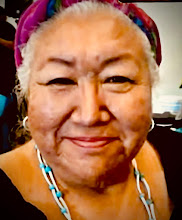 Memories of my late mother saying her dad, my grandfather taught her in a warning that the Dakota Medicine was good, but not anymore. As far back as 81 years ago, fake medicine people deceived their own people for money, power, and glory. Our grandmothers showed us through their prayers helping us celebrate love and helping us celebrate life within our families. Through my own lived experiences, I had to eliminate my own self-defeating behavior. Our people are depending on us to bring justice into our Indigenous Communities. Our Indigenous girls and women are going missing at an alarming rate and are being human trafficked. With little help in finding them or bringing their killers or abusers to justice, I started this blog. I never thought I would live to see such as year as 2023. Today, I feel blessed to be able to hold those who reached out to me in high regard. I am truly grateful, Creator’s Will guided me in my lifetime to see Nathan Chasing Horse arrested. And, yet at the same time, I grief for all his victims who died before they could see him brought to justice.
Debriefing after a week from experiencing a very emotional few days

Marina Crane (00:05.56) Good afternoon. It's March 24th, Tuesday. It's around noon here in Tsuutina, First Nations, Calgary, Alberta, Canada. I know most of my audience are American and female. So, but I'm putting it out there because I appreciate you all being there. Now, I kind of apologize because I had...I plan to have somebody come in and talk with me about Godman. But I want to reach out to my audience and say thank you for trusting me with personal things that I said about my experience witnessing or being in the courtroom and seeing Nathan chasing us for the first time. To clarify.is that even though you weren't present with me, I'm taking it on as if you were present with me, and because you're my audience. so presence matters. And there are things that I want to focus on that are important. First, there's the validation. And the thing is, if you've ever been in a courtroom with someone that you cared about that has been a victim, I don't know, for me, I've been in the courtroom as a rape victim, and it's important to have a sense of validation, not for revenge or punishment. Marina Crane (01:58.774) because the outcome of the court proceedings before they're found guilty, we have no control over. So even for me, not attending Nathan Chasing horses' trial, which has been ongoing because it's been delayed and delayed. The fact that I was hoping to just witness the sentencing, again, that was also delayed until April 1st. Yet others, the survivors of Nathan Chasing horse, knew the truth and they still stood alongside each other. the fact is they lived and they realized that they're not alone. For decades, Nathan Chasing Horse tried to silence them. And the thing is like when somebody tries to silence in a way, someone tries to make you feel like you're inadequate. You need to have some sort of validation that's grounding. It restores your dignity rather than chasing justice through harm. I know sometimes it's more complicated than that and as for me it is. I grew up not experiencing as much violence as most children have or even in my adult life. I think I've lived a very sheltered life but I'm still struggling with things like reoccurring like limerence or I have a avoidant attachment to being intimate or or just holding space when I get triggered. That's part of my conversation too with this podcast is that there is hope for people recovering from trauma in childhood. It's a lifetime journey, but all human beings go through it, and to some degree it's extreme. And as you go through support, and I'd finally mention support in whatever way it comes, whatever way it comes, some through therapy, some through support groups, and through family and community. So whatever way it comes, it's important. Marina Crane (04:17.166) And for me, because I've grown up around patriarchy and I have matriarchal lineage, matriarch power is not performative or symbolic, it's rational. When we talk about protection and boundaries and responsibilities, and the continuity of self because as little girls or as teenage girls or even as young women, a lot of times people want to take away our identity. And helping each other has a ripple effect. At the same time, not helping each other also has a ripple effect. The difference from power built on charisma, hierarchy, or fear. And that's the whole gist of it when it comes to Nathan Chasing Horse, the hierarchy and the charisma created around fear, his ability to manipulate, especially children, like in ceremonies, he'd hit them over the head with a rattle, scare them. And for some reason, and again, I'm not saying that we can each put ourselves in that position because it's the analogy that I was taught years, heard years and years ago. about healthy human sexuality and that they say when an adult thinks about having sex with a child, it's not sinful, it's just a thought. But it's the time when the adult actually... has the act and does that to a child when it becomes unforgivable. See, and that is the tipping point where something is unforgivable because there is something in the perpetrator that's instilling fear in the victim. Rather than just dealing with their own fear, like fear of intimacy or whatever that fear may be, there is some illusion or delusion that was built up and it's mostly environmental. Marina Crane (06:17.73) But I want to make a distinction too that there are some people who are just born this way. I don't want to make any analogies of people's sexuality, but there is something disturbing when somebody becomes so dangerous. Anyway, I want to talk more about, in some of the podcasts I have talked about, how Indigenous people dealt with such people traditionally. You're as as as a witness to anybody who has been a victim you're naming You are naming a real distinction between living teaching and appropriate narratives used to control so much of the time even though you're unaware of it because We when we've all experienced some sort of trauma. We do see that we do see the difference between the teachings and the narrative used to control people. That distinction matters, especially in the conversation of spirituality, colonization, and exploitation. I know as a child, I do talk about being bullied by white kids, because I've been around. white people and I want to use the word white in a respectful way even though it might sound like I'm not respected because a lot of the times when it comes to racism a white person says well I sense racism but the thing is how could you you're not a minority so I'm using the term a white person in the sense of just privilege. Now it will take it will offend some white people and I'm not going to apologize. I do trust white people. But at the same time, too, there's also this hierarchy or this point of view of privilege, which for me as an Indigenous woman who's lived most of her life in gender apartheid, I can't comprehend that. Marina Crane (08:27.732) Sometimes in some weird twisted way I do because I'm an indigenous elder and within my community I do have privilege, which again, I didn't understand it until I became an elder. So if I do offend white people who've lived a privileged life, that's my analogy, that it's taken a lifetime for me to feel that. What you as the listener or you as the witness to somebody that you know that has been a victim, just your presence, being there without engaging, witnessing without feeding distortion is actually a very healthy boundary. So just standing there witnessing empowers the victim, whether or not it shook anyone externally. Like just being present, say, in a courtroom and the perpetrator seeing you, it shifts something internally for, like say for me and for all the other victims who are waiting to hear the sentencing of Nathan Chasing Horse. The reality though is like even just the presence of how it shook you. One of the victims came out of the courtroom after they had delayed the sentencing, was crying. It was very emotional. So you don't have to prove or argue or perform pain. You simply exist in truth by supporting others. That's not small. Also, it's important about, it's also important about hope.not hope tied to outcome, sentence, or institutions, but hope rooted in lineage and continuity. See, for me, being Indigenous, it was one thing that I wrote my blog. And I never, like sometimes I receive emails or phone calls consistently, but like it wasn't, I shouldn't say consistently. I think people didn't want a right to identify or something, but. Marina Crane (10:44.238) When I was on the 15th floor in the courthouse and I saw Indigenous Native American women coming in, I didn't know what to expect. I really felt fearful because I didn't know them, they didn't know me, or I assumed they didn't know me. And I was traveling with a male companion who went into the courtroom before me. And while I was there outside with the other people, The group of people came up to me, like from California, Montana, Arizona, and they shook my hand. See, I didn't know they had been reading my blog since I started writing. And they thanked me for the idea, like they thanked me for writing that narrative. So for me, being constantly in battle fatigue as an Indigenous woman, Part of my fighting off that battle fatigue is to be an advocate or to write a narrative. So anybody who bears witness is doing this work. And there must be many others doing it too. I realize there's police and there's courts and social workers. So many people there for victims, and yet sometimes the victims fall through the cracks. somehow when we do the work of working with victims or even being a victim ourselves, we're not in denial.that's perspective. It takes the burden off one's person having to carry everything and place it back where it belongs across community, across generations. And when I talk about intergenerational trauma or intergenerational lack of support for children, especially from Indian residential schools, 60s scoop, foster care, it brings a lot of anger. And I didn't know how deep it was. Marina Crane (12:51.946) until I start it, when I start talking about it. And I think that's part of my avoidance, avoidance attachment, because it stops me from being intimate in a conversation when somebody's trying to show me some compassion. One thing I wanted to generally anchor is You as the audience in your steadfastness, in your support that you've had for the victims or someone you know and loved. Everything you can describe can be held as you've lived the meaning without needing to frame it as like as you're looking or being present.for this healing is destiny, karma, or a cosmetic assignment in the way that's put pressure on you. I think sometimes when we are so involved in advocacy or even being there to support, we forget the outside pressures that are coming to us because we're in the moment. We try to act in alignment with our values, our core values, and we try to show up with integrity. We try to protect ourselves because we know we're not alone. We know there are other people who've gone through childhood trauma as we have. And our battle scars show, like our battle fatigue shows, in some form or another, either through limerence, attachment disorders, whatever mental health or even emotional, you know, people when they get into relationships, they say, emotional baggage. Well, call it what it is. You know, we don't owe the university anything more than continuing to care for ourselves and others in a substantial way. I had hoped I would have a male invited to my podcast. Marina Crane (14:54.104) who is like a god-man or trying to be a spiritual person. But it takes extra strength and some continuity that are there. Not all people can name exploitation without sensationalizing it. Honouring ancient practices without turning them into commodities. Centering survivors' boundaries and accountability rather than personalities. See, all that, I mean, I learned some of this stuff in childhood. I grew up my whole life around white people. I live in a community of reserve or reservation, whichever terminology you feel comfortable in addressing me. And I was bussed in and out into a city every day when I went to junior high, elementary and high school. So there's...There's a lot of times when I just, as a child, I've been bombarded every time by white kids calling me squaw, wagon burner. It got to the point like a group of us just got tired of it and we hatched up a scheme to...deter this name calling in, we decided if they're going to bother us continuously, we've got to shut them down. So we devised a plan that if they were so mad at us and they hit the first punch to attack us, then that gave us right to defend ourselves and we wouldn't be charged with fighting or expelled from school. Marina Crane (16:42.634) So that was the whole point was to face the people who hated us to the point where they would strike out. And I was a very strong child, so I won all my battles. And as a result, a lot of the white kids feared me and would not cross paths with me or call me names. Mind you, I couldn't prevent it if they called me behind my back. But I'm just using it as an example of some god men or god women. I think sometimes you do have to take a stand because a lot of the values and belief you believe in will always be challenged. And I think sometimes you do have to have battle fatigue or you have to have an invisible armor to protect yourself every day. Let's see. So for me, grounded in a podcast narrative that avoids retraumatization, I had recommended that some of the survivors do podcasts without naming themselves or names within their story or their narrative to avoid being retraumatizing the self. You know, I've tried many times to make taking outline talking points that keep the focus on the system, not speculate. So you've to protect your emotional boundaries by engaging publicly. For me, that's part of combating battle fatigue. I think most minority women use activism or narrative to find balance and refresh or It's like relapse and recovery. The narrative and the activism is recovery in the whole process of relapsing in that battle fatigue. So it's a fact that you've got to rest, resting in the fact that you don't have to carry everyone to honour your ancestors. You don't have to carry everything. We're already walking in alignment with choosing truth, restraint and care. Marina Crane (19:02.4) So it's important to make sure that the people that you're there for or talking about or being, you know, a sister or auntie or grandmother or just another human being is to let them know that you're present and you're willing to bear witness. Now I've created other podcasts before. and I've used different people to come in and I'm grateful that they've come in to support me and have conversations about my experience around Nathan Chasing Horse because it has helped me understand my own avoidant attachment when it comes to intimacy. Even how what motivates me to do my activism, what promotes me or challenges me to do a podcast. Because it can get really heavy laden and you have to have some sort of impetus or catalyst to get you going. And most of the time I've used attachment to motivate me and I learned that quite a while ago when I was in my 30s attending university. I focused on avoiding intimacy by focusing on unrealistic expectation. so that I didn't have to deal with my emotions. I had to deal with studying, work, and surviving. Anyway, I'm 74 years old and I digress sometimes when I'm talking on my podcast. But I do have privilege in the sense that I can articulate because I've spoken English. most of my life. I understand various languages or I understand or can distinguish between Cree, Blackfoot, Dakota, Navajo, Polynesian, Japanese, Chinese. Well, we all do. Anyway, I digress. I'm just saying I'm doing this so that as I age, I've documented things that I have clear memory of or understand of myself. Marina Crane (21:21.42) Like I said, it's constantly learning and, you know, prior to doing the blog, my whole issue was around limerence and how limerence is a part of childhood trauma. But I am just understanding now attachment, just like avoiding intimacy. And I think part of why I do this blog is for Indigenous women because, you know, we've experienced gender apartheid in various ways. And I hope that some of the content that I do talk about does resonate with you because, you know, this is a safe place for sisterhood, matriarchy and cyberspace. And I hope to, you know, let you understand that I...that it's important to have an honest dialogue with men. All types of men. I enjoy that because I've never been married nor have I ever had children. So I grew up surrounded by white people. I grew up surrounded by indigenous people. And from my childhood experience, like I said, I was bussed into the city school system. kids can be really cruel, relentless in their racial slurs and you know you have to learn how to defend yourself like I said you you you're waiting for them to throw that first punch you're always on guard that you know someone's gonna attack you like aggressively because they just you know they just want to get under your skin they want you to they want to trigger you the reality of it is like you know these white kids are coming also in place of trauma Marina Crane (23:16.748) So it's not just, I think it's just as you're growing up, you don't realize a lot of times when children are angry, it's because of something happening in their home too. So just being present and being there to support each other deters bullies. This experience has taught me about the dynamics of patriarchy. When I noticed that some indigenous men adopt this colonial view. which is complicated in any relationship they have with other women. I can't claim to know how to deprogram these influences around Indigenous men, nor can I try to even understand how white men perceive what I talk about, especially when I'm talking so negatively, not directly to white men, but about the whole, generally speaking. I usually use an analogy. Because I start making a joke when I find things uncomfortable. So if I start laughing in this conversation, it's because it's uncomfortable for me. So when I'm in front of a white man or white woman and they're listening to my narrative and they apologize and they say, I'm sorry, I jokingly say, when you say that to me, I see you standing in front of me, but behind you, I see a billion white people. because you're saying like you're sorry on behalf of your race. I said that's how I see it because you're standing there in privilege. Now whether or not they can reconcile their values and beliefs around how they perceive me as an Indigenous woman, at the point like they've apologized, so I feel like I'm safe enough to go forward and talk about intimate things that have really Like I said, I've suppressed it so deep down and once in a while when I feel like I'm comfortable, I can trust the person, I will expose that anger, that just total frustration and emotional pain. I've always been proud of my Indigenous identity. My parents, it started when I was eight or even probably younger. I wasn't around white people my whole life. I think I saw my first white person when I was...Marina Crane (25:39.98) maybe four or five. Mind you, when I was 30 and I worked up in Fort McKay, Alberta, I met a lady, she was in her 40s then, but she said she saw her first white person when she was 18. So in Western Canada, we haven't had that much experience around systemic racism as Eastern Canada has. So like I said, my parents traveled, they traveled through to South America and...They saw so many things. And then they went to India when I was eight. anyway. much of the oral history and their narrative was talking about world history and world civilizations and the reality that a lot of this was absent in our academic books in junior high, elementary and high school and even in universities. So as a woman now I reflect back like 50 years or even longer. You know like I said I'm 74 so I reflect back. You know, over 70 years, I'm 74. So I've had like many lifetimes and it's important to have some self-defense, some self-assertiveness, especially when you've experienced violence firsthand. Much of my limerence or the birthplace or the creation of my limerence was seeing my father attack my mother. Even though I lived in denial that I didn't see so much violence, it was the watching of it because that's avoidance. It just has built into me to avoid intimacy. I ran away when I was 18, and when I returned home at 19, I was sexually assaulted by two Indigenous men who were serial rapists within my community. Marina Crane (27:45.1) And as a result of the lack of support and the realities of gender apartheid and trauma within our communities, it took decades for me to realize and how to address the injustice of the wider society, both within my community and outside, with white women too, that they've had issues just as we as Indigenous women have. The reality though is there are some things that...privilege has and there are some things that colonialism and religion has had an impact in my life as an Indigenous woman which is different in how white women have seen things. I've had discussions with close intimate white friends about, because we're both female, about how we see healthy human sexuality and it's important. At the same time too, I've tried to talk to various men about the same issues and how various religions have impacted the colonial systems like, well, various religions and various policies like the Indian Act. These systems are ingrained in patriarchy that has been deemed as valuable towards Indigenous people living in...First Nations communities for First Nations Inuit and Métis and the worldviews of Indigenous women as property, denying them rights, even including them not to vote, even including them that if they married a non-Indigenous man, if they married a white man, they would lose their status. And further reinforcing this pervasive or guardianship type of ownership over the female image or female apartheid was exercised in those Indian residential schools, whereas children who were deprived of love and deprived of emotional support. Thousands of children suffered in these places that were supposed to provide safety, leaving intergenerational trauma that persists to this day. And I keep on reiterating the avoidance of intimacy. Marina Crane (30:07.64) For me personally, I'm talking about myself personally. Each one of you has some form of, we'll say, level of whatever you call it, but you feel it, you understand it, you know yourselves. denying those histories of ourselves as Indigenous people is a challenge that we have to face because people are depending on us. you know, I shouldn't say you know Language is another background too, which is a very powerful energy. I spoke Sioux fluently until I was five. How do I know that? I have Sioux relatives who told me they remember me speaking fluently. My primary way of communicating is English because I was busting out of the city with other Indigenous children like myself and My education, my formal education with university I paid for by myself. Mind you again, back in the day they were basically grooming us to become teachers if they financed us through university. And we had to have our great 12 diploma. Working predominantly in a white environment. I had to be careful not to interact with saying racist comments for fear of losing my livelihood. And again, too, that's the whole thing about growing up with white kids in elementary school, junior high and high school. When you're a kid, you can say whatever you want without any consequences. And then when you come into the real world and you know that the dominant race is white and that...Even if they're racist, you still have to earn your bread and butter and pay your bills. So you have to be complacent. You have to know your place. And for decades I did. I lived in the United States and I lived in a very racist state. So now as an elder, I can speak the truth without apology. Marina Crane (32:25.344) even though it may offend others. the thing is, because I'm speaking my truth, I'm speaking my truth even when I use the word white men or white women. And I say it frequently and deliberately because I have white friends and they apologize. They say, behalf of my people, I'm sorry. Now, that's important because...If a white man or white woman takes offense by my using the word white to engage with them, it's to make, especially when you're the only white man in a group of Indigenous people. I've learned when I've had white friends come to my home or engage with other Indigenous people and my addressing them as white people is hoping that...They understand that the people who are listening are greeting them and saying, yes. They're not taking it as a token. It's more of like a humor, like, okay, we can accept you because you're friends with Marina. So that's why I say it's not to be discriminatory or anything when I describe people that I'm with when I'm in a group of indigenous people. when I'm talking about issues about patriarchy and injustice, or even how the system works because it's a white system. So it's like being an elder. I speak my truth because I don't have fear of being fired, dismissed, attacked, or for any reason called down. When you're an employee, you have to mind your P's and Q's. Your position is to listen and do the best job you can for your employer. So I try to express myself freely, sometimes triggering and offending others without deliberately doing it because...Marina Crane (34:41.068) When I'm talking about truth, sometimes it's really difficult for my white friends to hold space for me. And when they are triggered, they will say that, I'm sorry, I'm sorry this happened. Sometimes I think they lack the courage to bear witness of the injustice. I know that because I've had childhood friends, white friends who had a really difficult time bearing witness to injustice. The realities of Indigenous life are often misunderstood by non-Indigenous people, especially if they've been married outside the community, especially to white men, often meant losing their status, community, and support. So if there is a white woman who didn't feel comfortable and tried putting me in my place, I wasn't married to a white man. And it's like having somebody backstab you. in front of you, they're okay, but in the meantime, they're dismissing you because they don't have the courage to challenge things that I offend them with. They try to retain connection with me somehow because they know they have an Indian friend. I've grown up knowing what losing status as an Indigenous woman is because I have aunties who married white men who were displaced, isolated, and in some cases experienced violence and lack of support because they're in a city or a town where they don't have support. They don't have Indigenous aunties and uncles and cousins and sisters and brothers to support them. And so the white man can do whatever he wants and even divorce the Indigenous woman. who has lost her status in Canada, they've lost their status. I think it's only in the past 20 years or 30 that Indigenous women who married white men could reclaim their status and move back to their communities. Again, like it says, if, know, Indigenous women have created a horrible crime that they were banished from our communities. But this is how the white men... Marina Crane (37:02.86) When I say white men, mean the political systems, provincial and federal, have set it up for Indigenous women. As a child and teenager, I saw group homes for unwed mothers. And later on in towns and communities, saw group homes and foster homes, shelters for Indigenous kids run by white people and Indigenous people. However, It's only recently since I've been stepping back and looking at my niece and the realities of when she was apprehended along with her brother and sister, when my brother was arrested, how she fell through the cracks through the foster care system. Now, the reality of it is that the foster care systems in Canada, there are only a few tribes that have taken over their governance. My community is run under provincial and federal child and family laws. Now get this, even if you've worked for child and family and you've had your credentials, you have your degree, and say you stop working for child and family and all of a sudden you've got to be foster parent to your grandchild or grandson. And you have to go through the same meticulous work as if you're some criminal before they can even say that your house is safe for your grandchild. Now that's provincial and federal mandate. sovereignty, we wouldn't have to go through those rigorous trials and limitations. mean, yes, we have to protect our children, but we have to have independent revenue outside the province or the federal government to establish our own shelters and our own group homes for our children. Because if we don't, our children will continually be picked up like they did in the 60s scoop, like they did in Indian residential schools, like they are happening right now in all the care systems, like in the city of Calgary. And as a result, our children are losing their language, their cultural connection. In my own family, my niece and nephew came back to my community on special request. Marina Crane (39:22.6) as I navigated the regulations. And because of lack of sovereignty, it was evident how truthful the struggle was, especially when it came to their half-sister who wasn't a nation member, who didn't belong to our tribe, that she wasn't able to be placed in a foster extended care in my community. Rather, she was placed in a group home where she was trafficked. That's the disgusting part of it when I talk about the establishment of white society and white patriarchy. And if I use the analogy of white men, I'm being holistic in the sense that this is what one billion people are doing. Like, and unconsciously, because we're just a minority. They don't see us every day on the streets. like we're not as common like there's
a billion black people in the world. seeing indigenous people doesn't mean anything because you know we're not, let me put it this way, we're so far removed from the realities of daily living for people on Dail Today that we don't, when our stories are...are being presented, it's only if comes from a white cohort or white ally that it makes the news. again, attachment, avoidance for intimacy, just a white man holding space for me triggered me. And I can't apologize. I refuse to apologize. I've really dug deep thinking, why should I apologize? And then I realized, this is my own teaching. I still avoid intimacy. And I think I will continue avoiding intimacy because it's very triggering. It's very triggering when I know that today, when I have our young women who are single parents who die, Marina Crane (41:36.45) Because we don't have group homes or group shelters in our communities. And maybe the extended care of family is so saturated that the children can't stay in our communities that they're put in foster care. They've lost not only their parent, their extended family, their community, their culture, their language. It's heartbreaking because there are thousands of children out there. But this is still happening to. Marina Crane (42:13.42) So of course, I'm gonna still hold that anger. Cuz it's persistent. It's persistent in everything I experience in my community. Every week for the past two months, we've buried young people from cirrhosis or drug overdose. Like I said, the question is so huge and the answer is so huge. And when I have a white man saying, well, it's everywhere. And I said, yes, I know. But for me, battle fatigue is real. It's been so real. Even 20 years ago, I started trying to combat battle fatigue by writing my blog about Nathan chasing horse. I tried advocating. for the injustice of what I saw happening with Indigenous women and girls. Like any way for me to combat battle fatigue. And I'm a person that doesn't have a partner. I don't have children. I have extended family. I have immediate family. I have community. So I can't even comprehend how hard it is for other Indigenous women to battle fatigue. because there's so many extenuating circumstances of emotional overload, burnt out, you know, just even trying to discuss the injustices and gender apartheid. Sometimes it's so triggering and they don't want to talk about it. Like they'll say, Marina, are you still going to be talking about Nathan Chasing Horse? And I'm saying, said he's sentenced. I'm at peace that he's found guilty. But that doesn't mean I'm going to stop talking about the injustices of what's happening within our communities when it comes to the mental health of children, the mental health of Indigenous girls and women. I know sometimes it seems like it's an uphill battle trying to educate white men about the truth of what it's like to live in an Indigenous community. Marina Crane (44:31.52) I know it's not just white men. I met a very prominent Indigenous man who was a full professor, was consolidating all of his companies into 10, had worked in different departments in government organizations in the United States and at the federal and national level as well. And he said to me that he didn't know what it was like. He'd been in the foster care system, but had never once lived in an Indigenous community. Now in Canada we have an influx of a whole bunch of people pretending to have lived in Indigenous communities. Now why am I mentioning this? Well it's because like this man says, see I've got my status card, like he's got his treaty card or whatever you call it, enrollment card. He says, I don't access like the tribal funds in Canada, it's band funds. He said, well why should he? You know, he's a millionaire. Why should he access our band funds when there are so many of our children and young people who are unemployed, uneducated, who are trying to get jobs in the white world, who refuse to be part of that trafficking of employees like you, know, whatever color that person employee's skin is. to hold over like you got to work overtime, you got to do all this. you know that anyway, I'm just saying that this, this indigenous man, he says, as long as I have my card, and I can show that I'm proud to be indigenous, that's all that matters. And for me, he's not writing books. He's not creating musical songs or albums and winning Academy Awards or anything like that to prove like pretending he's Indigenous to gain notoriety. Because like, let me face, let's put it this way, when I was eight and 10 years old, where were these people who were pretending to be Indigenous? Where were they? They were so ashamed. Now, like I'm going, no, I've always known I've been Indigenous. So when somebody says, Marina Crane (46:54.838) my father, my mother, my grandmother, my... Like, excuse me. Unless you've actually lived in an Indigenous community, First Nations, Inuit or Métis, and you've experienced systemic racism, and you have... you've discovered the building that you've been born into is faulty, and that you have to have the courage to renovate it yourself. So most of my podcasts, what I talk about is that renovation of the self from trauma, from childhood trauma. Yes, I saw my mother being beaten up. I heard my father had affairs. I saw most women with black eyes. The majority of times when I tried to heal from my trauma, I was promiscuous. And you know, the whole facade or the reality of, you broke so many hearts. And I'm going, no, I took it upon myself to find somebody to have sex with. And I got what I wanted. And so did they. And we both walked away satisfied. End of story. Or it should have been. But the reality of the lack of not understanding intimacy has I want to say crippled me, because I do thrive. If I hadn't had these traumas, I wouldn't have learned how to use them as a catalyst to activate and motivate me to tell my story. It's not an easy thing to lay down and be depressed and think that there's no hope. But when you get inspired or you realize like there's somebody interested in what you have to say. Even if it means that you're avoiding talking about intimacy, like holding space for them. Like it's one thing for me to have people hold space for me, but the hardest part for me in attachment of intimacy or detachment for intimacy is to hold space for another human being. Marina Crane (49:20.086) because I have to practice that. And if I offend people or trigger people, I live with that. I struggle with it. You know, it's like emotional scarring, but it's important and it's paramount in healing. Women's shelters exist because there's severe violence out there. the trauma, the limerence, collective holistic approaches, avoidance of intimacy. Like there's support groups and there's many people out there. And a lot of times I've had, and I'm very fortunate that I have a network of support women. I tried when I first started to realize I had to go to court. I could have stayed in the United States my whole life. But...I had to come home and even though it was small and insignificant support groups when I first started, I've been able to develop over decades is very important because that, for me the podcast and talking to you as Indigenous women, because I said the majority of women who listen to my podcast are women and they're older women. Because as matriarchs, it's important for us to have our narrative. Because there are young women out there who are dying and needing to hear our stories. How did we succeed? How did we get to be as old as we are when so many their age are dying? How do young women protect their children from all this systemic racism? this gender apartheid? How do they teach their young men to respect women? And again, how can we do that unless we ourselves as Indigenous women, how can we hold space for people in general, whatever colour their skin is? How do we hold intimacy for them? Now sometimes I find that there are some Marina Crane (51:41.76) men who come across as being able to hold space, but really they're not. I'll use an example, especially when you're trying to be a spiritual man or a god man. And this can apply to god women too, or women who want to be medicine women. And I use the analogy I go back to again when I was a child and how I coped with people who just kept me. kept calling me down like Squaw, Wagon-burner. Those things and how they hated and aggravated me so much that I'd stand space and I'd say, okay, hit me. And they hit me and I'd put, I was a strong child. I was a strong girl. And they backed off and never bothered me again. Well, see, that's the same thing with spirituality. You know, when you have God men and God women or women men like Nathan Chasing Horse, and not just him, I'm talking about even specific people who come into Indigenous communities, not even Indigenous, you know, people who, you know, they say, you know, if we can help young people, if we can do this. But yet, when it comes down to just what you stand for, like I said, I'm using the example of that. signing up for the people you love. One of these godmen that I'd hoped would come in on my interview here in the podcast had told me about an incident that his former partner and his mother had and how they had an extreme argument and that his partner was so enraged by his mother. His mother is an elder and you know, like he just stood there like, what am I going to do? Well, because of his inaction, even though he's trying to look as the peacekeeper, the spiritual person, like in most spiritual people come across like they're really at peace. Understand this, what does it mean when you say you're at peace? A few months when he did, like when he did eventually leave his partner. Marina Crane (54:03.81) His partner's brother, who was this biker kind of looking guy, mechanic, buffed fellow, came up to him and said, if your mother ever confronts my sister again, you tell your mother I'm going to come over there and straighten her out. Now this is a guy who's coming across as a spiritual man, and a human being, okay? Put aside spirituality. Again, I go back to childhood. When a person is confronting me like that, If person came up to me and said that about my mother, I would make sure they threw the first punch. Because if he said that to me, I'd say, what? Say it to my face. And if he punched me first, I would be able to defend myself. Even if it meant I'd beat him up or he'd beat me up, the fact of the matter is I stood my ground and I defended the person I loved. Now, this man didn't do that. Yet he comes into our community and he's trying to teach our young people how to be strong. Like how can you do that unless you really know what it is to hit ground, to hit bottom? Especially when people attack the people you love. Because a lot of times when you're a spiritual person, you're defending your values and beliefs. Marina Crane (55:34.606) Sometimes, you know, it's unsettling. Especially like when you're in a community that, you know, you've grown up with people your whole life. I've had to stand my ground, you know, with people who called me down. And I have had them throw the first punch. And they have tried charging me. But they knew that they were the ones who started the fight first. And they had to drop the charges. But it was self-defense. And that's the whole point of it, you know, where there's conflict resolution, mediation and negotiating. However that looks and however it feels or you deal with, sometimes you do have to be very physical. And other times you have to be, you know, assertive, stand your ground, let them know some things that are being said to you are uncalled for. So when I talk to a white man and I say, white men have done this, or a white person, and he or she takes offense, it tells me a lot. It tells me a lot about that person. I mean, sure, things are forgivable, but there are other things that are unforgivable. And that's my whole reality of my podcast. Because for years, you know, I've heard so much religiosity, spirituality and all this stuff. And yet there are God men all over the world who have castrated, who have sexually assaulted like their followers. And this is just part of like being a human being. But at the same time, too, being a human being means to show compassion. And I find that it's a challenge to not be performative in our behavior, to have some honest reflection on truth telling. Yes, it hurts me to talk about white people this way, just as much as it hurts me to see children leaving our communities, just as much as it hurts me to...Marina Crane (57:48.108) know that they go missing and murdered. Just like it hurts me that hundreds of Indian residential schools killed our children. just as I know how emotionally damaging my parents were as children in these places where they weren't loved. So of course I'm going to have problems with avoiding intimacy. It's intergenerational trauma. And as a woman, I see this, but imagine, know, non-Indigenous, imagine Indigenous men. Sometimes...You know, it's hard to stand and be an ally or cohort when you know people don't have the strength to defend themselves. They don't have the strength to hold space. They don't have the strength to bear witness to the injustice that's being done to them because they just want to lie down and die. So. What can you do? Sometimes all you can do is just speak, share, and support each other for the sake of the generations to come. Sometimes when somebody goes through a psychotic episode and they're intoxicated or sober, all you can do is hold space and say, I'm here for you. Marina Crane (59:25.418) Even if what I say to you offends you, I'm here for you. And it's difficult, I know, even though as Indigenous people, or like as I said, the majority of my audience is female, even though, and I know most women could relate to this in the sense that... Marina Crane (59:51.53) It's not easy to understand how men feel. I know, like again, I'm laughing because it's uncomfortable. But even when I do offend men, I have to self-reflect and talk to other women and debrief and say, did I offend that person? Did I offend him? Because sometimes men, the majority of times, won't say how they feel if they've been offended. Some do, but it usually takes a while for them to hold space. Just as it's like us, we're human beings, we have to network with others to ask and self-reflect if what you just went through was real. Is this my reality? Did I have the right to voice my opinion on how I feel and how I see the system? How I see the system go against our women and our children? Like in the broader sense because, you know, we face it every day. We face systemic racism. We face gender apartheid. So I hope whoever my audience is, hold space for yourselves. I've to...hope and have you understand you listening is like you being in a courtroom with a victim ensuring space and understanding of what it's like to be present and bear witness to injustice. Once you start understanding what the narrative means, hopefully more of us will come forward and start talking about our traumas, our histories. Marina Crane (01:01:44.512) our battles with gender apartheid, our battles even with healthy human sexuality as we age. There's so many things that we do as Indigenous women that we cause this battle fatigue. And you know, I live it. I live it. I breathe it. I hold space for women in my community and women I've known most my entire life who struggle every day to try and create healthy environments for their children and grandchildren. So with that, I'll do some more. debriefing in outlines and podcasts and whatever I can in terms of having closure regarding the sentencing of Nathan Chasing Horse. Because this is a new chapter in my life that I'm, you know, I've learned so much from 20 years ago and to debrief about that, not the particular man himself. Like there's plenty of them out there in the real world. But just the impact of what we do to try and protect our children. Sometimes we put them in positions where it's unsafe. And sometimes, I believe as women, when you believe you're doing the best you can to stay with your abusive partner, the damage it's done to your child. Like I'm not blaming my parents, nor do I blame my grandparents. It's just a systemic system that I was born into, that they were born into. And we continue each generation to be born into this because of...Marina Crane (01:03:53.304) the colonial system. Like 500 years ago, didn't have that. 500 years ago, we were still spiritual people. But erasing our identities and our culture, stealing our children. For 500 years now, now understand the first 100 years, it's estimated that they killed five generations of our children. Five generations. That took 100 years to kill 125 million children, Indigenous children in the Americas. Marina Crane (01:04:33.61) So it's important as Indigenous women, you know, to whole space. Because we are worthy of being mothers. We understand what it is to carry a sacred being in our bodies. Even though I've never had children, it was how I was raised as a Dakota woman. I'm a matriarch. And to understand the teachings of my mothers, my aunts, and my grandmothers, and my grandfathers, is important. So...
With that, like I said, I'm going to end this podcast and I appreciate it. I'm using different techniques and doing my podcast and hopefully I'll get little more sophisticated. Right now I do most of my podcasts all raw. That being said, have a good day. Wopidamidakyapiyawasana. We are all related.
Memories of my late mother saying her dad, my grandfather taught her in a warning that the Dakota Medicine was good, but not anymore. As far back as 81 years ago, fake medicine people deceived their own people for money, power, and glory. Our grandmothers showed us through their prayers helping us celebrate love and helping us celebrate life within our families. Through my own lived experiences, I had to eliminate my own self-defeating behavior. Our people are depending on us to bring justice into our Indigenous Communities. Our Indigenous girls and women are going missing at an alarming rate and are being human trafficked. With little help in finding them or bringing their killers or abusers to justice, I started this blog. I never thought I would live to see such as year as 2023. Today, I feel blessed to be able to hold those who reached out to me in high regard. I am truly grateful, Creator’s Will guided me in my lifetime to see Nathan Chasing Horse arrested. And, yet at the same time, I grief for all his victims who died before they could see him brought to justice.
Subscribe to:
Posts (Atom)
-
Posted then my reply..... I agree with you all NCH is No Wicasa Itancan. I agree he is a womanizer he seriously Takes the cake wearing tha...
-
From GIRLSNOTBRIDES.ORG " 20,000 girls are forced into marriage everyday. It's a common practice around the world; however,...
-
Through these ten years I’ve sang this song. Despite the words being pronounced with a male tone. I’ve researched with Dakota speakers and ...
-
! search for more clues into this man’s lifestyle. I’ve found the increasing awareness of people becoming awake to who this man truly is and...
-
 https://abcnews.go.com/Nightline/video/dances-wolves-star-nathan-chasing-horse-accused-sexual-114067081?sfnsn=mo Throughout the decades of...
 -
I see people's children grow up and they too start dancing and following the pow-wow trail. When my nephews came home, they talked about...