
In life, my life, I've learned more about myself than what I was taught in university classrooms. Of course, this process is called Knowledge and we become knowledge keepers as we age providing we learned. I didn't really grasp this concept until I allow myself to trust. I am only writing this down as its important for you my readers to understand my process. A few days ago I was asked about 'trust.' I repied, I only recently started trusting people and to their response was that of disbelief. therefore, for me there is this explanation of what trust has done for me. It made me more out of my comfort zone. sometimes we become so frigid that we don't know how we became who we are.
the following podcasts deal with trust and understanding about human behavior. If your not a student of human behavior than I am not your cup of tea. some of my readers have engaged with my podcasts and other social media sources so your familiar with my interest in finding closure over Nathan Chasing Horse. I wish to repeat myself here saying not in the sense of sexual appeal rather in the case of his abilities to manipulate and control so many people for decades. I only spoke with him for a brief time and yet people assume I trusted him. I didn't! When you trust someone in ritual and ceremony one give tobacco. It's a sacred practice knowing the trust is established between you and your creator. the people who is the catalyst is who convegs your message to the Creator. I didn't trust Nathan Chasing Horse to believe he could conveg my messages like my grandfathers and grandmothers.
Our memories are so great and powerful I tended to forget or surpress my own. I had an acquaintence for over thirty years thinking I trusted him, but it wasnt. Until a few years ago, I trusted him thinking it worked both ways cause what I am talking about is how two people establish trust. My interactions with this acquaintance what only one sided and of course he thought it was both. I'll explain. As I ended my situationalship with this acquaintance I transferred this false sense of trust to another man. I didn't understand what exactly was happening cause I've never ever had a partner or sexual partner to discover gender differences. I know it sounds unrealistic but true in the sense of the word TRUST.
you've heard of transference well its familar yet not as intense if voilence were assocated with it. This why its important for me to define what it was that i was transferring all these years with different male acquaintances. Its better late than never, for my understanding. As I ended one transferance, one that I held onto for thirty years without any growth or movement becuase he felt safe, not realizing it was serving his own purpose for whatever that was.
Wichasta waste is a dakota name I've given this man who came into the scene of my life as I released my 30 year old connection. It was one where I felt I was being used. The encounter I had once the story of Nathan Chasing Horse revealed my connection with this blog I got attention from Wishasta waste. I put boundaries down by saying to Wichasta waste that if this former acquaintance was to become involved in his invesigations I would not get involved in his research. He said he still needed to contact him cause he had reached out to Wichasta Waste without my consent.
I explained this man never met Nathan Chasing Horse nor did ever attend any ceremonies. I explained what his main purpose was initially to help me with my nieces and nephews and their sibling relationhip and that was it. As he was instructmental in determining Roberta was a danger to herself and others, especially her half-siblings. This was essential when I went to the courts to get a restaining order against Roberta having contact with me or her siblings, nothing more and nothing less.
Understand that I knew this acqaintance a decade before I met Nathan Chasing Horse. it may seems redundant but I didn't realize I was stagnant in my situationalship with is acquaitance. Wichasta waste had this male energy. I call it animal magnetism cause I've never been a situationalship. I was safe or thought I was safe by not beig in a relationship with men or women. I mean sexual as all situationalships are not all phyical sexual. I had learned to trust white women and did have indigenous friendship my entire life; however, this to revolved.
During the establishment of trust with the invesigators regarding the history surrounding Nathan ChasingHorse's cult mentality, I became captivated by conveying my story. I started projecting my emotional memory onto Wichasta waste. This difference being I did understand my propensity to want to be around his male energy; however, not limerance. There is a difference in that I started remembering a lover some 55 years earlier whom Wichasta waste resembled through his male energy not his physical appearance. As this memory was of a Vietnam deserter who I walked away from and never dealt with my feelings for him. Being around Wichasta waste I was constantly reminded of this deserter, Mike. Health human sexuality meant I visited these memories knowing that Wichasta waste triggered this sexual energy in me. I didn't realize until after finding closure with Nathan Chasing Horse's sentencing and my efforts to support the victims of who I had direct and indirect contact with them over the years that I felt this connection. Of course, I gifted Wichasta waste a gift. Just like I gifted two of Nathan's victims there in Las Vegas.
So, what does this all have to do with violence towards indigenous women one may ask. Well, I thougth I understood trust but really didn't cause I never allowed myself to openly feel what Mike did to me. I never thought this was a truama bond I surpressed all these lifetimes ago. It blocked me from feeling sexual and that I do have a right to my private life. I explain this in my podcast interacting with other women talking about lateral voilence and how we participate without knowledging the damage we created from our own lack of trust. We surpress our sexual feelings thinking we should have such thoughts and yet these are emotional memories. My memories of Mike was not of violence and I do believe that if I had such horrific memories i know I would not be who I am today. So, this is my story of recovery and relapse. It's my story I share hoping I reach a certain audience who need to know that healing energy occurs throughout our entire lives.
My letting go of one man whom I knew for over 30 years to letting go of another whom I've only know a few years was healing. As these situationalship were all conversational. The majority of indigenous women in general do not trust men cause their history with men is where they've only meet men who were unfaithful. I explain people are good and that sometimes people grow apart not because of being unfaithful. It's really interesting. As the majority of women like myself have chosen to remain single without any sexual activity; whereas, men are in constant need of sexua gratification. We are all built diffently and we must learn to respect the life choices of those we meet.
I hope you will listen to my podcast. I know its next to impossible to listen to the eldery indigenous female prespective. The following is such a discussion:
part one of two with conversation with Michelle
(00:01.89)
Good morning, it's May 19th and I published a podcast earlier on systemic racism and that was with an audience of immigrants who wanted to know some history about Calgary. So they invited me. Now,
I do a few things within the community, not within Sioux, Tena, but within the city of Calgary. like tonight, I'll have a meeting with artists. We usually have, this is going to be our last dinner and it's been amazing.
There are so many things that...
I try to keep myself as active as I can. And at the same time, too, I want to make sure my podcast is insightful. So a lot of times, you know, I've met various people and again, too, when I'm talking to victims of violence, unless they're willing to disclose
personal deep information, then I'll publish it.
(01:35.758)
Over the course of time, I've never really given names. Sometimes, too, when I started writing on my blog, I was asked if I could keep the names of the children private, so I've done that. But a lot of times, too, they need to have that privacy.
You know, people want to know who the victims of Nathan Chasing Horse are. And even within my community, like I know these young women, but I haven't talked with them and I don't feel like it's my place to talk to them. Like I said, I'm not a therapist or a social worker and I don't think you need to know their names as well. I could briefly talk about their connection with Nathan Chasing Horse and how
they first met him. that's, I think, the guilt in the sense because I did set up the Wulwipi ceremonies for their moms and them. like, again, I couldn't help.
I couldn't help or say anything to even rescue them because I keep on thinking and seeing Ren Leone as an eight-year-old in our elementary school gym, standing there with Nathan and his entourage and her mother. And what I knew then, I couldn't even approach them. Like I just...
I knew he'd lie and there'd be an argument happening. So I think that's the majority of what I think I've heard over the years is that when people did confront him at powwows or at community gatherings, there was like, there were like fights, like arguments and yelling and screaming. And he even got kicked out of one of the powwows in Saskatchewan. So there's been a lot of angst or lot of anger and conflict.
(03:54.328)
when it comes to people trying to get people aware of what Nathan Chasing Horse was doing in our indigenous communities. It wasn't for the lack of trying. I think it was just the whole nature of conflict or that fawning. People didn't want a cause of ruckus. Like I said, when I saw him with that child, I didn't want a cause of ruckus because I knew I wouldn't.
even stand a chance arguing or anything because he was invited. So that means he had a crowd in our community supporting him by then.
And the thing about it is like, don't know anything about what happened to Ren and her mother afterwards. I can only speculate. And again, I think if people were actually at the trial and listened to her testimony, her witness statements, even her mother's, I think you'd get a gist of what she went through. And again, too, that's what I'm saying with the victims of Nathan chasing horse.
the children that left with him and came back as women, unless they publish it or unless they've been interviewed and it's a public notice, then anybody can look that up. And from what I understand too, is like there have been other people who have put podcasts out there prior to me.
(05:38.358)
The information is out there for you to grasp and take in, but it's the nature of the beast. It's like politics and politicians and you want to ask them for help or something and you have to go through this whole gambit of questions and...
people and it becomes public and then you're going, why did I even bother? I think it's the same in the same sense too. It's harder for victims of violence because you're going to be running up against a lot of people who have their own opinions of, you know, what actually happened. I don't know if I will ever be able to talk personally about
like some of the victims that I met, like Sierra. I can only say that she's a beautiful young woman and has a lovely family. And the first time I saw her was at the courthouse. And after the sentencing was delayed, I saw her crying in her mother's arms and it just broke my heart.
And I have talked with Lynette, her mother, and we've had long discussions. I'm just amazed at... And I've said this to the two women, just feel overwhelmed at just the process and the connections and the networking they've had to do for the past 15 years.
it, it, I like, I didn't know the extent of the timeline and, but I, but I did know, Lynette had tried to reach out to me and we did eventually connect. So it was important for me to actually meet her in person as well as get a gist of exactly like, where I stood or how people saw me in, in like, or even if they even knew who I was.
(08:00.686)
So those were burning questions for me as well as just the whole nature of the relationship or the community that they made. It's like they say like he had 300 followers. like that's a pretty well organized indigenous community.
Mind you, I think the supporters were all over the place, so I don't think it was in one group. I don't think he had that much power over people. But I do...
know that it's important if you really wanted to find out further information about the victims, it's on YouTube. can go on YouTube and you can listen to them. As well as I think there are about three or four documentaries out there, American, Canadian and So you can actually Google it or search the internet or YouTube and find this information for yourself.
So that's up to you to do. My podcast has been just about my experience with systemic racism, gender violence, just the whole nature of why we got into this situation or why is it that for Indigenous
women that we have to battle, like we get this battle fatigue, like about justifying who we are and why do we have to justify who we are? This is our personal lives and yet for some God forsaken reason we've been pushed into a public light. When we become victims that's what happens. You've had a private life and all of sudden, wham bang, you're pushed into a private, you're pushed into a public spotlight.
(10:08.44)
but it takes courage. And even being pushed into the public means you're going to be ostracized, you're going be criticized, you're going to be, there's going to be so much that you're going to be combating. And that's, that's, I think the nature of my podcast is just the reality of how hard it is for indigenous women to come forward and lodge a complaint against the perpetrator.
And even though you think you have support, it's the quality of support that you have that's vitally important. Now, I don't know if Lynette will ever hear this podcast, but for me, I just want people to realize, like, this woman is outstanding. When I talk about the quality of support that Indigenous women need, I think Lynette is the expert on this.
I mean, the quality of support she gave her daughter, not only that, but to Melissa and Wren and other people, other women, like from in California, Montana, Arizona, New Mexico, Lynette networked. As much as I can say, I have my podcast. I don't think the dynamics of just the nitty gritty of having some discourse and dialogue and
just the support because it's not easy. mean, my own personal experience is nothing compared to the dynamics of what Lynette had to do. And kudos to her. The reality though is like a hard lesson. This is a hard lesson.
And for anybody who sees Lynette, go up and give her a hug or just be there and just be grateful that... I don't know how to express it. I just know that the lateral violence that this young woman has experienced continues to experience and still remains supportive. And that's the whole point.
(12:33.462)
I think when you have a group of women who support each other, no matter the, we'll say the tornado or the storm or the angst or the bombardment of lateral violence, the verbal roughage or call it tripe that comes out in the discourse of who said what she said, they said, all that gossipy stuff, like I just can't even comprehend.
I mean, I know I'm not saying I'm perfect and I'm oblivious to this. I've had to make my own sacrifices too, all because of this learning lesson, this learning curve about lateral violence. That's why I'm praising Lynette for the support she gave her daughter and just the fact that after the sentencing, the other women from the different...
areas did a Zoom with Lynette and again the integrity and just the moral support they gave each other is vital in just healing, the healing process because a lot of times therapists and social workers and psychiatrists are they're not indigenous. They don't know a damn thing about what it's like to live in a
on a reservation or on a reserve, they don't know what it's like to live in indigenous community. And I think that's the same thing too, when people say, well, why did it take so long for people to catch nascent chasing wars? Like I said, I don't think people realize just the struggle, just the conflict, just the perseverance of trying to get this man caught.
Eventually he did get caught, but it had to be done in Las Vegas. Numerous places, like even in my community in B.C., Saskatchewan, Ontario. It was just a matter of time. mean, were leagues of Indigenous women in Saskatchewan who were rallying to try and go to Ottawa to get this man banished from coming into Canada.
(14:55.596)
Like that's how much Indigenous communities knew how much of a predator he was. Like, can you believe that? I mean, like, you look at, you look at Sierra, she reported what happened to her to the police and, and they just like turned a blind eye. Like it took 14 years for her to get her day in court in Las Vegas. Like imagine that. Like, you know, I think,
people immigrants or non-indigenous people or whoever who aren't indigenous don't realize the the the cusp of it like the reality of of advocacy or like the What is it that? Battle fatigue it's not just indigenous women. It's the men to her were fighting to get this man caught
I just, like I said, I don't think people get the gravity of what it took to have support and to be there for each other. I'm not saying people are perfect. There are conflicts with anything. again, my hat's off to Lynette for...
just being a strong individual who, like she knew Nathan since she was 14 years old.
I made a comment to her about his psychic abilities and don't get me wrong, all human beings have psychic abilities. That's just my point of view. I know some people are skeptical because maybe for religious dogma or some, I don't know, for some reason people are close to their own abilities but I just believe that
(17:01.314)
There's a great mystery out there. Why deny it? So I had a cousin talk to me about bad medicine and good medicine. And see, this is the superstition, or call it superstition from a non-Indigenous point of view or colonial point of view. But yet, I think in religious dogma, think religious people
do have some sort of commandment where it's like, like the whole commandments are all like, cured to, you know, treating each other with some compassion and humanity. But in the whole gist of it, there's the reality that there are people who are jealous. There are people who will pray for bad things to happen to people that they're jealous about. Or even if, you know, to pray bad for people who they can't control. So there's so much,
pettiness. But the reality of it, it's also based on trauma or some illusion or delusional thinking of somebody that, like because it's unrealistic, but yet they still have this notion that they need to pray for, you know, something bad to happen to another person. Now, I wasn't raised that way. I think most Indigenous people aren't raised that way. I do think that somehow, somewhere, someplace,
people got the notion that they could pray for bad things to happen. And again, maybe you can see it in, you know, like, we'll even look at the religion, you know, like they crucified, they crucified a person. They crucified a person, what, because they were jealous, because they were praying bad for him? So, you know, history does have its historical moments, and we haven't changed much.
We haven't, I mean, that was just what, couple of thousand years ago. But you know, we're still, we're still not as evolved as we think we are. And I think that's why, like when it comes to what people do to other people at a psychological level is very critical. That's why when...
(19:23.03)
I talk about good or bad medicine or I talk about hung prayers and things that might seem really abnormal. I'm talking in layman's terms. I'm not talking in psychological terms or jargon, but I do try and slip in the odd academic word once in a while so that I am reaching non-Indigenous people. So the whole point that I'm trying to get at is that
You know, when my cousin says to me, she says, Marina, do you believe in bad medicine? She says, she got injured. Okay. And she was saying that her former daughter-in-law said, somebody put bad medicine on you. And she said, do you believe in that? And I said, it's when people talk bad about you. I said, if you believe that.
If you believe that and you take it into your being that you're that bad person they're talking about, then yes, you are succumbing to those bad or those prayers, how people pray bad for you. I said, if you succumb to that and you hear it and like lateral violence, then what is it that...
What is it that you're trying to understand? Like my cousin, said, you've heard that people pray for bad things to people. And she says, yes, but I don't believe in good or bad medicine. said, you do understand that people can get jealous, right? And she said, yes. I said, well, it all depends on how you.
how you interpret it. said, you know, if you believe that you know your foot is injured because someone prayed bad for you or you just accidentally hurt yourself but yet the healing process of what your body has to go through is determined on how well you look after yourself. all these, again, why am I talking about this? Okay,
(21:45.346)
I use an example, I said 20 years ago I didn't give Nathan Chasing Horse tobacco because I didn't trust him. But at the same time too I didn't know how much he was intimidated by me. But just the mere fact that I was writing something on a blog and the fact that for all those decades that people would once in a while go on my blog I had people saying, is this blog still active? And I'd say yes.
I mean, there were some years or months that there was no activity. But the reality of it is I could sense that people didn't trust me, like within my community. understand this, there were a lot of followers in my community, members of my family, members of my community. So basically, if they chose to not interact with me, then I was wondering,
what's going on? You know, I never questioned the followers. I never questioned like, okay, you know, they're collecting tithing or they're donating thousands of dollars, like $10,000 for his prayers. I mean, it's one thing to give him a 6,000 for a WP ceremony, but just the reality of how many people he was able to manipulate money from. And here I am in my community.
advocate, against him. You know, like I'm going, you know, take modern medicine and take spirituality and find balance in both. Don't just gravitate to one. Do your homework and go shopping. Like even when you go to for a therapist, go shopping. Just don't pick one. Feel, pick one that's comfortable with you, that you're comfortable with, that you can trust.
But for my cousin, I said to her, people do pray for bad things to happen to people. I said, it's not only that, it's the lateral violence. I said, for 20 years, Nathan Chasing Horse was laterally violent to me.
(24:05.356)
just the reality of the impact of those women coming up and giving me a hug and shaking my hand because they knew who I was. That's how horrible this man was that they knew who I was because he told them not to read my blog. And even though I try and tell people in my community or even you as my audience, even my cousin, I said, you can sense when somebody just hates you when someone just wants to hurt your reputation.
You can sense it. It's just out there. It's like, you know, it's just this energy. And I use the word energy because if I took, if I believed what he said about me, yes, it would have really like I would have, said, yeah, this is, you know, he, don't know. I like, like that's why I'm trying to advocate and just praise Lynette because
No matter how hard and no matter what he said about her, I don't know. I don't know how he turned his followers against her or all these women who came forward to try and prosecute him. Like, see, I have my community. I have people who can talk about me behind my back, try and get information from me.
petty stuff. And I say petty because I want you to understand the gravity of what these women had to go through, the courage that it took for them to do what they had to do. And like Lynette had said, she says, I feel like I was obligated because I knew there were other victims out there. And for me with my blog, was publishing that there were other victims out out here.
And I just want to say that if you're advocating and you're looking for justice, because throughout the years I've met various women who were so angry at their perpetrators and advocating this and that. And again, they're angry. They're going through a process. They're reactive. There has to be some point where healing takes place and you have a sense of closure.
(26:30.76)
And that's what I hoped with Lynette and Sierra and the other victims. I know for some, it's going to be a little harder. It's going to be a hell of a lot harder because again, I can only relate to something that happened to me, geez, 49 years ago, almost 50 years ago. And even that, like that's how old Nathan chasing horse is.
Okay, when I talk about trauma and intergenerational trauma, I'm coming from a point of view where I've talked to a lot of women and men, and I've seen the actions of individuals. I've seen the repercussions of what happens with high-risk children, high-risk teenagers.
the reality or the denial that, well, we don't want them to learn the hard way. yet, you know, life isn't easy. And I do believe if we take a look at how we learn to trust or not trust.
Now, why am I going around in circles talking about stuff? Well, I think a lot of times when people come into Canada, or just non-Indigenous people who may have just come across my podcast, are wondering about Indigenous people, and they just think, well, they're Canadian or they're American. yes, but there's a history. And it's because of that history that...
There's certain notions of privilege that people think Indigenous people have. maybe, who knows? just know there's a crisis out there. And it's a crisis towards Indigenous women and girls and children.
(28:39.918)
I try to talk about it, I try to pinpoint it, and yet unless you're actually within a community, a collective holistic community, like it's one thing for me to talk about Lynette and her community, but her community is so scattered like in California, like I said, different parts of the states, but yet it's impactful, okay? I don't want to minimize it. This is impactful.
She had to have that and people need to have that. But if you can have that within your own community, then it becomes a very powerful tool in healing.
It's a matriarchal society. I I sensed it with my grandmothers, I sensed it with my aunts, and their Dakota Sioux. So my definition of matriarchy, to be born and raised in it, is part of that healing process. So when I talk to immigrants about just life, like what it meant for me to be proud to be an Indigenous person.
I say, you know, if my parents hadn't gone to South America and my father hadn't talked about Machu Picchu or my mother hadn't talked about, you know, being shot at by rebels while they were trying to show a movie at a university, all the dangers of life that they took traveling on trains with 250 Americans and other people in the world going into South America were...
some of the airports all they had was a tower, wooden tower. Just the reality of the hunger and the filth and the poverty and the thousands and thousands of Indigenous people who all spoke Spanish. So it was just an adventure in itself. But hearing that and knowing, like my mother describing, seeing seven foot tall Incas.
(30:47.638)
in the museums like they're skeletons and seeing like they were doing brain surgery. Just the reality of the contributions of vegetables and food products that's been based off of the agriculture of Indigenous peoples that have contributed throughout the world for the past 500 years. This is why I can't understand like white privilege.
What, you had the Roman Empire and all these marbles and coliseums and hey, what did you contribute? Sure as hell it wasn't tomatoes. Or rice? What was it? You just contribute grain? See, corn, beans, like you do the research.
The indigenous populations of the Americas contributed so much to agriculture in the world. And yet, for 500 years, it's been silenced. It's been oppressed. We've been looked down as our culture being matriarchal. It is less than. Why is it less than?
You know, as women, we try to look after our communities, feed our children, and in society, that's the whole nature.
(32:13.045)
I even, like even when they went to India, when my parents went to India and the stories of when John F. Kennedy was assassinated and my mother said, she said, I looked out and I just saw all of these people just falling to the ground and praying. They were so scared it was the end of the world. They were just waiting for the bomb to drop in their city. Just like that. Just like that.
I can't even comprehend that. Just the nature of what's happening in the world today, the thousands and thousands of atomic bombs that every country has, almost every country, which is mind-staggering. This is what it's come to. And because of that, here we have patriarchy, very fragile. We have...
white privilege just very fragile. The world is so much smaller. it's like white privilege is being absorbed by brown and black skinned And the fragility of like, oh my goodness, we're going to lose this. I'm going to lose what? What are you losing?
You know, when they say, our history, well, what history? You know, this is why, like, when I hear the modern news about, well, how many Jews were killed in the Second World War, I'm going, you don't get it. Look at Portuguese, Dutch, French, Spanish, French. The five conquering races in the Americas killed over a million people.
the first 100 years, five generations of children. Is that in the history books? Can you imagine how many, that's like what, for 100 years, that's like over million people dying every year, every year for 100 years. And yet all we focus on is World War II and six million Jews.
(34:26.124)
What? How many years was the war? Even before the World War II started, they were already killing Jewish people. So, look at South Africa, or look at, you know, how many black people they murdered. So, when it comes to humanity and us having our ability to press a button and have an atomic war, because why?
we want to prove that we're better than another person or that we want to pray bad for another person. You you get a sense like, what is it all for? And so when, I think in matriarchy, when you say, well, what is it all for? It's for the children.
Patriarchy, it's like the woman serves the man. In matriarchy, it's the other way around because it's the woman who is creating the society and the woman who's nurturing the children. And it's also the women who go through menopause and who have lessons to teach the younger ones. So in the fragility of patriarchy and just the things that are happening in the world today,
See, this is the whole problem, even when it came to Nathan Chasing Horse and the fact that he was so patriarchal. Like here is a Dakota man who was supposed to be raised in a matriarchal society, Sundance, a weepy ceremony, all those rituals and ceremonies that were handed down by a woman, white buffalo calf woman, thousands of years before the white man even came to the Americas.
That's why in my own opinion, as much as white people and other indigenous people who've lost their identity, who are patriarchal, not matriarchal, want to say that white buffalo calf woman is still coming or the signs are here. I'm going, no, that's no. I believe she already came. The signs were there. They killed over a million every year for 100 years.
(36:44.098)
How diabolical is that in terms of prophecies or foretelling about ritual and ceremony and holding onto these so people like me could be alive 500 years later? People like me could be alive 500 years later. I have 6 % European blood in me. 6 %!
The bloodline, my bloodline, 93 % indigenous came from all the ceremonies and rituals that my ancestors were taught thousands of years ago. That's why when I talk to immigrants, I'm going, we have been practicing matriarchy for thousands of years. And just for people to gravitate to white buffalo calf woman now.
Just like, like it's like who discovered it? White privilege in the academic books of the universities, like in the past, 150 years? Like, like how insinuate, how diabolical, how critical, like the privilege, the like that they can do this, they can change the history, they can rewrite everything. And, and to what?
You know, it's up to our young people to have critical thinking skills. And that's why I think it's important for me to do a podcast so I can have people actually do some critical thinking in what is it that we're doing and why are we doing what we're doing. It's not just a question of, well, you need a job to survive and food on the table. Yes. But you also need to live.
in a community to function and help each other. When I was a teenager, the first time I ever heard about suicide, one of the young men that I grew up with, he was 15, killed himself. At the same time, that same year, my uncle shot himself, killed himself. So as a teenager, as a kid, I never knew people.
(39:08.044)
would kill themselves.
Now today, like even within the year or just in the past 10 years, the amount of young people who've died and continue dying from accidental overdose, alcohol and drug cirrhosis. Like sometimes when I hear about it and I think and I know these people and I'm going, I didn't know they were drinking that bad.
You know, I think sometimes I'm naive about things too, like that the addiction is so overwhelming that people will even hide what they're drinking in front of you. I've had that done to me before. I've had people who've had addictions and I didn't even know, you know, how enmeshed they were in their addiction. And again, maybe...
Maybe that's the whole point of the podcast too, is that for people to understand, I'm Indigenous. Don't think like, don't think like every day there's alcohol in my life or, you know, that I'm panhandling on the streets or whatever stereotype people have about Indigenous people. Don't think that way. Please don't.
Because really, when people immigrate into Canada and they go and they see Skid Row and they see homeless Indigenous people, like that's just a small percentage. The majority of Indigenous people that are actively working and contributing to society, it's like I kept on saying at the beginning, maybe a couple of years ago, even when I was doing
(41:01.802)
some social media was saying there's a renaissance happening with our young people and then there was an influx of TikTok influencers and then this past week there was, I was on Instagram and I had met some classical indigenous musicians and composers at the BAM Center and one of them died in a car accident on Saturday.
45 years old. Just devastated. Just...
Like the contributions this young woman had made and would have made, and just the impact of what it is to be who she was.
Like that's the hope that I have for the people who listen to my podcast is to carry that young woman's life, who she was and how she lived her life.
is the renaissance of our young people. Her name was Chris Dirksen.
(42:15.566)
Part of the group was like Ian Cushions, Jessica McMahon, Sonny Ray Daychief, and what's his name? I keep on forgetting his name and yet at the same time, he's, anyway, they're,
It's like, just, like even when I say verbs and non verbs and pronouns and all that, like transparency, diversity, equity, you gotta live it. And this young woman did that. She lived it. I like it's, it's heartbreaking that she's gone.
I know all the people who, like Jeremy Dutcher is one of the other group members that I had met. I don't know, it's sad, really. Just all these young people and what they're contributing to Indigenous culture because they have allies and cohorts. I'm trying to get across, I'm an elder.
That was, we didn't have that when I was a teenager or in my 30s. We didn't. So the fact that there are young people doing the work they're doing is immense and you can't undo it. As much as, as much as people still spew hate to indigenous people, as much as people pray for bad things to happen to indigenous people, we are still here.
We are still here and we've been here for thousands and thousands of years. The prayers of our ancestors has power. The prayers of our ancestors are here so that we can understand how to treat each other. You got to trust your gut.
(44:22.638)
Listen when people talk about you know people if you if you generally respect yourself and Like my my my uncles and my aunties they you know just tell the truth Tell the truth and and This is what my late mother said she says you know when when the Sioux people traveled she said they came into Alberta
and they encountered the Tsutina. This is where I grew up. They encountered the Tsutina. She said, the Tsutina were fierce people. They had rings in their nose. Now the Sioux people knew when they came into the Dupu-Turu tribes of Blackfeet Cree Tsutina, when they come in and they introduce themselves with sign language, because they don't speak the same language.
But they had to address themselves. And they had to stand up and say who they were and where they came from. And they knew, even if they said who they were and where they came from, that they could be killed. They still had to stand up and say who they were. So you've got to be honest. That's how integrated, that's how much
Like the effort, the effort to reach out and help each other, the effort to connect to another human being, even if that human being is going to kill you just by addressing who you are. See, I, the genocide, the amount of killing that took place, it just...
The whole impact. So that's why, you when people talk about good or bad medicine and how people pray bad for people. Yes, for 500 years we've had Europeans, like I said, French, Dutch, Portuguese, English. Did I say French? French? Five anyway. Spanish. Praying for bad things to happen to us and actually doing it.
(46:46.518)
We're still, there are still people out there praying bad for us. Especially praying bad for Indigenous women and girls and children. And they take them into their foster homes, teach them their language, whatever language it is in that foster home. Never thinking that these Indigenous children are not, you know, like that they're less than. No, we don't have sovereignty over our children. We don't.
And as much as Indigenous people wish to think, well, I'm a social worker, I'm working for child and family. Yes, but you're working for the province. You're not working for the chief and council. You're working under an agency that is governed by the authority of patriarchy. So again, how much of our traditions and values are being honoured?
by non-Indigenous people if they refuse to even listen. Just look at what happened. Just look at what's happening in Alberta. What, 300,000 people wanting to separate from Alberta? Why? Because they feel they're being treated unfairly? Why? Because what, somebody killed all their families and put them in communities that they don't like and they can't leave those communities?
Like how outrageous. Or like what? They're not allowed to vote or have a voice?
(48:27.732)
All the problems and the historical evidence of, we'll say, religiosity, praying for bad things to happen to Indigenous people, has been going on forever. And I truly believe that, you know, if we believe them as Indigenous people, if we believe them, then we succumb to them. And I hope we're stronger than that. And I do hope.
You know, if you have thoughts of suicide or just wanting to end your life through drinking or alcohol or gambling, I'm susceptible to that. That we have the strength.
we have the ability to stop when we're overreactive. I mean, it affects us every day. It affects us every day. I know some people are so passionate about giving advice to Indigenous women and saying, you can walk away from those womanizers, those white men who are womanizers, who blah, blah, blah, blah. Like, you know, I...
Even that's like mansplaying, isn't it? You know, when somebody says, you need to live this way. It's a choice. It's a freedom of choice. And sometimes I think people just don't like it when you choose not to live or make the choices someone else has made.
(50:06.518)
So again, like I said, if you wanted to know more about victims and the impacts they've had.
(50:28.248)
You know, mean.
(50:34.542)
Throughout my podcast and throughout, I tried to prepare as much as I could before the jury and even during the jury and the trial and even speculations on things. know, a lot of things that I'd speculated on haven't even been dealt with in terms of the trial. Like, no, there's just so many things. Like, Nathan Chasing Horse can appeal.
But at the same time, like look, he's even saying he's innocent. So of course there's still gonna be a hell of a lot of people who think that he doesn't deserve life in prison.
(51:20.8)
I don't know, I think...
I don't, the words coping and resilience seem to be coming up quite a bit. And I don't know if the, like for me, how do you cope with living with somebody or knowing somebody for decades? And how do you become resilient knowing that you're enmeshed in this behavior of this person?
Like it'll take a lifetime of deconstructing and analyzing like your own self-reflection. You've got to have self-reflection to heal. And I'm grateful, like I said.
You can go on YouTube, you can do whatever, you can go on social media, you can research and you can find out like the people who followed Naysan Chasing Horse. It's important for them to write books, it's important for them to tell their stories. It's important for them to just be angry. You know, like be angry.
It's okay to be angry at me, to be angry at other people. It's a process. It's a process of healing. And I can see it, like I saw it when I went there. I wouldn't have, if I hadn't gone, I wouldn't have witnessed it. I wouldn't have seen it and I wouldn't have felt it because I'm the observer. I can relate because I've gone through that night and again, indirectly, I've been exposed to
(53:08.78)
to his lies.
But yet at the same time, there's an underlying common factor of what we as Indigenous women have gone through. And we have to stop projecting lateral violence on people. We can't fit people in a heterosexual framework of patriarchy. The diversity and the healthy human sexuality of being binary.
Like...
You know, I just grieve.
the renaissance of our young people.
(53:58.274)
the reality of the loneliness of getting older and not having support. See, when I listen to non-Indigenous women who've been married and have raised their children or they've been divorced or they're widowed, and they come from a patriarchal society, they either gravitate to religiosity
or try to find some community that will support them. But yet they've spent decades serving their partners, doing the dishes, washing, raising their children. They've been serving their partners. And then once their partners are gone, like they feel lost, anxiety, they're going insane.
(54:55.158)
See, I don't have that because I'm matriarchal.
Sometimes I don't think people understand that, for me, even with the chief and council, and because they're 50 % female and 50 % male, and just the respect, I don't know how to explain it unless you've actually lived it or embrace it. When I went into a community of immigrants from Africa the other day,
and they were all speaking their language. You know, I'm going, they spoke their language. You know, I'm going, yes. I said, do see why I don't speak my language? Do you understand the history of genocide, the history of gender apartheid, the history of trying to erase the identity of Indigenous women and children that we don't even know our language? Like I...
I walked into that room and could just feel respect. could just feel respect. Even the majority of the audience were men, but I could feel that respect because I'm matriarchal. That same respect that I get within my community, I felt it in that community that I visited yesterday. I don't know how to explain it. I just felt it. My white friend
in Montreal, she said, what do you mean? How did you feel it? I said, I just felt respected. I said, even like they came up and shook my hand, like it was like a warm embrace. It was like, I don't know, that's the only closest thing I could get to the realization. Even it was like a glow. If energy had a glow, I'd say the room was glowing.
(56:59.874)
But that's my analogy of respect. And I've never felt that in... Like I've never felt that before when I go to meetings in the city. So it was a unique experience and I'm grateful that there's a potential that they're gonna invite me back, which I will accept.
(57:30.572)
But again, I'm not trying to minimize patriarchy. It's all over the world right now. I I grew up in it. I grew up in it in the sense that I had to go to school in it, come home at night into matriarchy, go into the city patriarchy, back and forth, back and forth like that as a child, as a child. And some people say, well, it's one eyed or two eyed. And I'm going, no, you don't get it.
born in it and you're raised in it. I know a lot of Metis people, mixed blood people who have just lived in the city under patriarchy try to identify with their indigenous roots, yet there's the identity of like this is how it is. Yes, this is how it is for mixed blood people who are raised in patriarchy. It's not the same
for Indigenous people who've been raised in matriarchy, who are male and female, who follow the traditions of their family, their individual family group. And just to have that respect for that family, I think it's a deeper connection. Matriarchy has a deeper connection.
Some people might see it from me as being like, oh, well, she's ordering me around. I got to get her tea. But she wants this or she wants that. And I'm going, that's... And they get tired of it go, I'm not going to treat you like that. And I'm going, okay, well, that's fine. You can go and do what you want. But, you know, if somebody wants to give me, get me tea and all this stuff, then...
and show me that kind of respect, okay? See, it's like volunteerism.
(59:32.654)
I've served people my whole life.
(59:41.134)
See, matriarchy comes with a price. But if you see it as a price and if you see it as a burden, then, you know, like patriarchy, you know, when individualism where female services her husband, raises his children, and then he leaves and she's wondering, like, she's all alone.
Most older women too now are finding that they just don't want to ever be in a sexual relationship anymore or even date or just
It's a different world, I think, for older women in any culture, in any situation. But I do find myself in a unique situation because I'm in my own home. I have a beautiful view of the mountains.
(01:00:46.414)
I don't know how I am happy. I mean, I'm lonely and alone, but I'm happy. And again, you know, I have my own community and I have my own support and this is my life. I hope that anything that I can contribute to my podcast or have people give some sort of insight in what it is to be Indigenous.
and to be an elder, and to be a vocal elder. Understand that too. See, this is the whole point that I'm trying to get across. Even when I talk about binary and I talk about art and culture, just the creativity that's out there.
I can see it and I can embrace it, but I want you to understand a lot of people my age don't and can't because of past trauma.
The beauty of Indigenous renaissance is lost to some Indigenous people because of our inability to not heal.
our inability to suppress our feelings so that we aren't unable to heal because we're too scared to feel.
(01:02:19.136)
as hard as it is and as hard as it was.
(01:02:25.654)
I'm just grateful.
(01:02:29.728)
I am so grateful.
(01:02:38.518)
It's important to protect your heart, mind, spirit and soul on a daily basis. As John Trudell had said, he's a Su philosopher. We live in a time where people are eating our spirits, our energy. So protect yourself.
(01:03:02.806)
Encircle yourself in a bubble of protective, reflective, healing energy.
(01:03:10.574)
Embrace it. Feel it. Feel that respect and love. At the same time release whatever is not serving the higher good that you have a difficult time to release. But you're protected so you're able to do it without anybody criticizing, violating you, condemning you, trying to guilt you into something that...
They want you to fit in. Release that. Self-defeating idolization. That's self-defeating illusion or delusion.
part two of two in converstation with Michelle
(00:05)
Well, thank you very much. I'm also well with respect that I received coming through the door. I'm originally, I actually am from Sioux, Tinnah, which is located in the southwest quadrant of the city. I've gone to school my entire life here. And in order to sort of make you feel comfortable or to make myself feel comfortable.
My grandfather was David Crowchild, named after Crowchild Trail, and I'm 74 years old. So 74 years ago, they started putting up fences around Sioux Falls. We had many of the agents and we couldn't leave the reserves. Now, part of the discussion that they asked me to talk about was why is it important to understand Indigenous history? And the challenges that
Indigenous people have faced through people not being empathetic or even wanting to understand when they come into Canada. I think a lot of times when you all come into Canada, you have preconceived notions of us probably living in igloos and teepees and that we're very uneducated and that we rely on welfare. You're going to hear a lot of that on social media by various
Yemen nation as people because there's a lot of anger in terms of systemic racism. I'm what they call the knowledge keeper. And I wanted to just let you know that when I was 10 years old, well, first of all, the grandson of Mahatma Gandhi, Rajmohan Gandhi, came to me from India when I was like about eight to 10 years old. And I was looking for a lover in BC.
and he met my grandfather, who was chief at the time, and ⁓ he was impressed with my father. My father's name was Leonard Crane, and he had served in World War II. He invited him to South America and India, and so my father and mother both traveled at that time when I was eight and ten. And because of that, the stories that they brought back of the world, you have to understand that ⁓
Indigenous people here, we only we did like I saw my first white person when I was five years old. I mean to understand like the city of Calgary is over a million people in the 70s in the Sioux Falls, the cultural shock of people coming into the city and the way they were treating our men. go with race and you have to understand too my father and my uncles were cowboys.
and but they took a lot of really hard jobs in the city and a lot of there's a lot of alcohol and drug abuse because the majority of my parents with my mother which was five years old was from the residential school and my father as well and also my grandmother so in punishment they ⁓ my father ran away and in punishment as a child they caught him and they put him into an addict
in the cold sleep with the dead bodies of Indigenous children. My mother could read and write the Dakota language because we originally came from the United States of America and she was part of the mass execution of Dakota people from Abraham Lincoln. They followed 38 Sioux people and they chased the Sioux to Canada. So in Canada you have nine Sioux tribes that are exiled from the United States. Now,
I'd you to understand too that 500 years ago, when the settlers first came in here, there were millions of Indigenous people. They estimated that for the first 100 years, they killed five generations of Indigenous children. That's 125 million children that were killed by the colonizers and the Americans. And that's the Portuguese, the French, the Dutch, the English, and the French. Now, again,
What was the contribution of Native Americans in society here? Well, we contribute at least 60 to 70 % of the vegetables that you consume today. Corn, ⁓ beans, like you can Google it, you'll find it there. So my parents went to South America when I was eight and they went to the Los Angeles Machu Picchu and they saw these huge monuments that Native Americans had built. And just to understand now,
Only in this past 20, 30 years have they started to talk about the contributions of Native Americans in the society here. A lot of the times there was no curriculum in schools. So for me, a lot of the things that I've learned and a lot of the responsibility I had to show my own self, my own self-respect, my own identity was because of the stories my parents brought back from South American India.
the thousands of people they saw. When my father and mother were in India, ⁓ John F. Kennedy was assassinated. And she said that there was a huge crowd in the market. And she said the Indians just fell to the ground and started praying because they thought it was the end of the world. So the impact that the United States has had on the world in itself is phenomenal. Now, that being the case too, understand this.
For generations, they've been trying to kill indigenous people, especially women. In South Dakota, the United States, there is a town that was created just by settlers to hide Dakota Sioux women were pregnant. And they would track them down and gut them and take out their unborn babies and take their scalps as well as the bones. When you see a Sioux woman dancing in the powwow, you will see her wear a knife.
and you'll see mom since the little babies. When I worked on the movie, said very my heart and needed me and the whites and Salts were asking about the oral history of the Dakotas and people. I had to tell them how my parents, my great grandparents, my great grandmother was like five years old and her parents were in their mid thirties. When they came across through Montana up until Alberta,
into northern California, into Saskatchewan, down into Manitoba.
They took all the Sioux people out of the state of Minnesota. There were bounty scalps on their heads. Now, when people ask me about customs and traditions and the loss of identity, we ⁓ as matriarchs, I was raised a matriarch because I lived in Western Canada.
The majority of Indigenous people who live in the Eastern Canada have 100 years more experience with systemic racism. So when we say in Western Canada, we're very family oriented, it's because we still believe in community. We still believe that we're not individuals, we're holistic and collective. And because of that, we have a chief and council. And because of that, we try as a community to heal ourselves.
And through all the genocide and through all the propaganda to make us ashamed of who we are, we've healed ourselves. We continue healing ourselves. much of the practices that I do talk about, ⁓ I could create like a really nice fairy tale story, but see, Disneyland has already done that for you. And probably when you came into Canada, they weren't that much.
many people who could educate you about the Indigenous peoples in Canada. There are hundreds of us, thousands of us, and we have different languages, and again, different ways that we were raised. Now... ⁓
The problems as Indigenous women for what I've grown up in ⁓ is called misogyny, is called gender apartheid. Indigenous women couldn't marry who they wanted to marry. They would have to lose their status. Because we're tribal people, when the women married white men or any other man that wasn't Indigenous, we would lose connection to our communities.
So when I talk to a white man, and in my Sioux language it became a wasichu. When I talk to a wasichu, and I say to them, do you know the history of Indigenous women? I said, do you know in Canada, the Indigenous woman couldn't marry who she wanted if she married a white man? And if he was racist, she had to put up with him? I said, and she'd have children with him? And then if she wanted a divorce, he'd take her children.
She'd have no community, no family, because she was disowned. The government set this up to destroy our family units. And so when I talk to a white man and I say to him, those children, mixed blood children, they grow up being ashamed of being indigenous. And some of them will admit that their fathers are racist. And some of them will admit that their fathers will be racist until the day they die.
Now those young people are advocates today and they try to connect to their Indigenous communities. So a lot of times when you see Indigenous people in Calgary, most of the time you'll probably see them downtown homeless. Understand this, the largest population of Indigenous people in North America is in southern Alberta. You don't see us because we go back to our communities, like at Sixth of Cup, Sudina, Stoney's.
and then take it like down south with blood research. The majority of us who come into the city come in to work where they go home at night. Those 40,000 or 50,000 indigenous people who live in Calgary or across Canada are the people that you see. They're not from within the community of the land from here. They've come into the city just like you. Now the majority of times when
You meet Indigenous people, you have to understand that they come from different backgrounds, different languages and different customs. ⁓ I just finished coming back from the United States last week, two weeks ago. I had for 20 years, I had written on a blog and warned somebody about a medicine man who had come into our communities who was sexually assaulting our girls.
We traveled through Alberta, BC, Saskatchewan, North Dakota, South Dakota, Ontario, California, and it did these horrific things to our children. And because there were a lot of people, Indigenous people who live in the cities who had no connection to their communities, he prayed on them. So they wanted to know whether it was Indigenous. That means our Indigenous children lost their identity and wanted to know who they were.
And you will see that I grew up in Sudan and there were a lot of mixed blood people who were ashamed to be indigenous. It wasn't until like until the 60s, couldn't, indigenous people couldn't And indigenous women couldn't marry who they wanted to marry. I think until the 1990s, the 1980s, that women could start.
making applications to move back home onto their reserves. This gender apartheid is still entrenched in our communities. It's called ⁓ infantilization, but the Indian agents, the white people who came into our communities and monitored us, we couldn't leave our communities unless we had asked to leave.
the denial of all the children that they killed in those residential schools is still there. Now, I'm a survivor in residential school, but I'm also a survivor of day school, Indian hospitals. You have to understand the segregation that took place in Canada. I may sound like I'm well-educated, but I've been in places and I have been there. But sometimes...
A lot of people who are my age as elders will not speak up. And so you will very rarely find someone who's Indigenous around my age who has this knowledge that I'm talking about. But because of that, I'm really honoured and grateful to have been invited here to talk because as people who have a whole country of your own,
who have a rich background of where you lived, the villages and communities and towns that you came from. You understand your culture, you understand your language, you have families, you have connection, you have something. And for you to understand how fragmented Indigenous people have been for the past 500 years.
Like, understand this, this country was based on stolen land. And it was taken from us.
at a very big price. Do you know, with an Indigenous moment, because we don't have sovereignty over our children, our programs for child and family are based on provincial standards. So in our communities, we don't have sovereignty. So when a mom, a single mom, who has five kids, she dies, all of her children are put into the social services system and are brought into the City of Calgary.
for foster parents to raise who aren't Indigenous themselves. The average age for Indigenous children to be trafficked in the city and in Canada is 14 years old. They target our Indigenous children, they target our girls because the
people who are trafficking, and it's mostly women who help traffic our girls, and they're not Indigenous, and some are. The reason they do that is because we are able to dress up as Mexican, Chinese, you know, any ethnic background, Indigenous people can be ⁓ dressed up to play in trafficking. The horrors and the understanding of what it is to be like a process of
Rooming and trafficking is horrific. I know there are children here, so I won't describe that process. But I will tell you that we're not allowed, we don't have money to have group homes or shelters for our children when they're apprehended. So the majority of the things that we try to do and what you hear on the news in terms of people say our children are falling through the cracks.
That's because of systemic racism. The government has set this up and even though you may think that, well, they're getting educated, ⁓ a lot of times when our children come into communities, they learn Vietnamese, they learn Italian, they any other language the cost of parent has. And so when they want to come back to our communities, it's really hard for them.
So even though you're in a free country and you believe in the Disneyland or the Hollywood Wild Wild West, it's very hard ⁓ for me to sit down and talk to someone when they're asking me questions about privilege because I know what white privilege looks like.
I know what it is to try and find a white ally. The majority of times any stories Indigenous people have to say means nothing if it's coming from other Indigenous people supporting us. The story I'm talking about happened three years ago. The show, CBC did a program talk where they arrested ⁓
Medicine Man and they put it on the Fifth Estate, which was a national TV. And I was featured in that. Twenty years I had warned people in Canada and the United States. They took a white organization like CBC to put on the news before people listened. That's what you call systemic racism.
If a Native program, APT, were to broadcast that same story, it wouldn't have the same impact. So for me, as an Indigenous woman and a person of colour, when it comes for me to make a point across, I have to go to a person who's white-trigliged for them to validate my story and for them to get something moving.
My entire life, like I said, my grandfather was David Crochall after the Crochall Trail. My father worked with the mayor of Calvary. My uncles and them took part in the Calvary Stadpede. You know, when the Calvary Stadpede came in and when they first started, they used to dress me up. I was like a zoo animal. In the Indian village, they'd take pictures of me. It took a long time for me to even want to my photograph taken.
the oil rigors in northern Alberta. Understand, Alberta is the third largest oil producer in the world. So when we had oil workers coming in from northern Alberta to come to the Kelmish Stair to rest and relaxation, they came in to be with our indigenous girls. So prostitution has been quite historical.
because we did not have social services. We didn't have anything to feed our children. And so whatever means we could to make sure our children were protected, we did it. So every time when you have a Calgary stampede, think out of every doll that's being spent during the year, 75 cents of it is made from tourism that comes into the city to celebrate that Wild West show.
produced by oil companies and those oil companies understand to the Indian residential schools, when they first started to do this was in the 1860s on the cloud trail of Dearfoot, you'll have an industrial school where they recruited young boys to educate them into farming, husbandry, anything. Then they realized, they're gonna go home and they're gonna marry indigenous girls and those girls are gonna turn them back to savages.
So they said in parliament, it's written in parliament that we're going to educate Indigenous girls who will start in residential schools. So in southern Alberta and Alberta has the largest Indian residential schools in Canada. You've got to understand big business and big oil. They did this to us. My late uncle died 50, no, 49 years ago and he was quite radical and quite proactive.
He says the white men created this problem, let them solve it.
So a lot of the things that you see in Indigenous people on the streets in Calgary is only a fraction of what we're living with. For me as an Indigenous woman, I've never married, I've never had children. The majority of the women that I've grown up with I've had to bury, either from drug abuse or on the streets. The systemic racism and the gender apartheid is still alive.
The majority of our women are missing and murdered. Last year, the Suchina police opened a sting operation and they went online saying they were 15 year old girls, 15 year old native girls. Within a span of 24 hours, they had 5,000 hits. Can you imagine that? 5,000 VIN.
went online trying to buy sex from a 15 year old indigenous girl. And out of that they arrested 10 men. So however you think, however you see indigenous women and however you think that our lives are not worth it, believe me.
We are matriarchs. We are matriarchs and we are respected. Whether you come into my community and you ask people who I am, they will tell you.
Why? Because they know I have a voice. They know I've been advocating my whole life.
I try and educate people. I grew up my whole life with white people.
You know, it wasn't easy being called a squaw, like, and burner. Wasn't easy, you know, getting good grades and then jealous of being because they thought I was too stupid to be intelligent. I did a presentation in front of some academics at the University of Cal.
And I was saying when my mother was having children, she was having a litter of puppies. And one of the white academics started laughing in the audience. And I said to her, you know what, my mother thought that? She because she was raised by white people in those Indian residential schools. They never hugged her, never praised her. They treated her lower than a dog. A dog was treated better than a dog. They treated my mother like a father.
When my grandmother used to try and visit my mom when she was just a child, she used to braid her hair. She says, it broke my heart when they took my grandmother into the basement and had her sleep on the bed of straw.
You know, throughout my whole life, the systemic racism and you'll feel it and you'll sense it. You've probably already experienced in the hospitals, the police system in Calgary. I'm really grateful. That that you've come into Calgary. When I was growing up in Calgary, I said just wait. There'll be people with dark skin people coming in to the city who will hear and feel the way I felt.
And it makes white people, they call it fragility because they feel uncomfortable because they're not the minorities. And in order to educate people that cause a ripple effect of what systemic racism does, I'm grateful to have been invited and to talk about the history. The history that you probably have never heard. And unless you Google it or you meet somebody like myself who, ⁓
I'm going to lie about it. I'm just going to tell you the truth. Because I'm a matriarch.
My, the whole system, the whole system of a woman and how we raise our children has been handed down for thousands and thousands of years.
You know, we're whatever colonizers of patriarchy in the European culture has, it's not as valuable as being matriarchs and being tribal. I just wanted to say that message to you again, I'm very grateful and humbled to be in your presence. ⁓ I don't know where they got my name to come and talk, but thank you very much.
And if you have any questions, I'll be glad to answer.


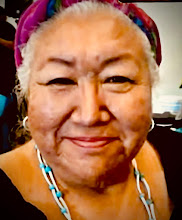 Memories of my late mother saying her dad, my grandfather taught her in a warning that the Dakota Medicine was good, but not anymore. As far back as 81 years ago, fake medicine people deceived their own people for money, power, and glory. Our grandmothers showed us through their prayers helping us celebrate love and helping us celebrate life within our families. Through my own lived experiences, I had to eliminate my own self-defeating behavior. Our people are depending on us to bring justice into our Indigenous Communities. Our Indigenous girls and women are going missing at an alarming rate and are being human trafficked. With little help in finding them or bringing their killers or abusers to justice, I started this blog. I never thought I would live to see such as year as 2023. Today, I feel blessed to be able to hold those who reached out to me in high regard. I am truly grateful, Creator’s Will guided me in my lifetime to see Nathan Chasing Horse arrested. And, yet at the same time, I grief for all his victims who died before they could see him brought to justice.


 https://abcnews.go.com/Nightline/video/dances-wolves-star-nathan-chasing-horse-accused-sexual-114067081?sfnsn=mo Throughout the decades of...