
Thank you for sharing this. Across the podcast, I hear several themes woven together, and they all seem connected by one central idea: the work of dismantling beliefs that were inherited rather than chosen.
A few themes stood out strongly:
1. Shame and women's sexuality
You return repeatedly to the idea that many women, especially from older generations, were taught that their value came from sacrifice, obedience, and meeting other people's needs. Pleasure, desire, attraction, and sexual agency were often treated as something shameful. What seems important in your reflection is not simply sexuality itself, but how silence around it can leave people without language to understand their own experiences.
The quotes you shared from various podcasts point toward a similar observation: many women were taught what they should do, but not how to understand what they feel.
2. Trauma, coercion, and the difference between intimacy and intensity
The discussion about limerence was particularly interesting because it highlights a distinction that many people struggle with:
Intensity is not intimacy.
Chemistry is not compatibility.
Attraction is not proof of safety.
That idea connects directly to your concerns about grooming, coercive control, trafficking, and abuse. A person can feel overwhelming emotions while simultaneously being drawn into a harmful situation. The emotional experience is real, but it does not automatically mean the relationship is healthy.
3. Intergenerational trauma and Indigenous communities
You describe the challenge of understanding present-day problems through a larger historical lens. Residential schools, the Indian Act, family violence, addiction, racism, displacement, and community disruption did not occur in isolation.
What I hear you saying is that healing requires more than identifying individual perpetrators. It also requires examining systems, beliefs, and patterns that were passed from one generation to another.
That does not excuse harmful behavior, but it helps explain why some communities continue to struggle with issues such as silence, victim-blaming, family loyalty, and the protection of abusers.
4. Creativity as survival
One of the most powerful passages was the story of the imprisoned writer who used toilet paper and an eyebrow pencil to write.
The lesson wasn't simply that writing is therapeutic.
It was that creativity creates freedom even in confinement.
That seems to resonate deeply with your own experience of blogging, podcasting, and telling stories. Throughout the transcript, you describe writing as something that allowed you to keep speaking when nobody seemed willing to listen.
For many survivors, creativity is not a hobby. It becomes a way of preserving identity.
5. Boundaries as a form of healing
Another theme running through your reflections is boundaries.
Earlier in life, you describe trying to explain yourself, gain understanding, gain empathy, or convince others. Later, you describe realizing that some people were not going to understand regardless of how clearly you explained things.
That shift from explanation to boundary-setting appears to be an important part of your healing process.
As you put it, there comes a point where you have to "climb off the cross" and stop sacrificing yourself trying to change people's minds.
6. The importance of difficult conversations
Perhaps the strongest message throughout the podcast is that difficult conversations need to happen.
Not because they are comfortable.
Not because everyone agrees.
But because silence creates conditions where shame, abuse, coercion, and misunderstanding can flourish.
Whether the topic is sexuality, trafficking, grooming, residential schools, trauma bonding, or women's autonomy, your argument seems to be that people cannot heal from experiences they are forbidden to discuss.
What struck me most is that your reflections are not really about sex alone. They are about dignity, autonomy, trust, safety, and the right to define one's own life rather than living according to fears, expectations, or inherited shame.
And throughout the podcast, there is an underlying belief that healing begins when people are allowed to tell the truth about their experiences, even when those truths make others uncomfortable.
Marina Crane (00:01.538)
Well, I it's November first and believe it or not, this isn't my first attempt at trying to record this podcast. but again trial and error until we get it perfect. Now this was on TikTok and it's emotionally at gravity channel. And so we'll just start it off and then we'll have some discussion.
Women get horny when she actually likes you. When desire exists, everything lands. When it doesn't, every move feels like work. You cannot negotiate chemistry. She notices your scent, your voice, your hands, your eyes, and the way you make her feel. A calm, confident voice can do more than a a rehearsed line. Hold eye contact a second longer.
And sometimes that silence says everything. When she feels emotionally safe, her guard drops. She can't surrender while her nervous system feels threatened. Understand her, make her laugh, remember the little things. One deep conversation can create more tension than ten pickup lanes. She may notice your hands while you're focused on your abs, and yes, hormones can turn the volume up too.
Men often notice the woman. Women often remember the experience. How you made her feel is what stays. So the reason I played that is The day you realize women get horny for reasons men Okay, and again her it's th the emotional gravity channel that's on TikTok. And the reason I played that is because a lot of times as a indigenous elder woman
when I talk to other indigenous elder women, it's a very difficult conversation to talk about how how I felt being around a man or how he made me feel. there's part of this narrative that she talks about in terms of feeling like be being able to feel comfortable enough to to you know like feel like actually feel how the the person is making you feel.
Marina Crane (02:26.018)
Well, I I tend to think like a lot of the problems is in terms of actually feeling like the the what she called it the hormones is because we repress it. We've repressed it and and so the discussion about healthy human sexuality sort of is r has its rigidity and and basically in a sense its roots in denial. A lot of times too, I think it has to do with early childhood
Like when you're when you become sexually active as a teenager and young adult. A woman's pleasure was never talked about. We were told when we were younger that a woman who has sex well, you have to you have to wait till you have till you're married. Once you're married, you're supposed to have sex to make your husband happy. But a woman who enjoys sex is fast. Meaning you're a slut. That is the term used. So
I also grew up thinking of this as not a good thing. Like, you know, that's an inherent thing that's put into your brain. The next thing was that when you do find yourself in that moment of pleasure, whether you know, this is you're going out with somebody, you kiss, you make out, you find yourself feeling pleasured. There's that guilt that is in your head. Yeah. It pulls you back. Then there is also the
Marina Crane (03:52.878)
Think about the the importance of the man's pleasure and the dismissive attitude towards a woman's pleasure. So automatically if you wanted more you believed that you were a slut and the other person equally is listening to the same narrative. A woman's pleasure was never talked about.
We were to that's why like it now with social media we're talking about woman's pleasure. And and even that, just the topic like talking to someone on the phone for me as an Indigenous elder, i is very uncomfortable for the other person on the other end of the phone. And and rather than dealing with like the self, they start the that that person over there or this happened to my relative or and and that's not the tone of it. The tone of it
is like the e the experience of of of what it is like to like when you were growing up, like this lady said, a lot of times women
you know, got married and like even if you enjoyed it then you were a slut. And at the same time too, I think a lot of the things that happen in human trafficking, especially with like mu like you wonder how can a mother traffic their daughter? Or how could a mother give up her child to a sexual predator thinking that he was going to marry her or give her a better life without the understanding that she was going to be trafficked.
All because the mom, narcissistic, Machiavellian, w whatever psychological label you want to put on it, has this notion that she's a good woman, this this shame of her inj not enjoying like like it's like it's it's a sh you're a good woman if you're you're ple pleasuring your husband. You're a good woman if you submit to the husband. and and you're a good woman if you're supporting your child.
Marina Crane (05:52.205)
To the point where you have t you're you you you sort of dismiss your child in the sense because you're constantly fighting to make sure that people see you as a good woman. And I and again too, I think it has a lot to do with with the relationships that that a yo like a young woman has or or how she was treated growing up. And
Like I like I said, it's it's it's it's an interesting notion that as as you grow up and you have a daughter and you don't have the ability to even talk to your daughter about healthy human sexuality, then then where where does it go? you know, I I I I really think there are there's a lot of issues that happen
that allow human trafficking to take place. And and you see it like in underdeveloped countries, you know, where you have like child brides and even I mean there are what I forget how many states in the United States that still allows adults to marry children.
Why is this such a a topic for me? And see again, even the topic even the topic is triggering and and women look and say, Well, why, Marina, are you talking about this? And it isn't it isn't my own personal experience where they tried to project it onto me and I'm going, No, don't even think that that's the type of life that I've lived. I'm s I'm saying this because
It's important for women to talk about it. Now, a lot of times when when I went to therapy it was because the people that I grew up were shunning me and treating me like I was a traitor to Nathan Chasing Horse. Now this lady, it's called Where Does Happiness Come From?
Marina Crane (07:53.229)
Now I hope I don't know why she's not coming through.
Marina Crane (08:09.448)
And it could I I don't know the other one came through. so it it's beyond me. Let's try it again one more time.
Th the thing is like it's a central message and it's part of, you know, what I hoped
Marina Crane (08:32.737)
No, it's not coming through. what I'll do though is I'll I'll disconnect it from
the media and then just put it on my regular on my regular
Marina Crane (08:51.477)
app and we'll see how this how it goes because I tell I tell you sometimes sometimes things that I watch on Instagram I just I get this what's the word? I just here let's try Nori who created statues also breathe
108 terracotta portraits made in collaboration with students and the actual families of the abducted girls. Each portrait commemorating those still missing when the body of work was created in 2022. Angelina Jolie's foundation would later support the international tour of Prune Nori's work globally, advocating for more girls to be released. And in bearing witness to all this, the question I keep returning to is: were the men responsible for this ever truly held accountable for their banditry?
What do the disproportionately small consequences men face for sexually abusing women say about how seriously society takes rape culture? Let's look at the story of Gulnaz in Afghanistan. A woman who was jailed for adultery because her rapist was married to her cousin. She was forced to then birth her rapists now. I don't know if you can hear it when she left clearly, she was forced to move- But that like that's why I I thought if I could if I could have it clear.
like taped then then maybe like you'd be able to hear it. So again we'll see if it works. If it doesn't it doesn't. If
Like I said, some of them work. Some of the some of them do work. I've been thinking a lot about the connection between Angelina Jolie and the 276 Chebok schoolgirls kidnapped, raped, and forcefully married by Boko Haram militia in 2014. Well, we have to begin with French multidisciplinary artist Prun Nouri, who created Statues Also Breathe, 108 terracotta portraits made in collaboration with students and the actual families of the abducted girls.
Marina Crane (10:54.305)
Portrait commemorating those still missing when the body of work was created in 2022. Angelina Jolie's foundation would later support the international tour of Prune Nori's work globally, advocating for more girls to be released. And in bearing witness to all this, the question I keep returning to is: were the men responsible for this ever truly held accountable for their banditry? What do the disproportionately small consequences men face for sexually abusing women say about how seriously society?
Takes rape culture. Let's look at the story of Gulmaz in Afghanistan. A woman who was jailed for adultery because her rapist was married to her cousin. She was forced to then birth her rapist's baby in jail, and when she left jail, she was forced to marry him as his second wife. The survivor carried the punishment. The perpetrator retained his place in society as a husband and father. In a CNN interview, he called this tradition.
But feel like in many regressive societies like Afghanistan, tradition is built upon a culture of shame that hangs over women like a sword, they must either live by or die by. And Hollywood isn't exempt to the institutional rot when it comes to this very regressive attitude towards women. I struggled to listen to this disturbing revelation Elle Fanning made during a roundtable discussion with the Hollywood Reporter. I was 16, I was literally 16 years old, and this person said, she didn't get the father-daughter.
a road trip comedy because she's unfuckable.
Let's be clear, it was evident that this kind of talk, hypersexualizing underage actresses, was normalized in the film industry with no consequences. The perfect breeding ground for the rape culture that made it possible for the likes of Harvey Weinstein to operate. And now, in Ohio, Amy Acton's unthinkable childhood sexual abuse at the hands of her stepfather has become ammunition in a political campaign. Her Republican opponent, Vivek Ramaswamy, has used Acton's estranged mother in a four million years.
Marina Crane (12:57.281)
Million dollar attack ad calling her daughter a liar. The mother who nurtured her daughter's abuser until his death. The mother who didn't believe her daughter in the way many survivors are not believed. Hi, my name is Joseph. I'm a rape survivor living with PTSD and a Greco-Roman wrestler. And this is day seven of my series Dismantling Rape Culture. So, I thought that was poignant in the sense that.
You know, a a a lot of things that changed for me stark like really changed for me. Like I I use I use the metaphor of Moh Arnold Schwarzenegger, whose father was a Nazi, and his explanation of working to dismantle h his the reality of what of what his father taught him.
It's the same thing for me when when Nathan Chase Morse came here. Even though I had worked with high-risk suicide girls, the there was a dismantling that I had to do. And and even though I I volunteered and cooked tacos and did everything to try and raise money and get the women involved with their daughters. See, this is the hard thing. We just finished having Halloween.
And I I d I don't give out candy, but I but s I had at least five cars come to my place. And and again I was unprepared. So I had this this bowl of candy. Now normally I take a gr you know, I'd take what I need to give and put it in their bag. I said to to the two that came to the door, I'm sorry I don't have anything, just take what you want. And the y that young man, he must have been about twelve, he just grabbed lun lunged into it and just grabbed out a whole handful of candy. I th
I thought how greedy. You know, they they had they had so many activities for youth, you know, for candy. And I thought and and then even then talking with my sister who said there were comments where people said teach your children not to be bullies. So
Marina Crane (15:03.815)
the the whole dis like I said, dismantling notions like how you treat or how you think. So so for me, like when Arnold Swartz and Davis says it was just hard as like he's a bodybuilder, he says it took that much
i like mentality to dismantle the way he was raised to think. And so when I explained the Indian Act and when I explained intergenerational trauma, when I explained my parents were in residential school, my grandparents, that I grew up in in a Sioux culture, like generations of genocide. And and I had to dismantle my belief system because like I knew, I knew I had my mother's cousins, they they they
like just the using rituals and ceremonies to seduce, especially white women. I mean you think in this day and age, you know, women would be smarter, but you know, and then when Nathan Chasinghorse came here and all the women when I tried to explain limerence to them
When I tried to explain he was grooming my niece, I had one woman say to me, he's forgiv he can forgive you can forgive him. Like she was teaching me how to forgive Nathan Chasing Horse for sexually abusing my niece because she said her own experience as as a woman in her healing process, she went to a man, a medicine man, who had told her it's okay to forgive men who have sex with children.
And I couldn't believe it because I had gone to her for support. She was working as an alcohol addiction treat like person. And and she ended up giving her daughter to to Nathan within a month. Then I also, too, like when in this video when they're talking about Hollywood, like of course, he was on the set Bury My Hearted Wounded Knee. And, you know, when they say they sexualize young people in Hollywood, like that Weinstein fellow, and even what he did to this indigenous.
Marina Crane (17:08.211)
Girl.
But the the point is the point is is that is that the sexualization like like that young actress saying that they didn't choose her for a part because she was unfuckable. Now with my niece and with the the group of girls and just the the the bullying and the the peer pressure, it was it I I know my niece thought that those young girls thought that my niece was unfuckable to Nathan Chasinghorse. Because she'd wanted to join in with
with the group and and the point for me was she had to have a sponsor and all these girls had their mothers but but only a few of them actually took part in raffling or or or or raising money. Instead they went the other way. They went to leadership and and had them pay pay you pay for them.
Not that they ever went to the Sundance. I mean I I paid. I even had one of the mothers, the one who gave her daughter away, steal all the hard work that I had done. And and there was no proof and like like I said, I had to dismantle the way I thought that I assumed women thought.
Because I just assumed that if I told them this was what was happening, as women they would say, yes, I n you know, I know about grooming, I know about this, but no, it didn't happen that way. And so I had a really difficult time dismantling why are indigenous women in like they're they're in their fifty they're like sixty some of them are sixty now because this took place when they were in their forties and their daughters were fifteen and sixteen. So when when we talk about the castes
Marina Crane (18:51.713)
system and just how like in terms of feminism and it's in the terms of like when when the drama or when the when the
tr like the trauma comes. What do you do? Like I gravitated to my community. I gravitated to the caste system, like the in how the Indian Act set everything up. And understand this too. In in in the caste system with indigenous women, there are also women who have married who who systematically are bullies to other women. And and whether or not we want to see it, it exists. It exists in all society.
That's why one of the podcasts talks about women are a hundred a thousand times more narcissistic than men. it's like like like again, there's a dismantling of of the notion of of what it is to to be a free thinking woman.
And and even then the jet the whole notion of she's talking about senses of being horny or attracted. And see that's why I talk about this is because the shame of it is so great that it's it's intergenerational. And I'm going, No, it's okay for a woman to have these feelings about about someone they're attracted to because we can't switch it off and on. But even trying to explain that comes with a rebuttal of something's the matter.
with Marina Crane. And so the whole dismantling and the criticism of of trying to have help when when when it was just focused on my family. And and so my whole notion is if you have a victim like my niece and it's just my family. Like I said, my family, there's no alcohol or drugs in my siblings.
Marina Crane (20:41.154)
But it but it's the intergenerational trauma or the behaviour the sex the sexual deviancy that's that was that we were raised in and dismantling it. Like I I
I I'm grateful that I had that shame because I had to make some serious decisions on how I chose to live and how I still choose to live and the boundaries that I've had to set because it's not easy setting boundaries. Like they use the metaphor of the the onion and you peel away the onion skin to get to the root of the problem. Well imagine like you're you're you're constantly putting boundaries because you know you you you don't have boundaries 'cause you thought, if I explain this then
then I'll have some empathy or they'll see me as a good person when really you don't have boundaries and who's who's who's getting sacrificed on on that cross? all Marina Crane. So you what? I had just I had to climb off that cross, dismantle all that wood and make a sweat.
You know, as the fry bread burns, like this has been going on for in generations and generations. I know as an elder there's you know, have stories of elderly women, even when we're in our twenties, saying as the fry bread burns, because it's so historical the notions of what men do to women and and as women how we have to join together to cr create things like create community activities and and try to help
help our our nieces and our nephews or whoever you know have understand what it is to be healthy. Now I don't know if this is gonna come through but there is a lady call Kelvin Anderson five five nine and I'm not too sure if sh this is even gonna come through.
Marina Crane (22:40.13)
Because
says here, okay, I'll have to read it out because it's not coming through. It says, I'm a happy person. This is this lady talking about it. She says, I'm a happy person.
Marina Crane (22:59.555)
People ask me, we heard that you had a very bad life, very painful, and we went and you went to prison, exiled, divorcing three husbands. What? Why are you so happy? I look happy while I am happy, she says. I am a happy person, she says. From where this happiness comes from, she says, from creativity. When I was in prison, she says
For three months under Saddam we were not allowed to have any paper and pen. To the prostitutes and the drug dealers and the killers, they all had everything, television, paper, pen, everything.
But the political prisoners, and this is who she was, because they didn't want allow us, allow her to have a pen and paper. The jailer came to my cell and tell tell me if I could I asked her if she could find a pen and paper for me for my cell. She says, you know, it's very dangerous if I give you this pen and paper. So I decided, since then I have a pen and paper. So she the prostitutes who helped the jailers to bring us bread, I told her, in fact, woman at point zero
And she loved me, so I told her she can bring me paper and pen because I needed to write. She said, okay. The next day she brought me a roll of toilet paper and her eyebrow pen. So for three months, I she says I sat down at night when the jailer go home, and for three months I was writing.
Memoirs, my memoirs from the women's prison by this little eyebrow pen and this roll of toilet paper. By writing the pleasures of creativity, the pleasures of writing, I didn't feel prisoner prison. I felt so happy, I was dancing, I was saying jokes. I was not feeling prison at all. so creativity, the pleasure of creativity can erase any pain.
Marina Crane (25:05.025)
And so I am writing. So long as I have the ability to write and express myself, I and you know it when you express yourself you feel you are happy. That's happiness. And see, that's why I I hoped I could have played it, but again too, she you know, it's really difficult for this audio to come through. And it's it's called the Female Poet Society. And
You know, I I wish I n had more to say about who this woman is, but she
Like the the whole notion of creativity. So when I started my blog it was it was because I like I it I was sad because nobody was listening to me, but the creativity of writing my blog allowed me I gave myself permission to to to write and to express myself and to put it out there to to even like you know, my niece wouldn't talk to me 'cause she was high risk already. She was a danger to herself and others. the my brother who was
guilty for sexually assaulting her for years. you know, he he turned against me. And yet who was gonna look after his children, his two children? And and that whole notion of who t who has the ability to tell my niece's story? Well her her half brother and sister do, because they're innocent. My brother and any of my siblings, we don't.
Because because we are the adults. We're the adults who who purpose like like I like I said, all this notion of how Nathan Chasingcourse set up my brother because there was a negotiating in in terms of trafficking that that my niece would be Nathan's wife. And it was so hard for her because she saw this other group of at least ten young women
Marina Crane (27:05.249)
I like again this whole notion of what's fuckable, pardon my language. But my niece just thought, you know, she was fighting to let those girls know, No, I'm I'm fuckable. I'm I'm I'm gonna be his wife. And the whole group of ten young women didn't believe her. And even when I tried to explain to their mothers that this was what was happening to my niece, they they didn't want to believe it. They did not want to believe it. That's why I say it's it's one thing for my
family to be ostracized. But in order for my niece to have healed
there would have n there would have had there would have been need for another family to be involved, but that didn't happen. It did not happen and it still doesn't happen to this day. So yes, of course I'm going to I'm going to talk about it and write about it because or s or talk about it essentially. Now and the the whole notion too that you know we're for for men who commit these horrific crimes
and and for them to try and shame and use the shame that that was w was like constructed, the de dismantling of the the patriarchy.
Y you know, when I say mm all men are bisexual, it's the notion of of sexuality and just the notion that you know, all this is society, like everyone, even women, we all have grown up trying to understand our own feelings and our own emotions. And so I try to I try to make sure that that I I try to make it as clear as I can on on just what it is that that
Marina Crane (28:54.802)
I'm talking about because these this is a time where women need to talk about like they're like they're in charge of their bodies, their creativity, their happiness. The day you realize women get horny for reasons men don't even understand, everything changes. Women get horny when she actually likes you. When desire exists, everything lands. When it doesn't, every move feels like work.
You cannot negotiate chemistry. She notices your scent, your voice, your hands, your eyes, and the way you make her feel. A calm, confident voice can do more than a a rehearsed line. Hold eye contact a second longer, and sometimes that silence says everything. When she feels emotionally safe, her guard drops. She can't surrender while her nervous system feels threatened.
Understand her, make her laugh, remember the little things. One deep conversation can create more tension than ten pickup lanes. She may notice your hands while you're focused on your abs. And yes, hormones can turn the volume up too. Men often notice the woman. Women often remember the experience. How you made her feel is what stays. And the thing about surrendering
is that like when I ran away to Vancouver and then I met I I had a sexual experience and I surrendered to it. And I use the metaphor like, yeah I f I met an alien because like I said, I was so inexperienced and the fact of how I felt and just the the horiness and the attraction between the two of us but it was the surrendering part
that that I will never forget. And the reality too is like like this just this year when I went to go see the sentencing of Nathan Chasing Horse, the n the allowing the allowing of of my emotions to to you know bubble from the bottom to the top because for so long I held that like I held those I held that pain of how people judged me.
Marina Crane (31:23.82)
when I was sexually assaulted. And and then for me to witness these young women who had lived with this man in his cult and and that shame of of having him control them. It it was like like for me, it was a I didn't really understand it until I came home because see
Part of part of the classical conditioning or the dismantling of the way I thought is like I I've never again I grew up at the c in the Calgary Stampede and I didn't like tourists taking pictures of me. I just felt like it's an invasion of my privacy. And so when I went down to Las Vegas I and even like I I had my picture taken, like photographs.
getting on the plane, you know, like everything. There was photographs. And and and I knew it was an invasion of my privacy, but but I surrendered to it. And and because of that there were boundaries in place with with the the man I was traveling with. And so so the the the closure of having the metaphor of my
my experience over fifty years ago come into full circle this year in 2026. It it was it was the dismantling of that notion that that I had denied myself this sexual freedom. It's I mean some people can say what they want but I just think now again
I want to play this woman and these are the last two I think if I can I think that's probably because most of the topics I do talk about they're very it it's mostly about like Indian residential school politics things like that and th that's not what this is all about so
Marina Crane (33:37.228)
But I do like I said, the the lady that I do listen to, she's she's Indian. And and so there's about four minute clips. We'll see how this works.
Marina Crane (33:57.312)
And this is the the love guide on TikTok. Is where where this is coming from. Your body being somebody else's property. You need someone else's permission to feel pleasure. You need someone else's permission to do this. You it was always about needing permission, but like you belonged to somebody else.
And I thought, no, I don't want my daughter growing up in a world where she thinks that that's how life is. But where are those stories that we have shut down? And I decided to pursue them. Because a lot of people are like, well, what's the stories got to do with it? To me, these ancient stories are like role models. They give you permission. They kind of carve a path for you. They show you the way.
They they're very important for me. I I'm one of those people who needs to be able to follow somebody that's done something. So I know that this is what they did and do I really want to do you know what I mean? Like that whole idea of strength has to come from
Because we are not told stories of a woman's strength aside from her silence and her sacrifice. And when we were talking earlier about the fact that this is a really feminine form of activism, but it just feels like you can channel your own energy. You don't have to take on somebody else's identity to be an activist.
And I had a group of women come to meet with me last week, artists, and I said, even to have caricature, a little novelette of eroticism with women d doing cautionary tales about about taboos so that the message is getting across to young people about healthy human sexuality or because the the
Marina Crane (35:56.726)
Like it we experience all this all the time. We experience th this this violence or this notion of of what what women are supposed to be and and again like it's it's not it's it's again this whole what did I call it? De deconstructing, dismantling
Marina Crane (36:28.27)
The capacity for pleasure than do men. Which is why in the first place the social narrative of containing a woman is seems to have been created. Because it was considered that if a woman was allowed to give reign to her her desires, her pleasure, her sexuality, that she would be out of control. so it is social conditioning, it is completely social conditioning. But I know so many of my friends or my age.
Who have got to this point where they're like, thank God I'm past it. huh. Because they're yeah, it's like you do sorry, you're mid sixties, right? I'm early sixties. Yeah, yeah. So I'm still early sixties. But let's assume you're gonna live till you're nine. That's just the same genetics, health, all the good stuff. you've still got thirty years. I know. And women in their sixties are giving up you're thirty years. You know, it's really weird because a lot of people now the narrative has become that you hit menopause and it's no more sex after that. And
I find a lot of my friends actually use that as the get-out clause so that they don't ever have to have sex again. And bingo, that she said it right on the nose when it comes to indigenous women. They just think that that's it. And some of these women are in their middle forties. And it it all has to do with like the relationship they had with their previous partners.
Without any like the courage to dismantle those notions of thinking. it it it amazes me. It amazes me to no end and yet at the same time there are predators out there. But yet as they're not they're not like these women are not fifteen and sixteen years old anymore. They they've had children but they still have the notion that, you know, it's over for them. A woman's pleasure was never joked about.
We were told when we were younger that a woman who has sex well you have to you have to wait till you have till you're married. Once you're married, you're supposed to have sex to make your husband happy. But a woman who enjoys sex is fast, meaning you're a slut.
Marina Crane (38:39.79)
That is the term used. So I also grew up thinking of this as not a good thing. Like, you know, that's an inherent thing that's put into your brain. The next thing was that when you do find yourself
In that moment of pleasure, whether you know this is you're going out with somebody, you kiss, you make out, you find yourself feeling pleasured. There's that guilt that is in your head. Yeah. It pulls you back. Then there is also this thing about the the importance of the man's pleasure and the dismissive attitude towards a woman's pleasure. So automatically if you wanted more
You believed that you were a slut and the other person equally is listening to the same narrative. A woman's pleasure was never talked about. So again, too, like, I think sometimes for me and this is the the the reality of it, like I haven't been sexually active in so many years. So even when I'm around artists that are that are lesbian and they're coming on to me, I I don't know.
and I and I jokingly say that about heterosexual men too. I I don't know. So so it it's it's the notion of actually for me just like, okay, what's happening here? 'Cause again
I totally believe it has to do with respect. And this is just this is just like my the ABCs of healthy human sexuality. I and I use the metaphor of Spock in Star Trek, where Spock has died and he and they regenerate him and Dr. McCoy asks him, What is it like to die? And Spock asks the doctor, Have you ever died? And the doctor, of course he hasn't, and he says, No. And then Spock says, Well, we can have a conversation. And the doctor
Marina Crane (40:28.816)
doctor goes and says, you know, can't have our conversation. He says, Yes, in order for us to have a discussion about death, you yourself have to have experienced death. And and that's my comment on respect, or even the comment of like the horniness, the the the the unless or the the surrendering. Because I I and that's what's so tragic
about coercive control and pedophilia is that the that that pleasuring, that horniness, that re surrendering, that that's robbed, that's taken away. And and for a human being never to experience that, like like that's unforgivable. Like that that's the bottom core of of why I talk about healthy human sexuality.
In in psychology one one they it it's it's just so simple. If an adult thinks of having ch sex with a child, you can forgive them because it's just a thought. They're not acting on it. However, once they take that thought and act on it, then it becomes unforgivable. Because the repercussions of what happens to that child by someone who who has no
no sense of morality, no sense of of of guilt, like just just pathological. La you gotta understand this too. Part of the releasing and letting go was yeah, I took my rapist to court. He was a serial rapist in my community and I keep on telling people, him and his partner, his partner died at twenty seven.
And there the two men were married to sisters who came from Saskatchewan. And and the the the the coercive control, the physical battery, like beating them up so th those women submitted and never said nothing bad against their husbands, who again were serial rapists. Understand this, like every time that the man who I charged, the one who still lived,
Marina Crane (42:49.836)
When he would see me with his wife, he would beat her up. I didn't know it until I witnessed it and my cousin and I had to yell for help on the corner of the street when 'cause he grabbed his wife and he beat her up with his boot stale stael toed boots. She was in the hospital for two weeks. And at at one time I was
I I was driving with her and I said to her, 'cause she knew he her husband had raped me, and I said to her, just not mentioning his name, and I said, If I ever was raped again, I would kill that person and she looked at me, just scared. And I'm going, No, for all the lateral violence and the the violence and the attitude towards me is very painful.
See so creativity and doing the blog and like twenty years ago and even doing my podcast, i it it gives me joy, it gives me happiness because it it was one thing to tell my story, but but the people who were listening were also women who were victims of violence. So there was so so they couldn't relate we could all relate in that sense, but we couldn't relate because none of them took their perpetrators to court. So once I took mine to court
like like the the message was, once you do it you'll wonder why didn't I do it earlier? And like I like I said, I took my perpetrator to court, he served his time, and even after he c got out of jail, he pursued me, he stalked me.
I would go into places and I would he would be there. He w he knew where I hung out. And and so that's why even though, you know, it's a nice fairy tale narrative confronts your abuser, you know, tell him he hurt you, like and and then like what happens afterwards. So even like in the case of Nathan Chasing Horse, he's gonna appeal his his his his sentence. Because these men still think that you enjoyed that what they did to people, especially these children.
Marina Crane (44:52.929)
That they enjoyed it. There's no ifs, ands, or buts about it because they're keep on persistently stalking their victims. And and to this day, like like I've put my foot down on this man who lives in my community. So when I talk about restorative justice and people will look at me and say, you're a pedophile because you supported your brother.
Like d do do they realize do they realize that my rapist is in my community? Do do they understand like that I put boundaries down with him? Do they understand the boundaries I put down with my brother or my family, my br my siblings? Like until you have actually understood just how deviant a perpetrator is and how you've had like for me, the
The person who took my pictures, he says, I've got a picture of you with a tear in your eye. And I didn't know, I didn't know like I had this tear in my eye. I didn't understand the whole nature of having closure with Nathan Chasing was was compounded and went deliberately back fifty years of my life.
And it's not like something that I that I held on to deliberately because if I knew it I would have let go of it a long time ago. So a lot of times when I talk about healthy human sexuality, I'm I'm encouraging women to to have discussions. And if you don't feel safe with your your your childhood friends or your new friends, find a therapist who who you can who can do you can do this to, or someone that you trust. That's important.
We were told when we were younger that a woman who has sex well you have to you have to wait till you have till you're married. Once you're married, you're supposed to have sex to make your husband happy. But a woman who enjoys sex is fast.
Marina Crane (46:57.644)
Meaning you're a slut. That is the term used. So I also grew up thinking of this as not a good thing. Like, you know, that's an inherent thing that's put into your brain. The next thing was that when you do find yourself in that moment of pleasure, whether you know, this is you're going out with somebody, you kiss, you make out, you find yourself feeling pleasure.
Marina Crane (47:25.378)
There's that guilt that is in your head. Yeah. It pulls you back. Then there is also this thing about the the importance of the man's pleasure and the dismissive attitude towards a woman's pleasure. So automatically, if you wanted more, you believed that you were a slut, and the other person equally is listening to the same narrative. A woman's pleasure was never talked about. We were told when we were younger that So
Like it's the pulling back for me. I didn't even know consciously I was doing it. It's like it's like when you touch a flame you pull back. Like I didn't know I was doing that. Okay. at the same time too, even the thing is like I didn't realize like the the part the person I'm attracted to, the person I'm horny with is listening. Okay, so whatever they're deconstructing to has an effect on
say me, the receiver, the giver and the receiver of the of the the message. So that's why like when when we're talking about narratives and and what happens and where we go and then even for us as women. like I like I said, my friend Barb she's a well I call it a psych a psychotherapist nurse.
And she said that she counseled a lot of women who remained virgins until they got married. and again this whole religiosity. You gotta understand too, a lot of these women married and trauma bonded. We're just not talking this isn't the cultural thing, we're talking humanitarian thing of women. Is that when women married, like even in the sixties and seventies, eighties, and I'm pretty sure even in twenty twenty six
that that the notion of like obeying or pleasuring your husband, the
Marina Crane (49:16.332)
The reality of it is like a lot of women were indoctrinated to be keep to keep their virginity. So on their wedding night, some of them were raped by their husbands, their newly married husbands on their honeymoon. And the woman who had never had any type of instruction or any type of n talk about healthy human sexuality just thought this was normal. Now my my friend who has passed away.
counseled women who had to dismantle that notion that what they had in terms of sexual intercourse with their husbands for years was not healthy human sexuality, that it was coercive control and that it was rape. Understand this too, some women who waited and and weren't you know, like again, they were perceived as being fast, so women didn't want to be seen as fast.
Okay, again, narcissistic. Like I'm the I'm a good virgin woman. But yet at the same time they're they're their partners or their
the the their partners would would give them a sexually transmitted disease because it was okay for the man to, you know, be perceived as being a stud or like he was, you know, this masculine man. but it was okay it wasn't okay for a woman to be a feminine woman. And what it what is the definition of that? That's why I like this podcast. Also too, there were women who like I said, in in terms of bonding, trauma bonding it it
It's it's like it you know, getting having their husbands addicted to alcohol or drugs and and for for for them to like the husbands would go to AA and again I have this whole AA and Oxford group and that's another story, another narrative that took place during the Second World War and there was this whole cult thing in Mackinac Island, Michigan and twelve-step program came out. Understand this that
Marina Crane (51:26.337)
That they had Alcoholics Anonymous and then they created El Anon for women or or men whose spouse were alcoholic and drug addicts. And so in this whole disparity of having support groups, the women found, and again, it says women found out that they were trauma bonded to these men. And they had to do some self-reflection on why it was they were bonding to such such creatures.
who yeah, gave them sexually transmitted diseases, enjoyed raping them. Like and and the brutality of of violence. There is a show on Netflix that I watched last night and and this woman she's sh you know, she's working in the slums.
collecting garbage and and, you know, recyclables to to look after her two children and she's living with a man who beats her up, wants to have sex every time he gets drunk, and she runs away.
And and the and her her relatives coercively control her to get back with this man. And when she realizes everybody's involved in this violence and that everything seems to be okay in this violent environment, she chooses to n to to to live on her own in a place of safety. And it it wasn't until she heard her daughter or that man she was with that he was having feelings for her twelve year old daughter.
that that the shock of what was going to happen to her daughters, she had to save her children, her children. So a lot of these stories, these narratives of how women had to understand trauma bonding. Because understand this, it's normal for human beings to bond. It's normal for human beings to bond with somebody maybe 10, 20 years. And it's and it's okay to leave that bond because it's not forever.
Marina Crane (53:26.892)
Bonding is not forever. But what's important that you have healthy bond healthy human sexual sexuality bonds instead of instead of trauma bonds. So it's important it's important to understand and understand these things by talking with other women and and somebody you trust. This guy kissing me, and I remember wanting more. It wasn't in like I wanted more. And I remember him saying to me,
You know, you're just being too demanding. And I realized this, that I mean, this happened with a couple guys, and then you suddenly realize, hmm, clearly this is chasing away the men. Yeah. If I'm too demanding, I need to hold myself back. So you suppress your own sexuality. You
The press your pleasure to make yourself acceptable. Because you have to remember, today I'm 61. I have learned over many, many, many decades that I am fighting for a particular right. And that's fine to have that fight. But when you're that young, when you're 21, you don't know that. You know, none of us know this. And there is a there isn't a precedent that say you need to go out there and fight for this. You know? Yeah.
When I think about the feminist movement when it started in America, that only started in the late 60s, at a time when there was no social media, there was very little television. You didn't know living in India what was happening in America. You didn't know about the movement. You had to discover a lot of this for yourself. So yeah, I grew up with this belief that something is not right with me.
That's why I talk about dismantling w ways of thinking. Because especially when especially when you have serial rapists
Marina Crane (55:23.134)
who and women who refuse to press charges or talk about it, or you have families who are oppressing and making sure that people keep quiet so that their relative stays out of jail or that the family is perceived as being a good family. Whether the family is religious or traditional, especially traditional, you know, that's why when Nathan Chasinghorse came in here, I already knew that I already knew about this whole fallacy of of like
what w how people perceive other people in in the public eye. So again, like when she said the feminist movement and in India she didn't know and it's the same thing with First Nations, especially isolated communities, they did not know.
And that's why like in some of the northern communities in in Alberta, when even in Indian residential school when they aged out or in foster care, they just put them on a ticket to Edmonton and there were pimps you know waiting for these girls to get off the off the bus. And then you had women who organized Indian friendship centers in these cities to stop human trafficking.
Like I know a lot of the elder Sutina women helped helped and and volunteered at the Friendship Center in Calgary. 'Cause I I was a young woman, I saw this. I I didn't understand the extent of the structure of what the Indian Act had created. And so that's why it's important for me to have a discussion about it o online and and as a as an indigenous elder woman who who has lived it. So
I hope that covers everything because like I said it's it's it's important it's important for for people to to like to know it it's okay it's okay to feel like that that it's okay to feel and have these emotions because we can't shut them off.
Marina Crane (57:23.328)
You know, it's it's it's part of our it's part of our DNA, it's part of the hormones and all these things that make us unique as human beings. But but if we do not if we do people in this country could not vote on Tuesday. Like it's just
Marina Crane (57:45.366)
I think like I said, it it's trying to dismantle rape culture and and trying to understand like it's the extent of everything that happens within within our environment, within our neighborhood, and even within our own individual cultures. So, let's see, I don't know if
Everyone is bisexual, but that doesn't mean what probably came to your mind. In psychoanalysis, the word bisexuality has a very different meaning from what we use today when we talk about sexual orientation. It doesn't mean that everyone feels attraction to men and women. The idea is that no one is psychically constituted in a totally masculine or totally feminine way. We all have masculine and feminine dispositions that appear in our desires, in our identifications, and in the way we relate to others. This idea reached psychoanalysis mainly through the influence of Wilhelm Fliss, a German.
Doctor who was a close friend and one of the main interlocutors of Sigmund Freud during the years when psychoanalysis was beginning to take shape. Fliss relied on data from anatomy and embryology. In both the male and female body, there are traces of structures of the other sex. From there came the idea that the organism would be, in its origin, bisexual, and throughout development, it would differentiate itself sexually, although it would retain some of these traces. Psychoanalysis takes this idea to the psychic field. One way to notice this is in the Odipus complex itself. The child does not relate to the parents in a single
Way, they can desire and identify with both the father and the mother. A boy, for example, can identify with the father and desire the mother, but also identify with the mother and desire the father. For Freud, these different positions can coexist. That is, one does not simply have to disappear for the other to exist. The subject can carry at the same time identifications and desires linked to both masculine and feminine positions. This also appears in the way psychoanalysis understands libido itself. Libido does not appear only in sexual desire, it also participates in bonds of love, friendship, admiration, and identity.
Identification both with men and women. This does not determine your sexual orientation by itself. That is exactly where the idea of bisexuality comes in. Our desires, identifications, and libidinal investments are not stuck in a single masculine or feminine position. So when psychoanalysis says that everyone is bisexual, it is not saying that everyone has the same sexual orientation. It is saying that our psychic constitution is not organized in such a simple way as man on one side, woman on the other. Masculine and feminine mix in the history of each subject, in their identifications, and in the unique way.
Marina Crane (01:00:07.514)
Way that each person constructs their own sexuality. Therefore, for psychoanalysis, anatomy alone does not determine what someone will be psychically. See, and that's the whole notion of of why, like even when I talk to older indigenous women and they're talking to their grandchildren, say, no, you were born a won a a girl, you are a girl. And I
Like an and for me to try and deconstruct that, to have a conversation about that is really difficult. Because that because they refuse to dismantle or deconstruct their notions of healthy human sexuality. And and and that's the nature of how many of our youth are growing up because you know, their grandparents are afraid for their children. But yet if if it's based on fear then
it it it it's gonna end up fear like in violence. That that's just my opinion of how I've s I've seen things in in in in just things that I that I understand.
Now let's see here. I was talking about this to my students today. I said I'm actually against the word love quite often because we use it and throw that word around like we know what it means. And one of my students who studies the Ojibwe language and is a teacher, they said this was so fascinating. I didn't know because I don't speak Ojibwe. They said actually one of the words for love that gets translated as love in Ojibwe kind of means stingy. And I'm just saying like to to sort of covet something for yourself. Yeah. Let's territorial.
Yeah, yeah. Interesting. Yeah, and I think fascinating. It is fascinating. But that is a nuance. Yeah. All these languages around the world will have different words for things that we might really lazily translate into something in English and no idea of the deeper values that inform it. So there's politics and all of that, and every single word in the English language, if you look at the etymology of the word in the dictionary, there's a political history to that word. I was talking about this to my students today.
Marina Crane (01:02:10.506)
That's multi multinary podcast. U L T I A O R I and that is from a lady she's a doctor, in in talks about indigenous identity.
I just I just found that interesting, like
It's amazing how people can act like hundreds of years of whites using violent oppression around the entire world hasn't happened, and that it's still not happening today. So let's address the comment: you hate white people. Well, yes, I'm not gonna deny it. There's a part of me that absolutely does, and for very good reason. You guys played a role in this. You're not Buddhas in this situation. White people hate white people, and I am half white. My mom is white. Like tr-
Trailer Park White. And I grew up part time in that culture. I went to school systems in exclusively white, economically poor communities. As an adult, I have seen all the highs and lows of white culture. I have seen all the common culture and all the forgotten cultures that you guys want to pretend doesn't exist. Believe me when I say I have enough hatred to last me a lifetime. But at some point I had to ask myself the same question I
Ask all of you, which is with all of this nastiness and hatred that's infecting the world around us, is that something we want to contribute to? Or is there perhaps a more beautiful, fulfilling way to live? Chief Tecumseh of the Shawnee called for a spiritual revival. He said that we need to refuse the firewater and reject European customs. Hatred is another form of firewater. It's a poison, a scapegoat, a justification, and a fuel that leads to.
Marina Crane (01:04:09.486)
More hatred and I don't want to be consumed by it or contribute to it. I know for a fact that white folks have the capacity to take responsibility for their actions and they can choose to do different things, which would lead to a much more balanced world. I've worked with hundreds of people who have been able to do it. But until the bitter end, the majority of white folks choose to deny what they're doing, they will attack you for talking about it, or they will reverse the roles.
And make themselves the victims. And of course, this has spread to include more than just white folks. So if you have similar experiences as I do, you can't expect anybody to make any changes for you. But if you want to lead the way and take accountability for the poison that's inside of you and choose a different path, check out my website. It's linked in the bio, or at the very least, follow for more. Sim. So his
It's amazing how people can act like hundreds of years of whites using violent oppression around the entire world. No, I don't know if I can actually see And that it's still not It's Julian J-U-L-A-N
Marina Crane (01:05:28.694)
I'm sorry I couldn't get his whole Well, yes, I'm not gonna deny it. There's a part of me that absolutely does, and for very good reason. Yeah, it's I can't get his whole bibliography act like hundreds of years of whites using violent oppression around the entire world hasn't happened, and that it's still not happening today. So let's address the c so anyway, we're we're
Again, like I said, I grew up my whole life around white people and and I have white uncles and and you know, like again, this whole notion, you know, you grow up and and you have this hatred and and so like like it's it it's one thing to talk about it, but it's an actual thing like when you talk about it and people know you actually hate hate them.
Like I like I said, as an elder I I know this fellow who's at least six years older than me and you know, like how he grew up and how, you know, in residential school how white people beat him up.
You know, for for just speaking his language or saying w what his name was, putting him in the attic and him escaping. And and for me, when when I was confronted about my my Indian name Hapa and and I that I knew my Christian name was Marina, I I wasn't beaten up. I I wasn't.
You know, I was embar like they she embarrassed me as if I was stupid. but you know, all the other people in that were my age group and it's it was a day school. It was a small two like a two two room schoolhouse. And but but the trauma like I didn't experience the the physical battering
Marina Crane (01:07:21.338)
And and like that's why I say if you know, growing up around white people, like like this fellow said, how he grew up, it it's it like experiencing all that and and knowing a lot of times a lot of times it it takes more and like I said, a lot of white people want to engage with indigenous people but but there's a cautionary tale
that there are still indigenous people elders who were brutalized as children.
mostly I could see it with men. for women, elderly women like like my late mother, it was more of like fawning. Didn't want to, you know, cause a ripple or didn't want to cause a disturbance. Whereas indigenous men they will use usually say, Well well pay me. Pay me to say a prayer or pay me to give you an ind indigenous name. like there's there's so much diversity in in just out there
in how people engage with other other indigenous people. So with that I want to I want to close off this podcast. I hope
there is one thing about limerence. Okay, so I don't know if this is gonna show up. A D H D in limerence, when intense attraction feels like love. If you ha Hold on here, if I could even you know, sometimes like I said, sometimes when I try to get this and it's connected, but yet I'm not actually able to have it connected.
Marina Crane (01:09:11.358)
And
Marina Crane (01:09:16.802)
Yep, it's amazing how this technology either works or doesn't work. Let's see if I can
Marina Crane (01:09:32.834)
seeing the options I have. Well I guess it's gonna have to just wait for another another podcast because it's not about to happen. Let's see.
ADHD in limitance when intense attraction feels like love.
If you have ADHD, I want to talk to you about something that could potentially save you from heartbreak. It's called limitance. And I have a hypothesis that people with ADHD may be particularly vulnerable to experiencing it. Let me explain. ADHD isn't just about difficulty concentrating, it can also involve emotional dysregulation.
Marina Crane (01:10:24.367)
I see I'm sorry again it this sometimes it just does not seem to want to work out the way I hoped it would. And and
Let's see if it
Marina Crane (01:10:47.362)
May be particularly vulnerable.
Experiencing it. Let me explain. ADHD isn't just about difficulty concentrating, it can also involve emotional dysregulation, impulsivity, novelty seeking, and heightened sensitivity to criticism and rejection. And here's something we don't talk about enough. Emotional dysregulation doesn't just affect negative emotions, it can affect positive emotions too. You meet some
There's instant chemistry, excitement, attraction. Suddenly you feel intensely alive. The novelty, anticipation, and pleasure of being around this person can become incredibly compelling, intoxicating. But here's where things can become dangerous. You might mistake the intensity of what you're feeling for the depth of the connection you're experiencing. And that's where limberance comes in.
Limitance is a state of intense romantic infatuation, often involving obsessive thoughts, idealization, and a powerful longing for reciprocation. You might put someone on a pedestal. You might fall in love with their potential rather than their reality. And you might overlook red flags because of how intensely they make you feel. Now ADHD isn't the only possible pathway to limit.
Limitance, attachment insecurity, childhood neglect, and unmet emotional needs may also contribute. But my hypothesis is that certain features of ADHD may increase vulnerability to it. And the consequences can be devastating because when you mistake limitance for love, you may open your heart to someone before discovering who they really are. You become emotionally invested, attached to
Marina Crane (01:12:49.313)
Vulnerable, and if that person turns out to be emotionally unavailable, inconsistent, or abusive, the psychological consequences can be profound. So please remember this intensity is not intimacy, chemistry is not compatibility, and feeling deeply connected to someone doesn't necessarily mean they are emotionally safe for you. Because ultimately, what matters isn't just how intensely someone makes you feel, it's rather
EDHD in limitance when intense attraction feels like love.
women like in this in the sixties and seventies, El Anon and just the whole notion of traumatic bonds and and how these women had you know, like again the deconstruction or the concepts of what a woman is supposed to feel in terms of healthy human sexuality, that the intenseness of it. It's like it's like Disneyland, you know, like you have the the fairy tale and people think, it's gonna be that intense and it does become intense.
But again too, unless you understand it the way he explained it. And again, too, a lot on the social media stuff, they there's so many people who have this magic formula of how to how to deconstruct or eliminate self-defeating behavior thoughts on limerence. and I call it's a cautionary tale because it's not something easily like it it seems easy to to understand because it it's being, you know, like you're actually
Listening and understanding, so yeah, I I've experienced that. No, the the the it it takes it takes more because you're like again, you're involving a lot of other emotional things that happen when you're engaging with an individual. You know, like and he said, you know, it has to do with trust, and again, too, the compatibility, you don't know, like nobody does. I mean, like I said, I I'm I'm so naive about certain things, and yet I'm
Marina Crane (01:14:59.136)
I'm grateful I'm naive when somebody is approaching me and is you know, sexually attracted to me. but again too, it's a learning experience even at my age. So there there I guess the bottom line and I and I and I'm sorry I'm laughing because it is serious. I I don't I don't mean to like make it sound like I'm I'm I'm
dismissing anybody's emotion. But but but the the the point the the point of everything is that like what like re I'll just go back to the last part where he's talking about the structure or abusive the psychological consequences can be profound.
So please remember this. Intensity is not intimacy. Chemistry is not compatibility. And feeling deeply connected to someone doesn't necessarily mean they are emotionally safe for you. Because ultimately what matters isn't just how intensely someone makes you feel, it's whether they've actually earned your trust. So y like like I s like you said, he he's written it out, he's put it out there. And and that's why like he says
it's it's such a it it can lead to you know horrible consequences and like I said you you have why are there women shelters? You know why is there human trafficking? all all these things of intense emotion and our inability to like you know really have a discussion with somebody whether or not someone is safe.
And e and even then that's why that's why I talk about the structures and the boundaries of of looking after
Marina Crane (01:16:53.514)
ch like teenagers or in group activities of d the social dynamics of structure, especially when it comes to you know, getting funding to to have youth centered programs. I know a lot of people say, well Marina, you know, we can't have shelters for children or or group homes for children in Sutina 'cause we're not trained. And I'm and I'm going, that that's not that's not
Like you you can have these p in place, you can govern them, but you you you also have the ability to manage who is doing these things. And and if you have qualified people to to understand how that structure should work, again, you know, I I I I I tend to really go back to grassroots and
you know, I talk about Danielle Smith and how she cut how her and all these people, these millionaires who you know, somehow they managed to cut funding like for Nietzsche Institute in Edmonton, which was started in the seventies by for by indigenous people to help like to analyze alcohol and drug addiction. Like the the whole program
And all the people who went through that program I'm I'm s I'm seventy-four. My my mother went through it. And and even in the seventies it was so difficult to even have any indigenous we'll call it not even paraprofessional. They were just volunteers trying to get AA programs going, LNO programs.
trying to get any structure, social structure, for people to come and talk about supports that when they wanted to feel like d getting drunk or or even to the point where like they're beating up their spouse. All these things there it's still a struggle.
Marina Crane (01:18:58.056)
you know, my mother tried for so many years and and it's a constant struggle, s constant understanding of what it is that we're fighting for. That's why I think sometimes when people say, get rid of the Indian Act and I say, Well, can you get rid of the caste system in India? Look at how long the caste system exists existed in India. And and look at look at what the Canadian government did with in the Indian Act.
A lot of this has to do with deconstruction, deprogramming, or really, you know, doing the work to dismantling, that's the good word, dismantling the things that we took for granted that were not healthy, but were taught that it was healthy. Dismantling it and understanding it and de and deconstructing it and reconstructing what we see and what we need.
Okay, I hope you enjoyed the podcast. Like I said, I haven't done too much in the past week. it's not that I'm lazy or anything, it's just the reality that I've had to put some more boundaries down and and I you know I it it's it's not it's not for the lack of a trying. I just have some mobility issues as well. And like I said
coming coming to terms with coming to terms with things that that I just thought were good programs and aren't good programs and then still being invited to participate in other programs within the city. I'm so much so very grateful for the ability to do that and and just the insight that I have that I can share with with people of of all cultures.
So I with that I hope you have a good day and and for those those adults who went out Halloweening, trick-or-treating, like my sister, all you adults, take it easy on the candy, okay? And for those people who just gave in to their children's need without without putting boundaries of how much candy is appropriate, you need to teach your children not to be bullies.
Marina Crane (01:21:20.48)
like I was going like I really felt bad that I didn't stock up or anything and I thought, okay, next year I'll I'll I will do Halloween but then the reality of it is no. Our pro our community does so does so much for our youth on Halloween.
I don't think they just need I I think having an extra, you know, bag of candy giving out isn't isn't going to hurt anybody. And and if I do give out candy next year, it'll be just to my extended family. I I I just don't like the time and the money like I I make my


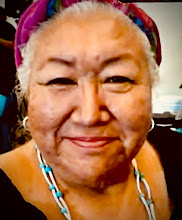 Memories of my late mother saying her dad, my grandfather taught her in a warning that the Dakota Medicine was good, but not anymore. As far back as 81 years ago, fake medicine people deceived their own people for money, power, and glory. Our grandmothers showed us through their prayers helping us celebrate love and helping us celebrate life within our families. Through my own lived experiences, I had to eliminate my own self-defeating behavior. Our people are depending on us to bring justice into our Indigenous Communities. Our Indigenous girls and women are going missing at an alarming rate and are being human trafficked. With little help in finding them or bringing their killers or abusers to justice, I started this blog. I never thought I would live to see such as year as 2023. Today, I feel blessed to be able to hold those who reached out to me in high regard. I am truly grateful, Creator’s Will guided me in my lifetime to see Nathan Chasing Horse arrested. And, yet at the same time, I grief for all his victims who died before they could see him brought to justice.
 https://abcnews.go.com/Nightline/video/dances-wolves-star-nathan-chasing-horse-accused-sexual-114067081?sfnsn=mo Throughout the decades of...
No comments:
Post a Comment