
RECORDED FROM FACEBOOK
Marina Crane (00:05.972)
Okay. It's August ninth, Sunday. I thought I'd do a quick little podcast. It thunderstormed last night, big bang. It was like the downpour came and it's supposed to rain today again too, but right now y I can't even see the Rockies because of the smoke and the haze and everything.
But this recording that I'm going to do ha was featured on Facebook. And why it's so important is because again, this whole connection with Daniel Smith and the Separatist Party and just the whole controversy too of what they call those data centers and you know, like, it's gonna lower the utility bill and there's so much conspiracy and theories out there.
I just wanna warn my readers, like you really have some to have some critical thinking skills. I came across a TikTok where this fellow was talking about Omicrons being s siphoned out of children's blood and my goodness, I thought, what kind of person does stuff like this, like spewing conspiracies, lies about f scientific stuff that's
That's impossible to do.
But take it what it is, until you do the research and actually have critical s thinking skills you'll you could believe it. And I I think that's why it's important for for parents to monitor, you know, younger children or even have some discussions about, you know, what is believable and what isn't. But that's similar to my podcast. It didn't occur to me until my friend said, Well, Marina, you know, people who listen to your podcast too can also look at you as some sort of conspiracy theory and that you don't know what the hell you're
Marina Crane (02:00.086)
Talking about, and you know, they can just chalk it up to like, she's you know, whatever, okay, whatever. but anyway, I want to play this because it has to do with this whole recovery center, and and again, I I I want to also sort of not caution but but just own the fact that there were indigenous people who supported Daniel Smith.
and they were elected into council or they were either fostered out or you know had some trouble connecting with their First Nations anyway Metis communities and well let me put just put it this way. Okay. When you're not mentally well and my mother or in the Sioux way they say Yakaba that means look at yourself. Yourself you're not mentally well. But what I'm
What I'm trying to say is that
You know, if you take a theory of cults and how people are deprogrammed and like how much you invest in it so that when you break away, you're heartbroken. It's like breaking up a love affair. And and you go and people will see this angst in you as you morph into somebody different. And and so it's the same thing with indigenous people that I do know who belong to this cult of Daniel Smith. And and they've sort of said that they've broken away or they gaslight.
And I want to use this.
Marina Crane (03:31.544)
word because I think sometimes when we're not self-reflecting and we don't know we're gaslighting, that we we're doing this without no I don't know if we're consciously doing it or that it we're too scared to admit it and because of that we're we our whole identity s was gonna be fractured and we've got to build it up. Like we gotta hit dirt bottom and build it up. And and I think for that reason a a lot of times when I see acquaintances or people like that I've known and grown up
my whole life or just new acquaintances who who haven't you know they've left certain we'll say ways of th cult ways of thinking but but haven't really done the work and they're still in recovery. I mean they're still in relapse, I'm sorry, because the recovery process is very painstaking, very difficult and it's worth it but but yet again too the proof is in the pudding. And usually and I'm not saying I'm immune to gaslighting.
And I I still find myself being victimized by it. So that's why I talk about it the way I do. It's it's just a matter of understanding it and knowing that you're involved in it without you you know losing much sleep over it. So I'm gonna share this.
If I can if I can get this done here. And I want you to listen to it and then I'll do a little comment after. But this is a quick p podcast. And again, hello Darcy and Marie.
Sam Mirage, Danielle Smith, the courts, and $104 million in recovery centers that may never exist. Danielle Smith knows that she is fibbing when she says that all three addiction recovery centers that were to be completed in 2025 will be completed by the end of 2026 and without any more government cash required beyond the $104 million the government committed to the projects.
Marina Crane (05:29.218)
The weeds are thick in the scandals that have resulted from the government failing to provide oversight over the contracts to build these centers. Suspiciously, all three contracts went to affirm that indigenous peoples suggest is secretly controlled by Sam Mureish, the businessman who has nailed hundreds of millions of dollars of controversial government construction plus the infamous contract for importing bogus, unusable Turkish Tylenol, cancel contracts.
Unpaid contractors, and tons of lawsuits will stall at least two of these construction contracts beyond 2026 and there is no doubt that if these buildings are ever to be completed, tens of millions more of government money will be required. As always the up government is playing fast and loose with public money, blaming others, and acting as if all will come out in the wash. Only the gullible and racist will fail to see that government incompetence and probably criminality and corruption are at play here.
This government seems unable to do anything honestly. From the Globe and Mail August 5, 2026, Smith insists Alberta Recovery Centers moving ahead of mid-tangle of legal action. Carrie Tate and Tom Cardoso, Calgary, and Toronto. Contrary to Danielle Smith's statement that the government will not have to intervene to finish building recovery centers. Subcontractors allege money has dried up, their work is incomplete, and costs have climbed since they first signed on Jeff McIntosh, the Canadian Press.
Alberta Premier Danielle Smith says she expects construction of three addiction recovery centers in indigenous communities to wrap up this year without requiring an extra infusion of cash. Despite a thicket of liens and lawsuits alleging millions in unpaid bills and misdirected funds, the government earmarked $104 million for the trio of facilities, which are key to the United Conservative Party's strategy of tackling the province's deadly opioid crisis by favoring treatment programs over harm reduction efforts, Ms. Smith.
At the end of July, said Alberta picked up the TAD for the facilities, but left it to each indigenous community to select the contractor for their respective project. The three facilities were to be finished by the end of 2025, but have all missed two extensions granted by Alberta's mental health and addiction department. According to documents the government disclosed in a progress report this spring, Ms. Smith said she does not believe she will have to intervene to ensure the recovery facilities make it across the finish line.
Marina Crane (07:50.744)
We're not hearing that more money is necessary, she told reporters last week. We're hearing that they are going to be completed before the end of the year with the budget that was established, but subcontractors, in court filings and in interviews with job flocks, allege money has dried up, their work is incomplete, and costs have climbed since they first signed on. The projects are caught in a tangle of legal action, with various parties spurring for control of millions of dollars allegedly earmarked for the facilities.
Someone has to step in, Renals Tehari, a mechanical contractor on two of the projects, said in an interview, if they don't pay, we're not going back. First Nations lawsuit against its ex-lawyer link Sam Raish to Alberta Recovery Site Procurement, Enoch Cree Nation, Sudina Nation and the Matisse Nation of Alberta all contracted Maluka Homes Limited to build their recovery centers. Maluka, owned by Louis Simashkewicz and his son John Simashkewicz.
In court filing said it partnered with another company, e-Holding Court, to win the construction contracts. The Simash Kwitches alleged the company was secretly controlled by Sam Mirage, the Edmonton businessman at the Center of Alberta Sweeping Healthcare Procurement Affair, who allegedly demanded exorbitant amounts of money to keep project payments flowing. Maluca also alleges Mr. Mirage threatened to use his influence to have the company's recovery center contracts cancelled. Scott Hutcheson, a lawyer for Mr. Marech,
Previously said the legal feud concerns a commercial dispute in which Mr. Marach has played no role and has no business or financial interest whatsoever. As part of the battle, he and its principal Mohamed Al-Jasaki, who is Mr. Moraes's brother-in-law, is suing Maluka, alleging the elder Samashkewich fraudulently took control of one of these bank accounts. None of the allegations have been tested in court and all of the parties have previously denied wrongdoing, lawyers for Lewis Simashkewich.
Mr. Al Disauki and Mr. Muresh did not respond to requests for comment. Meanwhile, Maluka and its subcontractors have filed liens exceeding $10 million against the Metis Nation project in hopes of recouping money for work on that recovery center. Subcontractors also allege they are owed for work performed on Enoch and Tsuudina, but those facilities are shielded from liens because they are on reserves. In those cases, some subcontractors are suing Maluka for the money.
Marina Crane (10:11.158)
Mr. Dehari's company, Inso Energy Incorporated, was subcontracted to work on the recovery facilities for the Metis Nation and Enoch. He said his business completed roughly 60% of its work at the Metis Nation's Recovery Center, and had yet to be paid for any of it. He estimates the bill amounts to roughly $180,000 after interest. He also said he had not been paid for roughly 20% of his company's work on Enoch's Recovery Center.
Mr. Deheri said the experience has shaken his trust in Ms. Smith's government, which he believes should be communicating directly with subcontractors and making them whole. The government should know where their money goes, he said. Materials and labor are now more expensive than when Inso Energy started working on the projects, which will make it difficult for the Premier to keep her word that costs will not balloon. Mr. Deheri said, I don't know how she's going finish this on budget, because we definitely don't want to go back with the same pricing.
Lydia Vikirka, a manager at HBAC Contractor Northern Alberta Heating, 2013, Ltd., began contacting government officials about her company's unpaid bills for the Matis Nations Recovery Center in January. I've written so many emails, she said in an interview. The subcontractor is owed nearly half a million dollars, she said, the government has not helped with this situation, she continued, they are completely ignoring it, and simply saying, yeah, no problem.
The project will be completed, everything will be done. The Metis Nation terminated its contract with Maluca near the end of March, when the project was roughly 80% complete. According to a progress report the province published in May, the indigenous organization, in a statement, declined to address whether it has picked a new contractor, re-evaluated timelines or revised its budget, noting the matter is before the courts.
Ms. Bakerka said it is very difficult to believe that the Metis Nation's project will be finished without additional funding. It's very challenging. The government left us holding the bag here, and it's not our fault. Two contractors with unfinished work at Tsuudina's recovery center said they had not been paid in months, but want to return to complete the job. Trish Johnston, president of A1HBAC Incorporated, said that while she was proud to support the Tsuudina Nation,
Marina Crane (12:29.09)
Her business is owed more than $700,000, including costs for specialized, made-to-order equipment. We have not been paid since November of 2025, and the resulting financial strain is significant, she said. This has put our company in such a tough spot, Ms. Johnston said. While we continue to support the project and its purpose, our experience would make it very difficult to take part in a similar project again without stronger payment and security measures in place.
Soudina did not address questions about its timeline and budget, citing litigation. The First Nation is suing its former lawyer over alleged irregularities in the procurement process for its recovery center, Soudina. In a lawsuit first reported by the Globe in July, alleged lawyer Terry Braun worked with Mr. Moraes to sole source the construction contract for its facility. Soudina alleges its recovery center project has been marked by red flags.
Including circumvented procurement processes, overpayments, and duplicated invoices. According to its statement of claim, Mr. Braun did not respond to a request seeking comment. Mr. Moraes is not party to that lawsuit and his lawyer did not respond to a request for comment. None of the allegations have been tested in court. Alberta, in its spring progress report, said construction at Zudina's recovery facility was 83% complete, Enoch spokeswoman Aaron Stroud, in a statement.
said the recovery center on its territory is finished, save for paving the parking lot, the project is on budget, there are no claims, no liens, and all payments to subcontractors are up to date, she said, Ms Straud did not reconcile Enoch's statement with the allegations of unpaid invoices.
So again, when the the Globe and Mail brought it out and they said like the procurement wasn't made public, just as from Sutina. But but at the same time too, they paid 50% of the money that was designated for the recovery center, even though 10% of the work had been finished.
Marina Crane (14:40.876)
Now Enoch says their recovery center and everything is built. Understand this too. Enoch got a a shed, I don't know, call it a shed or a building where patients can go and get like knee replacement rather than going to hospitals. Now I don't know what the project is, but it's part of Danielle Smith's efforts to privatize so like socialized medicine in Alberta.
and for her to use First Nations people as puppets. And again, the leaders get go into this without consultation from the the the leadership within the communities. So again I g I I want to make it known too that when people go to these gatherings, especially indigenous leaders go to these gatherings, Enoch Crenation hasn't been present.
So any any conversation or discussions about what's going on there, they're totally not saying anything to other other indigenous people. But again, everything with Sutina is in litigation, so you know they can't say anything. And and yet a lot of times too, I think non-Indigenous people go say, they you know, like why can't they get that money that's owed to them?
Like understand this. Th this is only three recovery centers out of the eleven that Daniel Smith's government has has designated to to to house and look after two thousand two thousand opioid addicted people. And and so even that too, the money that was supposed to come in to orient, like say my community of what the centers were, wasn't even done. I don't even know where that money went. It was probably like a hundred thousand.
It was in different increments of like half a I think fifty thousand here and another forty some odd forty nine thousand that was given incrementally. But again too, you know, the before the old chief and counsel left, a lot I think a lot of that money was was sort of gifted to certain leadership to do certain projects like like say host the treaty seven conference last year in here in Sutina. That's just my opinion.
Marina Crane (17:04.565)
Okay, because again, the orientation or the education within the communities of what this recovery center is going to be was what that money was designated for, but I haven't heard anything or seen anything. So that's why for me as a nation member and and an indigenous person at the same time trying to educate people about the Indian Act and how you know that when when you're when you're a a white separatist
and and you're complaining about, you know, you've got to go under the provincial law and the federal law. You know, as indigenous people we have we we're governed under those s same laws on top of the Indian Act. Okay, so we're governed under three different laws, whereas non Indigenous people only only two. And at the same time too, even the rural areas of Alberta are so mesmerized or or involved in this cult of separatism.
That I that like you go in southern Alberta and you see all these blue flags waving, you know, in the fields like you know, proclaiming they're they're going to separate from Alberta. Like i it it's completely hysterical in the sense that, you know, just a small little urban area thinks they have so much clout. And and the fact that they had this white supremacist doing training, you know, in our neighborhood at Millerville, which is a typical cowboy western rodeo type of
society or community. Again, you know what can I say about Alberta? What do they call it? geez. You know, Alberta has been a bad, bad like reputation for for just racism and like just the hatred towards indigenous peoples. Now here's an another article that came out about those data centers.
Where this fellow I don't even know what his name is. let's see. Macintosh the Canadian press, Alberta Premier Danielle Smith says she expects construction of three addiction recovery centers in indigenous communities to wrap up this year without requiring an extra infusion of cash. Despite a thicket of liens and lawsuits alleging millions in unpaid bills and misdirected funds, the government earmarked $104 million for the trio of facilities.
Marina Crane (19:30.466)
Which are key to the United Conservative Party's strategy of tackling the province's deadly opioid crisis by favoring treatment programs over harm reduction efforts, Miss Smith, at the end of July, said Alberta.
Marina Crane (19:48.546)
The largest private sector investments in Canadian history. The project will create more than three thousand construct construction jobs. You also said that data centers lower utility bills, not raise them. Do you still stand by that statement? Yes. On balance, they they are the biggest force we have right now to stop the rise of electricity prices and ultimately to drive them down. Yes. What if I told you that I represent more data centers than any other member of Congress and data centers have actually doubled our energy costs? So what do you think of that?
I I would th they've been develop data centers in your area for a long time, so but it but were data centers the driver of a doubling in the real cost of energy, I would say that that I would say continue to actually increase our energy costs. I can show you my utility bill. anywhere from twenty-five percent to two hundred percent increases in our utility bills only because of data centers. One of the largest private sector investments in Canadian history. The project will create more than three thousand construct construction jobs. You also said that data center.
Lower utility bills, not raise them. Do you still stand by that statement? So again, the this whole controversy of Daniel Smith pushing her agenda, and like I like I mean, I I give the basics of common sense when I say cult. And and when you're deprogramming yourself out of a cult, you go through a lot of angst. And and
And so for the amount of people like like what's his name, R Roth, the lawyer, you know, he's got fifteen million that they're holding against him because he took money out of Indigenous children's trust fund. Like you know, like at what point does this wrath sort of break himself away from Daniel Smith?
at the expense of fifteen million dollars. So a lot of like when I say angst and how people break away because the when when a when a cult leader
Marina Crane (21:45.214)
is is confronted they're i they implode from in internal people who who gave so much support and dedication to to the cult leader. That's why as a indigenous person I'm saying there were indigenous people who got Daniel Smith into this position. And they were like born again Christian
w well I don't even like some were some were elected chiefs and then became mem members of parliament. I'm like it's like it's the insanity of people wanting to become public in public office or in social media and they just blossom into this controversy 'cause they get into the you have a whole bunch of people in social media being attracted by them. And and yet and yet it's a facade
To promote the all this stuff that's supposed to be there helping. Like especially with the recovery center, when when you know there's alternatives that that are working to help people with opioids, cr the opioid crisis. And these are coming from grassroots people. That's why when I said Sam Mareshi, his friend, who again all these people work with Daniel Smith, were was instrumental, and I wish I could remember his name, was instrumental in closing the
Institute, Nietzsche, N-E-C-H-I Institute in Edmonton. That was a grassroots organization by Indigenous people to help in recovery and relapse.
I mean when we talk about mental health and and we have people who don't have the understanding or inkling of what mental health is, and and you they think like, you know, there's been some injustice towards us and like we're we're in a fragile state because our very democracy and how we think is being challenged by by immigrants who are coming in with different cultures and different values and different beliefs.
Marina Crane (23:47.508)
So it's it's it just like it it's what can I say? I just wanted to get this little podcast out there because you know the the the whole need for indigenous people to understand that a lot of times our own leadership needs to be criticized in c a constructive way. And
Because like we've been colonized for so long and and there's no way we're going to solve the problem because we're part of it. We're a part of the province and the and the federal government. But but it's the understanding of how it affects us that doesn't affect non-Indigenous people. And and for me, it's it's a very hard pill to swallow, especially when like I've grown up my entire life around white people.
And to constantly be grifted by them. like I was talking to a friend of mine and I said, Do you know do you know that it's like I go through I've gone through white friends throughout my whole life. I I had white roommates for over ten years when I when I lived in Utah and and it again they were the most racist
Again, because they're religiosity too, thou shalt not. So even that, like like having people talk down as if something's the matter because we don't believe in God or some stereotype we're not good people or savages. And again, this is what I I I tr try to link what I'm trying to link in terms of colonization. They did not see us as human beings.
They did not see us as as being educated being able to be educated. They they they had no no inkling that we we had we had a right to to talk about like our own feelings. What what is it? What is it? So
Marina Crane (26:01.484)
Like I said, it's it's it it would be it would be different, it would be totally different if if people treated treated my parents or my grandparents differently. And if they even thought that that
Like ignoring ignoring and teaching and even having having the abilities to to you know be social beings. Like I I can't comprehend this. You know, I really I really can't because you know, th there there's a group of people, they have children, they've been here for ten thousand, twenty thousand, then you get all these people who just come here for the last five hundred years thinking
they they have they have an answer. Some it totally totally puzzles me in in just just how people people think. And and and again to
Marina Crane (27:09.344)
I know
Marina Crane (27:13.954)
See many many Canadians don't realize that, but some c Canada's biggest energy projects
major ports, tourism destinations and successful successful businesses have been one one thing in common. They have they have happened without Indigenous partnership. They could not have happened without Indigenous partnership. And that's that's the key thing. It's like it's like because what they want us to parade down the road in horse and buggy with our headdresses to say, look, we've helped you out here. We're a partner. I like that whole cowboy and Indian stereotype just
floors me. and this fellow who's talking, he says, today we're going to look at he says he says, but this isn't charity either. It's modern Canada. It challenges one of the biggest misconceptions in the country throughout this year. So he's he he says like the Indian Act, residential school, land rights and more, these those conversations always focus on on conflict. And a sear and but he the biggest misconception is
Indigenous communities are opposed to economic development. The reality is far more interesting. Across Canada, many indigenous communities aren't saying no to development. They're saying something else. And this was what happened like 50 years ago with my late uncle and and his friend started Sarsi Economic Development and started Redwood Meadows and Redwood Meadows Golf Course. And again, like what's happening right now with Taza development. So
as as spect spectators or as
Marina Crane (28:52.15)
The afterthought it, but as partners, they're they're talking about like these projects affect our lands, our waters, our future. We want meaningful table seat to we want a meaningful seat at the table. Partnership can mean many things: employment, training, business contracts, revenue sharing, environmental monitoring, and increasing some things even bigger, ownership. Instead of simply receiving compensation after decisions have already been made, many indigenous communities are becoming equity partners in projects.
themselves. That means sharing both risk and rewards. See, and that's the whole process of it because a lot of people have misconception about the risks and the and the rewards because, like, say those those companies are looking at subcontractors and they're trying to retrieve it from Sutina, Enoch, and Metination, and they and they can't, again, because we're under a different law. And but but yet the the risks and the rewards are still a part of it.
That we're working towards. So this he gave an example of Kitamat BC, the Heislick commute nation. I've been there, it's a beautiful, beautiful landscape. And see it's the LNG Canada is one of the largest private sectors investment in Canada history. Instead of left
on the sidelines, the Heisline Nation became an important part. Community members received training, local businesses, cu b procured contracts, employment opportunities expand, and nations continue to play an important role in the environmental steward stewardship and long term planning. I have a a friend that I met went to go visit her and sh you know, just the
whole economic development. Her father owned a huge ship and he'd go out into the ocean and get halibut and all this food source. So they're fishermen. They've lived on the coast. They you know they're business people. and so I think a lot of times when people in the urban areas look at say Skid Row and they see a lot of homeless indigenous people, they they just sort of chalk it up like it's all all indigenous people and and you know for for decades it hasn't been.
Marina Crane (31:07.178)
And like the late Lieutenant Governor Steiner had said in in my presence, I heard him say this, he says, I don't know why they appointed me to this position. And and again, there's there's all this reasoning why you know white government does things to promote indigenous people if it if it's for their sake or f for the actual First Nations sake.
And and so that's the whole conundrum we'll say, or the paradox, in that as indigenous people, we have to do our due diligence and be critical thinkers and and not enable our young people to be tend to be dependent on chief and counsel or our and when I say that I mean our ban funds, our revenue. It isn't simply about jobs, it's about having a voice in projects that affect our our homeland. And again, this fellow is he says he says in northern Alberta
when we when people think about the oil sands many assume indigenous communities oppose oppose them but fort Mackay First Nations tells a different story over the past several decades the nation built successful businesses that provide services to the energy industry to these these businesses employ scores of people generate significant revenue and help support community programs and infrastructure
It re it's a reminder that indigenous communities aren't making the same choices. Many nations make different choices based on their own priority. And again, I worked up in Fort Mackay with youth at the time and and again when when Fort Mc McMurray was just just starting, which was an hour south of Fort Mackay, th there were it was horrible. It was like it was a horrible place for violence.
And and again man camps and indigenous women. And I was w I was with with youth and I was working with the principal, a white guy. And he said he he says, I remember the first time I came here and
Marina Crane (33:08.714)
I I mean like when they had bars, the bars they had tick tents. Okay, so when the workers would go ar have r rest and relaxation, they'd go to these bars in Fort McMurray. And the indigenous women had just been fed up with all the violence and the s assaults. So a group of women managed to t get a s a single male, and this is triggering, and and they sexually assaulted him. They sexually assaulted him so bad the helicopter
to come in and airlift him to Edmonton. Again, the violence is so bad.
And and just the isolation and the lack of policing in in those days, in the early, early days of Fort McMurray. Even e even to the extent that w there was one indigenous woman whose husband used to get drunk all the time and she just got sick and tired of having the bejesus kicked out of her. She started weightlifting. And then as as she gained more muscle mass, the day came when he started drinking and he tried to beat her up, and she she she fought back. She beat him up so bad.
the ambulance had to come into Fort Mackay and whisk come off to the hospital and never since ever since then he had never touched her. So a lot of times people have to really stand your ground and say, I'm not gonna take it, I gotta put boundaries down.
Okay, if that's my personal i i i in i insight into this, but th this article says two mem members two First Nations has have has become internationally recognized for something unexpected, business management. The community became one of Canada's most First Nation first indigenous governments and indeed in North America to achieve ISO certification for its administrative systems. So two members diverse in tourism, hospitality, commercial
Marina Crane (35:00.858)
development and numerous business partnerships. Today it's often studied as a model of indigenous economic development. And then again in BC, the US soldiers took yet another path, tourism and ag agriculture.
The band-developed vineyards, yeah, this is a soyas, I'm sorry. And and you know, the cultural center's chief Clarence Lewis often spoke bluntly about the importance of creating jobs and economic opportunities for future generations. His message is simple: economic success creates choices. Across Canada, more and more indigenous nations are pursuing something called equity ownership rather than simply negotiating impact benefits agreements. These purchase purchasing ownership stakes and pipelines.
plans, electricity transmission projects, new renewable energy development, shipping terminals, and other major infrastructures. Like First Nations major projects coalitions are helping communities build expertise.
needed to participate as ownership, not just as stakeholders. It's an important shift because ownership creates long-term wealth that can be invested in housing, education, healthcare, language, revitalization, and future generations creates independence. So does this mean every nation supports the project? Of course not, he says. It's and it's important. Indigenous communities are not a single voice. And this is what I keep on stressing.
Some particular projects and other others oppose them. And some choose tourism and others renewable energy, some mining, some forestry and or oil and gas. Just like municipalities, provinces, or businesses, different communities reach different conclusions. That's exactly what self-determination looks like. And the UNDRIP, that's UN D R I P version, realizes sometimes people think recognition reconciliation only means
Marina Crane (36:58.064)
Apologizing, land acknowledgement or court cases. These things all have their place, but sometimes reconciliation looks more like something much simpler. A signed business agreement, people sitting around the same table making decisions together, sharing risks and rewards, building something neither side could have done alone. And that I think that's the same thing when you're doing mental health and and and you've got a high-risk child and you want to heal them, it's not
Just that family that that they they can't do it alone. They have to have other families and other people in the community helping that individual, that individual high-risk child. And it's it's such the same same as in business. That's just my analogy, my own personal opinion. That's reconciliation too. Throughout these series, throughout what like he's saying, he said it's it's there's a there's a lot of painful chapters in Canadian history, and we have to understand the relationship.
without before without understanding how they were shaped, but history doesn't have to be defined. So he's saying like a this is a white guy talking. He says indigenous communities are demonstrating the pr that protecting culture, honoring treaty rights, and building pros press prosperous econom economies aren't mutually exclusive. They can happen together. When partnerships are built on mutual respect, everyone stands to benefit.
That's perhaps the most one of the most important lessons of reconciliation has to teach us. Not that we erase our differences, but that we learn to work together because of them. Earlier, like he's he's saying, sometimes people hear the phrases and imagine just
one regular hurdle and it's consultation isn't about checking the legal box, it's about creating opportunities for genuine partnership and these communities show and it happens and benefits extend far beyond the project itself. In and so like he says, you know, we don't want to focus on government policies or legislation. We want we want to to ask simpler question that reconciliation looks like or for for
Marina Crane (39:14.16)
Canadians, what does it look like? What is how how is this journey going to benefit us together? And you know, that's the reality of it. And I think in terms of contract resolution, I use I'm using an analogy again, too, that two parties have to agree to disagree or agree to agree. And and and there's somebody there that's mediating and negotiating so that the outcome at the end is is mutual, a mutual benefit for everybody.
Again
I I took a conflict resolution course certificate and I I didn't realize the strengths I had in mediation and negotiating. And I I think a lot of and I'm using this as an analogy for First Nations people and Indigenous people in Canada and in the Americas, is that sometimes we don't realize our strengths until we're actually tested and and and we have to, you know, stand and you know, tell people, not tell, but educate.
People about, you know, just what it is that we've had to come through, what it is that we've had to struggle. Most of my colleagues or people that I I do befriend are indigenous women who've worked worked away from their indigenous communities and have worked in urban areas and have paid mortgages and rent and just medical bills, health insurance, everything. You know, we we've we've done this, we know what it's like.
and we're not dependent on our our banned funds our the what then what the the what the individual First Nations and you wouldn't mate communities generate in terms of revenue. However, because of our age we realize like our younger generation are becoming so so groomed or so dependent on on
Marina Crane (41:07.506)
following like whatever whatever is given to them without question. And and I think that that in itself is a colonial way of thinking in a sense because because they're not challenging the leadership or questioning or critiquing or asking critical thinking skill questions about you know what is it that's actually happening. So again
It d it does it matter in a sense. Well, sometimes it does, especially if you're a single parent and you're afraid to lose your job, or if you're just a lonely person and you're afraid to you know, stop buying the alcohol and drugs for your adult family members and children or your partner just so you could have company. Like it's sometimes the reality of what people will sacrifice because they wanna be happy and yet their their mental health
Suffers.
So a lot of times with my podcast and when I when I try to talk about mental health and the crises that happens in Indigenous communities, I know it parallels with non-Indigenous people and people in general. Because we all struggle to pay those bills. We all struggle to make sure that our the people we love and those that love us are are being taken care of. The the common common thread though is is to to set some healthy boundaries down.
And I again a lot of times it it's it it's it's really hard for for me when when I I've gone through so many friends only because
Marina Crane (42:53.206)
A trust. You know, I I I've asked my f like most of my indigenous female friends, it's really it's really difficult to trust white women. And I don't know if it's just if it's just
I I I maybe it's because of privilege. And maybe maybe it's because, you know, the the the privilege that they've had and or the religiosity that they feel like they've got something to teach us, even in terms of mental health. Or or the fact that they can tell us their dirty little secrets and you know, like that that makes them bond with us.
You know, I I I really you know, I've heard so much and yet at the same time, like I wonder what kind of support they have. Majority of like like this is I know I'm I'm I'm lingering here, but I wanna I wanna do this before I leave. like I'm seventy four. I live alone.
I know sometimes people say, Don't say too much about yourself. But I but I want you g to give you this notion here. I I pay for a life alert and I've had it for about four years. I didn't wear it because it's so bulky and it became outdated, so I got a new one and it's got software and you know it'll it'll show if I when I fall or if I move from my house or you know and
I laugh because this is the reality, I kid you not. There are a lot of non indigenous women, white women, who live in these cities who are alone.
Marina Crane (44:43.958)
either their ho their husband have died or they've been divorced or they find themselves in a nursing home. Not in a nursing home. I freak no, sorry. They're they don't want to go to a nursing home. So they have their own home or their own apartment, downsizing, you know, or living couch couch surfing. The the reality though is like networking with other female, like white female friends and having some common ground because you're single and you don't want to be with a
a male partner or or you're not not you're not lesbian but you just don't want to be alone because the greatest fear like is like you have anxiety and the greatest fear that you have is that you're gonna die alone or you die and nobody's gonna know that you've died because you're in your apartment by yourself. So again, this life alert bracelet that I have, I have a lady that helps me, she brings me my medication and like I'll call her if I need anything.
So I'm gonna have her get the software so apparently this life alert can it'll detect when I fall. It'll also detect if I'm not moving. That means if I if I become deceased or die, the the medical alert will will will notify people. And and that's like amazing, like the technology. But but again, too, I'm saying it's it's the reality of growing old. I think a lot of times when I was younger I didn't really
really think about
what it was to to be older. I've you know, we we talk about hypersexuality and and we're we're all you know right from the get-go when we're born until the day we die, it ain't over. This sexual arousal and how we meet people and and again the mutual respect the mutual respect and I'll use the analogy of my my my Japanese friend's Japanese mother ninety-seven who refused to
Marina Crane (46:46.522)
Listen to my friend when she says, Mom, you've got to walk. The physiotherapist said you have to walk, and her mother would just bite her. I'm on the phone with my friend and she says, Marina, you see you see my mom walking around in the back. So she shows her the camera, and there's her mom 97 walking back and forth in the hallway. Marina, you know why she's walking now? She's not doing it because of me. She's doing it because her physiotherapist came. And he's a handsome, he's a handsome white guy.
Guy. And and I like I I remember that and I still talk to my friend Diane and I said, I am so grateful that I witnessed that because you're looking after your mother. She took care of her mother for 17 years. And and I have other other friends who take care of their parents. and and just like dealing with their
Alzheimer's or the dementia, there and even how they behave sexually when when you know that when there's a younger man that they're sexually aroused about. And and like after her mother passed away, like the physiotherapist, he he's you know, he was really grateful to have met her his her mother. And the fact that, you know, that he respected her and just was was kind to her, he put boundaries down with her and showed her this respect.
And and for me, like that's what aging is all about. But all too often I meet a lot of young men who don't know about boundaries and for some reason they they're misogynist or they gaslight or they're bullies. And and that's not that and again I'm I I want to also say it works for females as well.
So like I said, I have female friends who gaslight me and and if if it's a symptom of not looking after your mental health and and you don't you're not aware of it, you're not consciously aware that you're participating in it, then what is it what's the toll on you mentally in terms of your stress and balance?
Marina Crane (48:53.13)
So those are things you have to be cautious of and and and again, when I talk about, you know, separatism and the politics and economic development, it it all comes down to an individual's and the life skills or not I don't want to use life skills, the critical thinking skills that we develop as we as we age or the things that we choose to participate in. I'm just grateful that I have people that I that
I I shouldn't say like I'm seventy four. I have a majority of my friends are in their seventies and they're still working and they shouldn't be. They shouldn't be working. They should be enjoying their lives. But because they're actively involved in addiction
in in terms of being enmeshed in their families, buying their families alcohol or drugs or enabling their adult children, they're unable to enjoy their lives. And maybe for some reason they think that if the time ever comes for them to to go into a nursing home, that they'd be abandoned. And so right now they're they're just grasping at straws to help their younger family members. But but that's not the way life is. That's that's not something
Something to to put all your all your money on to think that somebody's gonna be there when when things get tough. And I have other friends who, like we know that. You know, we've like I said, we've we've had to pay the bills ourselves. And like I I was saying to a friend of mine, I remember biking up to a job I had. I was a dishwasher and and there was about, I think, it was such a big event, like I think there were fifty of fifty of us that manned
And the whole washing machine. I don't know how many plates we washed. I think there were three thousand people that were being fed in them for breakfast, lunch, and supper. So anyway, it was early in the morning, I'm biking up at five in the morning and it was an uphill bike, bike ride, and I was in tears. I've been alone, paying my rent, my insur everything I had to pay for myself.
Marina Crane (51:12.71)
And and I was crying, I'm going, I've gotta do this. Nobody's g here to help me. And and that's what life's all about, the journey. No matter how hard it is, it's worth it. And and even if you think you're being unjust because of the crisis or the critical like utilities being raised and the cost of food being raised, we're we're we're
human beings we we're we've got to learn to to talk to each other. We have to learn to put boundaries down and and and again I'm I'm just really grateful I I know throughout my life I've had friends and acquaintances that go by the wayside and then they pop up once in a while. And it's those ones who who make that effort.
to reconnect with me, that that that's meaningful. Because it means that they're that they're like they've they've gone through the same amount. They've gone through that same
Like like one of one of the ladies I spoke to, you know, she'd she'd drive like five in the morning to her work. She had to be at work early and she said, even in the winter she says I I I f drove into a ditch because of the snow. Like like just things. Even my late mother driving to a c a workshop in the if with Nietzsche Institute and and in the in the blizzard by herself. This is a a senior woman doing this.
So I know there are a lot of indigenous women who have, you know, really are the matriarchs of of their families. And and for me I'm just really grateful that I had the opportunity to take care of my matriarch, my mother.
Marina Crane (53:13.172)
I I I c had an opportunity to go to to Hong Kong and Taiwan and learn English as a second language with a with a group of fellow students and one of one of them still lives in Hong Kong. But I but I'm grateful I made the decision to take care of my my late mother because I under I started understanding a lot of things about aging and I applied those those things, those techniques to my life today. And
I I'm just I'm so brokenhearted that there are so many young people, you know, people in my family who are like in their forties and fifties who who just you know have have aged so much. They've aged so much and so fast. And and again, I I I I like I said, there's there's just something
having to do with like how how we're raised and what we choose to do. I mean I like I said, I lived off the land and picked up snares, rabbits with my dad, hauled water, pumped wa chopped wood, used the outdoor facilities, you know, right until I was twelve to fifteen. And and even then like I was involved in sports, track and field, basketball
then I then, you know, morphed into biking. So I try, but like I said, if if you're listening to my podcast and you've inter you've been interested in my life, I appreciate that.
I I sometimes I forget and I sometimes think that I come from a different generation, a different way of thinking and living. And that I hope that that I have some I'm giving my reader my listeners some insight in what it's like to be an indigenous person living in First Nations, Inuit or Metis communities. A lot a lot of the young people who've been fostered out, adopted out, who've been assimilated into the greater
Marina Crane (55:24.784)
Society, the melting pot of urban settings in urban areas, it's easy to lose yourself. It's harder to break away from that identity that you've adopted. And whether or not you you wish to take a different path.
a or else just stick to it then this Jo this guy this white guy called Joseph Campbell he was talking about such journeys. He says and some people just feel comfortable staying in the status quo in their religion, in their community, in the form of thou shalt not. He says, and then there are other people who venture out and explore different cultures and different ways of thinking and different people. I just never thought of myself as being such a person, but I am an artist.
I am going to be going to another project in in Calgary. I've been invited to participate. And and I'm I'm really grateful. I'm really grateful and I do hope my podcast do do does add some sort of artistic flair to what I'm saying because it's not done in in spite of anything. It's yeah, my podcast and I hope it it's done to give some insight into the fact that yes, I don't sound
I don't have an accent, at least like if you listen really carefully. And I was even told by this one military guy that I had a very sexy voice. And he says, just call, just call up and ask the sergeant if you can, you know, rent some tents for the youth program. I'm pretty sure he'll give it to you, Marina. He says, you know, just talk the way you talk. And I did. I called him up, and sure enough, I got the rented tents. And you know, so
So you know, if you like the sound of my voice and and you appreciate like I'm just saying, sometimes people don't really get a gist of who I am and because they don't s visually see me. But throughout my life, even as young as eight years old, I've I've had people jealous of the fact that I can speak English. and and that in itself is another podcast, too, because there are so many indigenous people who do not know their
Marina Crane (57:45.648)
Language. they we just know English and and just the reality of how other indigenous people respond to us. Like w we are indigenous, but yet they think we're not because our English and the way we speak or how they hear us seems to be so assimilated or so white when reality we're not. So again, I just wanted a quick like a quick
podcast and here it turned out to be an hour when I when I only wanted it for half an hour. But I do hope you ha understand the podcast that I not the podcast, the audio that I taped in the first place about the recovery centers, and that it is still a big controversy and it will continue until it goes to court and we see the outcome of it. But but these are the things that our leadership have to do to protect the children who that are being born and the seven J
generations that are yet to come. Wopida Midakya Piawasana, creator, grandfathers, grandmothers, thy will be done.


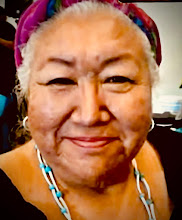 Memories of my late mother saying her dad, my grandfather taught her in a warning that the Dakota Medicine was good, but not anymore. As far back as 81 years ago, fake medicine people deceived their own people for money, power, and glory. Our grandmothers showed us through their prayers helping us celebrate love and helping us celebrate life within our families. Through my own lived experiences, I had to eliminate my own self-defeating behavior. Our people are depending on us to bring justice into our Indigenous Communities. Our Indigenous girls and women are going missing at an alarming rate and are being human trafficked. With little help in finding them or bringing their killers or abusers to justice, I started this blog. I never thought I would live to see such as year as 2023. Today, I feel blessed to be able to hold those who reached out to me in high regard. I am truly grateful, Creator’s Will guided me in my lifetime to see Nathan Chasing Horse arrested. And, yet at the same time, I grief for all his victims who died before they could see him brought to justice.
 https://abcnews.go.com/Nightline/video/dances-wolves-star-nathan-chasing-horse-accused-sexual-114067081?sfnsn=mo Throughout the decades of...
No comments:
Post a Comment