Th
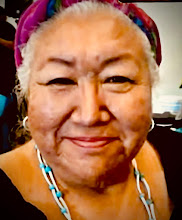
is transcript is a rich oral history and personal narrative from Marina Crane. At a high level, several major themes emerge:
1. Identity and Living Between Worlds
Marina describes growing up with both Indigenous and non-Indigenous worlds at the same time. She calls this being "two-eyed," meaning she learned to navigate different cultural realities simultaneously rather than choosing one over the other.
A powerful example is her first day of school, when she discovered that the name used at school, "Marina," was different from the names used by her family and community. This experience became a symbol of moving between different cultural systems and ways of understanding oneself.
2. Language, Naming, and Community
Names carry deep meaning throughout the interview.
Dakota relatives called her "Hopan."
Stoney relatives called her "Winona" or similar forms.
She explains that traditional naming practices connect children to family, birth order, community, and spiritual identity.
The discussion highlights how language teaches belonging and how Indigenous naming systems can emphasize relationship and community rather than individualism.
3. Dakota, Nakoda, and Stoney Connections
Marina challenges simplified ideas about Indigenous identity in Alberta. She argues that:
Many families in Tsuut'ina have Dakota, Nakoda, Stoney, Cree, and other Indigenous connections.
Family histories involve migration, marriage, adoption, alliance, and shared community.
These relationships are important for understanding present-day identities.
Throughout the conversation she traces extensive family and kinship networks across Alberta, Manitoba, North Dakota, South Dakota, and Minnesota.
4. Family Storytelling as History
A central message is that storytelling preserves history.
Marina shares stories about:
Her ancestors fleeing Minnesota after the Dakota War of 1862.
Family migrations into Canada.
Love stories involving her grandparents and parents.
Experiences of residential schools.
Community life in Tsuut'ina.
She presents storytelling as a way of preserving truths that are often absent from written histories.
5. Historical Trauma and Survival
The interview contains references to:
The mass execution of Dakota men in 1862.
Forced removals from Minnesota.
Violence against Dakota people.
Residential schools.
Generational trauma.
At the same time, Marina emphasizes survival, resilience, and the continued existence of Dakota communities despite these histories.
6. Spirituality and Traditional Knowledge
She discusses spiritual teachings, ceremonies, visions, dreams, and community responsibilities, including:
The significance of names.
The role of elders.
Ceremonial responsibilities after a loved one's death.
Stories involving dreams, premonitions, and spiritual guidance.
These teachings are presented as community knowledge passed through generations.
7. Racism, Allyship, and Dialogue
Marina reflects on experiences of racism and stereotypes and argues that meaningful relationships require:
Honest conversation.
The willingness to challenge assumptions.
Mutual respect.
"Holding space" for different experiences.
She suggests that true allyship involves listening, challenging, and learning rather than speaking from privilege alone.
Overall Message
The transcript is ultimately about identity, kinship, memory, and belonging. Marina uses personal stories to explain how Dakota, Nakoda, Stoney, and Tsuut'ina histories are interconnected, while emphasizing that storytelling is a vital way of preserving culture, family knowledge, and historical truth across generations.
Marina Crane (00:00)
To David One Spot. They all came in from Morley. See, so when people say, cranes aren't Soutina, well, there are a whole bunch of Stonies in Soutina. Like I said, I spoke Sioux fluently until I was five.
If if it was just all suit in out, would I have spoken so fluently? You know, you could people have gotta question that. You know, like why did Marina Cranes why is why is everybody called her ha? I mean, even the ever people my age still call me that. My you know, growing up they still call me that here. People wonder, what are they calling Marina that name? But when I went to school at age five
the teacher said to was doing reading out names and he had to say present or here and she'd called my brother's name but I didn't know my brother Cheskaya was Larry Crane. I always knew him as Cheskea and I didn't know my name was Marina because I was always known as Hopan. Now the stonies my stony grandmothers Annie and Juliet they would call me Lenona
So they it's still the same meaning like in in s in Dakota Sioux, Winona means first oldest child. But I'm second, I'm a Hopan. But the similarities with Stony and Nakota, Dakota and Nakota are so similar. So so the stony side called me Winona, the Dakota side called me Hopan. Anyway, that being said,
When the teacher came up to me and she said, I called your name and she says I said, No, you didn't. And she says, Yes, I did. And I was arguing with her as a five year old. I mean I've I think I've always had this character attitude about I I have no fear. Okay. I don't know if it's genetic or what it is. I I I I can run up against a rooster. You know, I I have
I don't know if it's just stupidity or I don't know what it is. But I I know my brother would say, you just act like a a guy, you know, because it just seems like I don't have fear. But anyway, I was arguing with the with the teacher and she said, This is your brother Larry, and I said, No, his name is Chesquet, and I was arguing with her.
And everybody in the classroom's listening and says, No, your Christian name is Marina, because she asked Larry, is this your sister? And he said, Yes. See, and he didn't even know my name was Marina either. No, my parents didn't even common sense like hello. So I have this white woman looking at me going, tall like I'm a kid, you know, five years old, she's this tall woman looking down at me, and she's explaining to me, Your Christian name is Marina.
Your Indian name is Ha Pong. I didn't know I had two lives. I was like in Twilight Zone, you know, where you step into a different dimension every time you go to school. So I just automatically thought that, you know, going to school, I was going into a different dimension. Which to me is what they call two-eyed. It's not two-spirited, it's two-eyed in the sense that when I talk to white people in the city, they say, How did you do it?
And I'm going, what do you mean? How did I do it? She says, Well, the c cross-cultural exchange from living on Sutina and then all of a sudden you're in the city schools. How did you do it? I said, We did it every day. So it was so common. It wasn't, it wasn't, it didn't seem like a chore. She says, Well, it's for an adult it would be cross-cultural shock. And and I try to explain that to people. When you're a child and you're living two-eyed, that means you have two
You're in two dimensions. This was white and this is southinna. And it was just I just thought that was normal. It's like using the word chabay. I always thought that was an English word for bone marrow. I didn't know it was Dakota. So a lot of a lot of words too, like even in Soutina, when we go into the bus, let
late Terry we'd be we'd be in the bus and we'd be singing we're trying to sing Sutina songs like Da da Ka like why? Da da da da We like we had fun mimicking Sutina words. but you know I miss I miss that that stony side of of Sutina because it was quite clear that these were stony women.
And these were Sou Tin and Women. And it was it was quite clear that that because we spoke a different language. And to me, my mother could read and write in Dakota Sioux when she was in residential school. My great-grandmother had blue eyes. She was from Mankito, Minnesota, and she escaped the largest mass execution. President Lincoln hung 38 Sioux.
And she was under the age her and five of her siblings, think of her parents were in their mid-thirties, thirty-five, going on forty when they when they ran away. All that in storytelling, and this is why like I think storytelling is so important, because you're taking history and and you're putting s you're validating that something happened, like like a like a miracle happened.
Because when they killed all those Sioux, they had the Siouxs had been starving for ten years. The Sioux, see again, my arm span is so long because the Dakota Sioux were swimmers in Minnesota, the lakes. The D Dakota Sioux built canoes. Not like the Ojibwe. They burnt the the canoes. They burnt them. So they were water people.
They weren't Lakota. Lakota were horse people. But that's why genetically my arm span is long because we were swimmers. That's Dakota. I didn't know that. Okay, so so even in the eight early 1800s, the Sioux were already, they already had established their dictionaries, were teaching it, were writing newspapers in in white townships.
So, you know, when they talk about the five civilized tribes, the Dakota people were already doing that. But because of the largest mass execution, they really had to oppress a lot of the accomplishments that the Dakota had. So when so when they when they hung the people, it was in it was I think in in December, it was in cold, and by fall they were chasing them from Minnesota.
to the west. So when I worked on the film Barry Maher and Wooded Me, I had to talk to the producers and I said, no, when they when they when they escaped from the states, I said it's not like Hollywood. I said they didn't the cavalry didn't chase a whole tribe of people. How the Sioux came into Canada, I said, is they came in in in floods. The first wave would come, the second wave would come,
And so each wave as they're following they'd have the siou people would see their relatives. So in Montana, there are huge trees that grow there. And my grandmother, my great-grandmother, said as they were running away into Alberta, when they're in Montana, they saw their relatives chained up with bobwire.
around a tree with the mum holding their baby and the grasshoppers eating the eyes of the babies. So so when they chased the Sioux people out of Minnesota, you've got understand there are no reservations in Minnesota. Nothing. There was a bounty in Minnesota to get rid of all the Dakota people.
That's how opp oppressed they were suppressing any civilization, any contributions that the Dakota people had. There is a town in South Dakota, I don't know the name of it, but it was created just for bounty hunters. So bounty hunters would seek out pregnant Dakota women, kill them, and and take out the baby's body and take their scalps as well. My one of my grandmothers is buried
As you're going down to Devil's Lake, North Dakota, there's on the roadside there's a monument. That's a little can carry it. And she was pregnant and they had attacked her and they said that she had the Sioux women always carried a knife. That's what I said in Barry My Heart and Wounded Me. I said those Sioux women fought with the men. The Sioux women were very strong. Like like I know how strong I was growing up in Calvary. I know how strong I was and you know, like nobody messed with
with with me or any Sutana Sutana kids because they called Marina Crane as soon as as soon as they saw me coming down the hallway they all scattered because you know all I did was call water and chop wood. You know, get set snare rabbits and you know, it's just like the the d social development or the physical development of indigenous people. like tying your shoe, hopping on one leg or hopping on another or
coordination and stuff like that that lot of non-Indigenous people cannot do at five, indigenous people could do. So there are a lot of skills and things that we were excelling in at Fairview. But yet at the same time, I think because we were academically with with people, we just didn't take anything they said
Like I was eight when my parents went to South America and I was ten. Well, nine when they went to South America and ten when they went to India. So when my parents came back they t told stories again, storytelling about the lost city of Machu Picchu and my father had put a tried to put a knife in the in the bricks and my mother said there were these tall Incas seven foot tall or higher with you could see brain surgery and stuff like that. So and even then today, okay.
I have I have Sioux relatives like grandchildren who who because of nutrition now are seven feet tall. So so even though the genetics of starvation has set in, there's there the it's the Sioux people, the the becoming tall is once our nutrition, the DNA comes in, it just
I I don't know, it has to do with with how we cooked our food too, with ashes and corn and stuff like that. But anyway, I regress. When my parents also went to India too, I saw and heard of stories of just so many starving children. Just the poverty and you know and the fact that even though we were poor in Sudina, we were still rich. So when I had non-Indigenous people, white people saying to me that
We were savages and we we didn't know any better. We're just talking about drunks and no good. I made sure I mean I broke a white boy's arm. Me me and Terry.
Because they were playing hubscotch and he wouldn't leave us alone and I said and grabbed his legs and says, We'll show you what human sacrifice is and we threw him up. And he fell on his arm. Broke his arm. I left to Manitoba, but Terry, she had to take the consequences when she graduated from grade nine. And the principal made sure she knew that story. Poor thing. She took it. She took it for the team. But yeah, no, I
I think I think that was the one thing I liked about Terry is the fact that
Yeah, there was there was we we could have we could challenge people. See and that and that's the whole thing too about discourse and about systemic racism and being two-eyed. I think for me as a woman, I think I think when I I tell white women it's it's just taking me maybe the last ten years to trust white women. And you'd think, well, geez.
I got my degree. I lived in Utah amongst the white Mormonism and worked amongst and you know, I I've done that my whole life. And I tell people I don't have to marry a non-Indigenous person. I know I'm different. You have roommates for ten years that are white. You go to school, you know, most of your life with white people and the systemic racism I had to fight through in just my courses, because the stereotypes of being stupid and dumb. but
that you know the the reality of the reality of having some sort of discourse in in having and finding a friend who can challenge what you're saying. Like like in other words, if I'm make have an opinion and they're challenging me and then they hold space for me in that discussion, that discourse, that storytelling.
whether it's f true or false, whether it doesn't feel doesn't fit right, there's gotta be a challenge in it. And I and I found that most white women couldn't do that because of privilege. But when I found white women who could actually hold space for me and and and well challenge me and also hold space, but as well as share the experience of witnessing injustice.
So so those fundamental fundamental foundations are important in establishing the two-eyed narrative in terms of how to have allies or chat or understanding what an ally is. Because I think a lot of times we take it for granted because there are our neighbors going, no.
I was talking with one Cree elder and I'm she made a comment to me about some of the narratives I talk about in my life. And she says, I don't I don't brag, I don't tell people what I've done or anything. And I'm thinking, Well, neither do I. What is she talking about? She says, No, I I do this and I do that for my community. I'm going, Okay, that's good. And then and I said to her, Well
I I talk to white people, I talk to non-Indigenous people. I I said I I just don't talk to Indigenous people about you know politics or you know my story. I said I I share it. She says, well I I I don't have time to to educate white people. I'm tired of it. I'm going, no. I don't think, you know, like for me personally, I j I just I think that's a cop-out.
I think I think if you're just one-eyed and and you've just been isolated in an isolated community, I think you you tend to just sort of say, no, I don't I don't need to deal with it. But when you're two-eyed, it it means something. It means something to have that narrative so that they the person you're talking to gets it. I mean I I had a friend from very elementary school.
Went to junior high school, went to high school, went to university. Every time we'd talk, I'd call her, never challenged me. She made c she'd make comments like, that person's talking now AFN Chiefs Conference. She said, Marina, I'm more Indian than him. And she's white. That's a racist statement. But see, she's coming from a place of privilege. Everything and every every narrative she's she is playing to me.
Is from her perspective, not mine. So she wasn't holding space for me. And this is a woman I went to school with my entire life. And I just decided I can't do this. Because we got into a discussion with a lady who was pretending to be Metis in the arts community in Calgary.
And I challenged her and I said, she says, my mother's from Ontario, I was raised in United States, my name is she's she she named this name and I will not say this name out of respect for the Dakota woman. It's a very famous Dakota name. And I said, Who gave you that name?
Really? Yeah. Like like if I ever saw her again, 'cause she's worked for for s the city police and all these other she's gotten awards. But since I've challenged her at eight at the at Arts Compens, I haven't seen her. 'Cause I tell you, this is where I'm saying it there is a reasoning behind it. 'Cause because it's it's not it means something. I I
When when I spoke to her, she knew the lady that I went to school with. So I called her and I said, what about her? What's her what's her story? And then she told me, well, her mother is an alcoholic. And I thought, well, does that justify that she's got indigenous blood in her? Because I find a lot of pretendians say they've either got an alcoholic parent or they're a victim of sexual assault.
I mean does that does that justify that you have a c a connection to community? It just means that, you know, whatever behavior or whatever trauma you've had, because that's life. Everybody has trauma. But but don't put it into that narrative of being indigenous or having that connection to community. So when I went back to the meeting, she came to me and she says, Maureen, I heard you're talking about me. And I said, Yes, I have every right to talk about you. I have every right to challenge you on that name.
That was a historical Dakota name she was using. If I ever see her and I see her in public, I'm gonna say to her, I am going to make connection with the people in n in South Dakota and they're gonna sue you for using their mother their great grandmother's name. But just like that, thinking there's no connection. That's why for me, when I say I'm sue, it means something.
Because we I in my DNA I have over six thousand cousins, like fourth and fifth cousins. I don't know how many thousands I have in first and second and third cousins. But because because my lineage is so strong, like my my father is is Nakota, Dakota and Cree. My mother is all Dakota with a bit of
Wasicha way back. And that's why I tell people the Sioux were already intermarrying a hundred years before even in Alberta. Anytime I come across with Soutina, when I was 30, I was working up north in Fort Mackay with youth, and I brought them down to Soutina and took them to a rodeo and the kids said, Where are the Indians? I said
You just you were just talking to them. Like, you know, they just they didn't think Sutina looked like Soutina. Like they they thought all Sutina were gonna be dark like me. But I said no. You know, like I I have a sister, like my sister Edna, she can pass for white.
You know, and I and for me, like I said, my my my mum's uncles when they died when we went to their funeral, I hadn't I looked in their coffin. They I told mom, I said, Y you your uncles look white. It's
I think too that's why like going to Sioux Valley and then introducing you to family you will see the genetic reference in how how powerful the DNA is with with that clan that we have in in the Dakotas, like from Sioux Valley, because I'm related to at least 95% of Sioux Valley. My mom's my mom's aunties and uncles, there were 15 of them. On my mom's side, my grandfather my her dad only was a twin.
He only there was only one in his family. And my grandmother, Daisy DeWan Crowchow, she had five. One natural brother and and three half-siblings. So so I have this huge, huge network of relatives in Sioux Valley that, you know, if I ran for chief or counsel, I would have got in. But, you know, my mother grew up like was married here. And as she puts it, she said,
I wouldn't have what I have today if I were in Sioux Valley. Because Sioux Valley were considered status Indians until a year ago. I don't know if you know that. No. The the Sioux, the Inuit and the Metis were not considered indigenous until a year ago by the Canadian government. Yeah. I didn't know that. And there's I think nine nine or seven
Sioux tribes and only one Lakota in Canada. But Overt Mercury, when he was president of the National Indian Association, he he says I travelled all over Canada. He says and when I go to Churchill, he says the Crees talk about the Sioux.
He says they talk up, they say the Sioux are called the people of the pipe. He says the Sioux went all the way up to the to Churchill, the Hudson's Bay. That's how far north they went. He says, and even when you have a ceremony like give like when you do wiping away his tears ceremony, releasing the soul ceremony for the dead, he said the BC Indians have a similar ceremony. He says, and when I try to get across to non-indigenous people,
And just indigenous people in general, is that this right of path, this right, this spiritual right, is so powerful. He says, the only way I can, the only analogy that I can have to people is it's worse than thou shalt not kill. He said when you have the commandments, it's it's it's a deeper, it's a deeper punishment than than a religious way of thinking. So so when a person dies
The person who is closest is the keeper of the soul. And for the whole year, you have to walk in that person's soul, that step. At the end of the year, you give away. In the giving away, and how you walk that year determines whether or not that individual is going into the Milky Way, the great mystery. Big responsibility. And it's all got to be done voluntarily.
when I did that for my mom, people say, why don't you pay me to cook? I said, no. Why don't you do this? No. I said it's gotta come, everything has to come from her relatives freely. I cannot force them, cannot manipulate them. See, and that's the the beauty of it is is that narrative. The to give up to give up control because it's creator's will. That's the greatest lesson. When when I was going to join the Mormon church, I asked my dad
And he says, you only have one person to judge you. Like that's how powerful that spiritual connection is. See, and people don't understand that. They just think, it's you can't pick it up, you can't touch it. They want something you can feel, like like corn.
You know, you you want you want to touch that, but you can't because it's it's a spiritual thing. So so in in that sense too, when I went when I was living in Utah I I became friends with twins. They had been some a Mormon family took them in and their parents once they took dropped them off at the house
Immediately within four hours, do you have cleans or they had they turned back to go and get the girls, they were twins, and the the the family was so racist, they were Mormon, they were so racist, they took a gun and sh and and you know shot above like look aimed at them told me told their parents to leave those girls with them.
And so so when they were trying to make connection with their parents, their natural parents were still alive in the Dakotas, I was roommates with them. And so I went with them to Dakotas and I met their aunts and uncles and mum and dad. And on the way back they said, Marina, they said, you you she said, you it's just like you're you knew them your whole life.
You know, you're just they're just so friendly with you. And I said to them, it's it's the way it's it's how I was raised. I said there's a there's a a certain a certain way, a Dakota way of thinking that other Dakota people pick up.
I s look I noticed it with the twins because they they didn't understand it 'cause they were you know, p like I guess in Canada it would be like the sixty scoop or something, like loss of community. And and for me that's a really tragic thing. But mind you, they're they they did marry indigenous men and they have been in their communities, so they made they split you know, they made that connection.
But I but I do find I do find a lot of times when I try to talk about
it. But it like what it is to make that connection. It it it's even though it's hard for them because they're part of that sixty scoop, I think the more effort they put into the more they understand it. But at the same time too, just like I said, it's it's it all depends on who's telling the story.
So do you have any
question. Yeah. Yeah, I was thinking. I really liked when you s talked about how our names were given. Like that was right from the start that just stuck with me right away. How our names are given like to the five to the oldest. Then the three younger ones. Yeah because because when you're in a Sioux community. Yeah.
Like when I'm when was around my aunties and my uncles and in Sioux Valley or even here, like I knew here if they talked about Winona, I knew they were talking about me. Yeah. Okay, very rare that the stony aunties would talk, the grandmas would call me ha pa. But in Sioux Valley it was ha pal. So I go to Sioux Valley and everybody's talking about ha palm. I'm going, gee, I'm so special.
such a special child never realizing that there every family had a ho. So so when you're talking when you're talking in Sioux and you're hearing them talk about you, y you know you you learn the language because of the naming of how you're addressed. You're you don't have you don't you're you're not an individual.
you're you're you're part of that community. So so when you're raised you're raised as being a holy a holy child. So those five names are names of holy children in the order of how they came into existence. That's how that's how I understand that. I like that. You even like the naming of the
the five older ones and then the three younger ones were named after did you say months? They're named like like my sister Eleanor is named after Ada. My mom my mom's grandma my mom's mom. Okay. Mark, he's he's named after Mark Baptiste, like a relative in Hobima.
And Dan, I think Dan I think Dan was more of like he was born in October. So there's there's different like how who who the who the families were. Like Mark George Alfred, George after George Crane, and Alfred after Alfred Otter and Dan Dari Danny Harry Leonard, Harry Dodging Horse and my dad.
Yes. How was Daisy when did Daisy come this way? Okay, so I tell you my family has love stories. I kid you not. I don't know what ever happened to me. But there are love stories. Believe in love, even though even though I haven't found no, I I take it back. Let me put it this way. When my mother and father met, my mom was in residential school.
And she the a train used to come by Elkhorn, Manitoba, and the war was going on, so my dad was on the train, and so all these soldiers came by, and all the boarding school kids would come and greet the soldiers, and the soldiers would be giving candy bars. So my mom got a candy bar from my dad. And so after the war was over, he came to Sioux Valley. Now my mom says, but my dad he says, your dad was in love with my cousin. These fickle men anyway.
Yeah, because you know like Sue women are good looking women. And and so my mom kinda like, he didn't really love me. But when when when the it was in the winter, the dead of winter, when they left, when they eloped. They just they got married here in the Catholic the Anglican church 'cause I got their wedding their wedding certificate here.
Pete Manywounds was one of the best w witness on the signature, but his signature on the Okay, so so but when they left in winter, it was my Aunt Doris said it was they came to the house, because Auntie Doris is my dad's first cousin. That was Granny Daisy's niece. so she she said they k they were leaving
And it was dirt road, she said I could see them walking down the road, it's like prairie. The snow drifts just going over the dirt and I could see them until they disappeared. They walked, I think, ten miles to Trans Canada and from Trans Canada hitchhiked all the way to Calgary. wow. In the dead of winter. And my mum said, you know, there'd be times where he she she he'd just carry her on his back.
And then when they when they did get married, they stayed they stayed in an old house where it was old they said a old medicine then lived. I don't know his name, but when he passed away, my grand my mom said it like I think it was the size of this room here, because I lived in it until I was like eleven or twelve. Yeah, I think yeah, we were still I think nine or ten.
but my mum said it was so dark with the smudge. He had smudged so much that all the family had to come and wash the walls. And so the the first week that they slept there, my dad would have a dream.
He said I w he's he said in the dream I would see this old man walking up the road, right by your place, across the across into the field. The old house used to be there. He said he saw the old man walk up, come into the door, the front door, and stand right at the bed. So this is a one bed one room house, right with a pot belly. But it had a fireplace. Okay. She's he every night
This person would come walk through the door and stand by the bed. So my dad went to his mom, Granny Daisy, spoke to his relatives, the brothers and all the relatives, and said, This is this person's been coming to me every night. And I said, Well, something. See, this I see, my understanding of Sudina, my understanding of Sudinna isn't the same understanding of of how
what I think people think Sutana is, like my age or younger. Cause whatever it was is very powerful because these people told my dad, you gotta look for something. He's left something. So the family came and see that's what I mean. When when you're gonna heal somebody it it takes a community to heal to heal a to raise a child, but it takes a community to heal that child or that adult.
So so so as a child I I witnessed that, I witnessed, you know, families coming together just to look in the house. This is the story. So they were looking and under the fireplace where the fireplace had been, they put their hand and there was a ball of hair. He took it and then and they said, You gotta, you know, bury it. Yeah. See, hair is very important because even Jim Miller was talking about hair in ceremony and how to how to deal with it.
in sweat. That's another story. But so my dad they got rid of that and that next night again the old man came through the door, stood in my parents' bed, and this time my dad told them, There's nothing of yours here. And he never came back.
Now in that house, there was I remember as a child there was this owl that was huge on the by you know where the trees are by your place? Was it sitting, it was a huge owl, maybe the size of this tripod. They they asked for somebody and some Sutina men went. I don't know how they did it. Like I said, this whole spiritual thing of Sutina when I was a kid is different than it is today. And they came knocking at the because they came in, told my dad they were gonna go hunt for the owl.
That same day, within a couple within an hour or so they knocked on the door, they my dad opened the door, and there was that Sutana man holding that owl with its c claws upside down, like how you hold a chicken before you cut off its head. Holding that owl like this, it was alive. But I remember how how big it was as a kid, because he's holding it like this, and it was almost to the ground he was holding it. That's how big that owl was. And he took it away.
Just so that you know it my the the family would be protected. So they came together, like Sutana people came together to protect each other that way.
And then at that same house too, it would get so cold we had a potbellied stove 'cause we weren't using the we're just using the chimney of the old fireplace. We had this potbellied stove and w and it was so cold that you'd have icicles around the window, like the window cell you'd you'd have ice around the s thing and you'd wipe it so that you'd see through the window. Yeah. Anyway, on the south side
So if I'm looking towards your place, and then over there are these hills. Yeah. So we look through the south side windows, were there, look through. That evening, up on the hill, just where those houses are, was a city, skyscrapers. Huge skyscrapers, and it was there all evening. Never disappeared. We'd go out and look out the window. We wouldn't look go outside, we'd go look through the window and we'd still be there.
Now my mother when she was a child five years old they took her into residential school and before that because again they were raised as holy children so her grandmother used to braid her hair and my mom talks about how how horrible they treated her the grandmother, my great-grandmother. But she says
No it's it's not about the hair.
Was it the skyscraper or the vision? My grand my great grandmother used to take my mother to ceremony. Most of the times when I ask the old Sioux Sioux people, like when I say old I'm I'm talking about like they'd be my aunts and uncles age. I ask about sweats and sundance and and back then they it was a very private thing when you had sundance. Maybe five people took plu took took part of it. Like they just have it
You know, like it would be just there in the field and five people and the whole community knew it was a little sundance there. And you know, people would sacrifice just five people 'cause it's a for community. So so my my and there were things that my grate grandmother took my mom to. Like I think it's like if you take your children to a ceremony. Yeah. That's how that's how my great grandmother did for my mom. And she gave her the name White White
white elk woman with a staff. A staff, like a the staff is is like the the flag, like when they killed those thirty eight Sioux people, they would have the feathers on the staff. So that kind of staff. again a narrative, a storytelling thing. So when when my mother was in boarding school there were a lot of sp things that were happening.
you know, like within within the s boarding schools, like beds moving, tele telekinetics like all hoodoo hoodoo. Yeah. And there's a lot of really stuff. Like I said, some some things in terms of trauma, it's human. You know, and some sometimes if you don't have anybody guiding you, then then that
that behavior becomes corrupted. So because they didn't have grandfathers or grandmothers, they were in those residential schools, a lot of the ways of doing things or interacting with other children your own age wasn't taught right. So so my mum always, I shouldn't say always, she she understood she had something
but she was more afraid of it because of the way she was indoctrinated into residential school. So the only reason I'm saying this story is because when she when she was trav when she was gonna be traveling to South America, she said I was sitting just daydreaming. She said all of a sudden I just daydreamed all of a sudden I could just see this whirling. And as a ki as a child I'd see this whirling too. It's like a snowball. But it but it's not really
physically there, you can see it in your mind, this snowball moving, like a matter like this, just like energy. And you and it's like when you're rolling a snowball, it just picks up everything. So my mother was saying, Yeah, I could she says I'd be just daydream all of a I'd feel it. She said, I'm just whirling. She says, and then and then it would go away and she says after after that the next day, she said, I gotta we get a call going to South America.
Then when I was when in India, she said the day before we were told we're gonna go to India again she had that same same what do they call it? I don't want to use the word vision. I know not clairvoyant, premonition. Yeah, she had this premonition. So those things were were like again
part of how she was raised because children were considered holy. But when when there was no grandfathers or grandmothers there because it was her grandmother that was guiding her and then they she was just taken away. So a lot of things that I know it's only because I sacrificed some things so I could understand more.
I really loved when you talked about how they first met. my grandmother Daisy. Yeah. Okay, so that's my mum's story. That's the love story. Yeah. Even though my mom says, he loves somebody else. You know what their couples say, you don't love me. Anyway, that's their loves their love nest. But my grandmother Daisy, that's Auntie Dorsey again is telling the story.
So Granny Daisy used to like the Slot and Sioux women were housekeepers for farmers, ranchers, well farmers in Manitoba. And so Granny Daisy, because her father her mother died, so her father remarried. So so and it's much the same thing with my dad when my when my grandfather died, that's why my dad
was raised more like with granny Annie, Granny Juliet, you know, like Marc Baptiste and Hubima, people in Ho in Stoney as well. not that it was my grandpa David's fault at all. It was just human nature. Anyway, my grandma Daisy, she went to Duke housework. And and her her
Brother, her full-blooded brother, picked her up from the farm and said, Let's go into Brandon, Manitoba for the fair. They're having a rodeo. So Greg Auntie Doris says, I don't know what happened. She went into Manitoba and she met George Crane. She says, I don't know what happened that weekend. She says, But Monday morning, she's at the farm, she's at the ranch house, the farmer's house. She's had her bag all packed.
There's George Crane coming down the road. She says, as soon as she saw him coming down the road, she just got their gr suitcase and just went after him. And they walked away. Yes. Just like that. Yeah. I'm going, why? What happened to me? No. Yeah, no, it's just it's amazing. They just came back. Yeah. Yeah. Yeah, and see, see and George Crane, like I said, his first wife, he was already suit in a
Because I think a lot of the misconception is that Granny Daisy married David Crowchild and the Cranes became Sutinna. I'm going, no. The Cranes became Sutina because of the One Spot family, David One Spot. And Mahashana and or and Tom Tom used to look after the old man David Wenspot. And and so
Tom took my dad like as a as an uncle at an older relative. So so because he knew that, you know, we're related and that
because we were we were adopted into Sutuma because of David One Spot, who belonged to that clan. That's why when anybody argues, well you're rel you're not related to the many wounds of the Simeons or the One Spots, I'm going, No, we are. Because just because my dad's gone and just because the Crowchild family is political, you know, it doesn't it doesn't
It doesn't take away the the from the fact that my father and my grandmother had love stories and they and they made Sutana their home. And you know, and it and it's a beautiful story because it's not it's not something out of necessity. You know, when my when my grandfather died and my mom my grandmother had her sons, David Crowchild just moved in and I think
I think Uncle Gordon, Auntie Victoria, Uncle Arnold, I think their names were Crane for one, until until they w Grandpa David and Grandy Daisy legally got married.
But that's the nature of it. They were best friends. Yeah. George and David. Yeah. Uhhuh.
I didn't know that. Yeah, I have a picture of the two of two cowboys. is that the one in the house side? Yeah. The granny and I two, Okay. Yeah. Yes. They were best they were best friends. Yeah. Could you repeat one more time, Marina? Just like a list like of all the people on Sioux Tina who are Sue, like which families are have Sioux and have Sioux. Okay. Jean Jean dodging horse. Okay. maybe Crow.
Juliet Little Bear, Annie Miniwoods, Edward Edward One Spot's first wife. see my mom, my grandma Daisy. Yeah. Okay. Yeah I was just wondering. And the Cree like if a Cree like through Mark Baptiste and John Baptiste, that's Sam Simon Senior. Okay.
But but because he was a baby and that connection never really happened, Helen and Josephine Crowchild are my dad's first cousins.
See, see, Helen and Josephine are Marc Baptiste's daughters. John Baptiste, Marc Baptiste's father, that's Helen and Josephine's grandfather, John Baptiste. John Baptiste's father to Annie Minniewounds, Juliet Little Bear and George Craig.
'Cause I have a friend now who's baptised. She goes by Sophia, but I think her mom's what's her mom's name? Isn't she from here? Yeah. Well Trisha Crowchild. What's her mom's name? I know yeah, I know Trisha, that's Late Late Bradley's first wife. Yes. Yes, Cheryl. Cheryl, Cheryl, yeah, Cheryl Baptist. Yes, C and C she
She's her partner is Helen and Josephine's brother. now. So that's a new partner that she has. Right. Yeah. And so s I think Sophia's I think that's her parents. And I'm friends with Sophia. And she goes, Yeah, Sophia Baptiste. Because that's true. But I I don't know if that yeah, maybe that's with Cheryl I don't know if the Cheryl and the fellow had a child together. But
I think so. I think Cheryl I think Sophia says that her dad and her mom have been together her life, but yeah, Trisha has a different dad. And Trisha's Sophia's older brother. older sister. Yeah. Yeah, no. No. I know Isaac too is related, but I don't know how.
Yeah, sorry to Okay. Maybe we could wrap up 'cause I told them they could start a lot more again. yeah, yeah. Yeah. Okay. But we recorded for a whole hour. Okay. Okay. Yeah. No, we're okay with that? Yeah, I'm okay with it 'cause I I think I think the whole point of it is that
the storytelling or the narrative of it i is something because when I do my DNA like I I have stony relatives. Like I like even like they'll pop up in my DNA. Yeah. And then I'm also related to Colleen Weskowitz's husband through the Baptiste. But the majority the majority that I I'm related to would be from Sioux Valley. Yeah.
and the and the and the Sioux tribes in Canada as well as in the mostly Devil's Lake. also Granny Daisy was her land was in South Dakota. So both North and South Dakota are we we have relatives there. Yeah. But originally the they came the Dakota people came from Minnesota. Like I said we're we're people of the of the of the lakes.
I didn't know didn't know that. The Minnesota the the Minnesota. I I didn't realize like how like up till I went to Minnesota, I didn't realize just how beautiful and how many lakes there were. But yeah, so that's why I say like the arm span. Yeah. I like I like swimming. Yeah, it's the it's swimming. Maybe that's part of my lineage too. Yeah. I love swimming. I was just in Vancouver swimming in the ocean. I love it.
Yeah, even like just it's Sasita min Minwanka Sasita Sasito one, Minawanka from the from Minnesota. Wow.
Well thank you, CS guys. Thank you. Well I'll stop I'll stop the machines. That was beautiful. That was. That was really powerful.



No comments:
Post a Comment