
Thank you for sharing this transcript. It is a deeply personal and wide-ranging reflection, and several strong themes emerge from it.
Core Themes
1. Choosing an independent path Marina explains that remaining single and not having children was a conscious choice shaped by her life experiences, educational goals, observations of violence and inequality, and her desire to pursue healing, learning, and community work on her own terms.
2. Indigenous history and systemic barriers She describes growing up during a period when Indigenous women faced significant limitations and discrimination. She reflects on barriers to education, housing, economic opportunity, and the pressure to conform to narrow expectations. Her experiences illustrate how colonial policies and systemic racism affected individuals, families, and communities.
3. Youth advocacy and leadership A recurring theme is her belief in young people. She recalls being encouraged by community leaders and elders who viewed youth as the future of the Nation. Her early activism, involvement with Indigenous youth organizations, and later work with community programs demonstrate a lifelong commitment to supporting young people.
4. Trauma, healing, and resilience Marina speaks openly about witnessing abuse, intergenerational trauma, residential school impacts, military trauma, and the consequences of unresolved pain. At the same time, she emphasizes healing, accountability, hope, and the possibility of finding balance despite difficult experiences.
5. Education as transformation Education is presented as both a struggle and a source of empowerment. She recounts working and studying simultaneously, pursuing mathematics and later fine arts, and overcoming financial and social barriers. Learning becomes a pathway to self-discovery and service.
6. Identity and "two-eyed" perspectives She discusses moving between Indigenous and non-Indigenous worlds, describing how growing up in both environments shaped her worldview. This ability to navigate different cultural perspectives becomes a strength rather than a contradiction.
7. Art, creativity, and self-expression Although her academic interests included mathematics and science, she ultimately returned to art, something she recognized as a gift from childhood. Art represents authenticity and a commitment to living without regret.
8. Spirituality, ancestors, and community connection Toward the end of the conversation, she reflects on Indigenous teachings, the role of ancestors, spiritual experiences, and the importance of carrying forward the energy, memories, and teachings of those who have passed on.
Key Message
The overall message is one of survival, healing, self-determination, and responsibility to future generations. Marina repeatedly returns to the idea that people can face trauma, discrimination, and loss while still finding meaning, purpose, education, community, and hope.
If this is for a podcast or interview
A concise episode title could be:
"Walking Between Worlds: Marina Crane on Healing, Education, Identity, and Hope"
And a one-sentence episode description:
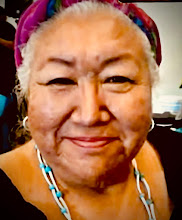
Marina Crane reflects on her journey as a Tsuut'ina elder, sharing stories of resilience, education, trauma, healing, cultural identity, and the enduring responsibility to support future generations.
If you'd like, I can also create a cleaned interview transcript, speaker-by-speaker edit, or a short article/profile based on this conversation.
Marina Crane (00:00)
Think you're framed nicely. So I'm just gonna push record on the sound as well.
Sound is recording and cameras recording and
Roll around chairs and just make sure.
Can continue from yesterday or totally different perspective? Share about? Yeah, well I think if we do something a little similar but a little different too. Yeah. Cause like I network with a lot of people from from Calgary and one of the ladies had asked me, she said, Why did you like I'd like to know why you chose to be single.
And it sort of surprised me because I thought, what? It didn't really occur to me that this was sort of like a curious minds wanted to know like like in a soap opera. I I'm laughing because it's like I said, I get uncomfortable when I have to deal with things. Anyway,
I I and I've done I've done like I think five interviews on healthy human sexuality growing up in Southein and how I learned about sexuality, what I thought was normal sexuality, what I thought was appropriate or inappropriate, what was manipulation, even to the point where I think in terms of young people from grade seven to twelve
And you're talking about healthy human sexuality and and the kids know or see something that's not appropriate with their parents, or they something's happened to them and how do they disclose if they're gonna hurt anybody, who's who's the youth elder that they can approach to disclose that there's been a sexual assault? because I think a lot of times with growing up you don't think that sexual assault is sexual assault.
because I think the grooming is stated like it's comfortable, it feels nice and you know, this is normal stuff. So anyway I did I did do some interviews on that and and I'm still trying to do a podcast on that 'cause I think it's important from an elder perspective.
'Cause like I'm seventy-three and in nineteen seventy women were not allowed to own a house or a credit card. And I think birth control just came out. And most most indigenous women, if they went to university or high school, after high school, they were conditioned by the government to become teachers. And I did not want to be a teacher. Not that I don't like teachers.
It's just I'm just grateful for the life I had because I ran away when I was seventeen and came back home about six months later and and then started doing activism work with youth. I joined a youth group called the United Native Youth in Edmonton.
see the see the chief and counsel and the yet the men like my Uncle Arnold's age were a little different, like Reggie one spot as well, because they started economic development in Redwood Meadows. And and their their dream was to have teenagers like myself and and all the all my my gangster friends like to to encourage us and so they took us to a conference in Bam.
And they were showing pictures in the cats like what they do now with the New Health Center and Taza. Like my uncle and Reggie were talking about youth and the opportunities education would give, and that they needed educated youth to do these things for further development. So and of course as youth we partied. I was only fifteen, but I was able to go into the tavern and get beer and got all my relatives.
Tibbs drunk. And and Reggie and Uncle Arnold wondered where we all got our liquor and Reggie went down because back then in the 70s, in order to get alcohol, you had to go and sign your name on a sheet. So of course I played, you know, I sort of limped around and acted like I was really old.
I've never been really able to show my age. Like even in 30 people thought I was a mature like I was a mature 20 year old or something. Like I've I've always fooled people with my age. So even at 15 people thought I was a mature 21-year-old. So Reggie says, we found out who got the liquor for everybody was Marina Crane. See I wasn't smart enough. I signed my name Marina Crane. Anyway.
So so a lot of the elders really I think as a y youth from fifteen to eighteen and just growing up here there was more they had a lot of hope for us. Like they re they treated us I like I think to me in my opinion like like holy people because we held the future of the community.
And and so they didn't I didn't feel like I was there was any caste judgment by the older people. Again too, I think a lot of our older people couldn't understand white people or white society. So I think they were basically depending on us to do the interpretation for them, be be the second eye, like when I talk about two eyed people.
'Cause you've got to understand in the seventies so many of our our indigenous men, Sutina men, died, and I truly believe they died from cultural shock, just because of the indifference of non-Indigenous people towards towards especially our indigenous men. like my dad being in the military, and I and I was talking to one young mum here who's
whose son's been in the military in the US, and I said, it's very racist. And she said, yes, she said it is. And I said, well, my dad knew about systemic racism because he was in the military. And I and I think a lot of our young men in Southein at the time did a lot of labor work, like like high tanning, like brutal, brutal work, sweatshop work. And that was all that non-indigenous men in the city wanted.
poor Sutana people. Again too the Sutana people weren't allowed to drink like a lot of the couldn't go into bars. So so the older people looked at us younger people as like, you know, these opportunities are going to be given to us the right to boat, the right to go into bars, the right to an education, not realizing like just the struggle it was going to take.
Because that's part of one of the reasons why I chose not to to be in a relationship or have children, is because I'd never received my high school grade twelve and when I tried to get into school I wasn't given allowance or support. And a lot of indigenous people weren't, especially if you didn't conform to be a teacher. You couldn't you couldn't do things and I think too in the sixties
A lot of indigenous people who went to university were either given a choice to either give up your status. and that's a bit of a barrier too, because one of my brothers said to me, he says, Well, you're no s you're not Sudina. You're and I said, What do you mean? He says, You're educated, you're not Sudina. Because you've got a degree, you're you're not indigenous anymore. And that was the that was the conditioning.
that that a lot of people i like in Soutinna had, especially when it comes to the c systemic racism and the color white. When I did my DNA, I said, I have six percent non-indigenous.
And the Sutan elder says to me, and I'm an elder too, so she says to me, Well no wonder you're smart, you know, because I have six percent non-indigenous employee. Which again is classical conditioning of colonialism and the reality of it is it is like I I grew up here.
You know, I I I grew up here, so a lot of the attitudes that I face and barriers I I don't r think that people realize that they're they're barriers only because they haven't left here and they haven't worked off the reserve. They haven't like I've had to work full time and go to school full time in the States. And sometimes I had five roommates and I I had to pay for my tuition. Sometimes I'd pay for two classes, a hundred and eighty bucks and then pay
my rent and I didn't have a vehicle so I biked to work, biked to school, and it got to the point where I estimated that I was biking 100 miles a week. And it took me a period of 10 years to build up to jogging five miles a day and doing aerobics and weightlifting. Again, probably because I wasn't sexually active too, I had to compensate somehow. But I had social activity too.
like I said, my life isn't I had a different life. I'd go out dancing Wednesday, Fridays and Saturdays and and I hung around like college athletes. Like I never really spoke to them, you know, like Steve Young from the San San Francisco Forty Niners.
Robert and I, assistant coach who's got 35 years of college coaching, like, you know, people, I you know, I'm not saying I was friends with them, I'm just saying the people that I hung around with. I had roommates who were 15 years younger than me who were Balavictorians. one friend friends were twins who'd been adopted in childhood.
And I played basketball. We loved basketball and I played basketball right in into my thirties. Cause when I was in Portugal Prairie in Indian residential school, my late brother Larry w went into basketball. Cause we had vis ed every evening at residential school. And so we had a team and our team was so in synced. I I swear we were psychic. We we do we all these tournaments like like all the girl like we we were a strong power team.
And and so for two years I played hoop and then so when I tried to when I did manage to enroll at University of Calgary, I tried out for the Calgary Dino Dinosaur basketball team and I got on. I got on as as one of the basketball team members, but because I only paid my tuition, I didn't have living allowance, I couldn't pay rent, didn't have
Any ways to even get no car, nothing to even get to university. But I I do, you know, I am grateful that I did get accepted as a basketball player. That's but again, even that was in my early 20s, but in my 30s when I was in Utah, I did play basketball. I I I I love the sport. But that being said.
I do know Amer Native American Indians, especially young boys, there is no comparison. Like I think the only comparison I can say is hockey in Canada. Cause, you know, just excelling in those sports. But you know, so when I lived in Utah, like I said, I paid for my education. I worked the first job I had was working as a psychiatric aide for the Utah State Hospital.
And because it's a university town you gotta understand this. at a college football at BYU, the amount I think there's sixty five thousand people that attend College Bowl.
You gotta understand the stadium for Calg the Calgary Stampeders only holds twenty-four thousand. So you can imagine sixty-five thousand students or people watching college ball. So, you know, it was a different a different a different type of lifestyle. Like when I go to Toronto I think about the Megal Megalopolis and and I don't like that kind of crowdedness because I lived in the Wasatch Front and I was so
just so intense population. So I I like living in Sutana, I like having my own place, having roommates most of my life, I'm just glad to live alone. my own my own furniture, my own food, when I can come and go. And I tell people I I don't have to marry non indigenous men or not like whether whatever ethnicity they are, 'cause I know I'm different. I
I've I've had roommates. I've had, you know, roommates that say to me, Indians just are nothing but drunks. I said, What do you mean? So, well on the radio it asked what nation has the most alcoholism? And she says, Native Americans. I said, Are you kidding me? I said I said, Nations, countries. Are you saying that Native Americans have a country? Like the ignorance and the uneducated.
in in Utah or even in the States is when I would study mathematics 'cause I had a math ma scholarship too in mathematics and I didn't realize I had them until I moved home and I got the letter the scholarship was offered me. my math professor I think was trying to guide me to become a math instructor at a college. He was grooming me to be that. And
when I was study get tutored in mathematics, one of the instructors said, It sounds like you have the best education money could have bought. I said, What do mean? He says he says, No, he says you the the way you articulate and talk and I said, Well I I went to school in the city.
'Cause most of the Native Americans who were in the foster program in the States had come right off the reservation, isolated. And most people who marry into Soutina came from isolated communities. So so a lot of times like my education or just the way I speak has because I'm two eight. And my relatives who ran away to Vancouver after I came back
When they came back and we reconnected and howled at the moon, we talk about, you know, meeting different people in Vancouver, and they said most of the plains Indians in Vancouver would say that they sounded they sounded like white people. And it didn't occur to me that that yes, growing up in a two-eyed system would make me sound like a white person. And and rightfully so, when I was nine years old and I almost died, and I was at the Charles.
Council Hospital. I was in isolation for I think three months. I I'm making I've got a claim on Indian hospitals because of the way they treated me. Like I had no, there was none no interaction. I was stationed behind the doctor's desks. No social interaction. People would come in and take catheters and blood every day, and that's the extent of human interaction. I think that's why now as an elder I feel comfortable alone. Because when I was nine, I was alone for three months. Then they put me
In the dorm for about a week and I was terrorized. I had this Kree girl, maybe 12 years old, threatening me because this other young Kree girl was crying, and she says, Tell her to stop. And I said, Okay, stop. And the that 12-year-old started yelling at me and she says, No, tell her in Cree. And I'm going, I don't speak Cree. And she says, Yes, you do. I heard you. And I'm going, No, I don't. So that jealousy and that bullying because I could speak and articulate in English at
nine. Now my father was quite gifted in in talking, like he was a a rodeo announcer and he could s when he went to South America he picked up Spanish quite easily. You know, so he was quite vocal my my father my late father. But even when I was in Utah my roommates would say let's play let's play telephone.
call up, you know, dial up a phone of a guy. Okay, Marina, talk to them. So what do you want me? It says just, you know, be seductive and talk to them. And I thought, what? So we play tag light, we do that. We're just silly, silly females. Teasing teasing young single men. And then another time because of my voice, I mean you can't hear it right now, but another time I wanted to get some tense
for a youth program out in Soutina and how
This one guy, Lloyd, he says, call call the cook the constable or call call the sergeant or whatever at Soutina Barracks. So ask them to you know borrow a tent for the youth program. I said, Well, why don't you ask them? He says, no, Marina, call them. Just just talk to them, just with your voice alone, they'll do it for you. And I thought, it's gotta be kidding, and sure enough, bang. Just by hearing my voice on the phone, I got my way. Now that I'm and I and honestly.
I understand this. I think it's because my dad had such a good voice. Like the first love in your life is your father.
Anyway, I when I was education director and I settled out of court, I went to Hawaii and I made trips with a travel ex a travel person, travel company. And I spoke to the guy and I flew down to Salt Lake City and made all these arrangements. It was a ten hour tour of the islands. So when I got to Salt Lake City
The guy was waiting there. He had fallen in love with my voice, but as soon as he f saw that I was indigenous, he just ghosted me. Not that I was interested in him at all. I d I just didn't think I had that ability to influence people with my voice, but apparently that's the history. So that's I I I I don't know, some people it it always amazes me that people spend so much money on their nails or
you know, make up and dyeing their hair and stuff like that. But I I truly believe that the way to another human is just being yourself. Yeah, just just being yourself and being genuine too.
That's just d that's just the way I think it is. And most of the time when I've talked to people about my life and that I haven't been sexually active in over forty-eight years, they say to me, do do people believe you? Aren't you afraid that people aren't gonna believe you? And I'm going, No. Like it it doesn't matter to me. I I think the first three years were the hardest.
But because I was so conditioned, I was so sexually active and
But the reality of it is that the human brain has ninety five percent is just in social interaction. Six percent of the human brain is for eating, sleeping and sex. So, you know, as we age and how we network with human beings is very important, especially when it comes to education. So so, you know, ninety ninety six or ninety five percent of our brain is there to develop a large part of the classical conditioning of how we
or stimulated or triggered is just based on six percent of of
what's what's what's in our psyche. So no I'm I'm I like I said, I studied I studied, I I had thought I would go into general studies, didn't know what my major would be, didn't even think I'd go into mathematics. My strongest subject was physics. but yet at age five I remember creating this little
art piece and I knew it was the best because it was on Sutina Day School and I knew I was the best artist in the entire class. And there was a fellow named Raymond, I can't remember his name, he he his he was Metis. And I he was going to school with us and I thought he was a good artist. And then years later when I saw his work, I thought, No, my work is good.
So it wasn't until I moved back to Sutina that I realized that if I'm gonna do anything I need to go back to the arts. And so I w roll changed my direction of the physical sciences, like mathematics. I thought I'd never wanted to be a social worker or a s or a therapist or a teacher. so I decided I'd
I studied those subjects, mind you. they were in there's stu they've always been an interest and it'll continue to be an interest in me. But I started because I had known I was an artist at age five, I thought I don't want to have any regrets in this life. I'm gonna go back to school and get my degree in fine arts. Because throughout my life people would look at my work and they'd say that somebody else did it.
especially my younger brother when he'd see see my work and he'd say, That's not yours. And I'm going, Yes. He says, No, your teacher did it. And I'm going, No, I did it. So so a lot of times I've had family members not really well I can say one thing. My my one of my friends we were talking and she says, Well it's it's sort of heartbreak.
'Cause I always thought my older brother was supportive of me, but he'd you know he'd make comments like, you know, you're you're not Indian anymore because you got a degree or you know, he'd he'd say, you do mathematics, you can do these you can solve these problems and equations. Why don't you do this and that? But but my friend said to me, It's your younger brother who who always supported you. Because it's different.
When you have a sibling who admires you. I think we talked about that when it comes to children and how they admire you, and somehow they go missing because somebody has assaulted them, traumatized them some sometimes really bad. And and yeah, my younger brother had that but he never lost his respect for me.
yeah, it was difficult, but I it was too.
It's only recently that my friend was telling me about that. Because, you know, I've had to put boundaries down with my family. And you know, I I that's why I think when it comes to trying to help children, then you know somebody's hurt
There's no way you can prosecute that person because you don't the person doesn't remember their name. It's it's really it's really difficult. But I just know that he would be still alive if he had dealt with his trauma. You know, it's it's heartbreaking and yet family have been in denial about that. But like I said earlier,
I think one of the reasons too is I just saw so much abuse. I just saw every woman that I remember in Sutana having black eyes or being beaten. And I just didn't want that for my life. And I didn't learn about sexuality until I ran away. And and even then it was abusive, not in the sense of
being sexually assaulted, I'm I mean abusive in the sense that the person I fell in love with had been badly abused. he he was he was he deserted from the US Army as a Vietnam vet. He served time in Vietnam and so he was you know when we talk about how men
deal with their trauma, you know, I saw that in him. And it's no fault, it's no fault of the individual because every human being is going to go through heartbreak. And it's how we respond to the heartbreak that makes us who we are today. So it's understanding and knowing that who you were when you met this person has changed your life.
So so that's why I advocate for young people because there is hope even in the midst of despair and obscurity and being invisible and missing, spiritually and emotionally missing, but physically there, there is still hope in finding somebody. But as long as you find give it a name, whatever that name is.
and and and confront the abuser there's hope and i and i'm not saying hope in the christian sense of light at the end of the tunnel i i'm talking about energy i'm talking about just protective energy because because creator's will is being done every day and when we bury people they become grandfathers and grandmothers
And so like my my siblings are my grandfathers and grandmothers, and my parents are my grandfathers and grandmothers and my great-grandparents and so on. So and even people that I grew up in Soutina who I've helped bury are my grandfathers and grandmothers now. So that energy, the energy that they've given me in my life
the memories, that energy, I call it energy because it's I'm still here. Their essence is still in me because I carry that energy with me. So that's protective healing energy. Even though they're not here with me, because they celebrated life and love with me, they're protecting me.
See and I and I think those are the teachings of our grandparents, our traditional knowledge keepers, our our healers. I I tell people, especially non indigenous people, when you invite an elder into into a space and you want it to be sacred, you've got to protect the healer. when I go into spaces in Calgary and I talk
I I've told people I'll we'll do certain hand signals. I said I might I might do this or do this or go I said that's a sign for you to come and rescue me. I said because I trigger so many people when I talk that after I talk they they come they sort of flood come to me and it gets they sort of zap my energy and I'm going, No, I like they don't respect my boundaries and I have to have somebody rescue me. They want to be healed.
they see something that I this energy that I'm carrying and for me it's a sacred energy because it it's it's been created because of the people that that I helped bury. Like that that I that I walked with in this life. You know, it's not good or bad. It has to do with just the essence of of
learning that ninety-six percent of our human brain that you know unconsciously or consciously we we understand and we you know try to articulate these feelings because I think sometimes when we suppress our feelings we tend to not express love because I don't I think the religiosity of love has been so romanticized by Western civilization.
And what is normal I don't think is is how our ancestors felt or thought about things. I I don't know, I j I'm just grateful that I lived in the States and I networked with Native Americans and that I come from Canada.
And I like I said, when I was a young person I worked with the United Native Youth, I was associated with people like Carol Cardinal, Maria Campbell who wrote the book Half Breed, Her Brothers, Art Manuel, Lloyd Cabbiosi, Gary Latticer Passed Away, Tantu Cardinal. We were all in this youth group. All t you know, we had
Like Marilyn Buffalo from Obima says, she says, Marina, we had elders who who guided us. We were very fortunate because in this group of of y young people, so much came out of it. So you know, if if I'm proof that something can come out of healing, it's because of this youth group I was associated with. And we were allowed to be just ourselves. And
just just the things that were able to happen. Like Tantu had said, she says, I used to get filmed by the Aboriginal news. It was just a small little newspaper, like with a video camera like this. And you know, we go to rallies and protest and they take pictures and photographs. I think Bert Crowfoot is like doing the news media, but that's a result of everything that we were doing back then.
Little little money, little stuff, and the fact that now our youth are so involved with social media, like that that was nothing in the seventies. It was next to nothing. So the accomplishments and what women have done and what women indigenous women are capable of doing, like even getting their status back. See that's another reason too. I didn't want to lose my status.
When I was twenty-three or twenty-one, I wanted to get a place, so I did the first daycare center on Sutina. Got the I think it was fifty-eight thousand dollars, renovated the basement, the old agency building, the smaller one.
created renovated it, everything they hired the first daycare director, Jean Dodginghorse. I wanted to be the janitor to live in the basement so to have my own place. Because there was a policy in place where single Sutana women could not have a house or any place on their own if they were 55 years single. If you're over fifty five you were eligible for a house. Now they established that because I was trying to get a place so I could stay.
And and so I developed the daycare. And then years later, I think twenty-six, pressure was under my mother to develop a detox treatment center. So I did the pr proposal, researched, did the budget, got the money for the first detox treatment center, was a which was across from the old daycare, that old old agency building, renovated it, said to Chief and Counsel, I'd like to be the janitor there so I can l live there, take care of the place. They said no.
So so it's been a struggle as a single female in a patriarchal society where men have oppressed women, silence them, don't talk about me beating the crap out of you.
You know, whatever the whatever the men were doing or whatever they carried, that's why it's really difficult, I think, for people to break through the colonial mindset of like it's okay to be married. Because I find sometimes men marry women to hide their deviancy.
And and I do really think that as much as I would like to see a female chief, we're not ready for it. I I hope someday there would be, 'cause basically, like the Sioux people are matriarchs. I grew up seeing strong Sioux women. My mom my grandmothers, my you know, my great grandmothers, my aunties. that being said though it
I think it's it's gonna take a long time and a long time for indigenous women to heal, to feel confident. because just as much as I worked in the state hospital looking after high suicide teenage girls, if I could not look after them, they would turn out to be perpetrators. We had one seventeen year old who was already a perpetrator. We couldn't even trust her around young boys.
Even going into the dining room, we had to make sure she'd go into the bathroom and if the boys were lined up, they'd she'd grab them into the bathroom and sexually assault them. So you know it it's as a female, it's my responsibility to talk about that. I think too, if you're a male it's important too, to understand the consequences of not healing. You have nobody else to blame but yourself.
if you become a predator with a specific goal in mind. You know, you could be a predator to an ethnic group. Like for example, that's a really mild state of it, or you could be a predator to children. So there the the degrees, the degrees of how we cope with trauma, trauma bonds, building illusions or delusions of an existence that's not real.
That's that's part of my challenge, I think, just to myself. But it's taken a long time. I think if I'd had children, I I think I wouldn't have accomplished or been able to understand my culture or the need for educating non-Indigenous people. I find there are more indigenous elders who refuse to talk.
because they say we're tired of educating white people or non-indigenous people. But but I think it's further than that. I think I think as indigenous people we we do have a responsibility. We we do have to give it a name and we do have to hold space for it. And and and and and tell non Indigenous people you are my friend. You know it's it's not an easy thing.
But I at the same time too, I think it has to do with trust. Even as old as I am, I just started trusting white women about five years ago. And about two years ago I started trusting white men. So, you know, when I talk about love stories of my mom and my dad and my grandparents, I'm like, what happened to me?
You know, I think it has to do with trust too. So, you know, I'm just grateful that I I I am blessed to have come from a lineage of my the people who came before me loved each other. 'Cause I think sometimes we we get caught up in the bad like I don't want to say bad, we we get caught up in the gossip of it when it's when it's just, you know, people trusting
Their gut. I think Oprah Winfrey said one time, she says on her book, I and I don't want to quote her, but it anyway, she says, I I think it was my D'Angelo or somebody had said human beings are the only animal that that walk into the face of danger. And and so I think, you know, if we understand that and we trust our gut to know that it's dangerous and not to go in there, then then we're okay.
But sometimes, like I said, when I fell in love, I knew I was walking into danger, but I didn't realize that it was a way for him to find balance in this life. There was a fellow Jim Miller, was a Vietnam vet, and I always mention his name to my non indigenous audience, and I said he said,
And people have who have seen it, talked to him, say you won't hear a bad word come out of his mouth about another human being. And the thing is he said it when you say something bad about a human being, he says that's how easy it is to kill. Because he killed thirty eight Vietnamese in Vietnam.
And he talks about the trauma he experienced in Indian residential school before he went to Vietnam and he talks about the trauma killing in Vietnam. And even how when he tried to find balance coming out into the living in a peaceful world, like he had to go into sweats and sundance and you know, he did all this work, the spiritual work, and and just the how to heal.
And how people just don't want to listen even to him. Like that's the beauty of it, is that creator's will is being done, but it's the it's the supply voice, whether or not a person's gonna listen and understand it. So so yeah, for me Jim Miller, like he he said just the smell of meet frying would trigger him. The the sound of babies crying would trigger him.
Yeah, i it was just those triggers. So even though a person might be so triggered, they they're still human beings seeking balance. So we have to be kinda gentle with each other when when we're trying to help people heal. It's not it's one thing for them to go missing spiritually and emotionally.
But it's another thing for them to lash out at you angrily because they're hurting. So I hope that helps. It helps me in talking about it because each time I share some of my energy, I know it goes out to the universe. And and like I say, we only observe a small percentage of reality in in what's happening in our life.
There are so many things that are unexplainable. Like I said before, you know, s my seeing this huge city in in winter and even hearing hearing sounds like my my my my relatives and I we were drinking and we went into this house.
one of the older older sisters was gonna have this house and we heard it was haunted and we went in and and the two of us were s the three of us were standing there and there was this the whole the ceiling, the walls was just breathing. Like that and I turned, I said, did you? And the other one here and the other one said that as soon as we heard each other say the same thing, we just took off out the door.
We were so scared just hearing that breathing. And then a couple of months later, I I was with one of the other relatives, the one of the and we we went to a place where we all hang out at Sutina to to to yowl at the moon. And this guy guy had a a car, it was stalled, needed a boost, so I the relative went out to boost and I'm starting my car, opened the wind I was outside. But two of them were busy hooking up
the stuff but the whole the wind, the trees, everything was I heard it. I heard it but those two didn't hear it. I just thought, okay, it's meant for me. Just let it happen. It's okay. Now my late brother, when he had his wake, I stayed up all night. And I stayed up with him all night. Had visitors come.
And one and Constable Big Smoke and I had talked about this because I had a an incident out here in my in my back. And like I I've I have I have pictures of orbs around my house too. So Constable Big Smoke
we were talking about my brother and one of the visitors. I said, yeah, he said his father was on horse and horse and wagon out in the D and D and something happened to the wheel and he had to get out and fix it. He said when he got out to fix it, I think that was your your father in law's your your father in law's father. So he got out to fix it. He says when he's fixing it, all of a sudden a sh light just s sh came down.
on him. This is a you know, this is at dusk or dark and he said he saw the beam of light, he fixed the wheel, he says he says, My dad didn't look up, he just did the wheel, got in the wagon and and took his horse and buggy home.
And I said to Constable Big Smoke, yeah, that's what that's what I was told at my brother's wake. So stories like that, like like spiritual stories, I I I tend to think that living in a city, people don't have that. There's there's something to do with that noise, the concrete or just that energy that that we you don't get it like like the trees and everything and just out here, I think I think
like they say Calgary's the UFO capital of Canada, but out of that Souetina has more UFO sightings than than any place else. So so I do think I do think you know Sutina has there is something. I don't know I don't know what it is. I think it's just creators will. But I but I do I do think whatever
When people play with medicine, bad, bad, good medicine, whatever it is, the con the vindication is creator's will. We have no say over it. That's just creator's will being done. And and trying to fight it or trying to ride with it, i it's not up to us. It's just it's just something we have no say over.
Like Lake Mildred would say on our conversations, Maria, we don't know when Creator's gonna take us. And it's true. We don't. I've lived, you know, these all these years and I'm going I've seen so many young people pass away and I'm thinking, wow, like I just can't comprehend that. That you know, like you know, people have so much potential to live so much longer.
So if you have any questions, no. Yes, no. No. Well no good information. Yeah. I think I just I feel full. Yeah. Good. Thank you. You're welcome. Well I'm I'm just really grateful, like I said,
most of the what I share is with non Indigenous people or or indigenous people in the city who are working with youth or or or in academics and to share it, but to share it with with Sutina, you know, it's I think the potential for youth and young people i is is here and I'm glad to witness it. So thank you.
Thank you.
Yeah, I'm grateful to hear people put form to some things that I think about and feel and but sadly don't hear much. Does your phone flash when you get a text? Yeah. I've never seen that. They kept doing that when it was when we were recording, I like, What is that? So you have like a UFO. You have a UFO in in your phone. No, I went to a hospital in what's her name? She's a Whitney, Tammy.



No comments:
Post a Comment