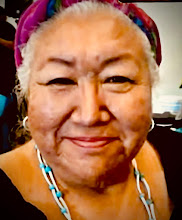
Marina, thank you for sharing all of that.
What comes through most strongly is not just anxiety. It sounds like you were carrying grief, memory, anger, compassion, and a deep awareness of intergenerational trauma all at once. When you describe waking up feeling trapped and then realizing that Truth and Reconciliation content had affected you more deeply than you expected, that makes sense. Triggers are often like that. They do not always arrive while we are watching or listening. Sometimes they show up hours later, in the middle of the night, when our minds finally have space to process what we witnessed.
One thing I noticed throughout your reflection is that you kept asking yourself, "Why am I feeling this way?" And eventually you found an answer. You were hearing stories that connected not only to history, but to your own family. You cared for your mother. You witnessed the effects that residential school policies had on her life. You have spent years listening to survivors, advocates, victims of violence, and members of your own community. So when you hear denialism, racism, or mockery directed toward that history, it is not an abstract political debate. It touches real people you loved.
What I also hear is that you did something healthy. Instead of staying alone with those feelings, you reached out. You called someone you trusted. You talked. You reflected. You put words to your experience.
That is the opposite of helplessness.
Helplessness says, "There is nothing I can do." What you did was:
recognize what you were feeling,
identify possible triggers,
seek connection,
reflect on your experiences,
and share your thoughts through your podcast.
Those are acts of agency.
I think your friend Cherie made an important observation when she talked about people feeling lighter when they finally enter an environment where they are not constantly carrying the burden of being viewed through someone else's assumptions. Whether someone is Indigenous, Black, immigrant, or any other marginalized person, there can be exhaustion from always having to explain, justify, educate, or defend one's humanity. That exhaustion is real.
You also spoke about something very powerful: "I don't need to be rescued. I need to be understood."
I think many people who have experienced trauma would recognize themselves in that statement.
Being understood is different from being fixed. Being heard is different from being saved. Being witnessed is different from being pitied.
Throughout your reflection, you repeatedly returned to the importance of bearing witness. To listen. To believe survivors. To acknowledge pain without denying it or rushing past it.
At the same time, I gently want to reflect something back to you.
You carry a tremendous amount of responsibility in your heart. You speak for your parents, your grandparents, survivors, victims of violence, Indigenous youth, and future generations. Those are noble commitments, but they are also very heavy. No single person can carry all of that alone. Sometimes feeling trapped can come from unconsciously carrying more than one human being was ever meant to carry.
It is okay to put some of that weight down for a moment.
Not because the history is unimportant. Not because the work is unimportant. But because you matter too.
The young people you worry about need elders who survive, rest, and heal, not only elders who carry pain.
What struck me most was when you described realizing that the feeling was a trigger rather than an immediate danger. You were able to tell yourself: "I'm safe. Nobody is coming to harm me." That awareness is important. It doesn't make the feelings disappear, but it helps separate the present moment from the past.
From everything you've written, I don't hear weakness. I hear someone who was emotionally overwhelmed by witnessing suffering, reminded of family history, confronted with ongoing prejudice, and trying to make sense of it all.
That's a very human response.
And I think your ending is important: you are trying to educate, to create understanding, and to encourage people to talk about difficult things rather than bury them. Whether people agree with every conclusion or not, the desire to tell the truth about your experience and your family's experience comes through very clearly.
For what it's worth, I don't think the feeling you woke up with was a sign that you were failing. I think it was a sign that something meaningful touched a wound that has not completely healed. The fact that you noticed it, named it, and talked about it is itself part of healing.
I'm glad you reached out to your friend, and I'm glad you shared your reflection here. 💛
Provide your feedback on BizChat
Marina Crane (00:01.196)
good morning. It's October first. Hey, the leaves are changing colors. Why am I doing this so early in the morning? Well, I have a luncheon this afternoon with a lot of seniors my age. Last night I had a I got up and I just had anxiety. and there were a lot of other complications, but then it had me thinking
And I thought, why am I feeling this way? Why do I feel trapped? And then the reality of the triggers that that I had the day before, like I was talking about truth and reconciliation, and the trigger I didn't think about the triggers, like hearing stories, horrific stories. And I know one of the late ladies, the influencers, she she did, you know, say it's a trigger warning, but I unconsciously didn't think it would have such an impact on me.
I mean I talk about trauma and I talk about just my life but and I and I do, you know, I I d you know, I I do miss my parents and my grandparents. But it but it was the notion that all of a sudden in Canada thousands and thousands and thousands of people are walking commemorating all these children children. And and just like well better late than never but even then
It's just so heartbreaking. It's so heartbreaking. And I I think it's listening to the comments of of young people or the reality of like, my goodness. like I like I I'm a functioning human being that's got a podcast and I talk about my life.
And
Marina Crane (01:54.572)
y the reality the reality of the fact that I can speak and t and talk and say things and even express my feelings. But the reality of the there's so many thousands of people cannot do this. So many people who have suppressed their feelings, anxiety and whatever they're dealing with. And I think that's why when you like the one lady talked about her her her her experience and
And the just the the how it had affected her her own daughter and and just from her own childhood experience. Just an innocent question? No, you can't. Because we all know exactly why you're asking that question. And we all know exactly how you feel about us. You fucking hate us.
The same way that your colonizer ancestors who built the residential schools did. And it's that hate behind your innocent question that makes it evil, vile, and hateful. So I got a question for you. If you're so happy to carry on that tradition of hate and racism and evil by your ancestors, why are you hiding? Because yes, every time you try to hide your racism behind an
Innocent question. You're hiding just like these buttholes here did. But guess what? Your evil ancestors couldn't get rid of us. We're still here. And you and your hate today, you don't stand a chance either. Hate is all you got. And now you're trying to mask it behind innocent questions, which is pretty pathetic if you ask me. Happy on shirt day.
Asking the question in Catherine is not considered hateful. At least as per Mark Carney. Got been a lot of hate around Owen Shirt Day this year, even So that's W L L W H R S E Wiley. And I I think that's the whole point is like the unconscious self
Marina Crane (04:15.906)
feeling hate but not really control not even processing it. Like unable to process it. because it it's it's like I said, I felt trapped. And I was wondering like why why am I feeling this way? What what is it that you know, what what is it that that like at the the my unconscious self, I'm I'm seeing this. And
I I don't know, I just I just I woke up and I wanted I needed somebody to talk to. And I'm just grateful that I was able to get a hold of somebody that
You know, I really didn't wanna make a video about the Second Sons and the residential school denialism that's happening across the country or this movement that's going against First Nations, that is spreading across the country. But after seeing images of masked men apparently associated with the Second Sons, having a banner that says gut bones, the university
incident in Calgary and BC politicians openly promoting denialism, I felt like it was my civic duty to say something. As a Mi'kmaq person, seeing our people suffering turned into a slogan is painful. These are families, these are survivors, this is our Canadian
Marina Crane (05:59.993)
Sorry, I put my phone down and it. Actual history. My concern though goes beyond that banner that was hanging across the bypass. This kind of division leaves Canada vulnerable to foreign interference. And I'm not claiming that I have some kind of proof that foreign governments are fine funding these particular groups. I'm saying that the division that they create serves the interest of anyone.
Who wants to weaken this country? A foreign government doesn't need to invade a country to undermine it. It can exploit its anger, it can manipulate the people, it can amplify radical voices, and it can encourage people to turn against one another. Think about it. What does that achieve? Number one, it creates a distraction. Number two, it creates chaos. Number three, it creates division.
When in this particular time this country desperately needs unity. Number four, it amplifies people's already existing frustrations about the government and then redirects it towards a minority. Number five, and this is the most important one, it creates distrust in the democratic institutions and our electoral government. And let me be clear.
Holding a government accountable is our right, is our democratic right. But convincing people that their neighbors are their enemy isn't accountability. It gives anger a target while leaving the real problems unresolved. History gives us a reason to take foreign interference seriously. The United States funded radical groups in Iran. In Guatemala, they did the same thing.
They funded the Houthis in Syria. They funded Al Qaeda. Etc. etc. etc. Those operations covertly support efforts to influence events inside their country. Those examples don't prove who's behind the groups in Canada today. They do show why we should pay attention and how division can be exploited.
Marina Crane (08:29.174)
What worries me about this unconventional warfare is the propaganda and manipulation and the economic pressure that come with it. A country can be weakened without a foreign army ever crossing the border. Influencing people can cost far less than fighting a conventional war. When you think about it, you can spend a million dollars on a few influencers compared to a billion dollars on an all out campaign for a month.
There's a trap to belong in, and this is what they exploit too. These groups will welcome you, make you feel heard, make you feel like they're make you feel like you're part of the family. And once your sense of belonging depends on that group, you may feel the pressure to accept things that you would once question or act outside of your moral compass. Wanting to belong is human.
Exploiting that need is manipulation. Look how minorities became targets in Canada over the last couple years. First it was immigrants, then it was the LGBTQ plus community, and now it's First Nations. I worry about what comes next. And if we're following the same pattern as the United States, it's women's rights that are next. Different targets but the same strategy. Blame somebody else for your frustration.
And create chaos. So my advice is this gray rock the provocations. Basically, what I'm trying to say, just ignore it. Don't feed into the post. Don't engage in arguments. Don't outrage or share those videos. Even when you share something to even condemn it, you can help you are helping carry that message further. Speak about what is happening.
Support survivors, share history, stand with people that are being targeted. We can defend the truth without turning the propaganda into the center of attention. The algorithm will tempt you. It will outrage you. It will make you want to respond and click that share button. That is what outrage marketing is. Your anger becomes their reach. Be smarter than that.
Marina Crane (10:58.828)
Be deliberate about what you amplify. Our people deserve dignity. Our country needs unity. And neither is strengthened by the mockery of the suffering of people's past. Anyways, that's my take. You stay deadly.
That is Kelvin Stan Stay Deadly on TikTok. And his was Truth and Reconcili Reconciliation Under Attack, Residential School Denial, and the Second Sons. Now CBC just published also an article on this such a thing. And I don't know if I'm able to bring that up and and whether or not it's applicable. But
Like I said, I woke up with anxiety and I was well, I wasn't too sure if it's anxiety or just feeling trapped. And and I think it's because like I did I don't comment like him, I don't comment on on videos because and and again too, I don't take part in marches because it's it's so triggering for me. because you know, I took care of my late mother for over a decade and and I saw the results
of what Indian residential school did to her because she went in when she was five and left when she was like sixteen. So so just imagine like a life, her childhood taken away. And that's why I think I advocate when when predators, pedophiles or just people who sexually abuse children. That's why like when I talk about countries, how many countries and we even within our own
political structure where the society allows adults to marry children and frown upon the marriages of two consenting gay people. Like I I the the reality of just how society looks the other way. And I think that's why I felt trapped 'cause I'm just like, I need some attention, I need to have somebody listen to me.
Marina Crane (13:17.61)
So and again I was very fortunate that I that I have different people that I can reach out to when I when I'm feeling such a way.
It's Truth and Reconciliation Day, and I wanted to talk to you a little bit about how the legal system actually facilitated, perpetuated, and enabled the residential school system in Canada. So the first thing was the Indian Act itself. The Indian Act essentially at the time made First Nations people wards of the Crown, which gave the Crown control over their autonomy and control over what they could and could not do. And then when residential schools were brought in, it was actually a crime not to send your child to residential school. It was
Required that children be sent to residential school and parents who refused to do it could be prosecuted criminally. In addition, later, as the residential school system grew and expanded, the government started to allow a pass system to be put in place. This was never something that was actually enacted into the law, but Indian agents would require First Nations people to get a pass from the Indian agent, essentially a permission slip.
To go visit their children at the school, to go see their children. And again, this wasn't in the law, but nobody cared. And because until 1959, it was illegal in Canada for First Nations people to hire lawyers, they weren't able to hire anybody to challenge this law. They weren't allowed to do anything that would actually get it into court to say the actions of these people aren't part of the law that they created that we don't like anyway, and so they shouldn't be allowed to prohibit us from visiting our children.
Make matters worse, the RCMP themselves were responsible for the enforcement of children's attendance at these schools. So not only would the Indian agents be involved in this, but the RCMP would be called in to apprehend children who ran away, to apprehend children who weren't sent, who were hidden, and they would pick up children and physically take them to or back to the residential school. So the RC and P were essentially facilitators of this system. And further, you also have the fact that it was illegal
Marina Crane (15:20.024)
For First Nations people to vote unless they wanted to give up their status. And so up until 1960, if you wanted to vote in a federal election, you had to give up your First Nations status, which meant that First Nations people weren't even enfranchised to vote for a political party who would get rid of the system that was oppressing them. This is all a legal structure that was in place. And even after residential schools closed,
When First Nations people were finally able to hire lawyers and thought about bringing challenges to this and suing the federal government for creating this system, suing the perpetuators of the violence and the sexual abuse that went on in these schools, the government didn't allow it because there was a piece of legislation called the Crown Liability Act that meant the Crown couldn't be sued for harms that it had committed. And they relied and continued to rely even in recent days in court cases.
On limitation periods against bringing lawsuits, saying you can't sue us for these things that we did because the too much time has passed. There's only a certain number of years that you can sue somebody for certain conduct that they've engaged in. And the Crown continued to rely on that, despite the fact that what they did was horrific and awful. So we've seen the harms of this not only be perpetuated into today's date, but the government continued to defend them in court in many, many recent years. And that's how the legal system has enabled, perpetuated, and created.
facilitated and s essentially created the entire structure and architecture of residential schools in Canada. It's and her handle is K Kayla Lee, K-Y-L-A-L-E-E. And like I said, it it it's it's the reality that so much was taken away from my parents and my grandparents. And and a part of me sees it and has felt it and throughout my life.
Like in class action lawsuits that I was eligible for. Now, I grew up in the city of Calgary not in the city of Calgary, but I went to school every day in public school and some private. I remember I was playing hooky when I was a teenager and I would go down to the Schinook Center or downtown Calgary, the Babe Parquade, like you know, just
Marina Crane (17:29.903)
cruising around in the city. And then when my parents broke up and my mother took us to Manitoba and I went to this isolated town that I mean, it was an old school, like I mean an old building. They didn't even have plumbing. You had to use a canister to you d relieve yourself. in the basement. and their their gymnasium was a huge ballroom.
I was so appalled because I was like this princess coming from the city and coming to this small town and I the first day I ran away I played hooky. I the re I why I'm bringing up this story is in this what this lady was talking about, the RC and P were vital in in making sure the laws of the government were in place even when children ran away. And lo and behold, when I played hooky in this little small town
Just west of of Brandon, Manitoba, the powers that be called the police. Like white people, you know, like I went to the house and because I did you know, I I I was smart enough to be and street smart, so I went to this house and th these in this little town, it's just a small little town, that these white people call the police. I mean they didn't call any tribal authorities, nothing.
And so this whole mentality of you know, if you cannot if you cannot beat them, join them type of thing. So, you know, if you can't beat the Indian out of me then join the horse.
But this anxiety or this entrapment that I felt after having to see and watch and listen to all the process of truth and reconciliation, it really it really hit home for me, even though I didn't think that it would have such a deep impact with me. And and like I said, it's
Marina Crane (19:31.617)
It's the reality of just what people are capable or incapable of doing or saying that that really really hit home for me. And
Anyway, I d I did manage to like usually when I'm in a situation like this that I feel entrapped or just like like I have no control over something that I've lost control. Maybe it's as similar to learned helplessness or or self defeating behavior. Like there's this this enabl this learned helplessness, like the fact that you couldn't do anything and this is ingrained like generation after generation. And so my podcast and what I talk about in in giving myself the ability or the freedom to talk
about how I feel, what I think about human sexuality, how I see society and how society sees me as a as a female. I I talked I have a I've got one more video here and this is from a fellow he's called the Goose Media. The underscore goose underscore media.
You need to understand that there is an organized, well-funded effort to get you to hate Indigenous peoples. Whether it's the disgusting chuds at Rebel News selling worn shirts mocking dead children, or the Nazi fucks showing up with signs that say got bones, or BC MLA, Dallas Brute releasing a feature-length residential school denial documentary full of lies and bullshit. You don't think they would have noticed that some of their people went missing? That got over six hundred thousand views on YouTube. This is all happening because
People with money see indigenous rights that are enshrined in our constitution, by the way, as getting in the way of them making even more money. Both the Rebel and Juno News have monetary ties to the fossil fuel industry. And guess who wants to build a pipeline through Indigenous territory? Yeah, that's right. The same people denying the climate crisis also deny residential schools were bad. What a coincidence. And let's not forget, Dallas Brody holds almost $50 million in real estate investments, so I'm sure land back scares you.
Marina Crane (21:39.13)
The shit out of her. These rich shitheads want you to see indigenous folks as the cause of your economic pain. If only they didn't have rights, then I'd be rich, they want you to think. But hey, whatever stops you from sharpening those deities. And this is how it's always worked. If you want to take other people's shit and still think of yourself as a good person, then you have to convince yourself that the other people are less than human. There were over 4,200 documented deaths at residential schools. These were children. Snatched up
By an institution whose whole purpose was to kill the Indian in the child. Denying this was bad is a cope. Because I'm sure you could imagine what it's like to have your child leave your home and never come back. This isn't about guilt. This is about shared humanity. Because you have much more in common with the average indigenous person than the average billionaire stoking hate.
like I I'm really grateful for social media because then they give me understand that there is because they give because they give me some insight. But at the same time too, like I I like I reach out and I was so like
I I felt so alone and so trapped because I I didn't realize like all the triggers like just listening to and watching things that were happening with truth and reconciliation, not even reflecting on the fact of white supremacy.
Okay, and and that hate. 'Cause like I said, I I I some I tune it out. But the reality of it is like how many like myself were triggered by by the amount of hate that was there? And so I reached out to some friends and my
Marina Crane (23:28.051)
I want to share a little content of the an ar a conversation I had with with a a a former classmate and and anyway here it goes. It it's still it's still painful for me to talk about it because unless you have lived through systemic racism and and basically have been yelling and saying, you're hurting me like emotionally and and you don't see it like I
I I know a lot of people don't they want they don't want to feel it because it's so painful and most mostly I think it's it's maybe even more severe if if you've if the trauma is is so great, is so horrific. but but it but it is i it is important. It is important to to know these things.
Well that's that's that's the human condition though. Like when even when I when I'm talking about bonding, you know people bonding to partners and this whole religiosity that that there's a forever like like especially Mormonism, you're gonna get sealed for time and all eternity and I'm going, No, no, no. Human human beings we we have it in our DNA to have form different bonds
throughout our lives with several people, not just one. Yes. And and the reality of it is he has just we fall in and out of love on a regular basis.
And and and for me, like when I say I haven't been sexually active in fifty years, imagine how many people I've fallen in love and out of love with without without being like without being physically like like sexual. Of course. And and I you know, and I try to explain that in in in my podcast and I try to explain that when it comes to like the concept of limerence and erotomania. And and I say for me
Marina Crane (25:28.379)
As a woman of color, when I'm talking to someone who isn't of my culture, I'm doing this concept of intimacy between erotic and limerence. I said and limerence is based on fantasy, and erotic is based on on like reality. So I said the closest I can do an analogy of erotomania is when a woman puts a restraining order against her husband because he's gonna keep
Kill her because it's erotic it's erotic. Sexual. And when w in terms of limerence, when I talk about what it is to be indigenous to a white man, like it's like it's like a fantasy or an illusion. When they're listening to me as an indigenous woman, I'm going, No, I am telling my story. And and if you fall in love with the romance of it, like like
Disney's you know these Disney princesses yeah the Pocahontas. And I'm going, No, that's the narrative that I've been born into. And and if you and if you get it or if you fall in love with that notion, that's part of that's part of limerence. And then when you when you embrace it and you realize like it's an illusion or a delusion, then you get it. You're just a person.
you know looks at you and thinks, gee, you're I'm sexually attracted to you. But that's all it is. Yeah.
Exactly. And the fact that you know people get scared of it are frightened of it. Yeah. Yeah. Like 'cause they don't have control. And I I think that's the whole thing too with all this happening with truth and reconciliation and this disassociating because sometimes when you're afraid to be intimate or you're afraid afraid of the the physical intimacy, you you want to you want to run and hide like a scared child.
Marina Crane (27:36.644)
But but these feelings are just normal feelings. They're at some point it became bastardized or unhealthy or something that you know like it's sexual and that's bad. It's bad, it's a sin. And I'm like, No, no. I'm trying to deal with this and understand it as as a senior indigenous woman and it and explain to people it's okay.
It's okay it's okay to be sexually attracted to someone as because like my parents used to say, It ain't over till we're six feet underground.
We have to deal with our feelings and our emotions and that's why when I woke up and I felt anxiety and I'm going am I disassociating what I'm going through? What what is it that I'm feeling? And I I I need to talk to somebody because process it a bit Yes. Yes, exactly. And I appreciate you helping me process it's Yeah. See and that's why I I say to people, find someone you trust.
Find someone who can talk to you so that way, you know, you're you're not being like a hu like a be perceived as somebody who like like that that it's my problem. See see Sheree like when when I talk like this to other indigenous women, I've I've had to give up friendships since since my since I've gone to the sentencing of Nathan Chasing horse.
And like like I I one of the ladies, throughout the the time that I've known her, like she'll she'll make comments that, you know, when she when we're talking she says, well don't kill yourself and I'm going, What leads you to believe what I've talked about means I'm gonna kill myself.
Marina Crane (29:30.647)
And I'm going, how can people exactly where did it come from? And and then I I stop step back away from a conversation for a couple of months, then I start talking again. And then just last month, she gets on the phone and she says, Marina, kill yourself. Take a pill. And I said, Yes. She's she was coaching meeting to to kill myself.
Marina Crane (30:01.367)
I'm sorry that my buzzer has gone off.
I'm just going to fix that. I should have done that, sorry.
Marina Crane (30:16.053)
And say. And I said, That's illegal to do that. Yes. And it it really made me think like where is her mental health? How d how she disassociated life that she could hate women so much, her own gender, that she can say this to another female, another human. Yes. Wow. Terrible.
Well I I That is not somebody you can trust the dog to for sure not. Well, she's been you know, I blocked her and she's been trying to get a hold of me and I'm just going, No You know, it's like my three strikes you're out, this I if I become that's that's as bad of a thing as you can say to somebody. Exactly. Really? And the reality is she's like sixty five years old. You know, at at one at what point at what point do you have survival skills for your own children, your own grandchildren?
when you're behaving like this to another human being? Yes. Yeah. See the thing, Sharia, is like I I don't need to be rescued. Like I you know when I when I tell my story to people, I I you know I it's it's like I I'm I'm telling my story but I don't need to be rescued. I just need to be understood. Yeah. Yes, yeah.
Everybody wants to be the savior, right? That's pretty annoying. Well that that's why like the the one white lady, like I said to her, don't drink for six months. Maybe your cholesterol will improve and then she ghosted me. Right. She didn't want to hear it. She didn't want to hear it and then I have another lady, the lady says, Marina, she misses your friendship and I said, No.
I said I said the amount of therapy that I've given her and for her to abuse my skill set. Yes. I said, the only thing that would mean anything is if she actually paid me for my time. Yeah, yeah. Like I'm kidding, Well, it's it's to put boundaries down because
Marina Crane (32:29.107)
I I know my I know my worth, three and and I really exactly appreciate like our friendship and just I'm just grateful you're on the phone. I do too. That you've been on the phone with me. You know, I I I go through so much in my life and I just you know, sometimes I just wish I just wish that, you know, I had to I I
I don't know. I it it I'm just grateful, like I said. Yeah. It's not many people that you can stay friends with for so long. You know?
Not you know, not many people's defense for years and years and years. Gosh since since university, my gosh, how many years ago? Thirty. I know when I when I when I try to Yes, and like I said, it create like like I said, my mother lesser heart says everything is guided. And and and I think too when I when I talk on my podcast and I encourage people of of all genders and races.
races to you know to talk about your trauma to talk about you know what hurts you and yeah find a safe place and and and let people know yes yes for for me for me when you have all these thousands of people that were my like my parents' age my grandparents who who talked and talked and nobody listened to
Right. You know, they're gonna destroy I think over I don't know how many thousands of of disclosures of Indian residential school in twenty twenty seven. And and when I put my podcast out I'm I'm s I'm saying a story and I'm saying I'm putting it out there because the survivors of Indian residential school, those children who didn't have the ability to talk about what happened to them. Yes. I said I said a little bit, yeah.
Marina Crane (34:38.865)
Yes, and that I'm trying to use my voice as an example that that it's important to to talk about it, but to to let people know these things happened. Yes. And that we still we still need need some some sort of closure or help in in processing things. You know, I when I went to Las Vegas, this white guy came with me. Yes and
And like they cancelled and the following month we went back down again. And then he says, this is this is closure for me and I said, Well it's closure for me too. But you know, for whatever closure he had to deal with, mine was different.
And and you know the the reality of it is like just to him being there, same saying to me, Marina, he she says, you know, for everything that you've done, this wouldn't have happened. And and all I did in my blog was to to let people know, victims know, there's no statute of limitations. You can tell your story, have the courage sometime where you can just tell people somebody is hurting you. And the
The fact that that a young woman did that on Facebook and got this man prosecuted and the ripple of that
Yes. You know, even though you think you may not even make a difference, yeah. Exactly. And then f to have a white guy look you know, say to me, Marina, you made that difference. Sure. I look I try to tell people even my own brothers couldn't do that. And even the men in my community couldn't do this for me. But it took it took a white man to do this for me. Yeah, yeah. No one would
Marina Crane (36:35.353)
come with you or support you or help you.
at least somebody came with you. You know what you did that by yourself. You found you find your people that can do what they can do for you, right? Sometimes your family can't. I like the way you said your people. 'Cause it is. It is like. Yeah, you find your own f yeah, your own people that do what you need them to do at the time. You need them to do them. Yes. That's what you know that's what makes us human, this human family. Yes, exactly. And it doesn't matter what color your people have.
Exactly. And I think that's why it it's so easy for women who project their like their disassociation, we'll use this big word, onto onto other women as if that woman will never experience that. And I'm going, no, like I'm I've experienced I've experienced it, but you're not listening.
you're not understanding, you're not embracing it. Yeah. You're projecting something onto me that that like I like I have to shake it off. Yes. Yeah.
well.
Marina Crane (37:59.672)
I I think that whole point too is that that shaking it off is is shaking off those triggers, those those things that like say with this white supremacy that was going on and just the whole reality of hate, hate that that people want to infringe on on my rights.
not realizing like the the battle I've had to to fight my whole life. And and it's not like like if people understood the whole concept then
Marina Crane (38:35.215)
I'm sorry. I'm so sorry.
Marina Crane (38:48.897)
So sorry for that. It it's like I have a meeting coming up and it's reminding me that I have to get off the podcast here. But but I I think the whole point was I I needed to ha I woke up and I felt trapped.
And and the the metaphor for that is like all the laws, all the laws that were built in that still exist today, that that still have control or governance over me. And and the fact that there are so many people who don't understand that and just look at it as like, no, sh you know, th she ought to be doing something different. And I'm saying to my friend Cherie, I'm going, How can I do something different when I'm a human being with all these feelings?
And emotions, but yet people don't understand the whole history, the whole concept of just like the attachment or the lack of attachment or or the disassociation or like the like when I talk about ritual abuse and I talk about the trauma, the extreme trauma children go through, to the point where they develop multiple personalities through disassociation.
And and as they grow up and and and sort of every time there's a trigger, they morph into a different personality. And like I went to a ritual abuse conference and I the lady there had thirteen or fourteen different personalities and her child was was just horrific and the the extent of what happened within her own family structure and just the university and the police and the whole the whole reality of psychology and what's the underbelly what's the underbelly in terms of humanity
in terms of ritual abuse and how it manifests itself. So even when I say look at look at how many
Marina Crane (40:38.497)
how many societies allow adults to marry children? That that is the ripple effect or the shadow effect of ritual abuse and the abuse that that people perpetuate without with and trying to have coercive control over the most vulnerable. And the reality of it is as a woman, when we do not heal, we become participants in it.
Like the the one lady social media and she was talking about her father and what her father did to her and how her mother enabled her. And it went on to a generation where they wanted to have possession of her own children so that they could also participate and take advantage of their grandchildren. This is intergenerational trauma. And and for for it to trigger me in the sense that, you know, I like I I'm just grateful for the parents I've had.
But I I can't comprehend what they've went through. And and I think that's the hardest thing to to realize. They were just children, they were just babies. And and the fact that seeing all this, seeing everybody you know, walking and the reality like acknowledging that something horrific happened. Something horrific happened.
And and that's why when I think about my parents being babies, scared, scared, and I'm going, how come nobody was there to help them? Not only that, but my aunts and uncles and even my grandmother. I haven't had that. I'm grateful that I had my parents. I'm grateful for having my friend Cherie that I could call up.
You have to understand this. Cherie is l when we're talking, she's she's she's in Hong Kong.
Marina Crane (42:39.511)
So like I like I said, there's different people I've met throughout my life and I'm
I didn't realize just how triggering this whole this truth and reconciliation what it what it was what it was doing until I woke up in the middle of the night and I wondered what what's happening. It's just like when I moved back from the States, I my first night home I in the middle of the night I woke up and I was going, What's going on?
I sat there in complete silence and I thought, No, I'm it's silent. There were no street cars, no rumbling, no vibration. I lived so I lived in such a dense population that my body and my s mindset became accustomed to all that noise. And and for me, like I woke up because there was no there was no noise. There was just complete silence and and that was scary. And and I think that's the whole thing too about what what triggers people, especially when you're listening
to the stories and the trauma and you get re-triggered. And it's not that I that I no know the individual who's telling the story. It's the fact that I've heard it throughout my life from my parents and my aunties and you know my siblings and and just like victims like when when my niece Roberta started disclosing about Nathan Chasing horse. I just
I I like it's just overwhelming. It was overwhelming. And and the fact that it exists and the reason I do my podcast is is so that people realize like it's it's if if we don't deal with it
Marina Crane (44:32.547)
then we we we carry it with us. We carry it with us. And so for for me, anything that I could do to to deal with this feeling like where did it come from? It was created before I was even born. And this systemic racism, we have to mend it and reconstruct it. And talking about the you know the the racism, the those the those white men who had the audacity to show up at in Kamloop.
You know, and people denying all this stuff and the reality is like the social media or just the whole context of artificial intelligence pushing pushing hatred to w because there's so many people online who are who are putting in that like alg rhythm. And that's the critical part of everything when we talk about
like our choices, our critical thinking and and what it is that we need to talk about because for everything that we do has a ripple effect. It's just so what
Marina Crane (45:46.294)
I I'm just it's like it's like when you're a victim and something happens to you and I'm trying to get this done but I'm unable to. So if I can any any little thing that in terms of This is my conversation with with you have no control with something with my ch w like I went to university with her. But I I just wanted to put the last one out because I do think
I do think like I said, it's an unconscious thing. It's like I said, like I woke up and I was expecting sound when I first moved back home. And and this this morning, early this morning I woke up and I'm going, why am I feeling this way? And the reality of it is like it was because I was triggered. I was triggered all day and I put out the podcast earlier to deal with it. I thought I dealt with it, but but it's the whole notion of just how much
How much of it is out there? And and that even though people are walking and you know saying, yes, we're we're acknowledging the reality of of this genocide, there there are still laws, reactive laws in government today that just doesn't deal with the things that we need to deal with. And and I'm grateful for whatever politicians sort of ease it into their system their their agenda, because
how else are things going to change? How else are we going to deal with things if if we don't have people in political positions to have the courage to to to be advocates, to to help us help us in in in monitoring and dealing with the things that we have to deal with or we need to deal with. See, I'm doing this on my own. I'm not being coerced into doing it. I'm not there's no monetary gain for me.
The reality of it is this is this is the reality of so many indigenous people. So many indigenous people who cannot articulate the way I am t articulating. And I'm doing this for my audience and my podcast because it's important. Like my my friend Sheree, when she talks about the reality of of like the the duality of of wearing your skin.
Marina Crane (48:07.727)
Now I I'm not too sure why I can't get this going because I do have to get ready to go to my meeting and I'm not too sure if I'll be able to do it on time. and I'm sorry that I if I knew how to edit my podcast I would do it, but I I just don't and
and I'm sorry that I that I have I use all this technical difficulty happening. But if I could put it online then it it would help. It would definitely help and life and technology. But again, hooray for technology. I wouldn't have I wouldn't have such a way of dealing with things. Let's see if I can do this. like well well yeah well like
You know, people peop people talking about like laws that we have no control over. You know, like it's like it's like when you're a victim and something happens to you and you have no control over how people treat you. And and so any any any little thing that in terms of things that happen during the day where you have no control over it, it it trigger it it just the ripple effect of the trigger.
So that's why I woke up
Marina Crane (49:44.964)
Well well it's like I I listen to the this one lady and she she's a social influencer. And to find out that her pair her parents trafficked her, 'cause a lot of stuff that I do for my podcast has to do with trafficking.
And then and then even over the weekend when I I went out to the casino and I went into the bathroom and I saw that at least six young indigenous girls there were prostitutes. And and I came out and I said to my cousin, there are prostitutes in the bathroom. She said, Yes. And and like how much helplessness do I feel as a indigenous elder woman seeing these young indigenous girls doing this? And then and then realizing like like they're they're
unable to live their lives freely and then here I am I woke up and I thought you know I I have I have a a bill that I've got to pay just a simple bill shury and then I'm going okay I can straighten it out when I when the office is open and then I thought wait a minute why am I feeling this anxiety it's because I have no control over it right now
And so so I'm saying, okay, how many people have been triggered that are survivors of Indian residential school or know like their parents or somebody that you feel this learned helplessness and the the thing about it is like there's a psychological turn called disassociation where where where you you know like you sort of yeah, so you're you're more of
it's like it's like when you're sexually assaulted and you know you you know something's happening to you physically but you
Marina Crane (51:34.893)
Yeah that Yeah, I so taking myself someplace else. And and then I thought, wait, all day yesterday, that's what I was doing.
And that's the reality, like like Shari thousands of people were marching yesterday before yesterday or yesterday wearing orange and I've never seen that many people being aware. And it and it's it's sad because because this should have d been happening when my parents were children.
And like this one lady who was trafficked by her family, she says she says, I overcompensated with my own daughter. She says, My own parents wanted to take my my daughter away from me. And these are people who are unc who are consciously aware that they want money and they're using their children to be trafficked. And this woman, she says, I overprotected my daughter and she's got anxiety now. Yeah, and then I think
Okay. Okay.
Marina Crane (52:51.489)
Okay.
Okay, okay. See my friend my like I said, sh I my friend it was in Hong Kong. Okay, yeah. so yeah, it's just the it's the reality, Cherie. Like I haven't felt this way and then I thought, no, it's part of healing. It's the reality that these triggers are happening and I can like I can talk to you about it and and I can say, Okay, I'm just associating. I can feel it.
But but it's I I I think the reality of it is like the anxiety and why is it that I have that? And then I think about this young influencer saying like her parents wanted to get custody of her fifteen year old daughter and knowing that she was trafficked by her parents and that the reality is like her grandparents would traffic her own daughter.
Marina Crane (53:52.965)
Like that's the grandparents trafficking the do the grandchild. That that I can understand that her daughter has anxiety because she was trying to over be overprotective. And then when I think about my own anxiety, and I think hopefully my my parents did this, but I don't think they were aware that they were doing this to me. Yes. Because they hadn't really dealt with their own trauma. Right.
It sounds so convoluted and so complicated but yet you know it it has a meaning to it. But you know, it's it's like at least the the awareness is positive before, right? That's that's the reality of it and that's what's so scary.
It's scary it's scary in the sense that, you know, when we talk about you know, like say victims of violence or we talk about people who have coercive control over other people. But it's the it's the reality that the government had this much power over generations of of indigenous people that is that is is the shock or the reality of it. Yes. And our people are consciously aware of it today as a country.
Yeah. Hmm. And I was like, you know, it's interesting. Like I I because I'm so far away these days, right? But you know, I talked to my sister the other day and she was, you know, she mentioned that her daughter was looking to for her orange clothes because she couldn't go out without wearing orange. And I was like, huh? Why orange? You know, because I'm I'm not in it, I don't see it, right? Yeah.
And then I like, okay, like she she mentioned it and then, you know, so I'm like, even then she's so young, but it was important to her. You know, she's nineteen. I think that's good. Like this new generation is, you know, more aware. I don't know, there's something good about them, you know, either way.
Marina Crane (55:59.855)
Yeah, it I think that's positive. In and yet we have so many white supremacists who who are saying that there that these things did happen. Yes. And and a lot of as long as there's both sides, I mean how the good side outweighs the bad.
Well, that's the reality of it. Like when I voice my opinion, it it's like I'm doing this freely, but yet the reality is is that you know, people are afraid. Like people are still afraid because it triggers them. I I know like like like I said, my I saw it with my parents and my my my aunts and uncles. You know, I saw that I saw that to like don't don't fear. Yeah, they're fear. And then and even though like
It's it's not like it's not flight or fright or like violence. You don't see it but it's pr it permeates, you can sense it here. And and that's why when I woke up and I got triggered, I'm going, No, this it it's like the reality like I'm okay, I'm safe, there's n nobody's coming to harm me.
And and it it's a dyso dissociative process. But yet but yet like it's like waking up from a bad dream and going, No, this didn't happen. But yet but yet like for me it's a fallacy and a illusion or delusion because I'm not being victimized. I'm I'm just it's just a trigger. Yes, yes. And that's that's you know how many like African American
Americans I have talked to in Ghana who say they come to Ghana and they're black like everybody else and they're feeling the weight off their shoulders is so huge that if they can finally relax. Yes, that's I think you know that's the the you hit it on the nose is the ability to relax and here we are in Canada. Like where can you go? You can't go anywhere. This your country. Yes. I you can't go to the motherland. It's not there. It doesn't exist. You're in it. You're where you're
Marina Crane (58:09.916)
supposed to be and still you can never take that weight off because it's the you're always carrying it. Yes. And and and the nature of it, Cherie, is like because you're white and I'm indigenous, there's gonna always be this this constant dance of intimacy. And yet if if there's if it's so unequal, how are you going
to deal how are you going to comprehend it if you're you can't even comprehend what I'm going through. So I I appreciate I appreciate the narrative about Ghana because that's exactly you hit it right on the nose. Where where is that freedom?
It's very not I always think about that because they they all say the same story. Like I've heard it hundreds of times from hundreds of people and they all say when they get to Ghana and especially they say it takes them a week or two weeks and they start to like it un they un get unburdened and then the next time like the first time they're driving a car and a police officer pulls them over, there's a person, you know? Yeah.
They're not a black person anymore, they're just a person. And then they go, I it's and then after that happens, a few more things happen then they realize, I'm just a person here. I'm not a black woman, I'm not a black man, I'm just a person.
They get to release that. Yes. And and I think that's part of the reason why I like staying home. I d I have a really difficult time going out even into certain spaces. Because like is it safe? Do I feel safe?
Marina Crane (59:54.702)
You should come to China, everyone will think you're Chinese. Some place some place where like a not sticking out like a sore thumb. It's you know, and and the reality of it is like like my my nieces and nephews and just the children are are are growing up in this environment. And that's what's so so disheartening. 'Cause there's no fairy tale. There's no you know, there's nothing to create the you know
to protect them. It's it's just systemic racism. Yeah, yeah. They need to they you need to come and hang up in like Thailand, Indonesia, Philippines, China. No one will know you're even they will just think you're a local. You don't stand out at all. No one would know, seriously. No one would wouldn't bat an eyelid at you.
Well it's it's We weirdly but it's true. Yes. I but see that's see when my parents traveled when I was eight ten ten years old and and even though they were traveling with white people, I do think they saw they saw something like some sort of freedom. And and you know, and that like probably the white people that were getting the weird attention and they were probably getting ignored because they look like everybody else. Exactly.
But yet when they came home the the the experience like you know how my father passed away e and my mother like just dealing with having to talk about her experience in those places. Yeah. That and that's Yeah, exactly. And that's the the hard part is like like this social this lady who's on social media, she's just a young woman, Cherie. And then I think she had she was trafficked.
And her her advocacy for indigenous ways of knowing is just so profound 'cause she's a huge influencer here. And then and to realize like the trauma she lived through as a child. When when here I am, like I'm I'm I'm seventy four and the reality of it is like it's still happening.
Marina Crane (01:02:13.411)
Yes. How and and yet we you know, like how the awareness is out there and people know these things are happening. But they're not stopping it. Exactly. They're not stopping it. Yeah. Most of the most of the time when I talk about ritual abuse I say, you know, there there's so many countries in the world that allow adults to marry children. I say and that's the surface of ri ritual abuse that we're so consciously a aware that you
know men are doing things to children. Yes, yes. You know, at the same time too, y you like when when I take a a look at the the bigger picture and I'm trying to say to people this isn't just an indigenous issue. This is this is a human a human rights issue for everybody. But when when I love China it's death penalty. They give you the they give you the death penalty for child abuse. Love it.
It killed like three people last week. I love it. See I mean there's tricks, but I love to Yeah, and the conce like for people to realize like when I do my podcast and I say things that adults do to children is are unforgivable.
And but you but unless you have the death penalty i it it's just like poo poo. It's like it's it's an illusion or a delusion. This isn't really happening. And I'm going, No. The the the the child has to deal with this their entire life. There's the rest of their life, yeah. Yes. Like in MC But I mean if there's real consequences, it sure makes people think twice. Yes. But but if the whole world had these kind of consequences
It would help. Yes, it would help. That's why when when when I make statements about the choices I made in my life not to be sexually active and I the one lady, well you're like a nun and I'm going don't no, don't put put religion on it. I mean you need I made this choice out of safety.
Marina Crane (01:04:19.787)
Yes, yes. And and and here I am, I'm still living in this life and you know, it's it's really difficult to to even be in a relationship because a lot of times I think men just have this attitude towards about about women on going, no, you the it's it's such a like how how do how do we
just I don't think it changed it. Yeah change that narrative, yeah. But you know, again, like it's just so so steep in like we'll say in European culture. Yes, yes, absolutely. I agree. Yeah, 'cause I I agree.
And and then, you know, to to try and talk to people about it who just live in it and think it's normal. And I'm going, no, you don't realize that you're projecting that onto other people. Yes, exactly.
Marina Crane (01:05:30.997)
Exactly. But I well So even though it might seem like a like what is what is Marina doing? She's got anxiety. What the heck? Sheree, I'm just glad you're listening to me because like it makes me makes me happy that you thought to call me. I'm I'm honored, you know? Well my I think that's really nice. Well thank you because
I I don't know, I just I I truly believe like creator, we we like everything is is guided.
And and for me to talk about disassociation and like it it's one thing like I I had a white friend and she ghosted me. we we met since the pandemic and I I made a comment to her about her drinking 'cause she she said sh her a her cholesterol was high. And I said to her, Well quit drinking for six months and maybe you'll s see a change and she ghosted me.
And yet and yet when I when I try talking to her about disassociation and she projects that onto me as if like she's well she's going for doing the same thing. Yeah, because she's a she's in a position of white privilege. And and I'm going, no, this disassociation isn't just something that happens to indigenous women. It happens to human beings. Of course, of course. And to to run to run away like fright or fright.
Yeah, it's normal. Yes. So I I d I don't I
Marina Crane (01:07:18.108)
you know I don't know how many times I say that to people, like when people say, Chinese people do this, I go, All people do that. Both people do that. In the whole world, I always am saying that. Or when I'm in Gava and people say, you know us, yeah, we do this as it everybody does that. White people do that too. Everybody does it. Yes. Chinese people do it, black people do it, white people do it. I would I it they don't Hello?
So I I just wanted to end that there because like I I have sort of mixed the conversation Sheree and I had, but it was important for me to put it on the podcast because like she said, there's a death penalty in China for adults who sexually abuse children.
The the reasoning or the intensity or the heaviness of it is the reality that in Canada, if this were China and this whole experience of genocide that happened in residential schools and all those children that were hurt hurt, how many of the priests and sisters and clergymen would have had the death penalty?
Or even people who worked in these institutions, how many of them would have been executed? Now people could do some self-reflection and say, well China. Well you even look at Tibet and you look at the Dalai Lama and all the sexual abuse that that had been occurring has been occurring there. So these these things that we talk about affect every human being, every every rock walk of life.
And and for having a group of white boys h covering their faces and and parading around that they have such privilege is a reflection on their society and how much denial they're in denial of their own capabil incapac they're incapable. They're it they incapacitate themselves into the structure of what they're contributing to their own society. It it's it's like a
Marina Crane (01:09:26.372)
what do call ping pong? You know, the ball keeps on getting hitting hitting back and forth and never really finding the goal because because again, what does it say about about that, about white privilege or even even systemic racism or or racism in itself? To have this illusion or delusion of power over another group of people.
And and for me as being that person they have control over and for me to have been raised in it is very triggering. It's it's like like when you when you s you when you're a child and you light a candle and and you look at the flame and you touch it and you get burnt. Well that's a trigger. That's a trigger response because you know that that's painful, it's gonna hurt. So when I see white supremacists, I
I know I know it you know, like it it's a trigger. But unless you've actually lived it, like emeshed in it, like like Cherie said, you know, you have black Americans who go to Ghana and it takes at least a week to two weeks to feel human, to feel at peace and to pe feel like another, just a human being, not a person of color. And yet here I am in Canada, I live in my community because I feel like it's an oasis.
I just deal with what I have to deal with with people I've grown up with. I don't have to deal with people who like like in terms of the city, if there's systemic racism, if if there is some dialogue that needs to happen, I I will I will step to the challenge. I I will step to the plate and I I will have a conversation with you. And and however that conversation comes out is is based on your own set of life skills or set of skills.
Because it takes it takes people who actually have boundaries and mental health boundaries that can actually dig into the reality of what it's like to be that other person. What what what is happening to that other person? I i is that person who's telling the story truthful?
Marina Crane (01:11:39.374)
can you trust them? Are they good people? And under your definition of what is a good person? So these things like are important and unless you have those the reflection or the ability to have some sort of discourse that that can trigger people, that makes people feel uncomfortable, well that's the whole point of of dismantling systemic racism, that challenge. And then for that person to bear witness, and it's not just
Like it's one thing to say and think you can bear witness, but it's a harsh reality when it when you have to bear witness to your own self defeating behavior. And a lot of people
who who want to dismantle their own self-defeating behavior, that's the point of triggers where they just abandon me or ghost me. Or just say, well she's not religious. She's not a good person because she doesn't follow my religious ideologies or my political ideologies. That's what I'm talking about in terms of holding space by just respecting the other person's values and beliefs as theirs. That it works for them and they're not hurting anybody.
In fact, they're protecting the most vulnerable women and children. So again, in order to hold space as well as bear witness to have the courage to stand by a victim and believe their narrative. To stand by the victim and believe their narrative. And I say it again, to stand by that victim.
That victim could could have had the most horrific childhood experience. And as you're standing by them, you're standing by them as elderly people who've carried this trauma their entire lives. And you're standing there bearing witness to the injustice by hearing and listening to their stories. That's what's so triggering about all this.
Marina Crane (01:13:39.317)
I took care of my mother as her primary caregiver for over a decade.
Marina Crane (01:13:47.361)
And I how much more can I even express?
I I don't have a magic wand. I can't erase my mother's life. I can't erase all the trauma she experienced. Nor can I even comprehend my grandmother.
It's just horrific and to know this history, to know how horrible people treated indigenous women and still do to this day. It's I'm sorry, but it's just so heartbreaking.
Marina Crane (01:14:32.353)
It's so heartbreaking. And yet and yet we have to talk about it. You know, we have to talk about the genocide. 'Cause it happens today all over the world.
Marina Crane (01:14:48.641)
You know, it's it's I used to as a child see my grandmothers, my I couldn't even comprehend my great grandmother. But to know that they lived in a time where they were hunted. Physically hunted. Hunted. I mean like indigenous girls, like kids are being hunted and trafficked. But this is this is like the Wild West where they physically were chased.
and and caught if they were pregnant, they they the the the prize catch was like a rare animal to find a Dakota woman who's pregnant and and kill her, gut her, scalp the b unborn baby and as well as the mum and take it to some hick town in South Dakota or North Dakota to collect bounty. And that women were were ki were hunted that way. The thousands of women right now what they say there's over fourteen thousand children
Who ha who were reported to have been killed in these Indian residential schools. That's just recorded. We're not talking about those records that that the Indian agent or or the residential school principal or administrator d deliberately destroyed. The history of genocide is so profound. And I think that's why for me it's so triggering because I'm aware of it. I'm aware of it.
And yet it's not common knowledge and we have so many people who are trying to deny that these things happen. And and why are they denying it? 'Cause they can do harm to me? They can do harm to my nieces and nephews, my siblings, my relatives, my neighbors. You know, I I fear for a lot of our young young people
who have a lot of anger management issues, who go out there and they meet these horrible people and they get murdered. I just, you know, I or assaulted. I think the worst thing, you know, I used to say, if I ever was sexually assaulted again, I would kill my perpetrator.
Marina Crane (01:16:55.245)
And this one lady looked at me and and I said, No, I said the lateral violence and the way people look at me and talk about me was harder than the actual assault.
And the fact that this was triggering that I had to live through that, I would sooner defend myself by killing my perpetrator. And and I think that's the the danger of of what's happening is that there are a lot of angry young people, indigenous young people, who are tired of this systemic racism.
And and I do believe that there are so many people with white fragility who aren't educated and don't understand the complexities of intergenerational trauma. So a lot of and maybe in some ways it's a bias for me that this podcast i is directed to indigenous youth, more so than strangers from other countries or immigrants or or white people. It it's it's a it's a lesson that
that we have to understand ourselves first and heal first. If we can do these things and have the strength and tenacity to feel our emotions, to understand the complexities of us just being human beings. To be in a society where we're constantly policed, constantly projected on as like they know me without knowing me. I'm just grateful for my friend Cherie in Hong Kong who
has you know, she she helps out in Ghana with in education and and that the reality of how many people she she lives with that are multicultural and the fact that people feel it and sense it because when they're out of the environment they they can sense something is different.
Marina Crane (01:18:55.467)
And and just for that just for that experience of of j how they feel is is a rarity. A rarity in itself. So so for me, opening up my house to a white man for the past three years in in just talking and texting and having dialogue and even having allowing him to accompany me to Las Vegas is a profound experience I'm sure for him.
And the reality of like feeling like that uncomfortableness being a white man. and the reality, the tenacity to to understand that and to to engage in it and to breathe it i is something that that I hopefully a lot of those young white supremacists who are s who are racist have the courage to be like this white man. B come into an environment where you feel uncomfortable.
G have the courage to you know have some boundaries and understand an environment that is so foreign to you. A concept of of living and culturally living in in in something that has been existing s in existence for thousands of years, to document it. Like do do people understand the nature of what Creator has been blessing us with? It's
Like I I'm I'm just totally grateful that I can do this podcast. And and as much as as much as I could say, Yes, I hate I hate these these racists, these sons of anarchy or whatever the hell they want to call themselves. But it but it doesn't do me any good. And and the thing is like
what thirty y some odd years ago, the the week my niece was born, my my childhood friend's daughter got into an accident and she died. And her the father was interviewed on TV and he told he told people who were watching the news that he forgave the person who was in the car that killed her his daughter. And the people were like, how could he forgive?
Marina Crane (01:21:09.899)
And and and that's the whole notion of of the reality of inviting someone from another culture into your space, in into your narrative and to have the tenacity to you know, to interact, to get to know each other and to broaden your horizons, especially mine. Like I like I said, I'm seventy four and I'm constantly learning and it's important.
Because if we do not bridge I don't wanna use the word bridge but like like sh like the analogy of Cherie when she said black Americans going to Ghana and it takes about a week or two weeks to feel completely at peace and and human instead of being a test subject.
So with that that's why I'm saying when you're both from two different c different cultures and you're both test subjecting each other, you know, you y ye the tenacity, like you we have to work. We have to step up to the challenge. So anyway, I have to I'm already late for my appointment. I know this podcast was interrupted with a bunch of my my phone going off and dingy linging and but
My hats off to my friend Cherie and to, you know, all the people that I've met throughout my life. And we'll continue to we'll continue to meet. and to people who are out there who have had the tenacity to actually live in in with indigenous people.
Not only just working with indigenous people, but actually going into our communities, First Nations, Inuit and Metis communities. Like that's the one thing that people don't understand. You know, you have people who are pretending to be indigenous, but but do these people actually know what it's like? You know, there are so many people who are not indigenous who
Marina Crane (01:23:16.153)
who who know what it's like because they've had the they've allowed themselves to come into our communities and actually live in our First Nations Inuit and Metis communities, who have actually spent time and and friendships and made relatives with with indigenous people. Like that's how you you understand what it means to be indigenous.
Not not pretending by stealing my story or any other body's else's story.
'Cause these stories are very triggering and how we process these triggers, even though we might not be aware of it. Like right now I'm talking in terms of a podcast. Probably tonight I'll, you know, wake up and I'm going, What did I do? What did I say in this podcast? What triggered me? Everything we do and say has consequences. So I I'm hoping what I do and say in my podcast is enlightening to people and and understanding the struggle of what it is to to even be
in an environment where where you're you're you're shunned and and you're looked upon as as as something different, as as a savage, lower than the snake's belly, as my mother used to say, because in indigenous language there's no swear words. So the lowest thing you can call somebody is lower than a snake's belly. So so when you're son of anarchy
you're you're lower than a snake's belly because you're slithering. Lower than that snake's belly. How are you gonna how are you going to rise above that and become a human being?
Marina Crane (01:24:57.569)
Okay, so that's my gist on anger towards systemic racism and power power and in and and more in empowerment to all those who are fighting systemic racism. I appreciate you, I I acknowledge you and and I wish you a good day. Keep the battle going, life's worth living and and whether or not you understand it, it it helps me
realize like you told me th this is what my this is this is how I grew up. These are the things my my parents had no say over in how they their values and beliefs growing up in those horrific places. But as a as the descendant and a child of them and as a product of the system, I'm trying to do the best I can to educate you.