
(00:02.148)
good afternoon. It's Sunday, July fifth, and it's storming outside with hail. And I am gonna go to a Mexican restaurant and pick up some menudo. I'm also planning to go and watch the Mexico soccer game today.
Of course, yes, I'm sure for Mexico. But it it didn't dawn on me 'cause I've like I've been fans of hockey players, rode well, rodeo, not too much baseball, basketball, football, hockey. So af and I sort of found out who Ronaldo Christiane Ronaldo was a few years ago. And
The fact that he's forty-one and he's gonna be retiring and the stats he's accumulated. Like I already knew he was he was what they call the goat, but I was talking to a friend of mine, I said, I think I like the sport of soccer. I didn't realize how many attractive and good looking, handsome men there are t on these teams.
'Cause you can actually see their faces, you can see their their arms, their legs, their knees. You know, they're not covered up with with protective equipment like in hockey and or a helmet like in football, like American football. So it it's an interesting it's just an interesting sport, especially like I've I've I've watched college football
And so I know the dedication it takes for an athlete to to keep their bodies up to up to par. Okay. So anyway, happy July fifth. The Calgary Stampede is on the way, it's happening.
(02:05.344)
I was I was promised some some passes but I haven't received them so the I was planning to go down to see the Pow Wow on Tuesday but I have to change my mind because I it's just too expensive. And my friend's coming in from Montreal so I'll probably just go to a restaurant and and have a chat or a visit rather than going down into the crowd and the noise and the
I don't know. I don't know. If if it was if I had a pass I'd go, but I I'm changing my mind.
Besides that there were a lot of people who said they were gonna come for the stampede and about gee two weeks ago I thought, no, they're not coming. And that's okay. I mean my friends coming in from Montreal. I managed to go to a birthday party yesterday.
And then I also went to a conference on action dignity, understanding and planning what racism, anti racism strategies, which is really interesting because a lot of the things that are happening on Sutina, especially when it comes to the five point one point five billion dollar economic
planning that we have and how to incorporate spaces, green spaces, so that people could use them in terms of like cultural activities, systems and ways of combating like depression or any kind of anxiety that might lead to racism.
(03:43.447)
So the whole concept of deconstructing racism, mental health and balance, it's it's it's an interesting concept, yet I think a lot of times people are so westernized they they forget they forget how primitive we are as human beings.
I think if we just ac accepted who we are and rather than trying to recreate or com make it more complex, then we don't really see the h healing modalities within our our cultures or within our our organizations and families like that have been handed down for thousands of years. th that's why this whole concept of Christianity and
organized religion or organized cults really makes me like wonder the whole reason for somebody to have control over another human being. when really
in the natural way of things is that is that we we're we're looking to to survive, just like to to plant vegetables, like if we're veg if we're vegetarians, eat that. But it's still the process of gett getting something done and and surviving and being happy in that livelihood that we're living. Things are not as they seem to be in terms of
evolution and human development. And I I really think that leads people more into some sort of unbalanced pro I think I'm a skeptic in the sense that I say more into illusions or delusional ways of thinking. But yet at the same time I wonder how healthy is is it if those delusions or illusions help us progress forward too.
(05:40.309)
So anyway, I I did manage to meet two people yesterday who I'm hoping will help me I'll I'll set up a meeting with one of the developers and see if we can form some sort of workshop or strategy in sort of a cross-cultural orientation or just meaningful workshops for different age groups.
in in understanding or deconstructing like s what silos are, what lateral violence is, like mental health, the whole process of mental health, or or even challenging our notions of am I am I a manipulator? Am I gaslighting? Am I fawning? Am I in limerenance? Am I infatuated? I am am I
Like all these labels like am I an alcoholic, am I a drug addict? Am I a Christian? Am I a woman? Am I etc? All these realities of self-talk and the like I explained in a previous podcast, I said when when you're older and and you're retired
and you don't have that busy schedule, you you still have to make a list of things that you're going to do. Now the whole process of it is just and even in social activity, because you can participate in various racist activities and just think that's normal.
You can i do a lot of addictive things and think it's normal as well too. So it's it's it's a real challenge to do self reflection and to, you know, grip get a grip on things of like what what am I doing? How am I looking after my brain health? 'Cause mental health in in the physical and spiritual and emotional and all the holistic approaches to to wellness, is encompassing but yet at the same time
(07:45.675)
if you haven't been practicing it for a long time, then it's gonna be harder th the older you get. So, the the reason I talk about these things is because when I talk to younger people and they use words like gaslighting and manipulation or even just the reality like, I feel insane, like I feel like something's happening here because
The narrative is like, if somebody doesn't say it, then what does the other person who's gaslighting like are they going they're not being challenged? See, a lot of times when I grew up with with white girls, I had one particular friend I knew her s I I I knew of her in elementary school and but I got start to go I started to get to know her when I was in high school.
And then of course college, university, and and even just keeping in touch with her. But for me as a minority woman who wears her skin, I I t tend to think like it why is it that I'm approaching this white girl? w what is it what is it saying that I have to approach people? Am I not a good person? So
I mean it's a very complicated construct if you really look at it and you wonder, are why do people why are people afraid of being alone? And so I I think a lot of conditioning for
for young women it has been conditioning. So by the time they get into relationships, having children and then being divorced, it's really difficult for for for them to be living alone. like yesterday at the birthday, there were two little babies that were there. Like when I say babies, like I'm saying four-year-old, two-year-olds.
(09:48.179)
And the the couple there were saying, I just I just wanna ha like they're they're you know, they're well like fifty and late forties, so you know, the whole reality of like still wanting to have children and the the two couples says, Well no we can't. I w we just can't. But but we do love children. And and the reality of it is like I I don't think some men I think some men just have it in their n mind that women all
women behave a certain way or all women react a certain way when a man touches them. Some things of these are true. However, I said to the birthday boy, I said that doesn't trigger me.
I said when I see a child or a baby, it doesn't trigger me to want to have children. I said, because I chose not to have children. So all those hormones, like for the nine months of hormonal changes within a woman, even the after she gives birth, the five years of losing her identity to raise that one child. It like it's so critical in the sense that if you're a if you're a woman and and you have some trauma when you're a child, and again
Again, too, the the the theory of all this, you you really have to take a look at it in terms of the construction of community. So, how do you take care of say, a child under the age of ten who's been severely traumatized? and again, let's hypothetically look at somebody under the age of consent.
17, 16, 15, under the age of you know, under the age of fifteen we'll say. And they've been traumatized as well. So they are looking and they become infatuated. See, but the reality of infatuation too has to do with whatever neglect they had experienced in childhood.
(11:51.463)
n I'm not talking about the sexual assaults or that. I'm talking about like being being silenced or not being noticed, like not feeling that you're loved.
So I use the concept of the Dakota people and the Seventh Council of the Great Sioux Nation and the birth order. So my older brother was Cheskea, I'm Hopan and and if I if it was Nakota, I'd my Nakota grandmothers called me Winona. So so the first five children that are born within a given family, the f oldest boy is Cheskea. Now imagine if you had a community of
fifty fifty families and each of these families had a cheskaya. Okay? Or if the if the oldest was a girl, Winona. So so if you had a whole bunch of Chescayas and you're a child under the age of ten
and you're hearing the language being spoken and you hear your name Chescay being talked about, you think, I they they're they're talking about me. I must have done something important. So so the the whole theory of neglect isn't there at all because the child with belonging to that that cultural group is is is part of this community which makes that child holy. So the the concept of what is holy in terms of religious
I ideologies is is is is is profoundly not what it is in indigenous ways of knowing and culture. Now, what does it have to do with trauma? Well, again
(13:37.955)
With the onslaught of alcohol and drug abuse, again the different perceptions of our physiology or the lack of understanding our own physical bodies because we're raised to believe that we're savages and we're ugly and like just stupid. So a lot of these I things about identity, like do you accept them or do you just say, Okay, I'm not worthy to be loved? So those different things that come up in child
That's without physical sexual assault, that's just environmental. Now, that's why I'm saying there are different constructs in how you how you talk and deal about racism or anti-racism, lateral violence, gaslighting. how do you look after your how do you understand mental health and how do you educate your young people?
When it's a holistic approach. Like I said, with the seven councils of the dec the Sioux nation, there were so many Cheskes, Winonas, Hopas, Hopsties. It goes it goes down to the first five oldest. There's birth orders. And so I say so when when everybody has energy, at what point does the soul develop to the point where like okay
I I'm becoming an individual. So in in Western theory they say that is when a person understands consent. Now even that, even if you're fifteen and to twenty one and you you're start you're understanding consent and by the time you're seventeen your bodies are mature enough like to you know actually feel a sexual orgasm. See that's the whole misconception that I think a lot of
people who have illusions or delusions or some sort of fantasy about I i about abuse, like they they just don't th like there's no convincing them. They they just get they just get sexually aroused around children. But at the same time too it's dangerous too for women because
(15:59.469)
The fact is when a man starts beating a woman and the fact that when he beats her he becomes sexually aroused. And the man says to the woman, I'll never hit you again but yet again he has sex with her, again he wants more sex, but the only way he can get er an erection is to hit her. Now that's with women.
We're we're assuming that there's no s trauma with that woman.
but if you have a child who's been traumatized and and you have adults who have that same theory of being sexually aroused by scary children, not hitting them, scaring them and sometimes yes, physically assaulting them too. And that's the extreme that is is so diabolical. Now why am I talking about all this stuff and why have I studied and understand like all these things about Nathan Chasing horse?
Because there were so many indigenous women who were detached or adopted or fostered or had a status card but never lived in their Inuit Metis or First Nations communities. And so they had this disconnection. So again, this is part of the colonial construct because indigenous people don't have sovereignty. And I think a lot of immigrants don't understand this. I said when a woman has
Five children, has never been married but has five children, and so she's got she's lived in First Nations in Wit or Metis communities. Because we don't have sovereignty over our child and family, whatever child and family services that are in those communities are run by the province. They're funded by the provincial government as well as the federal government. So when I talk about sovereignty, I'm talking about the tribes, the indigenous people who actually have the revenue of their
(18:03.824)
under their own hands to pay and create these programs. That's sovereignty. It it's the same thing as like not f like for me I've grown on the land, I've lived on the land, I I'm gonna die on the land. I I don't have any concept of like being forced off the land, being tr bombed and and
forcibly told to get out. Like those things off the land, a lot of immigrants who come into the country have come from places like that and and so they have a poor construction or ideology of what Native Americans have gone through.
So for that reason, for my podcast too, is is part of that is to to let people know there's there's there's more to there's more to just
talking about systemic racism, there there's the whole construct of community and history attached to it. And and so even though there are common threads in terms of humanity, the the reality of of what what I talk about doesn't really hit home until until the the like the we we hold space for each other. Now
What does it have to do with my community? Well, a lot of constructs that we have in our community and how we heal is is based on kinship and and again based on community and I and I truly believe in matriarchy.
(19:53.921)
And I I use the concept of Eastern Canada has been a hundred years more assimilated into systemic racism than Western Canada. So a lot of the indigenous people in the East have raised their children into patriarchy. I know the Mohawks say, well, we come from a matriarchal line and they're and they and they're staunch about it. They're staunch about it because they know when when the mum raises the child the first five years determines
determinants their ideology or the way they're gonna think because it's set in stone. They're either going to be patriarchal or they're gonna be matriarchal. And the the world's the world's population is matriarchy.
And it's it and it's through patriarchy that we get all this fighting and global globalization of resources. And the reality of it is like imagine the thousands of atomic bombs that exist in this planet today. And that what what how many thousands of years, fifty thousand, hundred thousand, however many thousands of years, they say there was a asteroid that hit the earth. Now they tried to calculate how many.
times asteroids have hit the earth that totally wiped out the dinosaurs. Now I use the dinosaurs for example because they've been around for 250 million years.
And as human humanity we haven't been around that long, but look at what we've done. We've created atomic bombs. When an atomic bomb and however many bombs are exploded in one section, that's as good as an asteroid hitting the earth. And with that produces catastrophic events.
(21:37.943)
Now we see events happening in say like this hailstorm that I've got going on outside, or the heat waves that have been going on in the United States, or the tornadoes and hurricanes all over the world. Flooding, drought. Ugh it's you know, people people think, you know
Again, people want to put attachments of the this is the last days or like no, no, this is the reality of it is this is the way we're living and this is the way dinosaurs lived. Like and even that, like they said, did you know that it rained for two million years on Earth nonstop?
So phenomena and things of how we live and who we choose to live how we see things i is based on on the history and understanding science.
And at the same time too, a lot of people didn't understand how sophisticated the the Sioux tribes were. I was talking to a Japanese lady and I said, Yes, we we because of the c of our system, our clan system, the and the matriarchy of it and the rituals and ceremonies that have been handed down for thousands of years with the sweat lodges, woo weepy and sundance, it just didn't happen five years five hundred years ago or four hundred. This has been going on
for thousands of years that our bloodline were universal donors were we were we carry negative blood o bloodline and and she said she said so do the Japanese we we understand bloodlines and and the thing is like that that is that's the the nature of a culture that has been living like you know like living their culture for thousands of years but in terms of indigenous indigenity or just
(23:28.208)
what it is to be indigenous. white supremacy and systemic racism has oppressed and erased that or tried to erase it. Why I'm saying that is because I live in Western Canada and
And I know I'm a matriarch. I know my community. I know how we've been living. We're we're economically developing to a point of one point five billion dollars based on community and c collective and holistic approaches in thinking and how we treat each other as neighbors. And and the whole concept of how we evolve is is critical. one of the young men who grew up here
He's a millionaire. We were talking and he sa he says, Well, Maureen, even your psychology background. See, the thing is,
Th this is what I was talking to him about. He says, Marina, a lot of people don't re see your s see you and I and I said, Yes, I know they don't. And and that's fine because for me, talking about what I know in my podcast and trying to educate young people about the historical events that that even if you're a foster child or your a ch your your grandmother or your mother was married to a non, like to a white man or some other
culture and you've but had some disconnection from from your the matriarchal side of your lineage, you're still you're still in the process of reconnecting. You're still in the process of advocacy. Because see the stark stark difference is if if you've never lived in First Nations, Inuit or Metis communities and you have a status card, leave that money. Don't touch the money.
(25:17.376)
Leave that money for the people who are actually living in those communities, like the First Nations, Inuit and Metis communities. Don't be taking that money if you're living in a city and you're professing to represent your tribe when you've never lived there. The the
best option for most people who I've met who carry status cards is the fact that they don't take money from their communities. They don't say that they represent their tribe. They they just s show their status card and say, I'm proud to be indigenous. And they manage to, you know, work and live and, you know, become millionaires.
but some of them some like I said, a lot of people have the misconception that people who've actually grown up lived in indigenous f indigenous that means First Nations Inuitan community Metis communities that were we're all poor, we're all not millionaires and rich or intelligent or educated. That that's a fallacy.
That's a fallacy created by by even people like I said, status car c status holding hard indigenous people, because they want those resources that somebody like me, who's lived you know, most of my life and I've grown up here my whole life, say for the exception of about twenty years, those were my choices.
But again to it's to understand the community that you've grown up and what it means and what what it means to to heal. And and to understand that that it's not just you as an individual, like it's not just me.
(27:00.578)
The fact that I that I talk to other indigenous people and that we share the same spiritual, psychological or cultural cultural phenomena or cultural validation of of the things we experience in ritual and ceremony in a holistic collective approach is phenomenal.
And a lot of people don't get it. It's like it's like interrupting me in the middle of a story. They did they weren't there at the beginning of the story. They're they come in somewhere in the middle and then they want to be there until the end and I'm going, No, no. You can't participate because you weren't there listening to the whole story at the beginning. You're only getting fragments of it. And if you just want the fragments of it to say, I understand racism
No, that's not how it works. That's n definitely not how it works. But again, you know, people want that magic wand, abracadabra. And it it's it's just not the way life is. It it's like I said, there are hung prayers.
And I and I and I give this definition because it's the basic construct of healing and how communities run. Because realistically, the people who are organizing the this work these workshops or this movement of people have to have to have their foot in reality. They have to have the understanding of how how we are as human beings and how we think
I don't think people who've actually lived in tribal communities or indigenous ways of knowing can grasp it. and people want to say they understand it because they belong to an AA group or they b they're Mennonites or they're Mormon or whatever little community they have created trying to do a support system does not work.
(28:59.562)
it it's like the ba a band-aid. We'll call that in the hippie movement in the seventies or the sixties, like it's it's Kool-Aid.
you know, because people all those soldiers that were being killed in Vietnam, like it's you know, th it's the re th it there was Kool-Aid so that people didn't have to really understand the the gravity and the destruction and just the devastation that was going to happen. So a lot of times we do we do sip the Kool Aid. the
reality when I was talking with a Japanese woman, I said, yes, the first and again there were people from India too that I was talking to and I said, the first five hundred years they killed five generations of indigenous children. That's a hundred and thirty million children. I said, but you you gotta calculate that within a hundred years how many how many millions they killed a year.
I said so I said so when you look at World War Two and you say, they killed six million Jews. No, that's just that's just a drop in the big bucket of humanity, just a drop in the the the the how how dangerous we are as human beings. That the fact that that people from the other side of the world who were separated by by an asteroid hitting the earth
took it upon themselves to to to kill. Come over to a new land thinking that we're from another dimension.
(30:40.942)
killing us off through diseases because they didn't understand the horticulture, the culture, the the amount of agriculture, the things that we progressed on, because we were not hanging prayers on ourselves. Our communities were not hanging prayers on ourselves or other people. And and so that's the basic understanding of it. And if you can understand that rationale, then at least you're one step forward. Because you gotta take a step backward too. So the reaction
The reality of it is even after 500 years, indigenous people, even through Indian residential school and all this, you know, creating industrial schools because they found oil in in our on the land. And again, it's only been 74 years that they started putting fences around the reservations in Treaty Seven because they found oil. Calgary is the the largest American influenced city in Canada.
they have the Calvary Stampede when I was a child you know white tourists would come in, take pictures of this little savage here, this little ho in her street clothing and say, Take a picture of the little Indian girl. Look at her, poor little animal. You know, to this day, you know, like I say, it's when I allow someone to take a picture of me for good reason.
I don't have pictures of myself as in ch as a child, a teenager, young adult. I just don't. There are few and far between. But the notion that when somebody takes my picture that I'm just a an animal, a zoo animal, that's where I like I just thought, my goodness. but that's that that's the critical thing is when I went to Las Vegas, I allowed my picture to be taken.
When the fifth estate aired, I allowed myself to be tape recorded. Because the message I had had to be had to be there it had to be said. going down to Las Vegas, closure had to be done. And if if it meant my image being pictures being taken, then so be it. But it's a very difficult thing that I that I do when I have people takes take pictures of myself.
(33:08.95)
I know some of my podcasts and YouTube I do have some video, but I've changed that too. So it's it's a really you go call it a psychological trigger for me. And because again, we get white people looking at an indigenous child as being something ugly and a beast and a monster.
Yeah, y y y really, I had when I was fifteen I had I had g white girls and white boys in Manitoba calling me beast. so when I look at my pictures when I'm like twenty twenty three and I see myself as a beautiful indigenous woman, I I never I have never seen myself like that. In when I was younger. Now that I'm older and I look at my picture and I'm going
How come I never saw myself that way? But yet it but yet it was the handsome men who who I did it
(34:15.919)
have relationshi well, I d like I don't wanna say relationships because it wasn't a relationship, it was a sexual encounter. The handsome men I've had sexual encounters with always baffled me because I wondered what do they see in me. 'Cause I I I like I said, it's that systemic racism and the the brutality of children or just people who are jealous or just hate the fact that you wear your skin.
But that the very fact that you have an opinion and that you can stand up and face them. You know, I when when kids would call me call me down, I just grab them and you know just well take them down. You know, like you you're f those are fighting words. It's it's it's just part of the system. And and so as we get older and how we understand things and how we we find
partners and families and how we'd hope that our own offspring can defend themselves. You know, it's it's it's it's a r a reality. I think the younger people have a lot more challenging places and things to do, but at the same time it's important that those terms are used, like even pronouns.
Even words like trafficking, limerence, tr gaslighting, terms terms need to be identified and understood. So again, I'm I'm going back to the construct of childhood development and and the age of consent, which was totally revolutionary for me, especially in deconstructing the whole nature of Nathan Chasing horse's ceremonies.
and how it applied to other like my relatives, relatives I knew who who were also pedophiles. and the whole nature of the deconstruction of where that all came from and and why fawning and limerence was so entrenched with indigenous women, to the point that even women who were ten years older than me were were so delusional or so
(36:35.407)
What's illusion or delusional when it came to just a man being nice to them? Like I like when I say I haven't been married or had children or been sexually active in forty nine years, any any sense of illusion or delusion when it has come from me talking to a man has had to I've had to do a lot of deconstruction, I've had to do a lot of interactive.
talking with men, I've had to really take a look at what motivated me to talk to that man or or what was the purpose in in in the infatuation. And and again, was infatuation a taboo? Is it does that make you a lower animal because you're you know, feeling these responses? See, limerence is is the offshoot of infatuation, which is a deeper psychological
personal disorder. And and it takes a hell of a lot of guidance over years and decades to recover and relapse from this structure, this construct that we created from childhood. Not any fault of our own. Like I said, for me, the trauma isn't the same trauma that people think of.
like they try to stereotype type me and I'm going, No. I I'm very fortunate that I have white friends who who've had traumatic childhoods. Successful people, you know, upper level, middle class, grew up middle class and they themselves became educated, can write books and all that and and function
even though their childhood was so traumatic. I mean I've I've met an anishnabi woman had her master's in civil engineering who was a victim of incest. So the fact that their childhood trauma happened say from the ages of ten, under ten, there's a different psychology in under ten. And again, people universities don't teach that until you get to upper level study courses.
(39:00.771)
But even from like ten to fifteen, again too, there's the there's more understanding of that and the effect it has on community and society. So like I said, the the notion of of what the capacity of the brain can do to people is far more it's far more complicated than we than we want to when we want to believe.
It's like we we want to believe in Cinderella or the three little pigs or Sleeping Beauty or or you know, any fairy tale story, we we want we want that. but the reality of it is it's far more complicated to understand the human condition and how we as individuals how who we are. And I use the analogy of as individuals we're we're we're just nothing but a bunch of ants.
If you go look outside and sit and watch an ant working in an ant pile and you see them all scurrying around, doing, you know, just working, working, working, like people in the city get on the subway, work, work, work, move, move, move. That's ants. Those are ants. Then you see you see what happens when when something happens to the ant pile, like it rains, you they can sense rain coming, so everything's moving. Everything's moving and shifting.
So that's why I say the analogy of of holistic and collective approach, that's how we operate. Now, if you've been separated from that ant pile and and you're let's say even even be even if it were in the ant pile or outside the ant pile that you experience some some horrific trauma.
Like like the s the sadness of it is that there are some things you cannot do. There are some things the human brain has is has a is not far advanced that we can overcome some of these traumas in the sense of functioning to our fullest capacity. So let's say our fullest capacity is to be able to read energies.
(41:26.483)
And because of the limitations either that happened and s mostly I'll use I'll use a really severe case under the age of ten. how do how does that ten year old who grows up has all these social problems, how how do you how do you heal that person? it's really difficult if if there's no connection to community or the holistic conceptual approach collective.
like an ant pile. You can you you can come back into the ant pile and heal. But but see, this is the thing that people don't understand is that that ant pile has to identify you like you have to identify with that that community and and and be part of it throughout your whole life. If if you if you tend to leave the ant pile
be because of the trauma that happened to you, y you you can't you you you psychologically or just the way the nervous system is set up, you're unable to function outside of that ant pile. Because again, this all has to do with consent. Now if if if you're in the ant pile and you haven't had that horrific trauma
and say you're a teenager, then there there's a little you know, you get some some understanding of okay, I I do know the difference between like if I'm a good person or if I'm a nice person. I can talk to human I can t talk to other people, I can function fairly well. And you you can, but you're always gonna be prone f to relapse and recovery.
And and so you're cognitively aware of it and you're and you're trained to deal with it. So so you can temporarily leave the empile and come back. Now, again too, if if you're if you've been raised your whole life, say in a matriarchal system where there's ritual and ceremony and you've been protected and you've been raised a holy child, a holy teenager, a holy young adult, a holy adult, and then you go into your old age
(43:41.412)
Then you're fully functioning in the sense of being holistic and collective. Because it's not an individual thing. It's a communal thing where you know the creator, the grandfathers and grandmothers' will is being done. It's a different concept in individual thinking where you're trying to be the president of the United States or the King of England. Those those concepts are so foreign to indigenous ways of knowing.
and again they're constructs that were created to create control and have little capacity in in establishing healthy human sexual identities. So so it's important to to humble yourself and think of it like, my goodness, I'm just one ant in a ant pile of eight billion ants and but we've got to live in this ant pile.
Even if an asteroid hits and and whatever ants survive, then how are they going to function to get that ant pile up to par again? So that's part of evolution. If we do not have the capacity to understand change, to understand healing and to understand the connection between all of us, some idiot will blow use an atomic bomb.
Maybe maybe five or six will b explode in one section of the earth, which would create a devastating effect of of an asteroid hitting the earth, which would totally annihilate the human race or or have remnants of the human race separated into two different continents in the world. And one one group will will evolve different than the other.
In terms of the way they think and their ideologies, and even how they perceive healthy human sexuality. And and just based on that freedom or the way the other person, the colonial construct, looks at someone like me, they'll say, she's nothing but a whore. She's a bitch. She's ugly. Who would ever want her? Because
(46:01.827)
They're looking at my culture and s and trying to say who would want to live in that culture, who would want to be that way. And yet and yet when I look back at my DNA, I look back at the earth and I look back at all the contributions of Native Americans in the entire world and and I say there's gotta be some reason there has to be that this
image of a woman coming down off the clouds with two men seeing her, stepping into that cloud with her, and then when the cloud disappears, she's standing there with only one one man. The other man has disintegrated into dust and bones. And the analogy for that is the one who who just disintegrated into dust and bones were the ones who weren't following the matriarchy, who weren't looking at the
the woman as being holy and everything that she does is holy. So the ceremonies and rituals that were handed down ten thousand, twenty thousand years with the Dakota Sioux people, and and even how you look at other tribes in clan systems like Raven Clan, Bear Clan, all these clan systems, with the Oshati Shakoui, it's seven council fires, that there were matriarchs who would go into these ceremonies
have a collective holistic approach in in reading energy because in those ceremonies they're you're not talking you're you can't see, you can't touch, you can't feel. Everybody's collective. Everything that you sense there is is created by the group, like the group of ants. Because they can see it, they can sense it. You can you can take a group of ants and make an obstacle course.
And you can have them have this big stick to to take this big stick from one end to the other end. And it may take hours to do, but in a collective, holistic approach, when they all work together, they can get that stick through the whole system. So that's what my analogy of what it means for me to be Sutina. Are what we've done in terms of economic development, in terms of of how we forgive and even how we understand restorative and
(48:29.251)
holistic approaches to justice, even how we understand how we raise or how we respect each other's tribes, even though we're one tribe in itself. The r approach and the understanding that that we we r we we're not alone. Like like I'm alone in a physical sense, 'cause I've never had a partner or children, and I and I don't have offspring to gauge like how
how I look, how old I am. It's only when I go into community or with other people that they call me elder, Elder Marina. And and so then I understand, okay, I'm an elder, this is how old I am. Because again, how I see things and how I do things, and even how I think ha has been for a purpose. And if that purpose is to educate and to make people who are immigrants
who are coming into the North to the Americas, or even white people who have realized like they they just have had this privilege where they they've walked into the the middle of a story a storyline, a middle of a narrative, and have only heard the middle part and do not realize that they could never understand because they weren't there at the beginning. So so for them, where is the beginning?
You know, once like I said, once a person raises a child on like the first five years, it's their the the the clay or the the model or the what that's in stone. That's set. You you you you you you're you're you're you've come into that middle and and if you're trying to change the the model you can't do it because it because you came in halfway or you haven't really understood the process. Even though you've
feel because you can see, think and talk that you're part of humanity. And I'm going, Yes, you are. But there's a holistic side of life, this energy that we that that communicates. That's the only way I can explain it is is the Sioux call it the Great Mystery. Because it's an energy that that is sacred. It it's it's
(50:54.273)
It's y you can't you can't see it, you can't touch it, you can't feel it, you can't smell it. All the senses, you know, like you think, okay, how you see things when you pick up a cup of tea or a cup of coffee. That that's those are the senses. But there's a great mystery that when people come together in a collective holistic approach with a dynamic purpose, that energy is is created. And in ceremony, sometimes you s hear it in
eagle feathers flying around in in the darkened room, or you hear an animal coming into that room blowing their horn. You hear and see things. And and so this great mystery i is exposed. And and it's not it's not directed to one individual. See, Western ways of knowing, especially with Nathan Chasinghorse and his cult, was the fact that he took that colonial construct.
this king and president type of construct and and made himself appear to be invaluable when it wasn't him. It w it was the great mystery that that people experienced, but he bastardized it and took it as his own rather than creator and grandfathers and grandmothers. So I hope that explains what I'm trying to say in the sense that there's so many young indigenous people
who I've been talking to, that are artists, that are educated, that are business people, who are millionaires, who are out there thriving, that I'm grateful that I've lived this long to have a conversation with them, and that if I can give them any insight into this great mystery and how it operates in in a holistic collective sense,
I use the analogy of the ant pile. And and I hope you understand that because i it it takes a long time. It took me a long time to to have closure with this. Because I I I just was hitting my head against a brick wall thinking that I could educate someone who has who who was never raised in matriarchy.
(53:22.009)
Who was never raised in a collective holistic community where, you know, they they know somebody from birth right until death. Today's society we're constantly in flux. Moving one day we could be in Europe, the next day we could be in South Africa, the next day we could be in Antarctica, next day in California. Like, people move. Today people move. The understanding though is like if you
belong to a holistic collective then and you're moving then then you're helping. But it but if you're unable to do that then then you're not you're not part of the you're not part of the solution. So I do know that there are people out there who are non-Indigenous, bless their hearts, and you know who you are and I hope you listen to me as much as you've you've done before
and understand when I s when I had told you that there was you had a great responsibility and something great was going to be happening, that you're going to be instrumental in this. This is the approach that I'm I I'm talking about. It's not an easy task that you've taken, nor is it one for anybody who is advocating for world peace.
But that's the whole construct of it.
I I hope you know things do work out in the sense of how people see things.
(55:02.371)
Like when I talk about the one hundred and thirty million children that were killed in the first five hundred years, and then I talk about the bombing on Hiroshima and how the Japanese that I've met wear white in a in a color of mourning because when those drums were b were dropped, any person who was wearing white, especially dental technicians, like my my friend's grandmother like I mean my friend's mother.
Died at ninety seven. she had to have white, white car, white house, because when the bomb dropped, her colleague who was in Hiroshima, when her when the bomb she she she she got burnt, but only like where on her uniform where she had a zipper because her uniform was totally white and it saved her. So
again, we we have I don't know how many tens of thousands of atomic bombs in this world.
All that needs to be exploded, I think, is five, to be the equivalent of an asteroid hitting the earth. So that's how frail we are in this universe, this spiraling universe that keeps on spiraling around, you know, like a like we're like a comet around the sun as the comet is moving through this space and and we're this particle.
circling around it. It it it's it's amazing the things that that science has proven and I like I'm just totally amazed that as that that as human beings we have this body and we have this soul and we have this spirit and and that you know all all things have spirit. So just to to understand this and to
(57:10.615)
understand like it's an abstract thought of the great mystery.
So anyway, I like I said, I think we have to really take a look at what we think in terms of timelines and all those thousands of children in Gaza and I say, look at all the thousands of children they murdered in the Americas and how many generations how many generations has it taken for someone like me to talk about healing?
These children in Gaza, it's gonna take generations for them to come together because their ant pile has been destroyed.
The the reality of it is I wanna I want to say that in the sense that the struggle indigenous people have had in the Americas, the onslaught of k having them kill so many of us, and for them to try and keep it quiet when the whole world has experienced w the genocide of Jews, the explosion of the atomic bomb on the Japanese people.
the the genocide of of indigenous children in Gaza and and just the the whole notion that that because somebody had experienced trauma that their children are destined to take over the world, that's not creator's way of thinking. I don't know why some people want to believe in that type of religion and that bec and that because their children have been marked by genocide.
(59:00.589)
What in the past eighty years, one hundred years? That's a drop in the bucket compared to five hundred years. That's a drop in the bucket compared to thousands of years. Like I said, you gotta imagine this. We've been separated in different continents twenty, thirty, thousands of years.
(59:30.509)
And yet people
Because it's systemic.
(59:39.672)
Don't realize the capacity we have.
(59:46.477)
Or the lack of understanding.
(59:51.011)
Because the ri because they think they're the original construct when they're not.
(59:59.524)
You know, I I think I think North and South America would be still thriving. Like I said, there are more pyramids in the Americas than there are in Egypt. There there's more horticulture and the science of the earth and and all this physic biology that that w contributions of Native Americans to the entire world. In in now e even understanding the the construct of DNA. You can't
You can't erase that. You can't take that away and deny it and say it's yours because you've walked in halfway through the story. Like that's just ludicrous. But yet that's the way you think and that's the way patriarchy is. So I'm hoping somehow that I educate and that and that the people out there who actually
find my stories interesting, d do their own research within their own families, their own tribes, their own origin, and and look at how communities thrive. to to you know make a list. Say you're gonna do these things and if you don't then you're hanging your own prayers. Also too, like fighting against systemic racism or racism.
Even even within within different groups and different communities, different parts of people, even set brown skin against brown skin, black against black, white against white, when when when you do that then you're you're hanging prayers on other people. So so both publicly and privately, understanding the nature of how powerful our minds are when we think these things of other people. As as the late
Jim Miller, Lakota warrior from the Vietnam War, he says he says and this is the c the understanding of hung prayer, just this simple. When you utter something bad about another person, that's how easy it is to kill.
(01:02:17.731)
That's how easy it is.
For us to even wipe ourselves off the face of this planet and even this universe.
(01:02:30.947)
Have a pleasant day. I shall get back to you another time with some more interesting constructs on systemic racism and how communities make a safer community. Yeah, I sure mis miss talking to to to some of my acquaintances. But again, we're never alone.


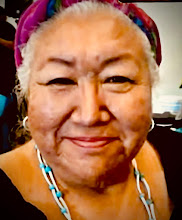 Memories of my late mother saying her dad, my grandfather taught her in a warning that the Dakota Medicine was good, but not anymore. As far back as 81 years ago, fake medicine people deceived their own people for money, power, and glory. Our grandmothers showed us through their prayers helping us celebrate love and helping us celebrate life within our families. Through my own lived experiences, I had to eliminate my own self-defeating behavior. Our people are depending on us to bring justice into our Indigenous Communities. Our Indigenous girls and women are going missing at an alarming rate and are being human trafficked. With little help in finding them or bringing their killers or abusers to justice, I started this blog. I never thought I would live to see such as year as 2023. Today, I feel blessed to be able to hold those who reached out to me in high regard. I am truly grateful, Creator’s Will guided me in my lifetime to see Nathan Chasing Horse arrested. And, yet at the same time, I grief for all his victims who died before they could see him brought to justice.
 https://abcnews.go.com/Nightline/video/dances-wolves-star-nathan-chasing-horse-accused-sexual-114067081?sfnsn=mo Throughout the decades of...
No comments:
Post a Comment