
Marina Crane (00:01)
⁓ good morning, ⁓ from Tsuutina and it's the twenty-fourth and you must be wondering what is the matter with this old woman that she's doing a podcast again. Well I want to I just got off the phone with a friend of mine, non-indigenous person. ⁓ and I wanted to discuss what we had talked about because throughout the day I'll probably forget and I'd have this epiphany of like, why didn't I say something?
I need to share this. And the reason I need to share this is because I try to say this on my podcast. As indigenous women and as an elder, most I'll say all, ⁓ of the women that I do know that I'm related to or have childhood friendships with, who are grandmothers now, ⁓ struggle every day. ⁓ when I say struggle, they bear witness to the injustice of systemic racism.
To the point where when I have discussions about systemic racism or ⁓ Nathan Chasing horse or ⁓ politics like white supremacy, ⁓ they they shut down. They they they don't have the capacity to to have a discussion it's triggering. Especially when it comes to ⁓ my trying to talk about healthy human sexuality and what the joys of sex ⁓
Because again, ⁓ their whole lives have has been one of struggling and feeding their children and then now feeding their grandchildren. And that's the reality. Systemic racism has produced a lot of adults who are codependent on their parent. And and usually it's a single parent female household that that's an elder who's still working in their seventies to support
the their their their families, their lineage, their legacy. ⁓ and I try to bring that across that I'm I'm indigenous, yes, but the topics I talk about and the struggles ⁓ that I try to maneuver in the sense of having the capacity to understand what's happening in the real world is is very ⁓ interesting
And I hope as a non-Indigenous person as you're listening that you comprehend what I'm talking about. Be and I really hope so. And if you're a minority too, that I hope you understand what I'm talking about. Because you know, we're all human beings. However, in the systemic racist system that we're raised in, ⁓ we're born into these cracks in in our in the are the very ceiling we live in or the cracks in the basement.
or something that the foundation is not perfect. Now throughout our lives we have a choice to either act on it or not. And sometimes we can't even see that it needs repair. And that's why I'm saying when you live in an indigenous community, either First Nations, Inuit or Metis, you y you're y you y it's every day you see the injustice. Now
You can say, well, you know, poo-poo on that, like I know this and that and I'm going, No. I sometimes indigenous people cannot speak out for fear of r repercussions and lateral violence. And at the same time too, those indigenous people who are card carrying status, indigenous people who've never lived in First Nations Inuit Mate communities, have a struggle of connecting back to indigenous community. Now they
they cannot say, I represent this tribe. And you know, in the United States a lot of people do say stuff like that and it's heart heart it's a heartache, heartbreaking that they just don't get what identity is. And and for me I'm very fortunate in Canada to to know s status carrying indigenous people who've never lived in first in in First Nations, Inuit or Metis communities, and yet they're activists. They're talking about systemic racism, they're talking about
the politics of how white supremacy divides people that are of color. I got off the phone with a friend of mine. I said, I'm just totally shocked. I was on a taxi going to a medical appointment, and this fellow said he was running a nonprofit as a taxi driver minority from, I think, Africa, and how he's his proposals have been rejected and rejected and rejected for nonprofit in the city of Calgary and that
organizations like the native women's emergency shelter gets all this money. And again, I the the fellow didn't know that I used to sit on the board for the Native Women's Shelter. I don't think he understands the genocide of what happened five hundred years ago or even cares because he's coming from some other country where he's probably had civil war or you know in that he really wants to ⁓ become a Canadian citizen.
But again, part of the being a Canadian citizen is like, are you trying to be ⁓ racist against indigenous people, first people who come into our communities? And see, that's a lack of education. And I'm really grateful that I get the opportunity to be invited to talk about systemic racism for with immigrants who come into the city. This morning I'll have a conversation with a lady who has a company that just helps ⁓ talk about
systemic racism for immigrants and for the problems that they have in s in the hospitals, within the city police, the same as indigenous people. Now who else is better ⁓ qualified to talk about the historical parts of it other be was is is really indigenous people who've been here long before ⁓ settlers came in. So when we talk about the historical impacts of systemic racism for immigrants, we're we're talking from a lived experience.
Now in hindsight, when I talked with my friend in from Montreal and we were talking about this gnome, Christine Gnome, I think her name is, who was hired by Trump to organize ICE and whose husband was a cross dresser and did little kinky things as well, was hired by a company in British Columbia, Canada. Understand this, this woman killed her own dog, was responsible for the killings of those
people in Minnesota. Like they hired her as a consultant? Like for what purpose? For what purpose does a Canadian company hire an American con ⁓ for cons consultation? Consultation on what? White supremacy? Dangerous people in dangerous times. Even the whole notion that Trump has contributed money to the separatist movement in Alberta.
And that, you know, white supremacy and the frig fragility of ⁓ the doctrine of discovery is is at its p tipping point. I truly believe that because unless you've actually been indigenous and you've seen the systemic racism, as I was saying to ⁓ my friend in Montreal, I said, even in the winter where all the power lines had gone down in North and South Dakota, the US President sent ⁓
the National Guard to another state to help out that state rather and abandon to the Dakotas. And it it took a a private ⁓ millionaire someplace in Africa or the Middle East around the Mediterranean to donate millions of dollars to hire contractors to put up the electrical poles so that electric electricity could run and feed the the
the Sioux people in North and South Dakota. That was one harsh winter. Again, you know, when Danielle Smith talks about separatism and the chiefs of Treaty Six, Seven, and Eight and and talking and like I like this cab driver, I was talking to him and I, you know, I say, you know, this Indian residential school deniers, I said, don't they realize like that the the government created ⁓
industrial schools to to teach ⁓ young indigenous boys to be farmers and ranchers.
All because they discovered oil in Eden in Turner Valley and Black Diamond and in Alberta. Then they established in in Parliament they said, well if we educate these indigenous ⁓ boys, they're gonna go back to their reserves and ⁓ they're gonna marry ⁓ indigenous girls and those girls are gonna convert them back to savages. So we need to educate both. So they created in Indian residential schools. And this is documented in Parliament, okay, by
probably John A. McDonnell or all these racist ⁓ people that it is is is co like it's documented, okay? ⁓ do the research. But even the Indian Residential School Memorial that's going to be set up at the confluence is going to document all the residential schools that were in Alberta. Now and again, ⁓ for me, trying to get people to understand ⁓
Th these were set up because oil was found in Alberta. So when you have people like Danielle Smith and the Separatists, you know, talking about like Alberta's got the third largest oil producer in the world and that like how ignorant for separatists to think that indigenous people were not affected by this, we still are being affected by it. You know, and when we we're saying when the chiefs say, Well we're going we're we're going to we're dealing with this
And the reality of it is like do people realize, you know, each generation like there was the battle of Greasy Grass, that's the hundred and fiftieth anniversary th this like this week, and hundreds of people, ⁓ in Native Americans are horseback riding to ⁓ Custer's last stand. Anniversary, an anniversary. And and don't forget to wounded knee and this you know, when
they occupied that church. And ⁓ again, I was a teenager, or even the fact like in w in the seventies when they had all this the militants and everybody, you know, going to Alcatraz and going down to Wounded Knee. And then you had Standing Rock, what, thirteen years ago, when ten thousand people can d had an encampment in the Dakotas. So when Daniel Smith says that, you know, when we talk when we're talking about peaceful
protests ⁓ and you have white supremacists who went on the convoy ⁓ in ⁓ Ottawa and also down into the border carrying rifles, that that th these are the people who who support her, and these are the people who are gonna defend her policies of separation, that Donald Trump had given money to support this organization. I mean it how how different is is it?
in in terms of non profit organizations within the city having minorities fight for the same dollars and then those minorities hating each other because, you know, they're saying like we are we need this money more. So when Daniel Smith does the same tactic and trying to divide and conquer like settlers in Alberta saying you know, trying to convince them like how pitiful and poor they are, when really
you know, they they've been blessed. We've been blessed in Alberta. But it comes at a price. And the chiefs of of Treaty Six and Seven know that price. We know the price of ⁓ the the children generation after generation and the systemic racism. Like I said, as an elder I can talk about these things and a lot of times the capacity to not talk about it because we're we're just trying to survive.
on like feeding our adult children and our grandchildren. And I'm only talking from a pe female point of view. Okay, so so when I talk about ⁓ murdered and missing indigenous children and I talk about human trafficking and I talk about like example, the immigrants that come into Canada, the men salaciously get online trying to recruit a fifteen year old indigenous girl. This is a sting operation.
by the Sutana tribal police. Within twenty four hours they had five thousand men trying to lure this fifteen year old. And when money was exchanged online, that's when they arrested ten. Ten ten men, minorities from other countries who immigrated into Canada. That's just one ⁓ category of men who look at who who chase after indigenous children.
We're not talking about ⁓ the the non indigenous men like the white men historically who've hunted us and who've killed us. ⁓ now, you know, I mean you can look at me and say, ⁓ geez, she's she's she doesn't have who is she? Yeah, who am I? My beauty standards and how people see me this is the reality that I'm coming to terms with. I'm I'm considered a handsome woman.
photogenic apparently. Okay, but I've I've been around good looking white men ⁓ and good looking indigenous men. Good in good looking men in general because I was just born this way. ⁓ I was raised as a matriarch like be by my parents and my grandparents. I I cannot undo the the casting of who I am.
And and I I I was talking to my friend in Montreal and I said, I I saw that in my grandmothers. I I saw this beauty that they carried themselves and I'm grateful that people see that in me. Now, if there's jealousy or lateral violence and again all the things that I face on a daily basis is because I choose to live in my community. And ⁓ I'm going to be ⁓ talking to some young people this afternoon.
And and again too, like I'm grateful that I can give some insight, historical perspective on ⁓ the difference in in how I was raised and the opportunities they have as as young people in their thirties and forties. Again, there's so much out there in terms of how people perceive who I am. And and again
You know, when I get picked up in a taxi and the person just lays it right in front of me, thinking like I don't see how racist he is towards me and and that the native woman shelter shouldn't be getting money, but that his organization should. when I mention that it's like it's like ⁓ him coming into Canada and ⁓ saying that indigenous people don't have any rights. Now how
Who who taught them that? And again, when ⁓ people come in from different countries, I'm just grateful that I that ⁓ people are inviting me to do conversation and have, you know, talks and and let them know ⁓ who I am and and the legacy of my family and the systemic racism that has occurred throughout my life. Like even with the Calgary Stampede, oil companies. Growing up as a child and seeing all these
men coming in from up north off the oil rigs, ⁓ catcalling me a twelve year old child because I'm pushing the stroller of my brothers and sisters. Like I for me as a child I I just thought it was ugly. I didn't understand like that this type of behavior is still persistent today.
the thousands of indigenous children who are fostered in the city of Calgary and that the average age for trafficking is fourteen and just the horrific grooming practice that they have to endure with their bodies, their young bodies and if they can't endure it they end up dying.
The reality of human trafficking and the ugliness of what people do to to other human beings. I mean we can say all this stuff about genocide and I say you know, with people who come into the North America, I said five five hundred years, the first one hundred years, five generations of children were murdered, killed, slaughtered. Can you imagine? Like divide that.
Within a hundred years, that's what, a little bit over a h a million and so children murdered every year for the first one hundred years. And then right now people are just focusing on Germany and six million Jews that were killed in what in four years? Like, ⁓ understand the gravity of of the history of genocide that has been suppressed. Even talking to this taxicab driver, I said, Do you know there are more pyramids
in the Americas than there are in Egypt. Like the legacy of white supremacy and ⁓ the truth telling of what n indigenous people have contributed to the world. Like I said to him, you know, 70% of the vegetables that are produced around the world that are consumed by human beings have has been produced in the Americas. ⁓ Again, I I said even that
10,000, 20,000 years of ritual within the Oshati Oshati Shakoi, the great Sioux nation, and other tribes through matriarchs, clan systems that that when you do our blood DNA, you we're we're universal blood donors, type O. That's the Oshati Shakoui, the Sioux tribe. And and for us to to ⁓ be classified as being savages, ⁓ when we're a matriarchal system.
like to to try and kill us off the face of the earth because we took two spirited people and there was no devil or hellen. You know, like how can they control us if there's no devil to scare the bejesus out of us? But that's ⁓ five hundred years of indoctrination and colonization that we've been ⁓ trying to decolonize and
And the reality of it is like in eastern Canada they've had one hundred years more of systemic racism. Whereas in Alberta, I'm seventy four. They started erecting fences around when I was ch when I was born. My grandfather told me. Even going all the way down to City Hall where we used to go to the grocery stores. Like that's how fresh and new Calgary is. And then to to have white supremacists in the province
within Calgary too, to want to separate when that when they've only immigrated here in the last seventy four years? Like like it's amazing w what is it that they're dissatisfied with? have they come from a country where they've there's been civil unrest, that they've been starving? ⁓ what what more do they want? You know, the there's thousands of children that have been murdered every day in this planet.
And and yet because we ⁓ think that we're so civilized, when when that's not the definition of civilization.
Like I I've said in my earlier podcast, to eliminate systemic racism or racist the old racists have to die. But it's the same thing with patriarchy. In order to have civilization, patriarchy has to die. That's just my opinion. And ⁓ I think as much as women are growing older and educated and understanding what matriarchy is.
and how the psychology of early childhood development plays a huge impact on on how we how we perceive ourselves. It's it's inevitable. ⁓ you know, for thousands of years we've been matriarchs. It's only what in the past three thousand years patriarchy came into play and that's in in Europe where w you know, like this whole concept of of ⁓ violence and
the Neanderthal and all this DNA. Like we all came out of Africa. You know, even the diversity of African bloodline. Like, my goodness. You know, how can people say that they're superior when the bloodline shows different? Just the reality, like the gift of creator. Understand this. In Africa, from one country to another, or just the diversity you have
Like the like I say, you can have the smartest person in one one side and a hundred miles away you have the dumbest person. You have the most beautiful person and then a hundred miles away you have the ugliest person. You have like the just the diversity, the you can have the most powerful athletic individual and then you a hundred miles away you have somebody who's not athletic. The diversity and the intelligence and just the
I will call it the stew, the soup of the world. I'm j I'm just amazed at at ⁓ the capacity to to gift the world because we all came out of Africa. And and for what, five hundred years or like the w after we've been discovered and just the mixing of new blood from the Americas after t what tw thirty, twenty, ten thousand years of of being diverse?
And just the capacity of what we've contributed to to the world that has been suppressed and oppressed and still continues. That that we don't have a voice and and that ⁓ you know it's up to whatever what they call divine ⁓ you know, where you have that woman flying in the air, divine destiny or you know, where people think like, ⁓ it's God's work.
Like excuse me. You know, I I I I ⁓ it it's amazing it's amazing to me, like I said, this woman, Christine Gnome, is American being hired in BC, a very dangerous woman whose whose husband you know, she was fired because of her husband's ⁓ lewdness. like why? Why why are Canadians doing this? Why are Canadians looking to the South New
the United States. Again, the the United States in my opinion is is collapsing. And ⁓ again, ⁓ you know I've had people say, well why am I not living in the States? Well because of the genocide, because of the the denial of history. I I was very fortunate when I was at going to university in in the States that I had a a professor who was very educated about Native Americans and
Again, when I was growing up I had books of you know, pyramid like the pyramids and how indigenous people were buried in certain cultures in the Un in the Americas. ⁓ my parents when they went to ⁓ South America and they saw the seven foot Inca people and they saw it in the museums, they were doing brain surgery using gold gold ⁓ instruments to cut into the human skull. Just the mechanic
the mechanisms of making Machu Picchu, my father saying he could put a knife he couldn't put a knife in the crack there. And and just the the i interesting theories that non-indigenous people try to muster up in terms of like, there are aliens and UFOs and whatever phenomena there is, it's energy. And how we create it in terms of human beings, because there's eight billion of us.
like and what we generate. like I mentioned earlier with Yoko Ono and and just the a beauty of human sexuality and the energy, ⁓ the energy that we feel ⁓ when we're when we're in that moment of enjoying ⁓ sex, ⁓ that it's that it's peaceful. You know, like ⁓ La John Lennon says, give peace a chance.
You know, under understand healthy human sexuality and understand these these ceremonies for thousands of years with indigenous people and not just the Sioux people, everyone has had this communication with energy in these ceremonies. And I I equated and I tried to say to non indigenous people, everybody's gone to nightclubs in New York City, any place around the world there are nightclubs. When you go into those nightclubs and it's dark
And you feel that energy. It's it's that's what I'm talking about. But these are these are things that that ⁓ govern us. But but when we ⁓ somehow have trauma attached to it, then then we don't have the capacity to see it. And and we have to try and understand this because children are depending on us. The amount of children that go missing and murdered.
It's one thing to talk about indigenous g girls and women, but it's a reflection on the greater capacity of the human race with black women, with ⁓ women of colour, then then you even go into to white women and white children. I I mean I I went to a ritual abuse conference in Utah and the children that were ritualistically abused were white.
the therapy and the psychology of ⁓ deconstructing multiple personalities of these children who live through horrific sexual sexual and physical abuse and how like police and lawyers and doctors like all of them everyone could could be a victim and one personality wouldn't even know what the other has done or is doing. That's the nature of ritual abuse.
So when people say, Well, why did you join this or what this and that and I'm going, No, it's in every every culture, every profession, every religion. But it's up to us to look at the energy, to to understand healthy human sexuality and to understand that there there is ⁓ something very peaceful when we're when we're balanced.
And and only when we come to a collective and holistic approach as a group of people do we embrace it and understand it. For thousands of years we had clans, clan mothers. And and ⁓ there was no there was no Bible of good and evil and like ins like like who like what they say if you do this then you're ⁓ you're you're going to hell. ⁓ what to control or I don't know. I don't you know, I I grew up ⁓
understanding like okay, I didn't know my parents went to residential school, didn't know my grandparents did. They suppressed all that, made sure that my my parents were afraid to talk about it.
And then here I am, you know, as an elder now discussing it. And and if the truth hurts your ears and you know, you think, my goodness, what is she talking about? I I I try to talk about it. The capacity for people to shut down and not understand what I'm talking about is is the reality of of e exactly that. even even beauty standards, like I like I said,
⁓ I always thought I was ugly because again I'm not white. I I don't have that ⁓ Greek nose or that Neanderthal way of looking in the eyes. ⁓ you know, my my cheekbones are high and I I actually look totally indigenous. And again, I my grandmothers and my mothers like I that's who we are. But to be strong and individuals
tr strong individual women and to have people want to silence us. ⁓ there's a lot of hate out there and no matter what I do on social media, even when I was disclosing about Nathan Chasey Moore and and how people had still tried to ⁓ keep keep me quiet. I didn't realize like like even with some social media influencers that they have to have connection with the local pol ⁓ police authorities.
Just in case, you know, people who hate the speech, who hate my conversation, my narrative want to shut me up. Like that's the reality.
Like I said, five hundred years one hundred years they killed five generations of children. I said to this taxi dri ta cab driver, I said we don't have sovereignty over our children to this day. Yet you come into this country and and you think we we we ⁓ are just like white people that we have access to all this ⁓ freedom that they have, this sovereignty they have.
We we don't have that as indigenous people. We we've tried to have sovereignty and understand you know, to try to have people understand what what we've been given up.
They just took away our children.
couldn't even leave our our communities. even even that, like ⁓ even when I I was never ashamed to be indigenous because when I was eight years old my parents talked about the lost city of the Incas. When I was ten they talked about ⁓ you know John F. Kennedy being assassinated when they were in India and how all the Indian people just fell to the ground in prayer because they thought it was the end of the world.
You know, the thousands of children that they spoke of and saw begging on the streets for food when I was eight and ten years old, and then to go to school in the city of Calgary and have you ⁓ white kids totally oblivious to to the hungry children of the world. There was some notice notification of it, but the reality of it like to protect.
protect that ideology. That that you know the the way they a person lives is perfect. Like I said, ⁓ patriarchy is perceived as being perfect. You you there's no way you could ever be that perfect, but everybody strives and thrives to be that perfect. And and for me as a matriarch, I'm going, no. There's imperfection in life. That's the beauty of it. Anyway, I wanted to put
get on the podcast and and talk about like the just the reality of what's happening in Alberta and how dangerous things could escalate. And and ⁓ like when I was a young woman I used to go I was quite radical. I'd go and do sit ins and radical marches and like I said it was during the time of AIME, the American Indian movement and ⁓ even ⁓ tr realizing that I had to get an education in order to ⁓ help help
understand what's going on and I still do what I'm doing. I've I've just been very fortunate that I rubbed noses with a lot of great people who are who are elderly now and some of them have passed away and the contributions that they've contributed to indigenous communities, both First Nations, Inuit and Metis. ⁓ that that's something that's something for people to understand that the ⁓ impetus or the creation of
any movements that's happened in indigenous politics has been at the grassroots level. It always has been and it always will be. And and we will fight for that sovereignty to our very last breath because why? The hundred million, over a hundred million indigenous people five hundred years ago, lived in the Americas.
They've tried to eliminate us and they've used narratives that the reason that we were almost wiped off the face of the earth is because we were savages. That's the justification. And that if we fucking repent one of our Native American people, if they repent hard enough in the patriarchal system, that one of us will rise to be a leader of any religion or any government, which is the white supremacist narrative.
in recruiting indigenous people to think a certain way, to to ⁓ be ashamed of being indigenous, to be ashamed of how they look, how they walk or how they talk. Yeah, so I have a picture of myself when I was twenty three. ⁓ like I said to my friend in Montreal, I never thought I was beautiful. I because I look so indigenous. I I never thought people would be jealous of me, even
non indigenous women. I never thought ⁓ white men would find me attractive. But again, you know, again it's a cultural thing. Beauty is in the eye of the beholder. And ⁓ it in every culture. I remember my late mother saying she was at a grocery store and she saw this black woman and my mom was just totally in awe of her beauty. I remember my mother coming home and saying
what she saw and how she felt about this, the beauty she saw. And so each one of us carries such beauty. Each one of us carries something that the Creator has given us. Whether or not we want to control it by by ⁓ minority men. Or like again, again, the most dangerous men on the planet are white men. And when when again when I'm talking to minority men, they're kind of looking at me.
Or even minority women, 'cause of again we gotta talk about capacity here. White men, all you need to do is give them permission. From Diane, not help in. That's Dewey's mom picture. I you know, it's like it's like
Well you know, it's just ⁓
I'm sorry, I ⁓ I've lost track. Again, my old age brain. But ⁓
Again, like I said, there's ⁓ an anniversary of a hundred and fifty years. From Diana, help him. And Delaney is Dewey's cousin. So she's texting me on on my text talking about this hundred and fifty year anniversary. See, I'm in Canada, but yet, you know, I network with people in California too. ⁓ indigenous communities are not that small. You know, like we we because of social media we we do network. I
I ⁓ I'm just amazed i that ⁓ like I said, if if people could understand the network of how indigenous people work in the United in the Americas, or even the fact that, you know, in Mexico or South America, ⁓ the population of Indigenous people there. So like I said, ⁓ when push comes to shove and
indigenous people are being attacked. In today's modern age, ⁓ there are so many more indigenous people who will come to our rescue, who will come and stand against Danielle Smith.
From Diane, not how damn Dewey's cousin Wendell started ride from Pine Ridge. So again, you know, like even for this anniversary of ⁓ the Battle of Little Bighorn, all the indigenous people, Native Americans horseback riding there to commemorate this this battle. So I'm not trying to raise any kind of hate speech. I'm just saying that
a lot of this peop these people who've been on the convoy or in Ottawa or at the border had rifles. And and those non indigenous people aren't afraid to use them.
It it's like ⁓ it's like I'll use the example. I have dogs. I've I I have dogs. And it's amazing that white people will will will ⁓ look at look at my dogs and like think that I'm treating them horrible. And yet ⁓ the reality of it is like get this. The police will shoot a dog. Like th like if a dog is barking or anything, being misbehaving.
police officers will shoot a dog if the dog is owner is a minority. If the dog owner is white, the police will not shoot the dog. So I'm just saying there there are certain s the capacity of understanding and using a double standard of like color or or just whether or not you're wearing your skin.
See th the the thing is when I worked with Barry My Heart at Wounded Knee, one of the executive producers who raised the money, she says, My brother r drives like a you know, a sports car, you know, 'cause they're millionaires. She says, But he wears his skin and I said, What do you mean wears his skin? She said, Well when he's driving and the police pull him over, they they don't look at the car, they look at the fact that he's black. They pull him over and they, you know, g give him tickets and send him on his merry way because he's black.
I mean ⁓ you know, I I try to ⁓ equate like when I talk to my ⁓ friend, like understand this. I'm I'm I'm very gifted in the sense that I that I've trusted w both white men and white women. And like my white friend says, I've met people who've betrayed my trust, like it's a human condition. But it's even harder when you're an indigenous person
and and white people pr you know, pretend to be cohorts and allies and rise to positions of power and then turn against the very people who helped them ⁓ g get into this place because they b a bet betrayal of trust. I've grown up my whole life around white people who've done that to me. I I ⁓ I I'm their best friend until until I challenge them and and again
growing growing up that way I just refuse to be associated with racists. ⁓ and I I understand this. Understand this. I I apply it even to indigenous people who who are laterally violent towards me. I will I will not befriend them. So again, boundaries and and putting boundaries in place to protect my own ⁓ sovereignty, my own identity, my own ways of thinking and understanding
Because I do believe how I have the lived and how I continue to live is important. Like I said, the capacity to bear witness to injustice every day, some of these things are I have I'm not limited on whereas other people I've grown up my whole life have those limitations. And for me, that freedom is very important. I chose not to have children or be in a relationship.
And and because of that I have a voice. Because of that I am not or nor have I ever been pressured to comply with ⁓ political leaderships or or ⁓ being indoctrinated into a society ⁓ based on patriarchy.
So that being said, I know my ⁓ point of view and my discussions on my ⁓ podcast are controversial to people who who are racist and and again too, I think I know I I have my audience that are the United States, ⁓ some of them are in Asia, but ⁓
I'm just grateful that the people who I do know physically, who actually I see face to face, ⁓ invite me to give talks. ⁓ they call it knowledge keeper, that I'm considered a knowledge keeper, because the information I have isn't in a textbook and it's not in the curriculum, but yet it's important. It's important for people to understand the gravity of what our children are going through. And the same with
people who are in poverty that that for no other reason than being a minority fighting for our rights like over what oil? The thousands of children that were taken away so they could have control over the children.
But those children would be compliant and complacent when it came to how they governed their the the communities they come from over economic development. The whole scheme of it and how it's set up is is you know it's diabolical. But yet, you know, we we live in this system and we have to operate in this system. So
you know, once there's a crack or somebody tries to ⁓ disturb the status quo, especially when it comes to ⁓ leadership and what leadership is trying to project, like our language, our culture, our way of thinking and living. Like y you know, like I said, I'm seventy four.
A lot of the history of Treaty Seven and Treaty Six and Treaty Eight, these are historical. We we haven't had that kind of influence amo amongst white people as as as ⁓ Ontario and Quebec and the eastern United States and different parts of the United States. Our our history in Western Canada is totally different. And because of that we have this voice. We have this ability to have unity.
because we're we're talking about this energy that was gifted to us through the Creator and our grandfathers and grandmothers. So so when when I say my prayers and I say to people, especially people I meet for Creator to embrace with protective, reflective healing energy. For whatever reason, whatever energy they're giving off that I can sense, that they need some protection of their heart, mind, spirit and soul.
At the same time too I ask to release self defeating ideologies or self defeating idea ⁓ idolation, suicidal thoughts, illusions or delusions. I ask Creator to release that from them or from myself because we're we creator, like the grandfathers and grandmothers came thousands of years, hundreds of years before me.
Who am I to think that I am any that I am some sort of genius in this whole realm or this whole scheme that what and the whole narrative that Creator has created for us? It's the reality of what we have in the very blood that flows in our bodies. These things are proof of of evolution, proof that ⁓ there's something greater than all of us together.
But all we hear is the voice, the sound, the smell, the sense. It's only when we start thinking about energy that we realize just how ancient we are and the whole purpose of creation. So with that in a sense, I wanted to get that out there because I just like I again I don't have the capacity because I live in my community and protect it in my little house.
protective reflective healing energy. But the very fact that what's happening in the politics of white people, non-Indigenous people, is scary. Especially when you hire a woman, a dangerous woman, to to work as a consultant in for a company in in British Columbia. And the very fact that Trump also gave so much money to to a woman in in Alberta
You know, like again, hello. Th these are women who have been raised in patriarchy. They're not matriarchs. Don't get don't be fooled by that. They're not. They're they are running on a patriarchal ideology. And and they're dangerous. They are dangerous women. And this is coming from a woman. Okay, that being said, I hope you have a good day. I've I've got ⁓ places to go and people to meet. I have ⁓
Like I said, one lady's gonna call me about ⁓ systemic racism. ⁓ the other one's gonna call me about industrial school, Indian Indi Indian industrial school that was built in Calgary and is just off of Deerfoot Trail in Glenmore. And then this afternoon I'm going to economic development in Soutina ⁓ with developers. So again, whatever I can contribute
to to the way people think or how or whatever ⁓ challenge I can ⁓ give in the discourse that I have in understanding you know what where people are and what they what they hope to accomplish. I'm just part of that grain of sand or that s dri ⁓ drop in the bucket. So
I hope my audience out there, ⁓ whether if you're indigenous or non or minority, that that you do do some research. Ask questions, even look at your lives and you know, wonder like how am I living? ⁓ do I need to leave this relationship because of violence?
Like the the whole notion of like living in a violent environment and not having the capacity to to you just to like to to bear witness of the injustice every day. But to have it to eat away at you you know, you you y you know, that's the reality. And if you do allow it to eat away at you, you can become very dangerous yourself. Okay, I'll keep quiet and hopefully
We'll have a discussion again. Again, I'm talking to cyberspace. How silly am I talking to cyberspace? But again, I don't know who's listening. And and I just hope I just hope that mm you know that what I'm saying has some relevance and that somehow somewhere that people can ⁓ get ⁓
get get to the point where you know, we're we're all trying our best to to live with each other from diverse backgrounds.
some of us don't have the capacity because of poverty. But but if you've come into the country and and ⁓ you're still struggling in poverty
⁓ I just hope I just hope that you understand like ⁓ we've been here for thousands and thousands of years. We we haven't gone into other countries and tried to take over anybody. The whole notion of divide and conquer has to mean something in the whole scheme of things for the next thousand years.
⁓ because life has to go on.
We have to we have to learn how to become civilized. We we're we're not civilized. We're not civilized because there's still war, there are still thousands of children being killed every day. We're not civilized.


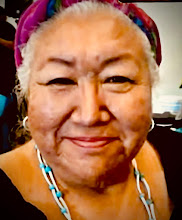 Memories of my late mother saying her dad, my grandfather taught her in a warning that the Dakota Medicine was good, but not anymore. As far back as 81 years ago, fake medicine people deceived their own people for money, power, and glory. Our grandmothers showed us through their prayers helping us celebrate love and helping us celebrate life within our families. Through my own lived experiences, I had to eliminate my own self-defeating behavior. Our people are depending on us to bring justice into our Indigenous Communities. Our Indigenous girls and women are going missing at an alarming rate and are being human trafficked. With little help in finding them or bringing their killers or abusers to justice, I started this blog. I never thought I would live to see such as year as 2023. Today, I feel blessed to be able to hold those who reached out to me in high regard. I am truly grateful, Creator’s Will guided me in my lifetime to see Nathan Chasing Horse arrested. And, yet at the same time, I grief for all his victims who died before they could see him brought to justice.
 https://abcnews.go.com/Nightline/video/dances-wolves-star-nathan-chasing-horse-accused-sexual-114067081?sfnsn=mo Throughout the decades of...
No comments:
Post a Comment