
Introduction and Context of Immigration Issues
Marina Crane (00:01)
Okay, good morning. I'm sorry. It's i I shouldn't say I'm sorry, it's my mistake. I I I go babbling on for a half hour and realizing like it wasn't even tape recording. Well, say la vie, ajoutui, hey bonjour comes ⁓ good morning, Humbastic ⁓ Doksha, hey Ola Kamostas.
And anyway, I was talking about immigration, non profit organizations in the city of Calgary, how ⁓ r systemic racism and sort of the caste system has put ⁓ so much ⁓ vulnerability on ⁓ like the pressure on indigenous people. I didn't know this because I I do a lot of work in the city with nonprofit
And ⁓ it wasn't brought it wasn't drawn to my attention till yesterday when I met this fellow from Africa and I and I've talked to other people from Africa. I've even gone into associations and I've talked about the history of indigenous people. I I didn't know that ⁓ like we're fighting for all the same dollars, but in the sense of s fighting for all the same dollars, the immigrants who come in from other countries who are nonprofit who are trying to get the same monies
that indigenous people are fighting for within the city of Calgary, they say First Nations gets it. Like even even a woman's shelter. Can you imagine? I was I'm still ki I think that's the reason why I'm doing this podcast. I I used to sit on the board for the Native Women's Shelter and and, you know, just a whole colonial history of of family violence. And for me to sit in ⁓ in a space with a man, an immigrant from Africa, ⁓
⁓ basically demonizing the fact that the woman shelter gets money when his organization doesn't for his children, his African children who are immigrants into the city of Calgary. Which to me was like, What? You know, like I like the analogy is like as an indigenous person, if I go to any African country and and I say I organize a nonprofit and I say, Well this is right and this is wrong and you should treat me this way and
And and yet I've never lived in Africa, but yet I have dem certain demands and I think I should tell the original people that are from who were born and raised in the country, like you shouldn't be getting funding. Like I I just couldn't understand like the anger this immigrant had towards non indigenous people. So I called up a friend of mine who I I like I'm I I enjoy reading, but I'm not as an avid reader as
as most of the people that I do meet and have conversation with. And I'm really grateful like that I that I do ⁓ have relationships with such people. And and like I I'm saying, like, you know, ⁓ I have cousins whose fathers are white. So for me to have a friend whose father is white and whose mother's indigenous, who's who's n who's never claimed that she represents her tribe
She claims sh she's an indigenous person. And there's a difference. You know, she she's raised her whole life in the city. She, you know, finding out who her family is, her roots, her genealogy, and and yet knowing that she could never go back to her community because of the violence there within the community. Even the whole notion of like poverty and if there's any space to even ⁓ have a home or the safety of her children or just the safety of
you know, what's out there in terms of your own life skills. I always use the example of Fort Peck and how just the lack of housing prevents the tribe from the court system from hiring any new police officers because even if you hired them they have no place to live. And and even the curfew of children who are being exploited by people within the community that the tribal police have a curfew at ten thirty
And the reality of it is like it's they're not saying like ⁓ like ⁓ if and when you're being sexually assaulted, do this and that. They just say when it happens. So that's what I'm talking about in terms of when somebody who claims they're indigenous and says on behalf of their tribe this is they represent this tribe. No, no, you have to actually live there. And a lot of times, when you're a victim and when I talk about Nathan Chasing horse and I talk about his victims
Most of them, like in my community, they actually grew up and were raised here and then he took them. There were others, many others in his in what he did was was recruit indigenous people who've never like they have their status card, but they've never lived in their First Nations, like i in the in Canada or the United States. So there there is a vast difference in in the sense of who who can claim ⁓ like what
what it is they're claiming because the hunger to identify and and see this is the juxtaposition of being a human being throughout our lives. I'm seventy four. How many identities have I had that are all cara surrounded around my indigenous Dakore identity? But I've evolved. And and rightfully so. Our human condition is our identities changed you know for decades after decades. So my trying to ⁓
Talk about the psychology of Nathan Chasing Horse and the identity of of the victims is so broad spectrum that that when I say ⁓ be careful, there are pretending indigenous people who have status cards. And I and I and I'm I'm trying to s like strategically get you to think about it. Imagine you applying for a status card who've never lived in First Nations. Why are you doing it? Why are you applying?
Why are you applying for status so that you can be identified as either First Nations, Inuit or Metis? Why? Now get this. If you're a millionaire, I've met indigenous people who have status cards who are millionaires, and I've met Indigenous people who've lived in First Nations, who have a status card, who have lived in First Nations, who know what's what it's like to live in First not in First Nations, I'll say indigenous communities, who are millionaires as well.
Now, I'm only saying this because a lot of times people want to put a light on that indigenous people ⁓ are poverty stricken. I I'm talking I'm trying to get you some to have some clarity and some clarification on identity and what it is that you're supporting. Cause what the hell? The majority of people who pretend to be indigenous because they have a status card, ⁓ you know, like like yes, you're gonna struggle your whole life.
And and I'm really grateful like for those indigenous people who have their status cards who do not claim the communities that their status cards are printed from. You know, because they've never grown up there. And they're like I have first cousins who are Dakota Sioux who've never lived on a Dakota reserve. Now again, you know, like I I have ⁓ a relative who's a millionaire ⁓ and ⁓ he's lived his whole life, you know,
until he became an adult and became a millionaire. Now he's you know, he comes back and he you know, when he when they ask him to help ⁓ economically, he'll charge them a dollar. Okay, because he's got his own company, pays his own staff to help h his community. Now that's that's a pr an indigenous person who's not pretending to be
To be anything else. He can he can say that he represents the community because he was raised and born here and we all know him. And not not that his w there's no such thing as like, well h his mother lives here, but he's never lived here. No, not we're talking actually living and breathing and you know like come on, people who listen to indigenous people who are pretending. You know, I I have relatives whose fathers were so racist that that
their families couldn't even stay in the same room, the same farmhouse as their whitehead counterhaps. I mean, that's the reality of life when a when an a European settler chooses to marry an indigenous person, a matriarch. And then again you gotta understand the th you know, what how the their children see themselves in terms of identity. Totally different, totally different.
Like for me, I'm not a people pleaser. when I say that I'm like like say Danielle Smith, if she told me to get to check by to check myself, I'd go, What? You have the audacity to tell me to check myself? You go check yourself. My whole life I've been around non Indigenous people ever since elementary school, them telling me to check myself. Like I said, do they stick around? 'Cause no, a lot of non indigenous people do not like to be challenged.
And yet that's part of ⁓ truth and reconciliation and part of understanding systemic racism. To be a cohort or an ally is to is to take the challenge and to hold space and to bear witness of the injustice. Not to say like, ⁓ be converted and become, you know, like p come and do our rituals and ceremonies with us. Like, what the h hell there are boundaries in place, people.
W why do you think Nathan Chasing Horse took advantage of people like that? I've seen that my whole life with my relatives ta people taking advantage of non-Indigenous people because like you know, like they're they just have some s sort of misconception of what indigenous people are. Anyway, I know another ⁓ indigenous man, he's probably deceased now.
And he was he had gone from foster home to foster home, much like ⁓ so many other indigenous children. And he had a status card. And when I met him, he was a full professor and he was consolidating all of his ten companies into all of his companies into ten companies. And he used to when he was a young man in California, he used to babysit for Ronald Reagan. And then when Ronald Reagan became president, he was appointed.
a chairperson. Now, ⁓ the reason I'm mentioning him is because he was involved in politics, not just indigenous politics, but you know, politics, American politics. And ⁓ he said to me, he says, I have my status card. Did his genealogy went to his tri the tribe where he was he was his parents were registered and he got a status card. He says he says to me that he says I have this status card, but I don't apply for anything. Any any
grants, anything, any any programs within within his reservation. He says he says, because I don't know what it's like to live there. I don't know what it's like to live in an in on in an indigenous community. He says I just hold the card knowing that I that I have indigenous blood and that I'm proud to be indigenous. Doesn't touch the money. Doesn't try to make money or exploit, you know, through TikTok or wherever, you know, to get little money. I don't know the
how how it works in social media. But but apparently, like ⁓ in Canada, because of the Indian Act, it's the flavor of the month. You know, you have you have people who come on TikTok and they become social media influence influencers and everybody gravitates towards them, not knowing like, excuse me, they're the same age as me. Like I'm 74. And yet their whole life, like, they didn't live in an indigenous community.
And they just don't know a few ⁓ words. Like I know a few words, you know, but I can also answer back in English, like for Blackwood Sioux, Cree, ⁓ Soutena, no na s like even like I've studied French and Spanish as well. So does that make me French or Spanish? Okay. Again, the pretending of of you know, holding a status card and pretending that you
you can represent your tribe when you've never even touched foot in a First Nations Metis or Inuit community. And again, I use the example of sometimes it's too dangerous to set foot in that land, especially if you've never been raised and born there. And and you know, and that's the reality. I mean, listen to indigenous people who have s who have status cards who will tell you why they are they're activists and why they talk about
systemic racism because they face it. Off community they face it.
when I spoke to this friend about non charity and how ⁓ different programs in the city ⁓ are helping indigenous people and then I said, Is is there something systemically racist that is structured within the city of nonprofit organizations that are favoring indigenous people over non profit organizations of immigrants like from Africa or other countries? And she said, Yes.
Which totally made sense to me after the shock. Like I said, I met this man yesterday driving by the native women's shelter, him not knowing I used to be a board member, him not knowing my abac advocacy for women indigenous women and against family violence and him saying that he has like, I don't know, nine ninety or nine hundred or I don't know the community he represents in the city of Calgary, but that he writes proposals and that they get rejected.
And they get rejected over the choice that it's either his organization or First Nations, like the women's shelter. And I thought, my goodness, here's an immigrant coming into the city from another country demanding that he ha that he that his rights oversee First Nations or Indigenous people's rights or indigenous people who are living in the city. Like the historical fact of like, you know, the systemic racism.
Indian residential schools, the genocide that was experienced, totally lost. Tot totally didn't understand the history. And yet he's was, you know, he's living in in the city of Calgary now. So yes, of course when people ask me to come and talk to you know, their communities, their here because they're minorities and there's experience systemic racism, sure I'll come and talk and I'll talk about the history.
and and what it is to be indigenous living in an indigenous community. They're not approaching me because like I lived in the city and I'm acculturated and la di da like no. They're they've done their research. They know I'm I like they know I'm not pretending. Whereas I I want people in my audience to get a grip. Do your research. Find out like who you're supporting. A lot of times ⁓
You know, you just have to ask ⁓ somebody within the community that they're representing whether or not they actually come from that community. And that's where, you know, they get they get their feelings hurt. Well my mother still lives in in on the reserve, but they've never lived. Okay. Th huge difference. Huge difference. And again to making money because you're the flavor of the month. You know, a a lot of times ⁓ to
When when you have indigenous people who ⁓ you know are aware that they've never lived in First Nations but are using their art form representing indigenous people, like they're not pretending to be anything else. They're very clear about it. So again, you have to do your research, find out like and most when by the time you become a celebrity.
⁓ your biography, your autobiography is already known because you publish it. But if you're an unknown and ⁓ you're trying to make a name for yourself, just like look at what happened with Buffy Saint Marie, nobody questioned her. And yet the ones who questioned her for decades were poo pooed by by other indigenous people or or non indigenous people. Why? Because my goodness, break my heart, she's she can't she has no records of her fucking birth.
Excuse me. She's a couple of years older than me.
It it just always you know, just it doesn't break my heart. It just shocks me. It just shocks me. And it still does. Because because there's that shame and guilt. I know one of ⁓ the followers of Buffy Saint Marie to this day who still follows her, still loyal to her. Like he grew up in a very poor home. He didn't live like he he has a status card but his whole childhood lived in the city of Calgary. Very you know, parents alcoholic.
⁓ just you know, very ⁓ I apparently like I'm just again, my opinion, growing up being ashamed and and pleasing non indigenous people, trying to prove like, that we're smart and intelligent and s so called civilized to to the to the indigeno to the non indigenous person, like fawning fawning over non indigenous people, ⁓ limerence over non indigenous people.
all the basic psychology of trauma transferred to non indigenous people. And and so when I talk about basic psychology in terms of pretending it, yes, there is a crisis. Yes, it's with our own people. And yes, I advocate and I say, look, this is what happened and this is why they were so easily victimized by Nathan Chasinghorse. Again, my whole podcast has been reflection on him because there are thousands
of young men, young people in our communities who are using our rituals and ceremonies without any comprehension, like the whole gravity of it, and and make money. Like when they think chasing horse, it was five thousand dollars for per ceremony. And you go, why? Again, in Indian residential school in the we'll use Brandon, Manitoba, they did experiments on indigenous children to see if they had psychic abilities.
You know, on top of starving d indigenous people and stuff, on top of ⁓ murdering indigenous kids, like, you know, excuse me, people got away with stuff because because they were under the guise of like some organization that's supposed to look that's supposed to represent Christianity or civilization. You know, it was just it was just a cover up to like the you know, what they were really doing. And and a lot of times
I believe a lot of organizations, especially newsprint, social media, they they still falling fall into that same that same guise of of like what what it is to be indigenous. Like like I said, you look at Daniel Smith. Ha ha like I've had roommate not room well, roommates and grown up in the city with I had white classmates who who you know, just like
⁓ racist, what can I say? Be trying to be my friend, cohorts, and allies, and yet when push came to shove and and my den my identity was under question as opposed to someone who's never grown up in Indigenous communities. I'm going, No. Y you're supporting a pretendian as opposed to someone who actually is a real indigenous person who still lives in her community over someone who's advocating trauma, trauma that
anybody experiences and putting a label of being indigenous that it's valid, that she steps she's out of the ordinary because she's she's claiming to be indigenous when she's actually more she has no claim to that. I don't even think she has her status card from her community in Ontario. Like ⁓ stuff like that. You know, and when when you have ⁓ people who are pretending to be your friends and you're there supporting them.
And then what do they do? You know, they don't even claim that you wrote their sp they that, you know, you y like this one individual wrote speeches for Daniel Smith.
Like trying you know, befriending and trying to get into position of power, which she did under the guise of being a friend to indigenous people. Now look at what she's doing. Like what kind of fraud is she?
that she that she's done this the the reality of the hate she's created for non indigenous people to muster up some sort of violent, gun carrying, toting Western cowboy and Indian mentality that you know, like they they supported what the convoy, they they supported the blockade in Alberta and now they're supporting Danielle Smith against the chiefs of the of of Alberta.
You know, like I I'm really concerned about this, like so many. Hello. You know, when my late mother was dying, ⁓ they were having Standing Rock in the Dakotas over over a pipeline and the ten thousand campers that came to support the the stop of that pipeline. In the American government. It's American. Understand this too, there are a hell of a lot of
countries in Europe or Saudi Arabia or someplace in the world who see the injustice that has been happening with the Great Sioux Nation. I've you know, I I know, you know, even when when a big snowstorm came and knocked out all the electricity, the United the National Guard wasn't even sent to the Dakotas, it was sent someplace to Texas or some other place that needed help.
And it took thou millions of dollars from a ⁓ a millionaire in in the Middle East someplace, I don't know, Europe someplace. probably an oil baron. Now I I shouldn't laugh because ⁓ pe they they hired they hired people in North and South Dakota to to string up the electrical poles that had fallen fallen down to to bring electricity back into the reservations in the in the Dakotas.
This is real time here. Not the govern governor of North and South Dakota, not the President of the United States, a foreign investor. Now I'm not saying ⁓ when you look at Danielle Smith and you see like the foreign investment that has been coming into her
and and the separatist movement to try and instigate systemic racism like to burn like all like ⁓ you know what happened to the United States in Selma and with with all the revolutionary ⁓ protests with Dr Martin Luther King, Malcolm X.
You look at Alcatraz and the American Indian movement, you look at Wounded Knee and the occupation at Wounded Knee, you look at all this that was happening in the seventies. Well, this is what Daniel Smith is creating. I'm seventy-four years old. I know and I lived through those times. What she's creating and what she wants and what's gonna happen is this hatred towards people like myself, people who wear their skin, people who've gr lived in
in in First Nations Inuit and Metis communities. This is what she's done. She says she pretends. What, she even pretended she was Cherokee. What the hell is she doing in Alberta if she's Cherokee? And even then to find out that she was pretending? Like that's what I'm saying. These people who pretend to have some connection to indigenous people and then turn around and stab us in the back. My whole life. My whole life I've been around such people.
You know, and I you know, and people say, Marina, I'm going, no, I'm not some isolated indigenous person who's grown around grown up looking idolizing through some sort of mental health disorder of limerence, mm fawning, whatever the hell Indian residential school created. I'm not that. I'll stand up to people who pretend to to be pathetic or appreh to be compassionate. It's a false compassion.
a false sense of trust, like all this fallacy they create. You know, people ask me, how did I know Nathan Chasing Horse was a fraud? Well I've had so many people who not are non indigenous who are frauds. You know, pretending pretending to to be my friend.
You know, you get a you get a spidey sense after, you know, decades and decades and identity after identity, like of evolution, learning from those past mistakes of trusting pretendiums. And and and rightfully so. Like I wish people would understand this. You know, the indigenous people of Alberta were y you know we we've struggled. We're still here
When I talk about ⁓ Oshati Shakoui and that's just one one indigenous people that have what, forty thousand, fifty thousand population or people who speak the language, the rituals of the o Uwe P and Sundance and the pipe carriers and that's just one tribe. That's just one. And when they do the DNA results of that and they realize, my goodness, they're O type, they're universal donors.
like ten, twenty, thirty thousand, even longer than that, of of the history of indigenous people within the Americas and what we contributed to civilization. It it's amazing to me when you have people who immigrate into the Americas who do not understand look at the medicine, look at the vegetables, look at the contributions of indigenous people. The vegetables that you eat were created
manipulated, cultivated, reproduced by indigenous people for thousands and thousands of years while Europeans were still eating pig, still defecating in their castles, still wearing perfumes to s to you s stop the smell that they were carrying around. You know, indigenous people were not like that.
I mean, you look at our biology and you wonder why do they still hunt indigenous children? Why do they still try to murder indigenous women? When I was growing up and and I heard stories of women who were going into the hospitals to have babies and the amount of pain and the screaming non indigenous women went through in childbirth and how the indigenous women would talk about it. I I had a nail ⁓ I mean I'm not
I'm not comparing it to childbirth at all, but I I had a hang hang a nail hanging w just by a thread when I was in the States and I ⁓ happened to be near an Indian hospital. And I wanted that nail removed, so I went to a non indigenous doctor in an Indian hospital, 'cause in the United States they have Indian hospitals. In Canada we don't. So I went there and he came and I thought he was gonna be anesthetic and helped me take my fingernail off, so I
wouldn't have to snag it in my clothing and he says, This is what I'm gonna do. Without telling me, he just rips the nail off of my finger. Sweat just I just produce sweat on my forehead. No pain, nothing. You know, they they say I'm docile. Yes, I have a high pain threshold. But you can look at puppies and you know, you have little dogs who if you clip their nails they they die of a heart attack, whereas older bre older breeds like they they don't.
Well, you know, people want to look at indigenous people as being different, but that comes from thousands and thousands of years of ritual and ceremony. There was no church. There was no heaven or hell. Now understand this too, there was no patriarchy until what, three thousand years ago? So the evolution and how s how we just are at the cusp of evolution. What?
30, 60 million years dy different lifespans of different species within the commun in this community of the earth. And here we are so arrogant to be talking about things like like what I'm talking about, blood quantum. And yet that's the reality of systemic racism. You even look at the country of Africa and just the diversity in itself. How can any human being
indigenous or non indigenous look and s even say anything anything about the lack of diversity. The diversity in Africa is amazing from just one country to the next because there's there we all come from Africa. And the proof is in the pudding in the bloodline of black people today. You get the smartest and the
the dumbest, you get the tallest and the shortest, you get the skinniest, you get the fattest, you get the most athlet athletic, the least athletic. The diversity of extremes in human in the human population in Africa is so diverse. You don't see that in European culture. You don't see it it's it's it's just a phenomena. ⁓ well I don't want to call it phenomena because making it sound like a phenomena me ph phenomena means like
Like ⁓ it's it's well, for say for someone who doesn't have that diversity in the population, of course it's gonna look phenomenal. But I think with with people who've grown up their whole lives just accepting who they are and living their best lives, it's not phenomenal. It's it's a way of life. And and so that's why I talk about the Oshati Shekoi and the rituals of the Yweepy and the Sundance and the pipe ceremonies.
You know, it it was matriarchal and and it oversaw different clans that ⁓ up that came into those ceremonies. And and I I look at the the horrors of what Nathan Chasing Horse created, manipulating people, vulnerable people who were pretending to be indigenous because they had a status card. You know, that they wanted to they wanted to ⁓ form a community.
a community because they couldn't go to their own reservations or their own reserves or or they didn't have that. Like the the girls that were with Nathan Chasing Horse from my community are back in my community. They have community. There were so many others who didn't. There are so many others who live in urban areas in the cities in the United States and in Canada. And it's those non th it's those indigenous people
Who have status cards, who don't do not have connection to their community that are most vulnerable, to people like Nathan Chasing horse. Not only to people like Nathan Chasing Horse, and I'm say well, let me put it this way. There are so many cults out there that aren't even indigenous. Mormonism, Moral Rearnament, Judaism, you name whatever religion, there is a cult within those structures. Those structures have cults. Because cults have been around since the beginning of time.
You delve into psychology at any at any moment, at any level at the university, college, and if you have the opportunity to attend a ritual abuse conference, and if you even understand the nature of trauma, then you realize, my goodness, it's been around from the beginning of time. Yes it is. People tend to gravitate to this generation and say, yeah, six million Jews were killed.
Look at the trauma they've you know, they've lived through and the justification that they're the chosen people. Well, even in Mormonism, they're considered the chosen people too, because you know, like they recruited so many indigenous kids from all over the Americas, claiming that there was gonna be a latter day prophet that was gonna be indigenous or in the Mormon faith they call it Lamanite. Now, even before that
I I think probably about the same time too there was MRA who was recruiting a lot of indigenous people. And again t saying ⁓ the propaganda was like to go back to your communities a and realize like you do have a gift, you're gonna show the rest of the world. I d I don't know why the mythology of trying to understand ⁓ the great ⁓ mystery of a lost civilization. Do you know there are more pyramids in the Americas than there are in Egypt?
You know, do you know like all the ⁓ how tall the Inca Indians were? The advanced brain surgery? Like I said, what, seventy, eighty percent of the vegetables that are consumed all over the world now come from the Americas. So many things that were like the first one hundred years of colonization by the Portuguese, Dutch, Spanish, English, and French.
The first one hundred years they killed five generations of indigenous children. A hundred and thirty million. Now you divide that by a hundred, you know, a hundred days or a hundred years, and how many how many like that's over what? A million killed every year? Like no, even more than that. And then people just gravitate to what, six million Jews they killed in Second World War? In how many years? Four or five years? Like
Even the children that are being killed right now in this world, we're we're not civilized under patriarchy. We're we're not. And and yet I I look at you're gonna laugh because this is the irony of it. You know, I I'm I grew up when there was like John Lennon and Yoko Ono. And Yoko Ono talks about energy and about how energy is a different c way of communicating.
And and how ⁓ with energy is peace. Like how long have they discredited this woman's ways of thinking? I'm seventy four. That's fifty years of social media propaganda because she broke up the Beatles.
You know, a lot of the ceremonies in the Wuyi Wepee and ⁓ especially when it comes to healthy human sexuality and energy. And only those who are listening who've enjoyed and love and see human sexuality as something beautiful will understand this energy. There has to be balance within this sexual energy. There's like ⁓ I use the analogy of a of a seesaw.
or or we'll say Lady Justice or ever whatever balance looks like. It could be in a circle as well. But the reality of it is like there's trauma, the act of part where consciousness, like you're actually hearing me talk, you it evokes a feeling in you. Okay, where does that feeling come from? It comes from, you know, whatever like the identities, like I I like I say, I'm seventy four. I've ha we'll say I have seven identities for every ten years.
So so when when I'm ⁓ sexually ⁓ attracted to a human being, that that that's one side of the seesaw. How I react and interact with that individual is the other part of the seesaw. If my identity is so is is less like say we'll use the example seven lifetimes, okay? So if I see one guy on the other side of the spectrum that I'm attracted to.
every time I see him I I feel sexually aroused. On the other side of the t seesaw, I'm I'm taking those seven lifetimes, bringing my memory of those seven lifetimes up to the surface so that the so that the seesaw balances. See, trauma and I'm using this as an example of trauma and limerence and fawning and
All this good stuff that we need to go through ceremony and rituals to find that balance, that energy. See it takes that energy to make that to make that balance because it's peaceful. Beautiful, beautiful feeling, beautiful. It just makes you feel warm and fuzzy. And and that's peace. We're capable of it. That's why I said I I I I was just amazed.
when I ⁓ was listening to Yoko Ono ⁓ and I just thought, my goodness. And again too, this is systemic racism and over the decades of people, ⁓ especially all the thousands of children that were put in those residential schools because people just wanted to silence the balance that indigenous people were living for thousands and thousands of years. Like I said
The Oshati Shakoi are universal donors, blood transfusion.
Thousands of years indigenous people for the past five hundred years have been mixing with the old blood out of Africa. We've re we've replenished
a dying race. But because of all this imbalance of patriarchy, or this lack of understanding healthy human sexuality for profit to to ⁓ manipulate and and hurt those who've been traumatized.
Because they don't understand. People would sooner find a magic wand and say, Abricadabra, you're you're healed. Life isn't like that.
But it's important, whatever I talk about, as ⁓ as I try to have you understand, when when people come into a collective, imagine sitting in a room that's totally pitch black, and you have maybe fifty people in there. You have a group of people who sing, sing sacred songs.
And you have another group of people who who who want to ⁓ want to have prayers for themselves, either for whatever reason they feel they've they need healing, and all the other people in there are there to also offer prayer to help them, but at the same time for their own healing. So everybody's in there. And imagine, okay, some some man lost his wife. You know, I'm not saying the relationship that this couple had was perfect.
There was a lot of trauma involved in this. But you're there helping him grieve, helping the family grieve. And the s the music starts and the individual who's using the Uwe P again, you gotta understand there's imagine as I'm saying this that I'm the elder matriarch in this room. I have to be there to conduct and make sure that everybody in different clans know who they're related to.
Because in this ceremony, a lot of energy is gonna be moving around. It's not something you c some and the only way you can express it is through your senses, your hearing, your seeing, your smell, your touch. It's all black in there and the music starts. And the person who's wrapped up in a blanket, tied up like Houdini, is there listening to people pray. And you have people singing.
for the songs and the ceremony to begin. And then and then they ask questions. Now in all this, as they're they go through the sessions, the offerings and the rituals and the, you know, things happen. You'll see sparks. You'll see hear wings of birds flying. You'll hear a huge, huge elk come into the room, blowing its horn. ⁓
⁓ like you you hear and you you see it, you're enveloped in all of this sound. And and you're there praying to the best of your ability because again, only you are talking to Creator. See the the bastardization of what happens in UEP ⁓ has been lost. The only remnants of it is is ⁓ our bloodline, ⁓ like that were ⁓ O donors.
the connection of family and who are related to ⁓ in Western Canada we still have a remnant of that. Not so much in the eastern Can in eastern United States or Eastern Canada or parts parts of, you know, where the American way of life has taken over. But but I I I tend to think like in Western Canada, like I said, ⁓ I'm seventy four
⁓ when I was seventy-four they started putting fences around Sutina. ⁓ we used to go all the way downtown to City Hall to get our groceries. That's not long time that's not a long time ago. So when you have all these people who are immigrants, settlers coming into Alberta wanting to separate, separate from what? This is a new city. This is a new community that you're just settling in, wanting to take ownership of what?
It totally baffles my mind. But anyway, getting back to your weepy ceremony. The only parallel is our nightclubs that our young people go into. They're dark, they're noisy, you get all hut and bothered and you know, being promiscuous is a way of healing. A lot of ⁓ stereotypes of women like ⁓ she's she's they there's so many derogatory names for women who are promiscuous.
more so than there are for men. Because again, patriarchy. If it was a matriarchal system it would seem equal. The seesaw would be balanced, but it isn't. So when young people go w when I was young, go into a nightclub, be all hut and bothered and horny and have a one night stand, c walk back on the walk of shame and nobody knew who your partner was and they didn't know who you were. That was it, goodbye. No love lost. Okay,
Well you weepy you come into the into the ceremony, it's all dark. Again, music, everybody's getting hut and bothered, praying. And and I saw this, like when Nathan Chasing Law would be like ⁓ escape those bonds. And again, in hindsight, he had his followers trained. But in reality, sometimes, you know, people who were wrapped up never escaped. But it was just the the
notion of the darkness and the the energy because you're you're there seeing energy, you're there hearing it. Again, you you don't you don't see it every day because it's not dark. But when you're involved in something like that, like and I use the analogy of a nightclub, and and some people want to enhance it with other things like alcohol and drugs.
You know, it really it really ⁓ you'd really do a disservice to yourselves by by using those things because it's the adrenaline and the ⁓ chemicals of the brain, the sexual hormones, ⁓ don't need to be ⁓ exacerbated or enhanced with alcohol or drugs.
This is a natural phenomena. This n I shouldn't even use phenomena. This is a natural way of being a human being in the psychology of basic healthy human sexuality. So the matriarch or the patriarch well, the patriarch would oversee or the elder would oversee what was happening in the weepee. So so say a married couple comes in and and in the ceremony they're they become horny and when they go home they they have sex.
produce a child. if you're single and you go into the weepi, then you have the el the elder there saying, Well you're you both belong to the Raven clan or you both belong to the Buffalo clan. Those are just examples. I'm being hypothetical here. and so you know you cannot you cannot go home and have sex with that individual. But but there the person who's overseeing the ceremony
⁓ understands and knows because they're actually living and and breathing within that community from childhood to to the time they leave into the next world. So ⁓ that's why I'm saying ⁓ the collective and it doesn't even matter if it's Nathan chasing horse, the phenomena of indigenous people and the amount of our young people who are actually experiencing this practice that I've just explained is is overwhelming.
Even though non-Indigenous people might not get it, I'm quite sure a lot of young indigenous people are understanding what I'm talking about. Because because it's a collective and it's holistic way of healing. And we see and we experience these ⁓ visions or these this these brothers and sisters who come into those ceremonies like the elk, the eagle, those are energies. And whatever energy we have.
Like without w however old we are, like I said, we're always evolving, our identities are always evolving. And and throughout these ceremonies that we attend throughout our lives evolve as well. So it's quite a beautiful practice. It's just that I find and most young people are finding there are a lot of people who bastardize such sa sacred ceremonies. ⁓ especially ⁓ non indigenous people, like I don't know where ⁓ you know, white people and I use that
quite liberally because they've done sweats. Or the Germans are notorious for doing sundance or ⁓
You know, just people dressing up performative without ceremony. I mean they try they create ceremony and ritual. They think that that's the key. Like the Oxford group, you know, creating AA. All these people, all these psychologists trying to ⁓ understand this this ⁓
collective and holistic way of approach. Nob nobody has a say over it. Nobody has control over it. It's creator's will, grandfathers and grandmothers, creator, grandfathers and grandmothers' will being done.
it's it's amazing and I only say that because I've seen the destruction destruction that when people take these sweats and ceremonies. Look at look at those people that died in the a huge sweat. They were charging what, six thousand dollars a sweat. You you look at you look at the exploitation of all the ⁓ people who still follow Nathan Chasing horse. Like he he's a psychopath. Okay, his he was born with a different nervous system.
And all those people who suffered trauma that still follow him to this day, that continue to be traumatized by other people, have bec he he they cre he created sociopaths. And there's not anything anybody can do to change those sociopaths except themselves. You know, and and that's like that's why I say that these things that we do, that's not up to us, that's creator's will and grandfathers and grandmothers' will being done.
I can only say that that it's important to to heal. And and there are people out there who don't claim to be medicine people. And this is the discussion that I tried to get across to a lot of people. A lot of artists, ⁓ a lot of ⁓ people who've gone through ceremony, a lot of people who've been traumatized in childhood, who've gone out to to seek medicine people f whatever decade or
However they did n whether or not they learned a lesson of of people who pretending to be ⁓ medicine people who aren't, because a lot of these people too who live in the communities who are pretending have gr elevated themselves into positions of power within the community.
So ⁓ what I'm saying is that individual ways of thinking and how you deal with people or how you choose to establish boundaries and find peace, that's a individual that's an individual choice. I you know, I'm not saying the way I think or what I do is perfect. I'm just saying that that there's a lot of ⁓ issues when it comes to how people
Perceive us and how we see ourselves as well. I mean it ⁓
It's not easy to be a human being ⁓ trying to find balance in this world. When you have outside sources who want you to be a certain way. They want you to be complacent, fawning, they want you to have limerence over them. They they want you to be somebody that that you're not. And it's those ch challenges that if they stick around and are cohorts and good allies
then then you know then that's y you d what do you do? For me, I I I try and find I create ceremony and ritual. Embrace them and then I release them. Life is too short. My in my life I've I've let go, I've embraced so many friends and I've had to let them go. Take their take their journey to the next like as they say, take their journey off to the Milky Way.
There are so many things Creator has has done for us that has existed not just a hundred years, not five hundred years. We're talking five we're talking thousands of years. When we when we try to look at ⁓ and glorify different civilizations like the Greek culture, Romans, Egyptians, and we and we fail to ⁓ look at the histories of the Americas.
Like it's whatever's happening and however things are being disclosed this year and whatever the prophecy is that is being created and generated by a whole generation of people is is important for our young people to listen.
a lot of a lot of this these ways of thinking ⁓ don't really serve anybody but an individual. So ⁓
That's why ⁓
When somebody seeks me out and asks me questions or tape records me, then I then I know they know that I'm actually like a living, breathing, indigenous person. I'm not pretending to be anybody else but who I am. And and that's the hardest thing I think anybody can have like really you have to have the courage to do it. I'm just so very fortunate and blessed to have been sought out by by certain people.
And these individuals are highly respected and and for good reason. Whatever skills they've developed over the decades that they've lived, more power to them. And whatever they do in creation of a story or a legacy to tell the stories of indigenous people, or even just people in general in the world, more power to them. I I'm
completely amazed at the diversity of systemic racism that comes into Alberta for people who've just recently moved here. I've been here seventy-four years of my life.
I've seen I've seen things in terms of the Calgary Stampede. You know, like just the whole notion of oil. They created the largest, the most populous of indust ind indigenous schools because they discovered oil. They created industrial school because they discovered oil.
They they took away our children because of oil. And here's Danielle Smith and her separatists think that we haven't been fighting.
That are that my parents and my grandparents haven't been fighting for a way of life that had nothing to do with oil, had everything to do with family.
So that's the reality of it. I hate to see non-indigenous people come out with guns. That's an American thing. I hate to see it. But but people have got to understand. I was radical in my twenties. In my twenties I'd go and do sit-ins and ⁓ marches. ⁓
But I always say ⁓ to people, you're very fortunate. In my twenties, I didn't know about Indian residential schools. I just knew about the injustice. I never knew about the thousands of children. My parents never spoke about it, nor did my grandparents. Now I know about it, and young people know about it. The whole world knows about it. And here's Danielle Smith and her government.
Coming in because of oil money.
It isn't about oil money for us, it's about our families. It's about our inherent rights that have been we've been fighting for ever since they started negotiating treaty.
We've been here for thousands and thousands and thousands of years.
I'm sure ⁓ Daniel Smith and wherever she and her family come from and all those settlers and colonial ways of thinking.
It has to do with money and power. You can't take that when you pass into the next life. How we walk in this life and what we give and how we contribute to our ways of thinking to help other people. Like I said, I I didn't know about Yoko Ono's way of thinking about energy. I just hope she forgives me and so many other people because that's healthy human sexuality.
An i ⁓ a ⁓ a woman, a non indigenous woman, had the guts to to use her art practice this way.
There's so many other things that that I I'm concerned about when it comes to giving away things. I I remember ⁓ when they appointed the Governor General of Alberta who was indigenous, ⁓ I went to go into his hotel room with his his granddaughter and he was talking and he says, I don't know why they appointed me because he you know, he had cattle, he was a rancher.
But he was always skeptical about the reason why n non indigenous people were doing the things they were doing. And and it's the same thing here. You know, they're giving PhDs, honorary PhDs left and right, the past what, ten years to indigenous people? Even in Eastern Canada. I know it it it shocks non Indigenous people when I say, Are they pretendian? Are they like like are are some of these honorary degree holders, are they pretendians?
You know, have they have they actually lived in their communities and have you know and still live in their communities and bless non Indigenous people when I confront them that way, they go, yes when really they don't know. You know, the majority of ⁓ honorary degrees in Alberta that were given out have been given to people who actually live in indigenous communities. Which to me is like the that's something good.
Because it's saying they're they're actually bearing witness to the injustice. And that these people have a voice and and people have been listening to why they do the work they do. Their entire lives have been dedicated to to a specific goal. That's the kind of potential we have in terms of our elders. But I hope
whatever I could contribute to healthy human sexuality and the understanding of s ri ritual and ceremony in a spiritual sense makes sense to you. I will try to break down the Ye Weep ceremony a little more so that you get a better understanding how it was documented as as well as ⁓ just to let you know it's
There there are people our own people who exploit our own people. Just like in all civilization all over the world. One one of the men that I spoke to, he says he says, I'm I'm not around ⁓ this you know, people who talk like are emotional or spiritual. Like he says, I go into a room and I wear a suit and and it's all just strictly business. So again
as an elder I have really nothing to lose. And most ya young people when I say to them that I'm doing a podcast, they say, Good You know, ⁓
Anyway, ⁓ I hope this recording ⁓ works out 'cause sometimes I record and said things and I go back and it hasn't recorded. That's the irony of it anyway, technology.
So anyway, I just wanted to post my podcast. I'm not just doing this because of Nathan Chasing Horse. Like the all around him. That that would be that would be egotistical. No. My my whole effort is is to underst is to have people understand
It's not it's not easy being indigenous. It's not easy ⁓ being an activist. It's not easy trying to let people know about the injustice that that that we face every day in our communities. But yet we do it. We do it because it because this is who we are.
So I hope and my concern is for a lot of the non indigenous people who really hate me without even knowing me. I I get it all the time. Un unforeseen trauma that they project onto people like myself. I get it from indigenous people too, but what's scary right now is is ⁓ this whole I don't know, the word caucus comes into place. This whole non indigenous
separatist movement of gathering like a snowball. Not just non in like not just white people but immigrants. Like people. This is the scary part. People of all colors are coming into this snowball being rolled by Danielle Smith to separate Alberta from the rest of Canada.
I I can't comprehend why they would join join her.
Anyway, I I just ⁓ it's really ⁓ dangerous way this woman is thinking and and the fact that she's giving herself permission to behave this way. And because she's given herself permission to behave this way, a lot of other people, dangerous people, are following her.
And yet they have to pay their bills. They have to go to work.
But understand this the things I do and how I do things isn't because of money.


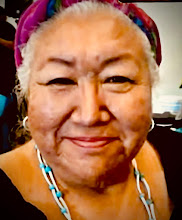 Memories of my late mother saying her dad, my grandfather taught her in a warning that the Dakota Medicine was good, but not anymore. As far back as 81 years ago, fake medicine people deceived their own people for money, power, and glory. Our grandmothers showed us through their prayers helping us celebrate love and helping us celebrate life within our families. Through my own lived experiences, I had to eliminate my own self-defeating behavior. Our people are depending on us to bring justice into our Indigenous Communities. Our Indigenous girls and women are going missing at an alarming rate and are being human trafficked. With little help in finding them or bringing their killers or abusers to justice, I started this blog. I never thought I would live to see such as year as 2023. Today, I feel blessed to be able to hold those who reached out to me in high regard. I am truly grateful, Creator’s Will guided me in my lifetime to see Nathan Chasing Horse arrested. And, yet at the same time, I grief for all his victims who died before they could see him brought to justice.
 https://abcnews.go.com/Nightline/video/dances-wolves-star-nathan-chasing-horse-accused-sexual-114067081?sfnsn=mo Throughout the decades of...
No comments:
Post a Comment