
Reflections on Indigenous Womanhood, Leadership, and Truth-Telling
Introduction
Seeing our true self isn't easy. For me, its avoidant attachment with a Smidge of Limerance.My human brain is chemically incapable of wanting 'the unobtainable' much in the same way after one sleeps with another. When a I Was sexually active pursuing a man & then withdraws after sleeping with him, my first thought was that I got what I wanted; however, that is not was happened. I experienced neurochemical crash. During my pursuit of him my brain flooded with dopamine, same chemical released during gambling, drug use,& competitive sport. This process never goes away & I continue this behavior cycling through dopamine rush. Much when I'm waiting for a text, a delayed response amplifies it until the uncertainty ends. Dropping dopamine sharply. I haven't changed; however, my brain chemistry has. So when I gamble I stay so as not have this emotional come down. It's warmth of dopamine,obsession, the constant thinking about me from a complete stranger is driven by a chemical left in his bloodsteam. It's not his choice rather it's a withdrawal he had expeiencing this chemical change in our brain cell & has nothing to do with me. It took years for me to understand that some brains are meant to chase and not stay. Limerance for me is the seeking of the unaobtainable. With guided narratives, therapies, groups & courage to heal this self-defeating behavior can be eliminated.Truth-telliing has gotten me in trouble with men & I end up thinking what did I do wrong, as men's responses to this dopamine drop is quicker than a female's drop. As an elder woman, I will not apologize for any anger outburst when talking about gender apatheid.I know it exists everywhere; however, I live with 'battle fatigue.' If I didn't try to keep at deal with this fatigue there would be no BLOG or activistism.
It's March. 23rd, 2026. My name is Marina Crane, and I'm attempting another podcast. Although I've created other podcasts before, each time I use a different app and a different technique. I hope not to repeat myself, but I also want to acknowledge that I'm 74 years old. That’s not to suggest my abilities are diminished—after all, Ronald Reagan became President of the United States at 73. It’s worth reflecting on how we often view leadership and age, especially when it comes to memory and capacity. I digress, but perhaps I'm making excuses for not being more specific about this episode. Typically, when I record a podcast, I try to focus on certain issues important to other Indigenous women, as most of my listeners are women. I appreciate the presence of sisterhood and matriarchy in cyberspace. Still, it’s important to mention the value of honest dialogue with men. Indigenous men are different from white men, and while I’ve never been married to a white man, I grew up surrounded by white people.
Childhood Experiences and Lessons on Self-Defence
When I was bussed into Calgary to attend Fairview School, many non-Indigenous kids were cruel to the Tsuutina kids—at the time called Sarcee—using relentless slurs and insults during recess. To defend ourselves, we strategized to ensure that if things escalated, it was the other party who threw the first punch. This way, we could defend ourselves without being labelled as the aggressors. I became known for always winning my fights, and this reputation eventually led others to leave me alone. Even so, some girls continued to be harassed and would come to me for support. Just my presence became enough to deter bullies. This experience taught me about the dynamics of patriarchy, and I noticed that some Indigenous men adopted colonial views, which complicated our relationships further. I can’t claim to know how to deprogram these influences in Indigenous men, but I can share my journey to reconcile my values and beliefs as an Indigenous woman.
Family, Identity, and Historical Context
I’ve always been proud of my Indigenous identity. My parents travelled to South America when I was eight and to India when I was ten, exposing me to a broader perspective of world history and civilizations, much of which was absent from school textbooks. As a woman and an elder, I reflect on my childhood and the many lifetimes of experience I carry. Growing up, I learned the importance of self-defence and assertiveness, especially after experiencing violence firsthand. At 19, I was sexually assaulted by two Indigenous men. This event, and the subsequent lack of support, highlighted the realities of gender apartheid and trauma within our communities. It made me realize that before we can address injustices in wider society, we must also acknowledge and own the issues within our own communities.
The Impact of Colonialism and Religion
My life has been shaped by exposure to various religions and the impact of colonial systems like the Indian Act. These systems ingrained patriarchal values in Indigenous men, teaching them to view women as property and denying them rights, including the right to vote. This was reinforced by experiences in residential schools, where children were deprived of love and emotional support. Thousands of children suffered and died in places meant to provide safety, leaving intergenerational trauma that persists today. The denial of these histories, even by some Indigenous people, is a challenge we continue to face.
Language, Education, and Navigating Two Worlds
Language was another battleground. I spoke Sioux fluently until I was five, then English became my primary language after I was bussed into the city. Encounters with other Indigenous children sometimes led to bullying if I couldn't speak their language. My education was self-financed, as I received no help from my community or Indian Affairs. Working in predominantly white environments, I had to be careful not to react to racist comments for fear of losing my livelihood.
Eldership, Advocacy, and Community Dynamics
As an elder, I can speak my truth without apology, even if it offends others. Supervisors and upper management in our communities, especially when working with white men, must navigate their roles carefully, always advocating for their people without causing offence. Employees outside of management have more freedom to speak openly. This dynamic parallels my position as an elder—I can express myself freely, but it sometimes triggers or offends others.
Friendship, Support, and Loss of Status for Indigenous Women
Growing up with white friends, I sometimes assumed they were allies, only to find they lacked the courage to bear witness to injustice. The realities of Indigenous life are often misunderstood by non-Indigenous people. For Indigenous women, marrying outside the community—especially to white men—often meant losing status, community, and support. In contrast, white women marrying Indigenous men often retained connections to both communities. The loss of status for Indigenous women led to displacement, isolation, and, in cases of violence, lack of support. The 60s Scoop and related policies further fragmented families and communities.
Foster Care, Sovereignty, and Systemic Barriers
As a child and teenager, I saw group homes for unwed mothers and later, homes run by Indigenous social workers. However, these facilities were not governed by Chief and Council but by provincial and federal mandates. Sovereignty is limited in our communities; without independent revenue, we cannot establish our own shelters and group homes. As a result, many Indigenous children are placed in urban foster care, losing their language and cultural connections. My own family experienced this—transferring my niece and nephew back to the community required special requests and navigating government regulations. The lack of true sovereignty is evident in these struggles.
Truth-Telling, Healing, and Responsibilities as an Elder
When discussing injustices and gender apartheid with non-Indigenous people, especially men, I am not trying to belittle anyone but aim to tell the truth as I have lived it. There are Indigenous female journalists, lawyers, and professors who bear witness to these stories, but as an elder, my responsibility is to speak the truth, even when it is uncomfortable. The act of receiving tobacco in ceremony signifies this bond of truth-telling with Creator, not with individuals. My role is to uphold the protocols and responsibilities passed down by my ancestors.
Trauma, Limerence, and Collective Healing
The experiences of survivors of abuse, such as those harmed by Nathan Chasing Horse, deeply affect me and my community. The emotional and physical scars remain, and the importance of holding space for healing is paramount. Women’s shelters exist for those who have experienced severe violence, but healing from trauma and limerence requires collective and holistic approaches. Support groups and sharing stories are ways we confront these realities.
Interpersonal Relationships and Advocacy
Travelling with men, especially white men, is rare for me. When I travelled to Las Vegas with a white companion, he listened and processed the difficult truths shared by survivors. I appreciate his willingness to be present, even if it was uncomfortable. In my community, my presence alone sometimes unsettles others, especially men who may feel exposed in their behaviour towards women. Indigenous women continue to advocate for themselves and each other, despite burnout and challenges.
Family, Kinship, and the Meaning of "All My Relations"
The concept of "all my relations" is deeply rooted in my Dakota, Lakota, and Nakota heritage. My extended family includes dozens of grandparents and relatives, each with large families of their own. This interconnectedness speaks to the depth of our history and spirituality, which colonial systems sought to dismantle by dividing families. Understanding and maintaining these connections is a form of resistance and healing.
Conclusion: The Importance of Truth and Holding Space
Western Canada has a particular understanding of systemic racism, with a history distinct from eastern Canada. My podcast aims to illuminate these realities, to challenge performative behaviour, and to encourage honest reflection and truth-telling. The legacy of colonialism, trauma, and resilience is part of who I am and who we are as a people. I hope that by sharing these stories, others—especially non-Indigenous men—can have the courage to stand with us, hold space, and bear witness to injustice. We must continue to speak, share, and support each other for the sake of generations yet to come. Thank you for listening. Wōpidāmidākyāpyawasana. We're all related.


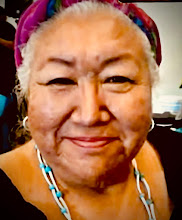 Memories of my late mother saying her dad, my grandfather taught her in a warning that the Dakota Medicine was good, but not anymore. As far back as 81 years ago, fake medicine people deceived their own people for money, power, and glory. Our grandmothers showed us through their prayers helping us celebrate love and helping us celebrate life within our families. Through my own lived experiences, I had to eliminate my own self-defeating behavior. Our people are depending on us to bring justice into our Indigenous Communities. Our Indigenous girls and women are going missing at an alarming rate and are being human trafficked. With little help in finding them or bringing their killers or abusers to justice, I started this blog. I never thought I would live to see such as year as 2023. Today, I feel blessed to be able to hold those who reached out to me in high regard. I am truly grateful, Creator’s Will guided me in my lifetime to see Nathan Chasing Horse arrested. And, yet at the same time, I grief for all his victims who died before they could see him brought to justice.
 https://abcnews.go.com/Nightline/video/dances-wolves-star-nathan-chasing-horse-accused-sexual-114067081?sfnsn=mo Throughout the decades of...
No comments:
Post a Comment